

Orange-red achiote gives the first clue, but the real reward in cochinita pibil is pork that yields easily to a fork. This home-oven version uses boneless shoulder, citrus and a well-covered pot. Banana leaves bring their characteristic aroma when available; the method adapts a Yucatán preparation to a domestic oven without pretending to recreate a whole pig cooked in a pit.

Marinate the pork in the refrigerator, seal it inside the covered pot and cook gently until the connective tissue softens. Orange and lime stand in for sour orange here. The clock gives you a checking point, while the fork tells you whether the pork is ready to shred into its cooking juices.
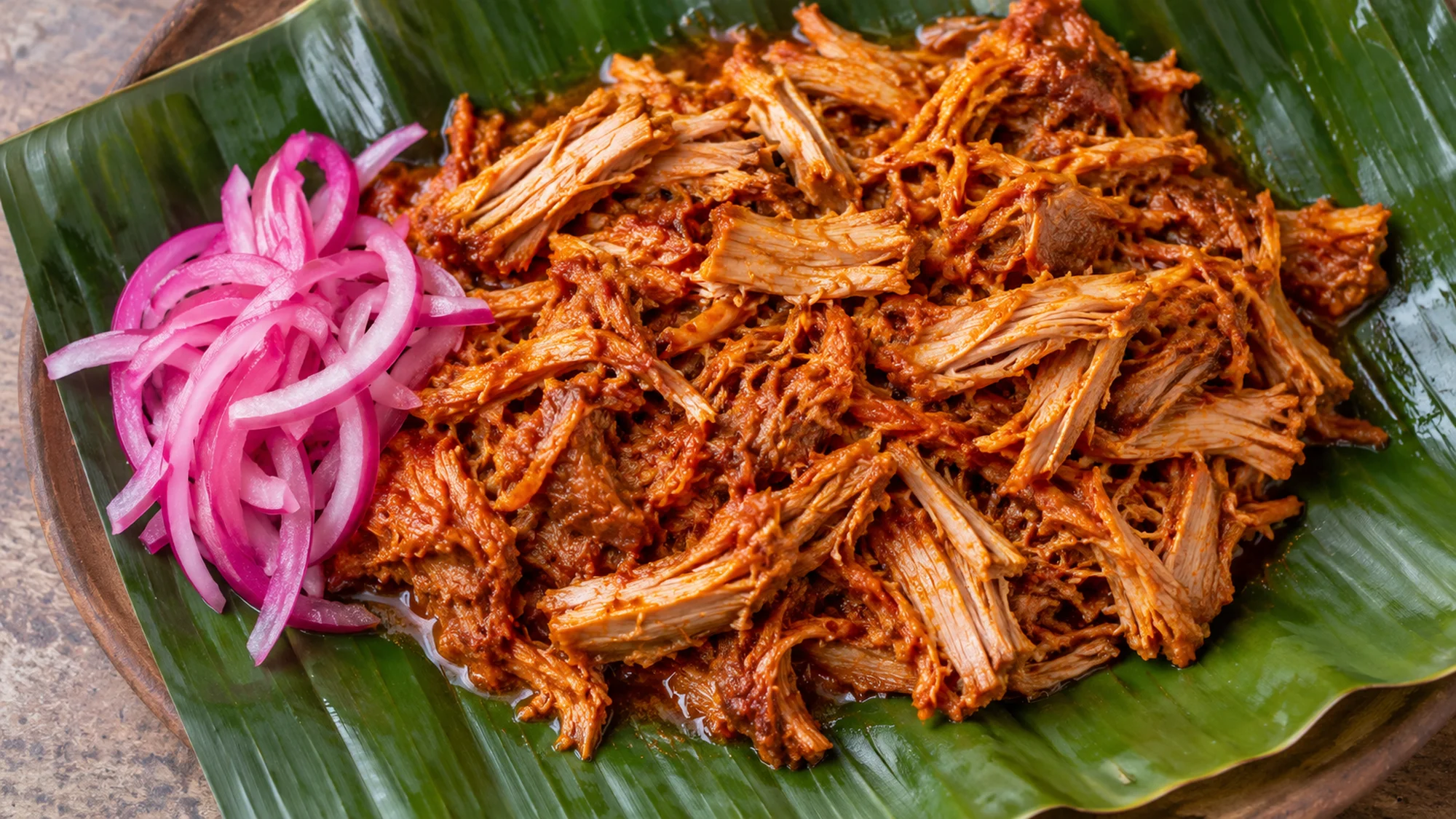
Serving Suggestions for cochinita pibil
Serve the pork with some of its sauce rather than lifting out dry strands and leaving all the flavor behind. Warm corn tortillas, pickled red onions and a separate hot salsa make a useful serving arrangement. Keep strong habanero heat optional so everyone can decide how much they want.
I’d skim visible pools of fat before reducing the cooking juices. The sauce should moisten the meat without flooding the plate, so reduce it separately if it is thin. For another slow-cooked filling, barbacoa uses beef and dried chiles; it is a different dish with its own cooking schedule.
- Sauce: keep a little around the shredded pork so reheated portions stay moist.
- Toppings: offer sharp onions and hot salsa separately for different preferences.
- Portions: count tortillas and sides separately from the meat-only estimate.
For a bowl rather than tacos, add rice or beans and a crunchy vegetable alongside. Chill leftover pork and juices in shallow containers within two hours, use within three to four days and reheat the portion needed to 165°F (74°C). A heavy covered pot cools slowly, so dividing the food matters.
Variations for cochinita pibil
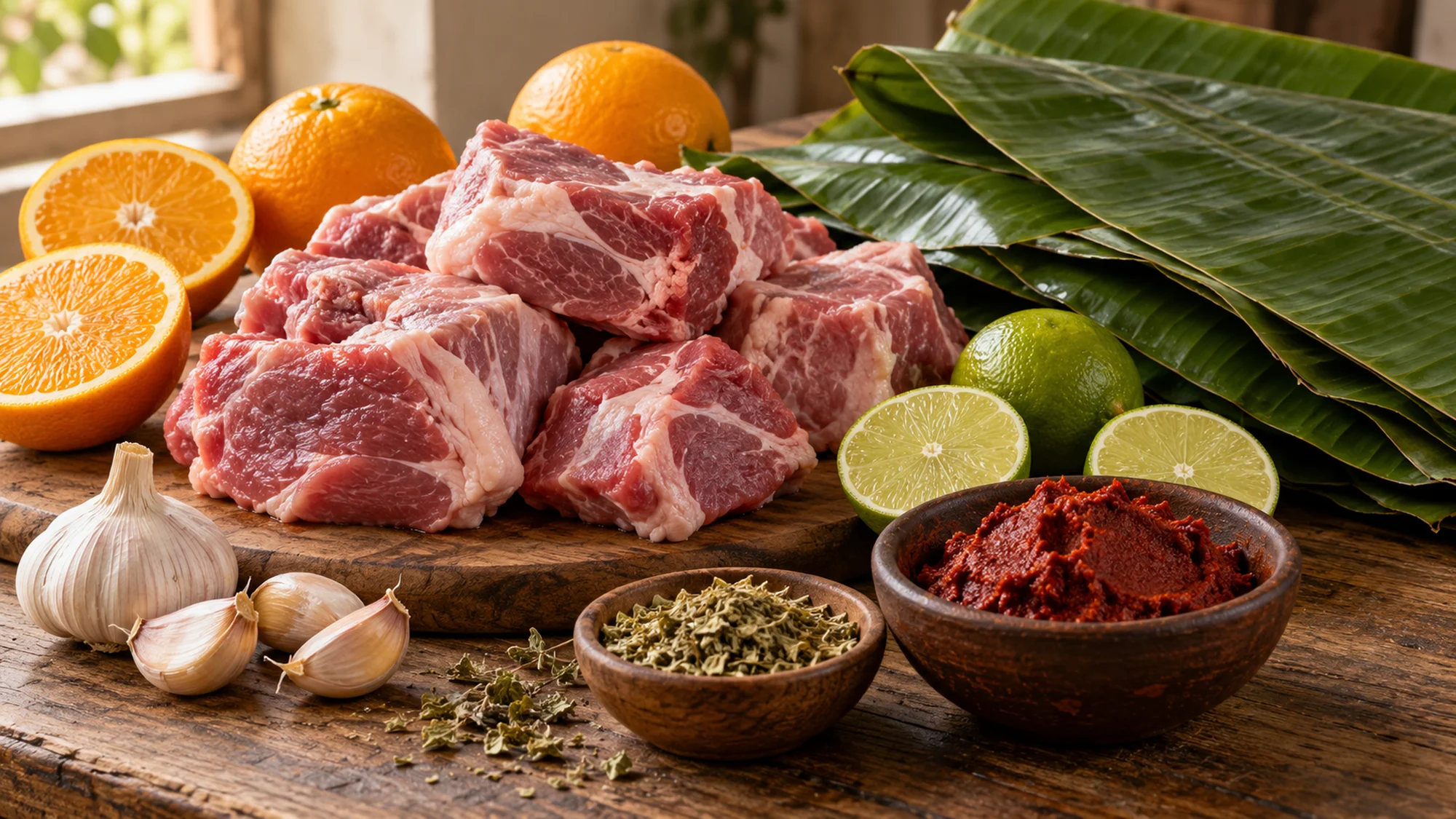
Achiote paste is a prepared seasoning, and its salt, acidity and spice levels differ by brand. Read the label before adding the full salt measure, especially if the paste is already salty. Plain annatto powder supplies color but is not an identical substitute for the complete paste used in this card.
I would choose shoulder over a lean tenderloin for this braise. Shoulder has connective tissue that benefits from time, while a lean cut can become dry before it behaves like shreddable pork. Large, similarly sized chunks also make the cooking more predictable than a mixture of tiny scraps and one enormous piece.
Banana leaves are useful for aroma and wrapping, but the tightly fitting lid does the essential moisture-control work in this oven method. If leaves are unavailable, use the covered pot without them and expect a different aroma. The citrus blend is also an approximation: actual sour orange has its own balance of acidity and flavor.
| Choice | What changes | Useful cue |
|---|---|---|
| Boneless shoulder chunks | Convenient home-oven portions | Cook until a fork twists easily |
| Bone-in shoulder | Different size and yield | Allow more time and remove the bone |
| Orange plus lime | Accessible sour-orange substitute | Use the measured blend |
| No banana leaves | Less leafy aroma | Keep the lid tightly fitted |
Health Benefits and Portion Balance
Pork contributes protein, while the cut and trimming determine much of the fat content. Citrus and achiote provide flavor, not a reason to make medical claims about the meal. The card estimates one-eighth of the meat and sauce, excluding tortillas, pickled onions and other sides.
The guidance on varied protein foods and vegetables offers a practical meal-planning frame. Add sides you enjoy and choose portions for the whole plate. A rich braise does not need to be served in an oversized heap to make a satisfying meal.
Keep the raw-pork marinade refrigerated and separate from ready-to-eat toppings. Follow safe cooking guidance and safe reheating temperatures. Shredding tenderness generally needs a longer braise than simply reaching the minimum safe temperature; do not use color alone to judge either.
Bottom Line
Give the covered pot time, keep enough liquid around the pork and reduce the sauce only after the meat is tender. I’d finish the plate with sharp onions and let diners add their own heat. Achiote and citrus should remain easy to recognize, with the pork carrying the sauce instead of disappearing beneath a collection of extra toppings.
Cochinita Pibil Recipe

Ingredients
- 1.2 kg boneless pork shoulder large external fat deposits trimmed; cut into 3-inch chunks
- 50 g achiote paste
- 150 ml orange juice
- 75 ml lime juice
- 100 ml water
- 4 garlic cloves
- 1 tsp dried oregano
- 1 tsp fine salt reduce if the achiote paste is salty
- 2 large banana leaves optional, thawed and rinsed; enough to line and cover the pot
Equipment
- 5- to 6-quart Dutch oven with lid
- Blender
- Tongs
- Two forks
Instructions
- Blend the achiote paste, orange juice, lime juice, water, garlic, oregano and salt until smooth. Coat the pork, cover and refrigerate for at least 2 hours or overnight.
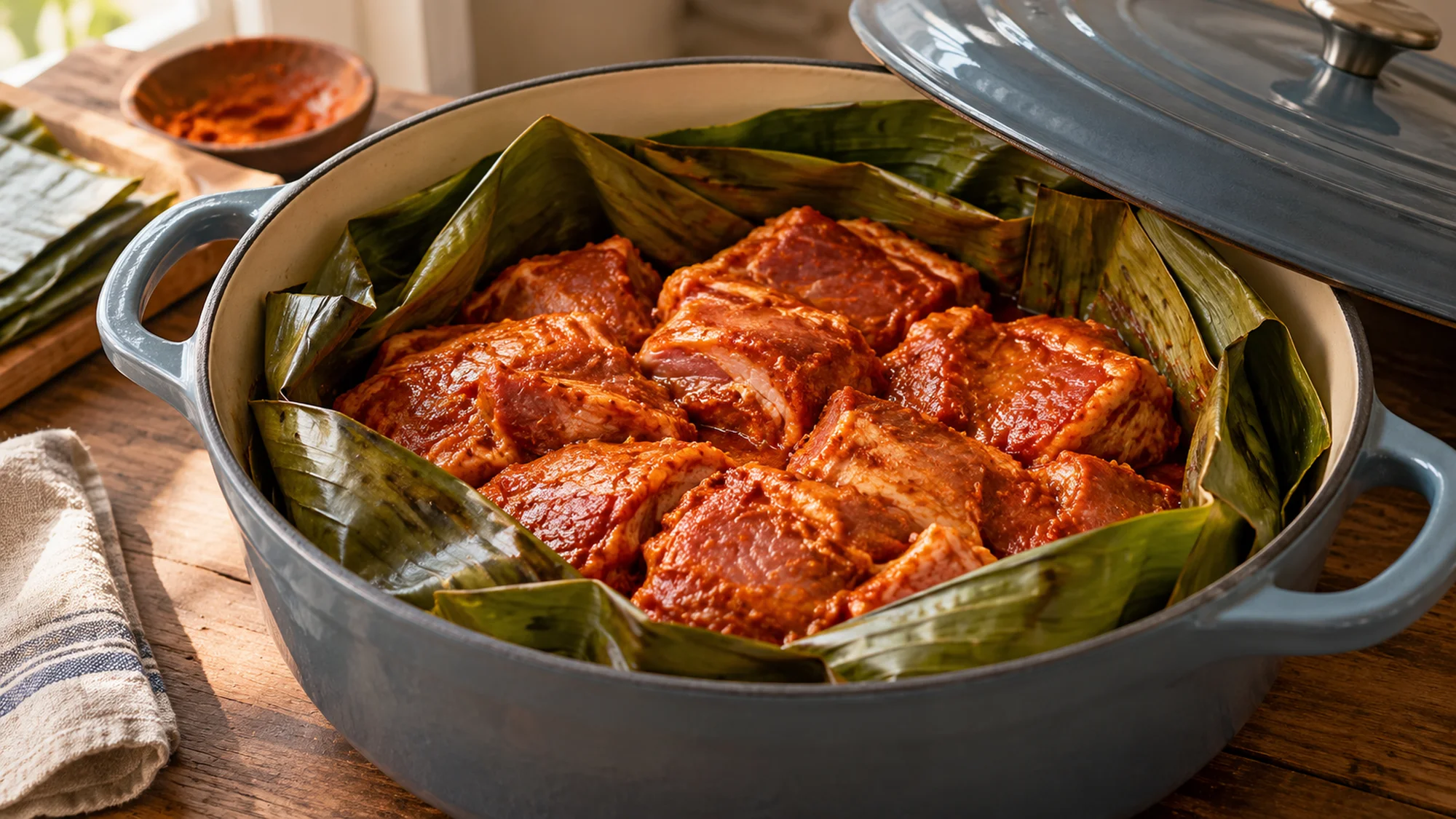
- Heat the oven to 300°F (150°C). If using banana leaves, line the Dutch oven with overlapping leaves and leave enough overhang to cover the meat. Add the pork and all its marinade; fold the leaves over.
- Cover tightly and braise for about 3–3 1/2 hours, checking after 2 1/2 hours. Add a little hot water if the pot is drying out. Continue until a fork twists through the pork easily.
- Rest covered for 15 minutes. Lift out the pork and discard the leaves. Skim excess fat from the juices and simmer uncovered briefly if the sauce is too thin.
- Shred the pork with two forks and mix it back into the juices. Serve with optional warm tortillas, pickled onions and salsa; those extras are excluded from the nutrition estimate.
Nutrition
Video
Notes
Tried this recipe?
Let us know how it turned out!Hi, I’m Emily Pocker! I share recipes and food guides here at Recipes360 to help you find everyday meal inspiration and feel more confident in the kitchen. My goal is to make cooking approachable, enjoyable, and full of flavor.