
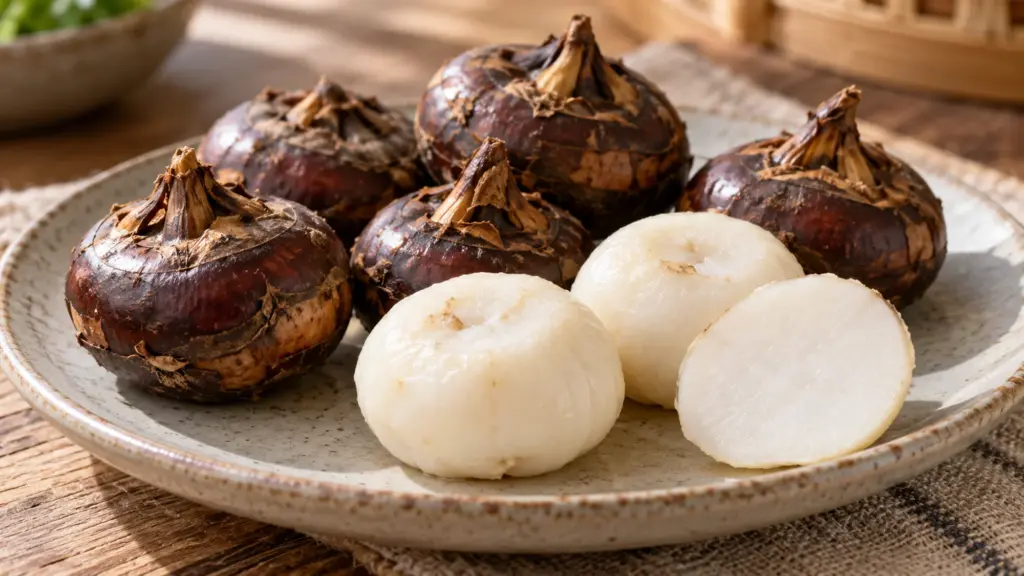
That pale, crunchy round in a stir-fry is easy to recognize and surprisingly easy to misunderstand. A water chestnut is not the chestnut you roast in winter: the Chinese ingredient sold fresh or canned is the edible underground storage part of an aquatic plant. Choose it for a crisp bite and a mild flavor, not the soft, starchy texture of a roasted tree nut.
Chinese water chestnut is a crisp, mildly sweet aquatic vegetable. Fresh corms need washing, peeling, and thorough cooking; canned ones are already heat-processed. Choose whole or sliced according to the texture and shape your dish needs.
What is a water chestnut, exactly?
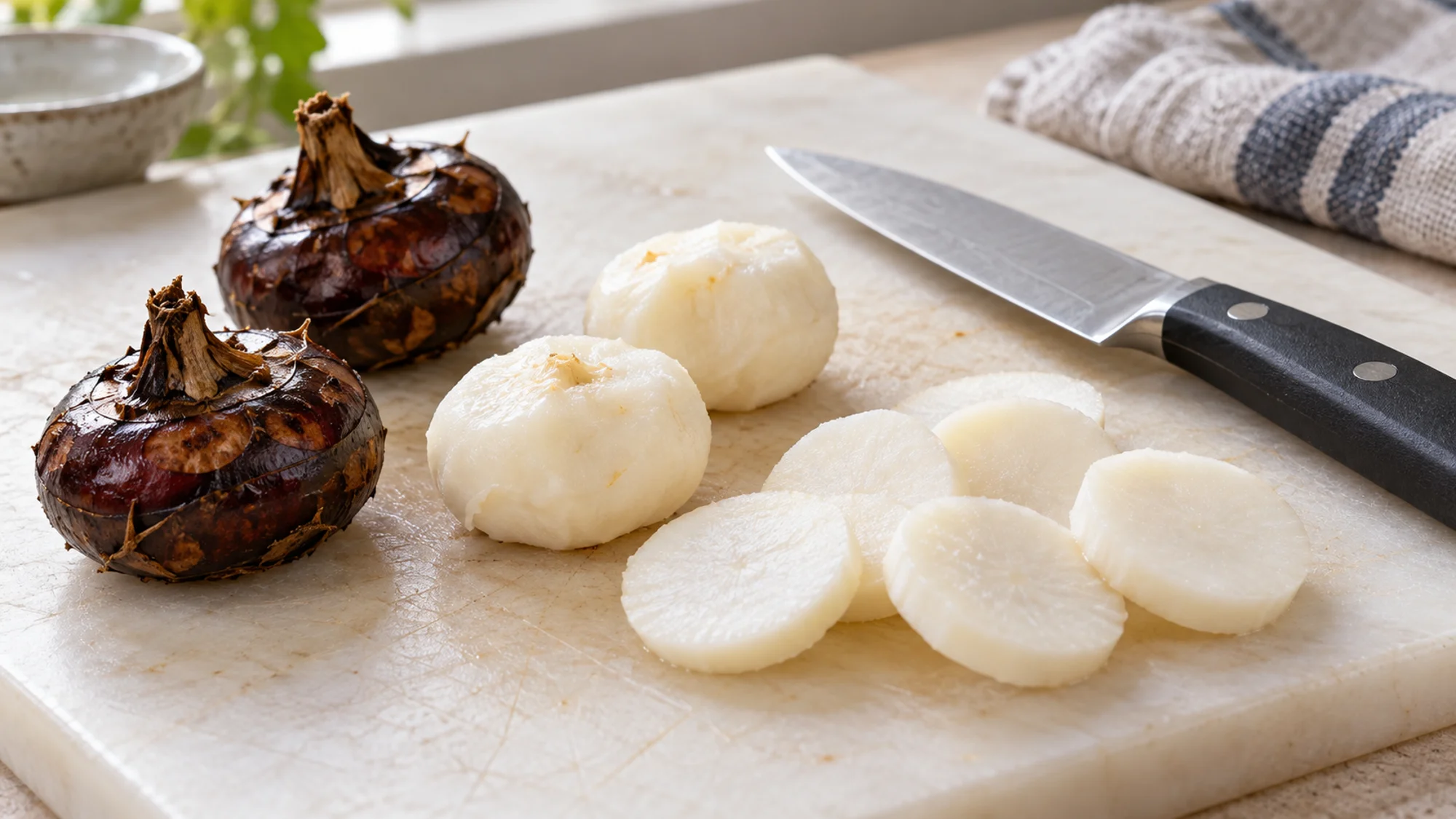
The Singapore National Parks Board identifies Chinese water chestnut as Eleocharis dulcis, a freshwater sedge. Its edible storage organs form underground; cooks commonly call them corms. Beneath the brown skin is pale flesh, so the familiar white slices are not a separate variety growing in a can.
The name can also refer to other plants, including horned water caltrops. This guide concerns Chinese water chestnuts, not a foraging identification or instructions for every plant sharing the name. Buy a clearly identified food product rather than applying kitchen advice to something collected from a pond.
I would treat the name as a shopping clue, not a substitution rule. Ordinary chestnuts will not give the same crisp texture, and water chestnut flour or starch is not a spoon-for-spoon replacement for pieces of the vegetable. A recipe calling for one form has a particular job in mind.
Fresh or canned: choose by the job
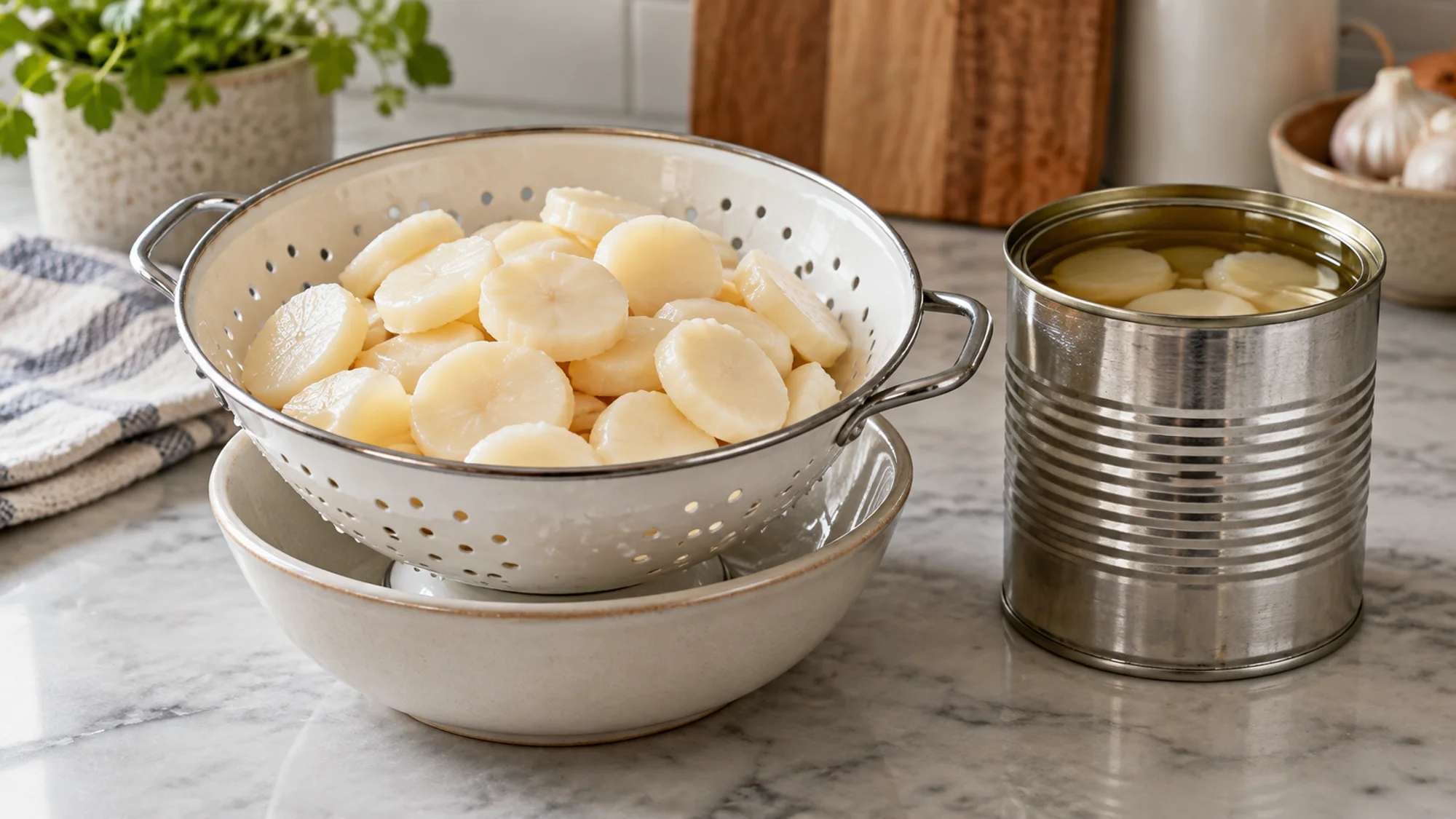
Fresh corms let you control the peeling and cut size. Canned water chestnuts trade that preparation for convenience: whole ones can be chopped for a filling, while slices go straight into a dish after draining. Neither choice needs an elaborate meal to justify opening the package.
| Form | Useful choice for | Preparation |
|---|---|---|
| Fresh whole corms | A dish where the ingredient is prominent | Wash, peel, trim, cut, then cook thoroughly |
| Canned whole | Chopped fillings or larger pieces | Drain; cut to the recipe’s size |
| Canned sliced | Stir-fries and quick vegetable dishes | Drain well so packing liquid does not dilute the sauce |
| Water chestnut starch | Recipes specifically calling for the starch | Follow that recipe; it is not a substitute for sliced corms |
Check the can’s ingredients and nutrition panel if sodium matters to you, because packing liquids differ. Compare drained portions where the label provides them. I would choose the cut that saves useful work rather than paying for slices and then chopping every one into tiny pieces.
Prepare water chestnut safely, then keep its crunch
Wash fresh produce under running water before cutting, remove the brown peel, and trim damaged areas. Work with a stable cutting board and a small sharp knife; do not hold a slippery corm in the air while trying to force off the skin. Cut even pieces so they cook consistently.
Fresh does not mean ready to eat raw. The CDC explains that contaminated raw or undercooked freshwater plants can transmit Fasciolopsis, especially in south and southeastern Asia, and recommends cooking them well in boiling water. Washing or peeling alone is not a substitute for that cooking step; commercially canned products have already undergone heat processing.
- For stir-fries: use drained canned pieces when you want an easy final addition. Heat them through without adding the packing liquid to a carefully balanced sauce.
- For fillings: chop evenly and mix through the other ingredients. Their job is to provide small crisp pockets, not oversized pieces that break the wrapper.
- For soups: let the recipe determine the cut and cooking order. Fresh and canned forms should not automatically receive identical treatment.
Make the rest of the dish—and storage—work
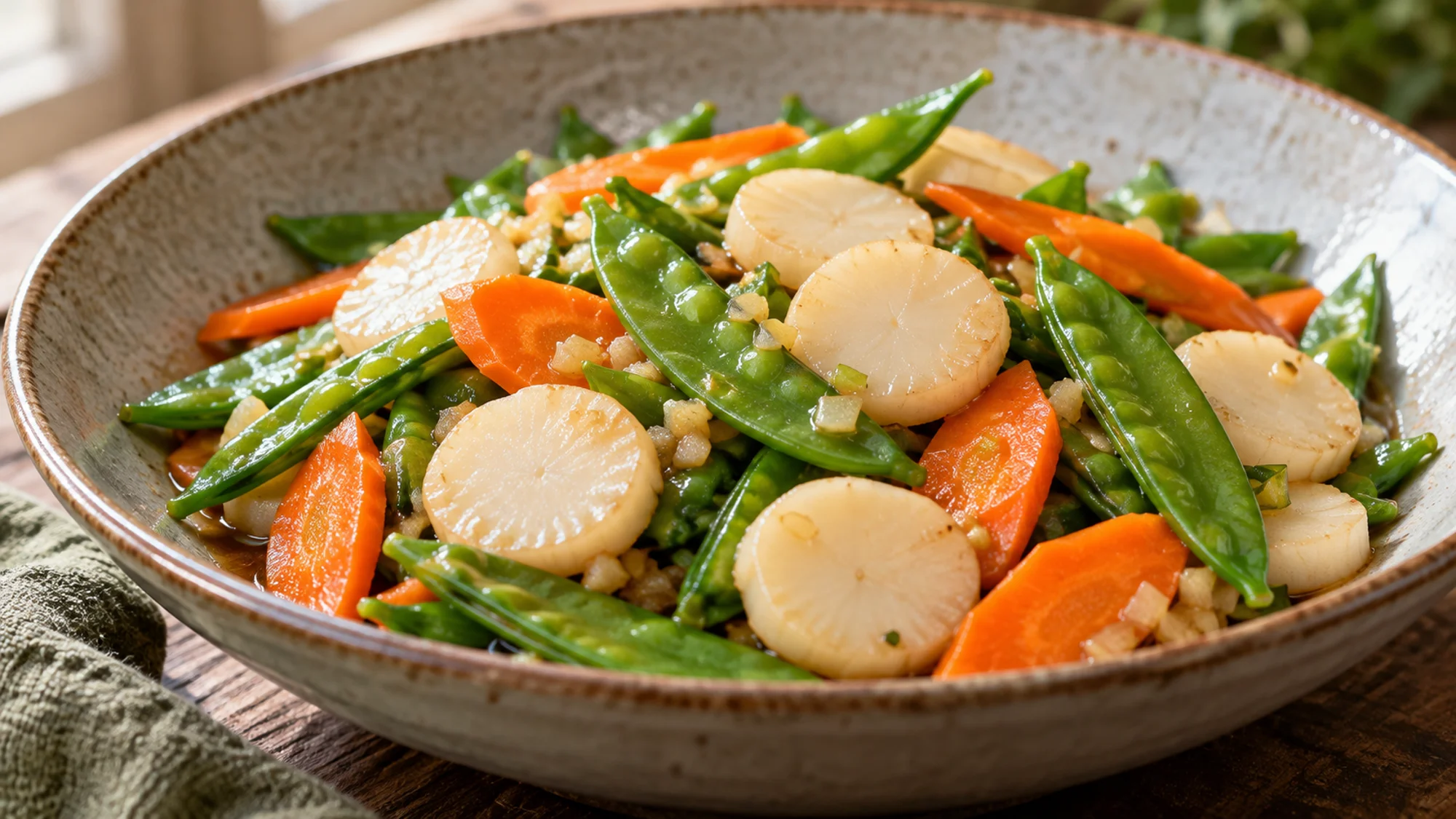
A mild vegetable gives the sauce room to speak. Ginger, garlic, and a savory coating can make a useful starting point, but the right balance depends on the whole dish. Our oyster sauce substitute guide explains why swapping one brown sauce for another can change sweetness, saltiness, and body.
For a simple vegetable pan, I would keep the water chestnut pieces visible among softer vegetables rather than burying them under a heavy sauce. That gives the ingredient a clear purpose. If you need a substitute, first decide whether you are replacing crunch, mildness, or the actual flavor; no single vegetable matches every role.
- Keep unopened shelf-stable cans in a cool, dry place, not beside the stove. Reject bulging, leaking, or deeply dented cans.
- After opening, refrigerate unused canned vegetables promptly in a clean covered container and use within 3–4 days, following USDA shelf-stable food guidance.
- For fresh corms, follow the seller’s storage instructions and prepare them while sound. Discard moldy, slimy, or deteriorated pieces rather than trying to hide them in a sauce.
Bottom Line
Choose Chinese water chestnuts for a distinct crisp bite, not as a stand-in for roasted chestnuts. Fresh ones reward careful preparation and thorough cooking; canned ones make that texture convenient. Drain well, cut for the dish, and refrigerate leftovers promptly.
Lee Kum Kee’s short landscape demonstration shows the peeling technique for fresh water chestnuts; it is a preparation reference, not a substitute for thorough cooking.
Sources
NParks: Eleocharis dulcis
CDC: Fasciolopsis and freshwater plant safety
USDA: Shelf-stable food safety
Lee Kum Kee: Water chestnut peeling demonstration

Hi, I’m Emily Pocker! I share recipes and food guides here at Recipes360 to help you find everyday meal inspiration and feel more confident in the kitchen. My goal is to make cooking approachable, enjoyable, and full of flavor.