
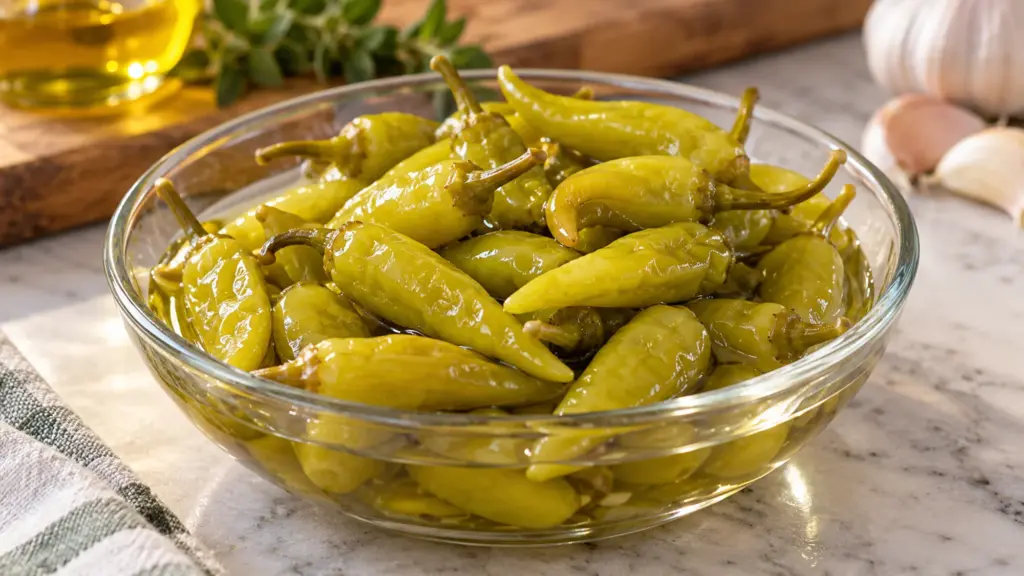
A Chicago-style hot dog has plenty going on, but those little green peppers are not just decoration. Sport peppers bring a sharp pickled bite and chile heat that cut through the rich sausage and soft bun. Once you recognize their job, it is easier to use the rest of the jar.
Sport peppers are small hot peppers commonly sold pickled and served on Chicago-style hot dogs. Use them when you want both briny acidity and heat; a different pickled pepper can substitute, but it will change the flavor and bite.
I’d treat the first pepper from a new jar as a taste check, not a challenge. Small does not necessarily mean gentle, and your sandwich does not need to become a competitive event.
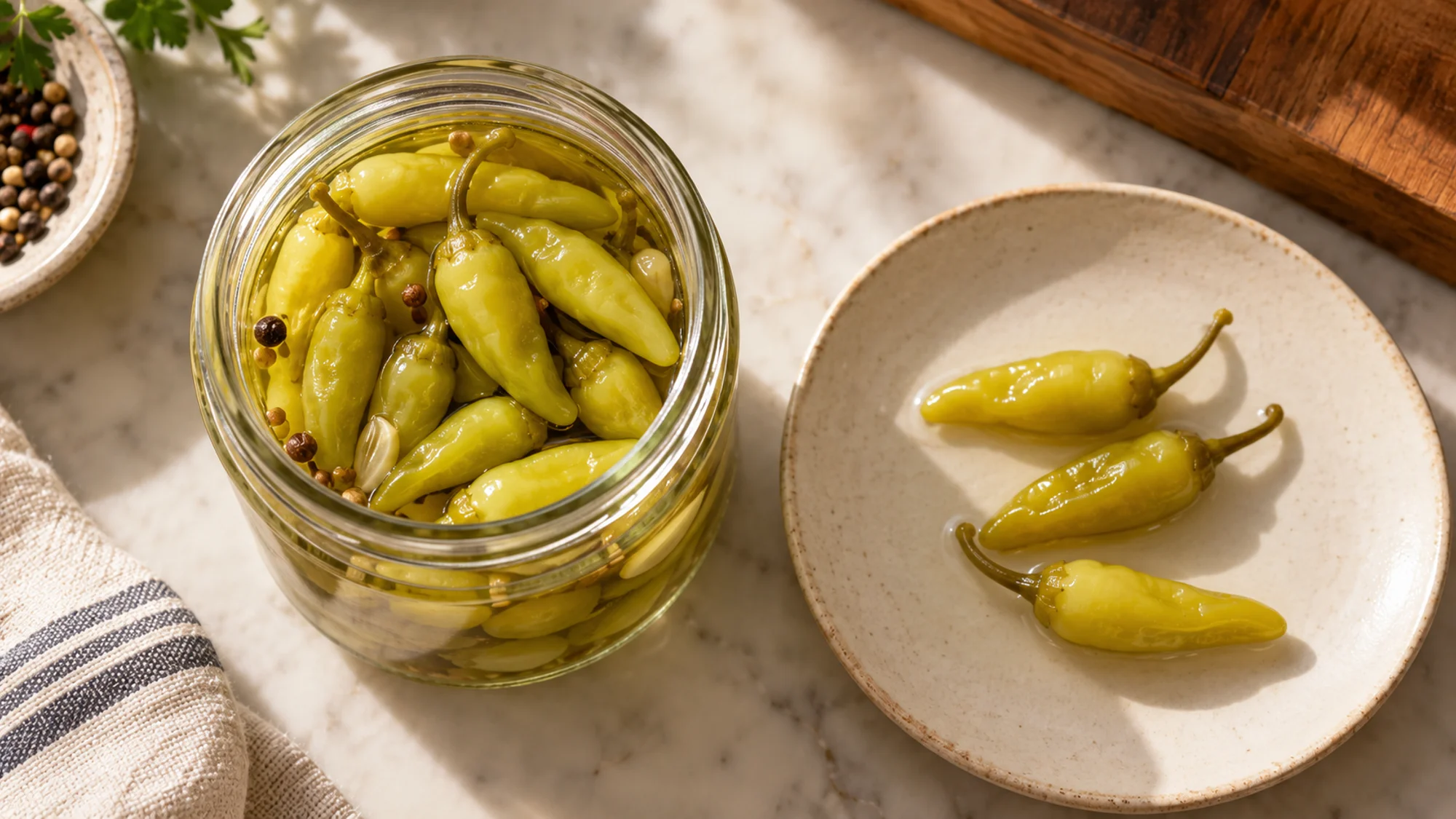
What Makes Sport Peppers Different?
In the condiment aisle, the name usually refers to small whole peppers preserved in a vinegar-based liquid. Their compact shape makes them easy to tuck along a bun or serve beside a sandwich. Vienna Beef identifies sport peppers as a Chicago-style hot-dog topping and also suggests them with its sausages.
They are not simply another name for every green pickled pepper. A jar of sliced jalapeños, mild pepperoncini or banana-pepper rings offers a different shape and eating experience. Look for the actual product name rather than assuming a similar color means the same thing.
- Whole: a pepper gives a concentrated burst of heat and acidity in one bite.
- Sliced: smaller pieces spread the flavor through more of a sandwich.
- Chopped: the pepper becomes a seasoning for a topping or cold dip.
- Drained: less clinging liquid helps keep bread and other crisp ingredients from becoming wet.
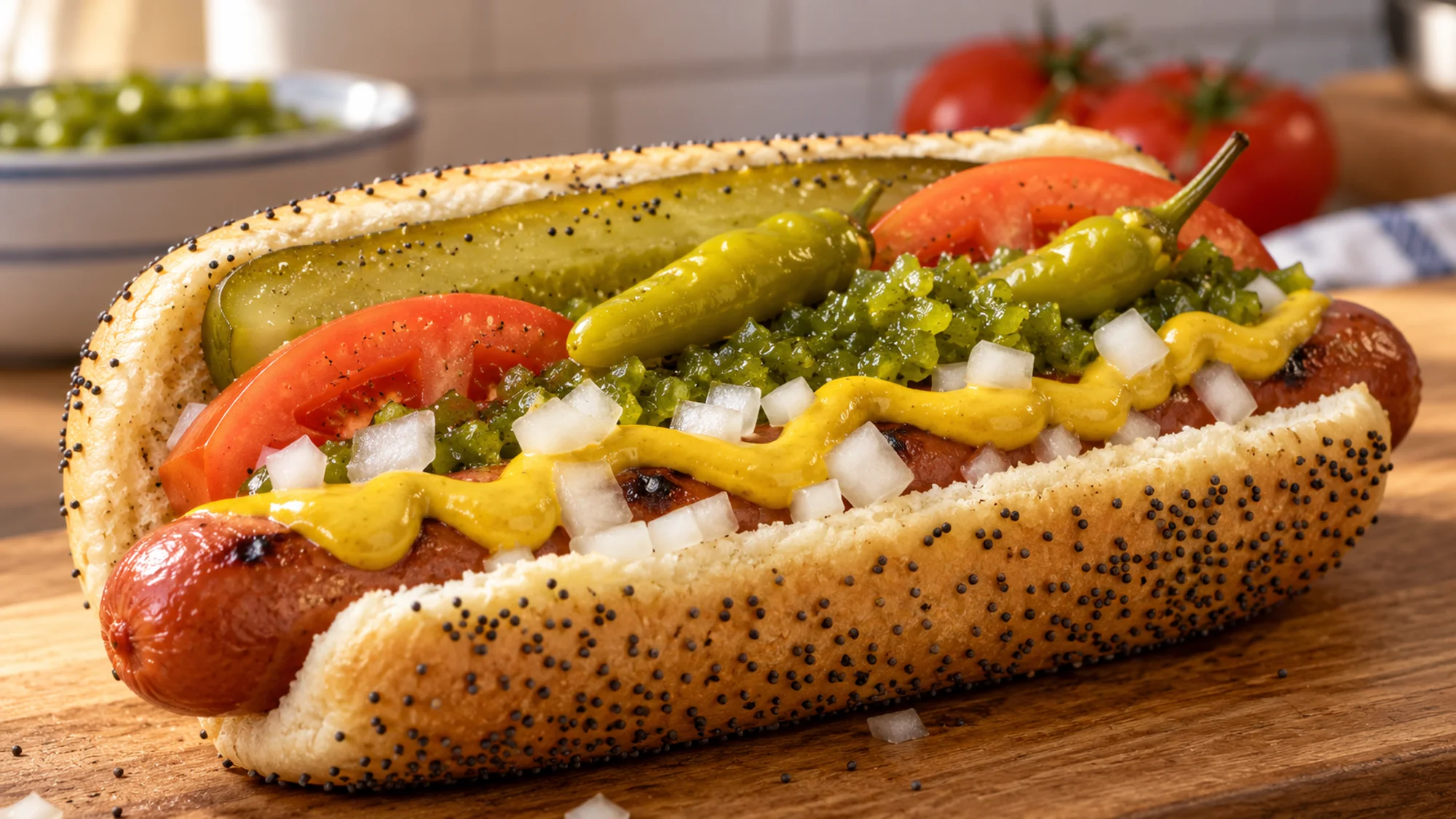
Use Them for Contrast, Not Just Heat
A rich or creamy filling can benefit from a sharp accent. Sport peppers supply that contrast without needing a separate hot sauce, though the result is chunkier and more distinctly pickled. I prefer adding a little, tasting the whole bite, and stopping while the other ingredients still have something to say.
Think about what is already on the plate. Mustard, pickles and salty meat can make additional brine unnecessary. These are serving ideas rather than fixed recipes, so adjust to the particular jar and your own tolerance.
| Food | How to add the peppers | What to watch |
|---|---|---|
| Hot dog or sausage | Place drained whole peppers along the filling | Remove stems as you eat |
| Cold sandwich | Use thin slices or a small chopped amount | Avoid soaking the bread |
| Creamy dip | Stir in finely chopped drained peppers | Taste before adding more salt |
| Bean or chopped salad | Scatter small pieces through the bowl | Balance with existing dressing |
| Snack plate | Serve a few peppers separately | Let guests choose their own heat |
Let the peppers provide an accent. Their vinegar, salt and chile heat all contribute, so taste before adding another strongly flavored condiment.
Choose a Substitute by the Part You Want to Keep
There is no exact substitute that guarantees the same heat, texture and flavor in every jar. If you mainly want a tangy crunch, a milder pickled pepper may work. If the heat is the point, a small amount of pickled jalapeño is a different but practical direction.
For acidity without a chile-centered bite, pickled red onions offer another sandwich topping. They are not sport peppers, and the difference is the reason to choose them—not something to disguise.
- Pickled pepperoncini: consider them when you prefer a gentler pepper accent; taste the specific product.
- Pickled jalapeños: useful when a sliced chile topping is welcome, but not an identical replacement.
- Banana-pepper rings: check whether the jar says mild or hot before deciding.
- Pickled onions: choose for a sharp onion crunch when chile heat is not essential.
- Hot sauce: supplies heat and sometimes acidity, but cannot replace a whole pepper’s texture.
A substitute can be delicious without being identical. Decide whether crunch, acidity or chile heat matters most to your particular dish.
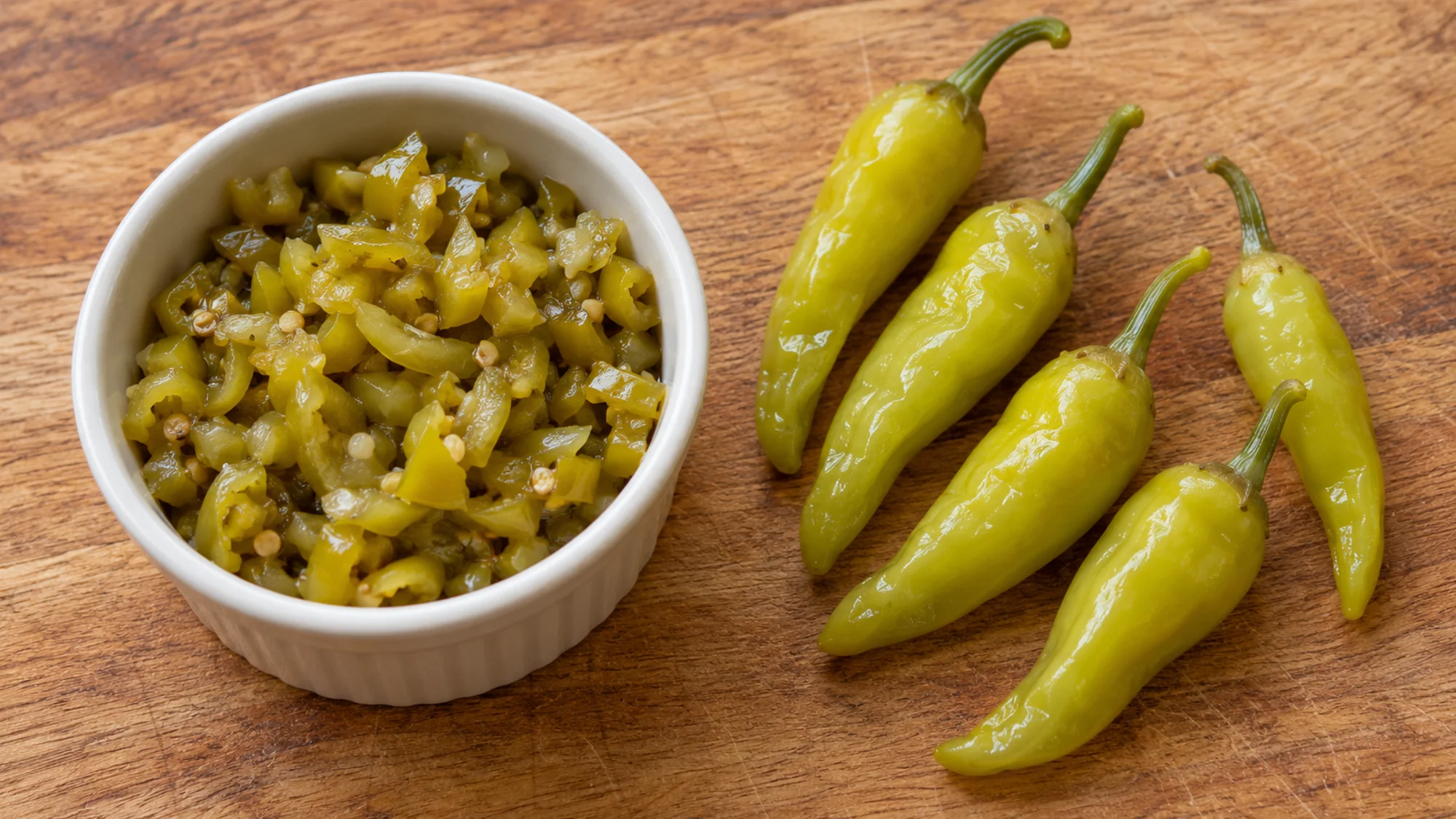
Read the Jar and Keep It Properly Stored
Check the ingredient list and sodium amount for the actual product you buy. Pickling liquids and serving sizes vary, so a generic nutrition number can be misleading. The FDA’s label guide explains how serving size connects to the amounts printed on the panel.
Follow the jar’s storage instructions; Vienna Beef specifies refrigeration after opening for its product. That is not a license to apply one brand’s unopened shelf-life statement to every opened jar, and a vinegar smell alone cannot establish safety.
- Use a clean utensil to remove peppers and replace the lid promptly.
- Keep the original label so storage and date information stay available.
- Do not top up a commercial jar with raw vegetables and assume the original preservation conditions still apply.
- Do not treat leftover brine as a tested home-canning formula. Illinois Extension distinguishes flavoring with used commercial brine from preserving food with it.
- Follow FDA advice to reject damaged or visibly spoiled products; do not taste a suspect jar to check it.
Keep the opened jar according to its label, and keep preservation experiments separate from ordinary condiment storage.
Bottom Line
Sport peppers bring a compact combination of chile heat and pickled tang. Start with a small amount, drain them for sandwiches, choose substitutes honestly, and follow the storage directions on your particular jar.
FOX 32 Chicago’s report on Vienna Beef provides context for the Chicago hot-dog tradition associated with these peppers.
Sources
- Vienna Beef: sport peppers and storage guidance
- FDA: understanding serving sizes and Nutrition Facts
- Illinois Extension: pickling FAQ
- FDA: checking packaged foods

Hi, I’m Emily Pocker! I share recipes and food guides here at Recipes360 to help you find everyday meal inspiration and feel more confident in the kitchen. My goal is to make cooking approachable, enjoyable, and full of flavor.