
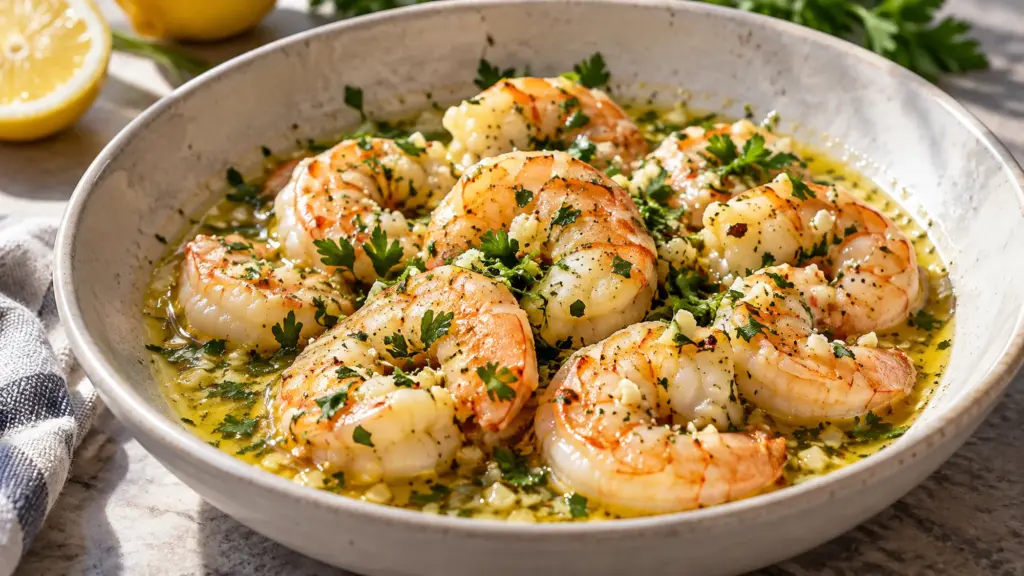
The garlic is fragrant, the butter is bubbling, and the shrimp need your attention now. That quick change from translucent to pearly is the heart of this scampi recipe. It is an Italian-American shrimp version, with lemon, white wine and parsley, rather than breaded British scampi or a preparation of langoustines.
Cook the shrimp briefly, lift them out while the wine reduces, then return them just long enough to coat in the garlic-butter sauce. Keeping those jobs separate helps the sauce come together without making the shrimp chewy.
I’d peel the shrimp completely for an easy fork-and-spoon dinner. Tail-on shrimp look attractive but ask the diner to do more work in a buttery bowl. Either choice works, provided the stated weight is the peeled, edible shrimp rather than a bag that includes shells.
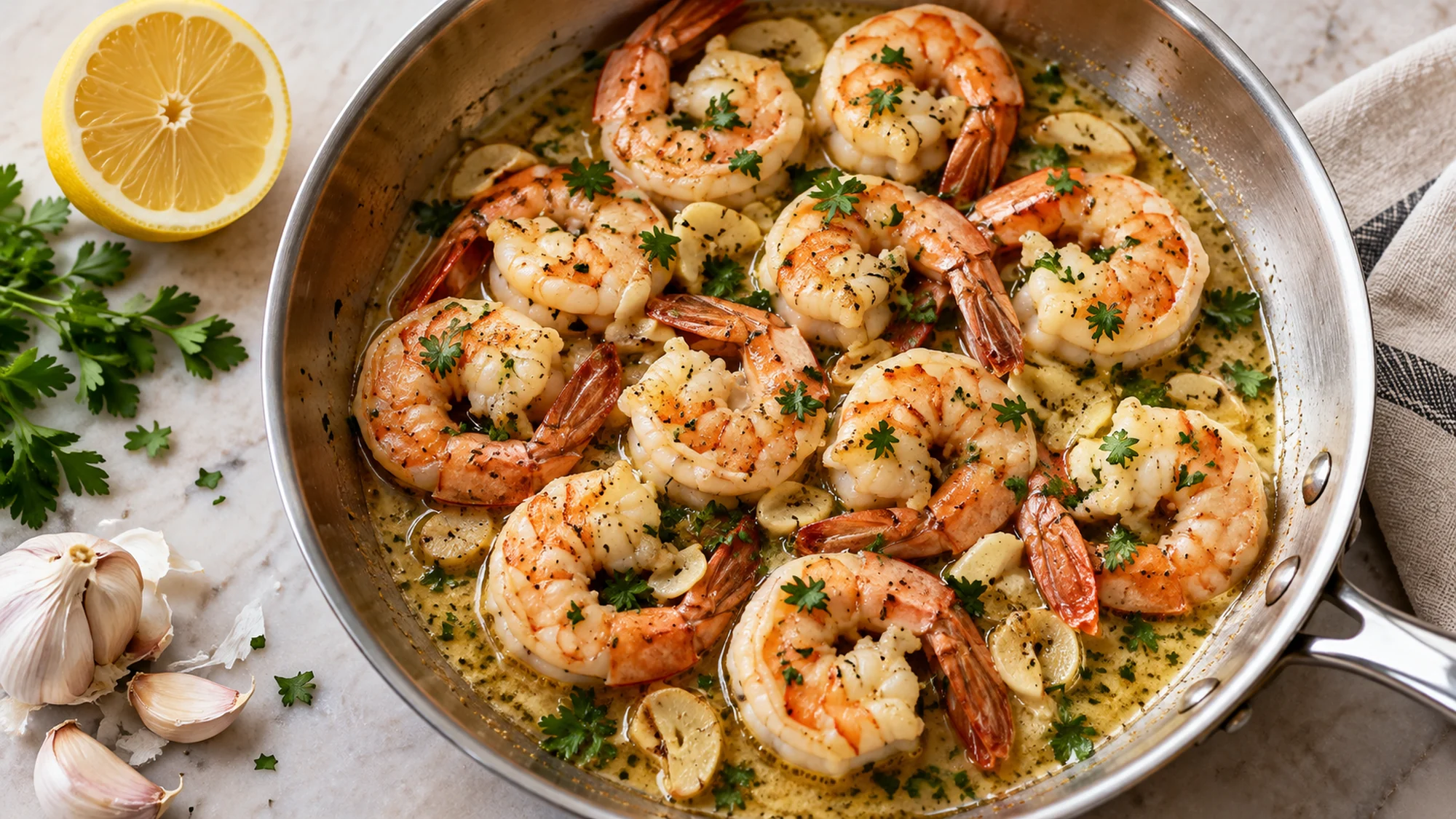
Serving Suggestions for Scampi
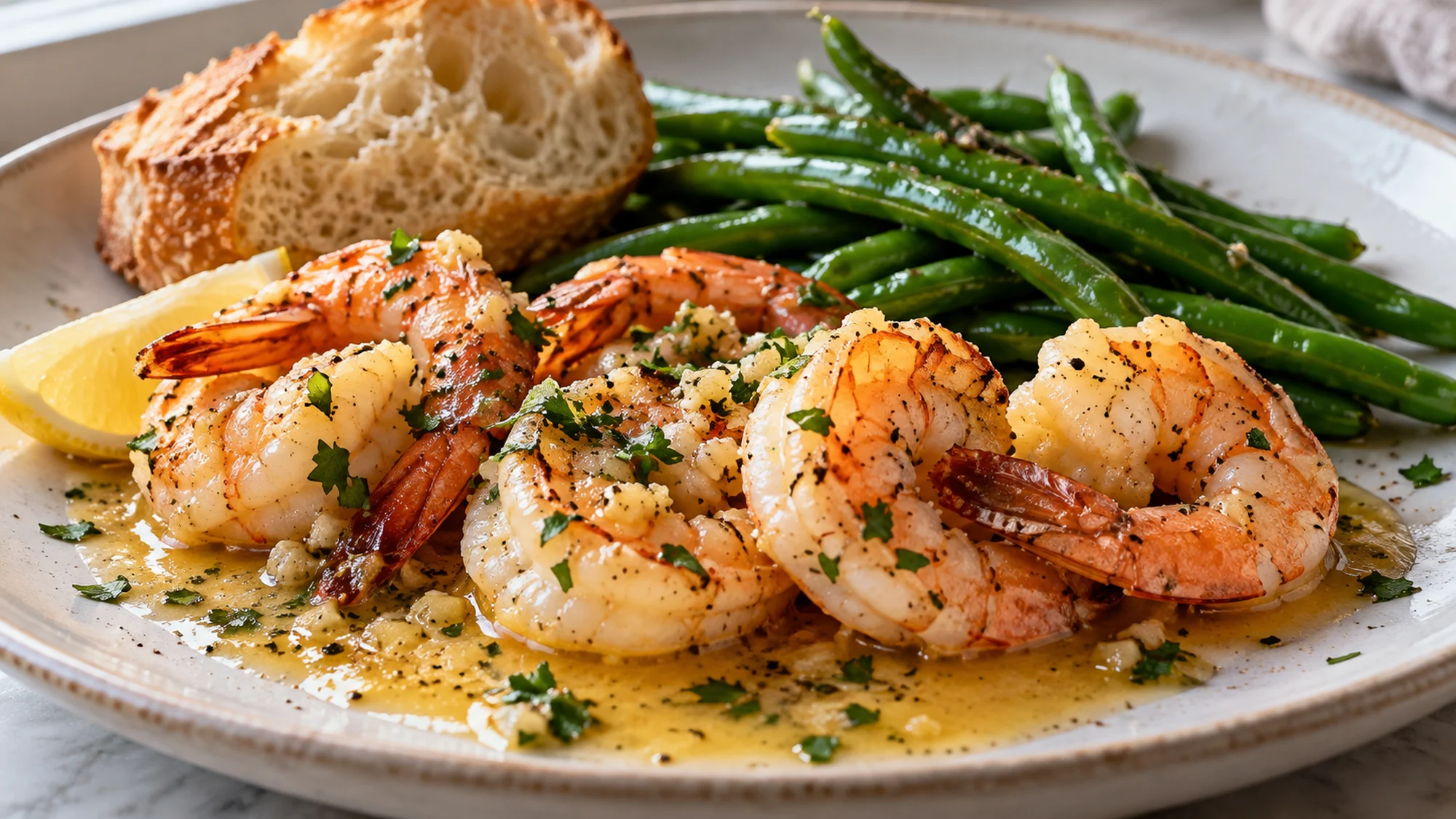
Serve this dish as soon as the sauce coats the shrimp. The sauce should be loose enough to spoon, not a thick cream sauce. Warm the serving plates if practical and have the accompaniments ready before the shrimp enter the skillet. This is one of those dinners where setting the table early has a real culinary purpose.
Crusty bread is excellent for the lemony juices, while plain cooked pasta turns the skillet into a fuller meal. The recipe card measures the shrimp and sauce only. Pasta, bread and any extra butter need to be counted separately if you track portions or nutrition.
- With pasta: Toss freshly cooked linguine or spaghetti with a little reserved cooking water, then divide the shrimp and sauce over the top.
- With vegetables: Choose steamed green beans, roasted asparagus or a crisp green salad to contrast with the buttery sauce.
- With rice: Spoon the shrimp and some pan juices over plain rice. Keep the rice separate until serving so the grains do not absorb every drop.
- For a small starter: Use smaller portions in shallow dishes with bread alongside, and serve promptly while the shrimp are warm.
Build the plate around the sauce: choose one simple starch and a fresh or green vegetable.
Variations and Sauce Adjustments
The balance is garlic, fat, acidity and a small amount of liquid. More lemon is not automatically better; a very sharp sauce can hide the shrimp’s mild sweetness. Start with the measured amount and offer lemon wedges separately. I prefer flat-leaf parsley here because it adds freshness without changing the basic character.
Use a dry white wine you are comfortable cooking with. Simmering reduces the wine’s raw edge, but it does not guarantee that all alcohol disappears. For an alcohol-free version, use lower-sodium broth and adjust the lemon after tasting. Do not replace the wine with the same volume of lemon juice.
| Change | What it does | How to handle it |
|---|---|---|
| Broth instead of wine | Less acidity; no wine added | Taste before adding extra lemon |
| Smaller shrimp | Cook more quickly | Check earlier and remove promptly |
| Extra garlic | Stronger savory flavor | Keep heat moderate to avoid bitterness |
| A pinch of chile flakes | Adds gentle heat | Add with garlic; start sparingly |
Preserve the sauce’s balance, and adjust acidity after the liquid has reduced.
Health Benefits and Portion Considerations
Shrimp contributes protein, while the butter and oil supply most of the sauce’s fat. USDA’s standard nutrient data for seafood identifies raw shrimp as a protein-rich ingredient with relatively little fat before cooking fats are added. That does not make a buttery preparation a low-fat meal.
The card’s nutrition is an estimate for one-quarter of the shrimp and sauce, including the full measured butter, oil and wine. Some alcohol may cook off, but the calculation does not assume a precise loss. Bread and pasta change the energy and carbohydrate content considerably, so choose the portion that fits your meal.
Follow FDA safe-food-handling guidance: keep raw seafood separate and cook shrimp until the flesh is pearly and opaque. Thaw frozen shrimp in the refrigerator, not on the counter. Refrigerate leftovers promptly and reheat them thoroughly, accepting that the shrimp will become firmer.
Treat shrimp as the protein and the sauce as a rich accompaniment; vegetables and sensible portions round out the plate.
Bottom Line
Good scampi depends more on timing than on a long ingredient list. Prepare the garlic and lemon first, watch the shrimp closely and give the wine its own moment in the pan. The finished dish should have tender shrimp, fragrant garlic and enough glossy sauce to make that piece of bread useful.
Take the shrimp off the heat when they are done, then let the sauce finish without them.
Scampi Recipe

Ingredients
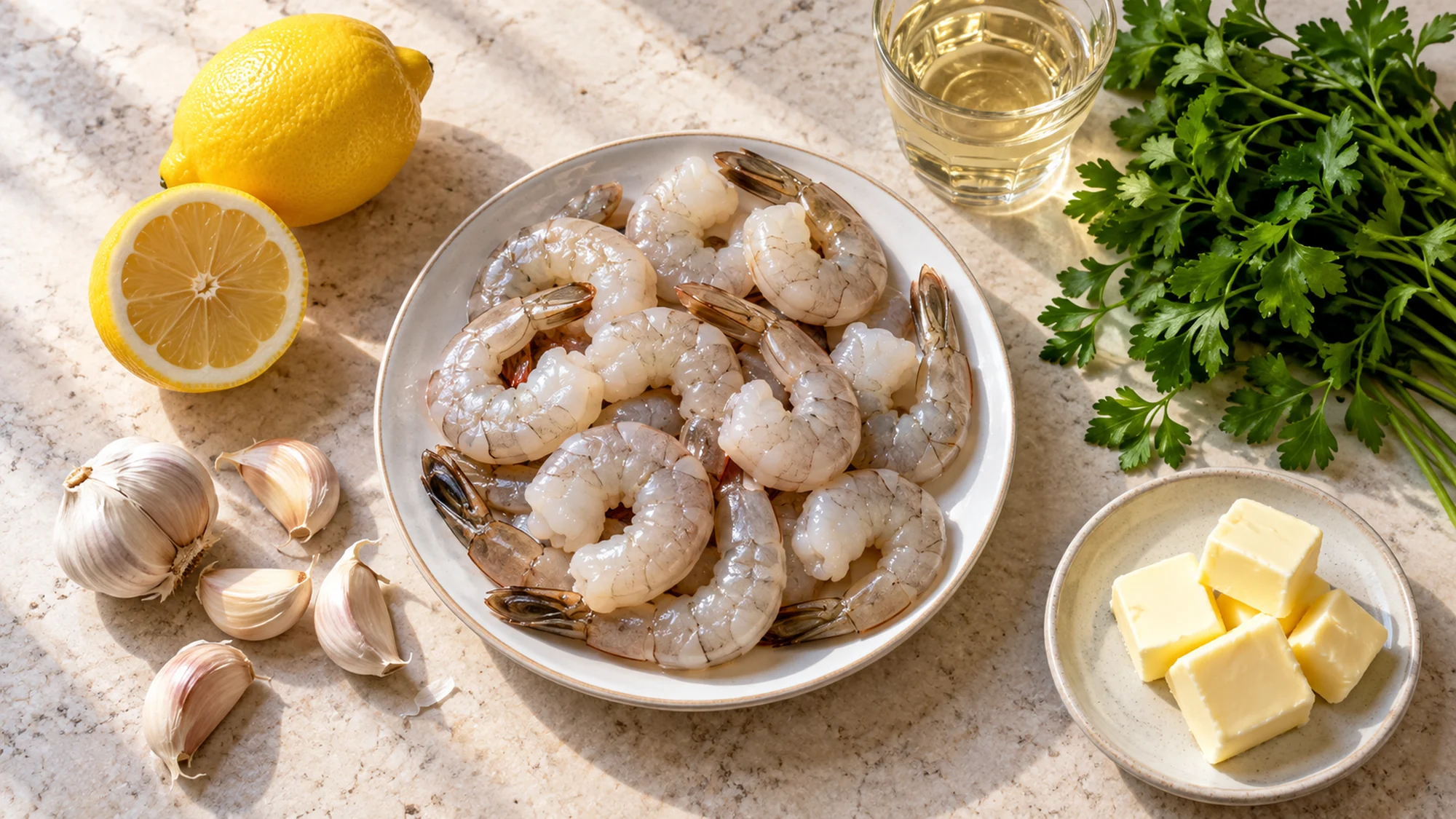
- 1 1/2 pounds raw jumbo shrimp 680 g peeled and deveined; thawed if frozen
- 2 tablespoons olive oil 27 g
- 4 tablespoons unsalted butter 56 g, divided
- 4 garlic cloves 12 g, thinly sliced
- 1/2 cup dry white wine 120 mL; see notes for alcohol-free version
- 2 tablespoons fresh lemon juice 30 mL
- 1 teaspoon finely grated lemon zest
- 1/4 cup chopped flat-leaf parsley 15 g
- 1/4 teaspoon fine salt
- 1/4 teaspoon black pepper
- 1/8 teaspoon red pepper flakes optional
Equipment
- 1 12-inch skillet
- 1 Tongs
- 1 Citrus juicer
- 1 Measuring cups and spoons
Instructions
- Pat the peeled, deveined shrimp dry with paper towels. Season with the salt and black pepper. Keep raw seafood and its utensils away from ready-to-eat food.
- Heat olive oil and 2 tablespoons butter in the skillet over medium-high heat. Add shrimp in one layer, working in two batches if needed. Cook about 1–2 minutes per side until flesh is pearly and opaque throughout. Transfer to a clean plate as each batch finishes.
- Reduce heat to medium. Add garlic and optional pepper flakes to the pan; stir 30 seconds until fragrant, without browning the garlic. Add wine, scraping the pan, and simmer for 2–3 minutes to reduce slightly.
- Reduce heat to low. Add lemon juice, zest and the remaining 2 tablespoons butter. Swirl until glossy. Return the shrimp and any juices to the pan just long enough to coat and heat through, about 30 seconds. Remove from heat and fold in parsley.
- Divide shrimp and sauce among four servings. Serve optional bread, rice or pasta separately. Do not keep simmering the shrimp once they are cooked.
Nutrition
Video
Notes
Tried this recipe?
Let us know how it turned out!Hi, I’m Emily Pocker! I share recipes and food guides here at Recipes360 to help you find everyday meal inspiration and feel more confident in the kitchen. My goal is to make cooking approachable, enjoyable, and full of flavor.