
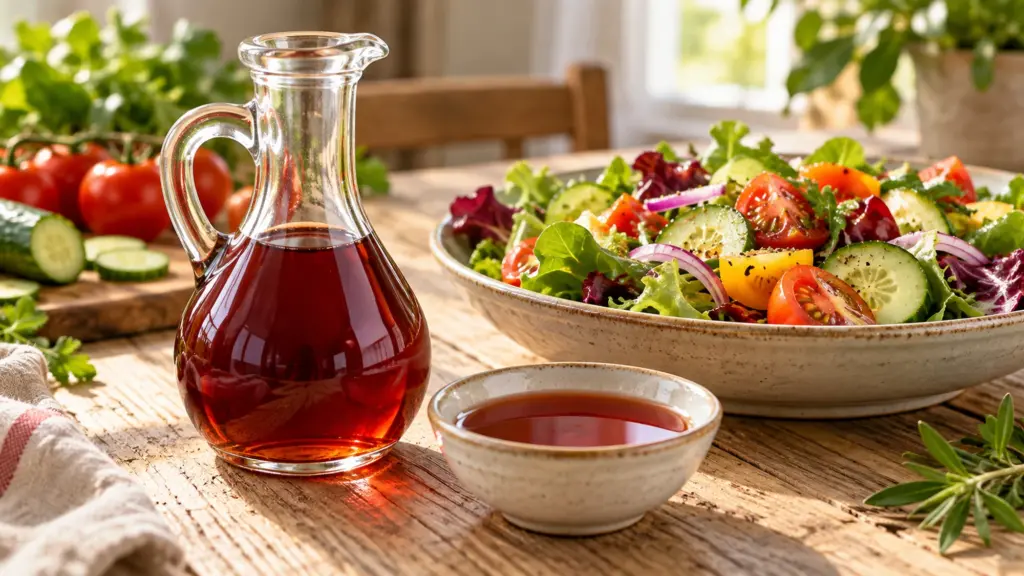
A salad can have lovely tomatoes, crisp cucumber and good olive oil yet still taste a little flat. Red wine vinegar brings the sharp, fruity edge that helps those ingredients stand out—often with just a modest splash.
Red wine vinegar is vinegar made from red wine, with a tangy flavor suited to dressings, sauces and everyday seasoning. Other vinegars can work as culinary substitutes, but home canning requires the vinegar and acidity specified in a tested recipe.
I’d keep this bottle near the olive oil rather than save it for a special dish. The useful skill is learning when a meal needs brightness, and when one more splash would simply make it sour.
What Makes Red Wine Vinegar Different?
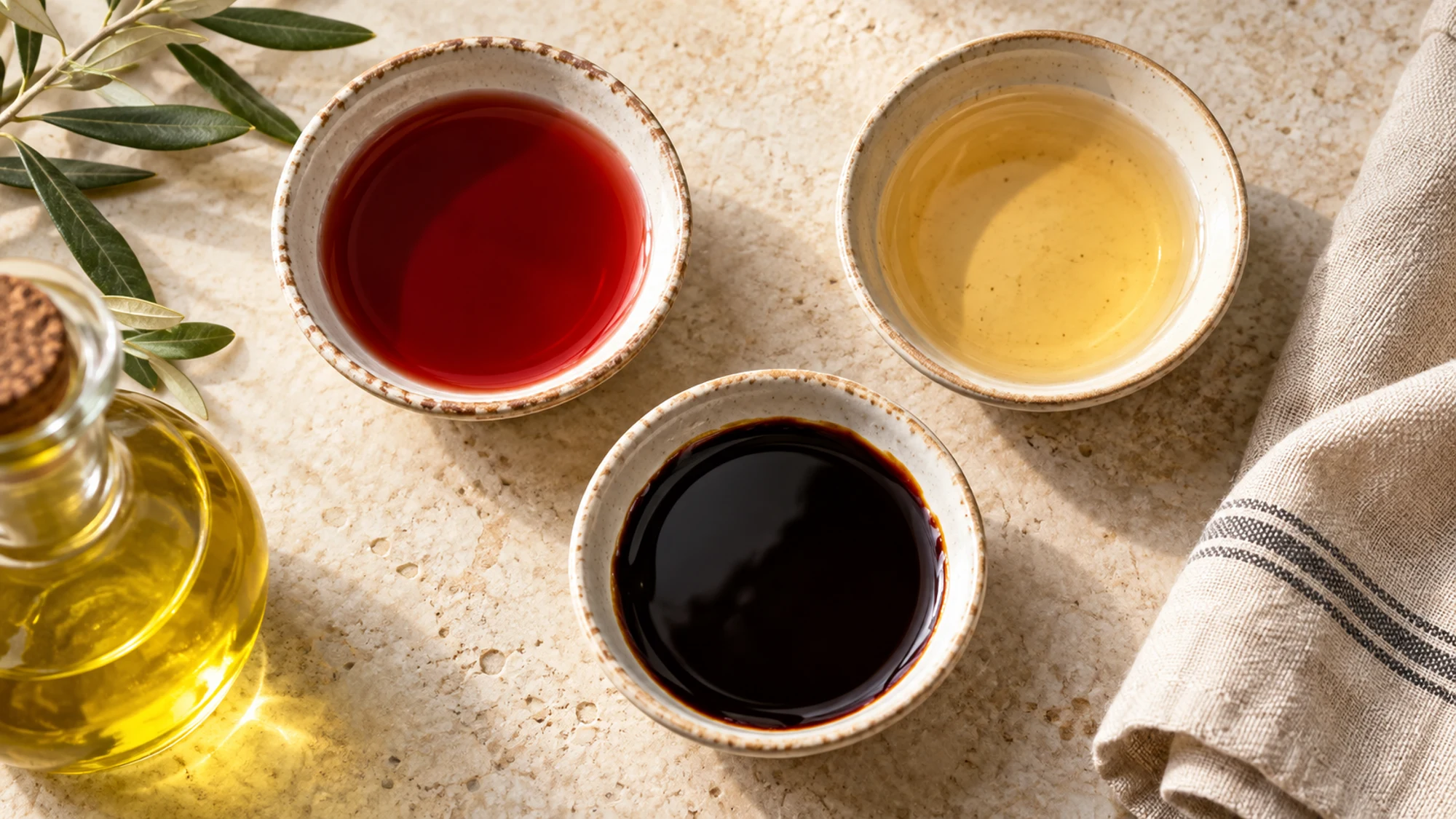
Wine vinegar starts with grapes and undergoes alcoholic and then acetic fermentation. As NC State Extension explains, vinegar-making bacteria convert alcohol into acetic acid. Red wine vinegar is therefore not interchangeable with a glass of red wine in a recipe.
Expect a clean sour bite with some wine-like fruitiness; the precise flavor and color depend on the bottle. Compared with many balsamic vinegars, it usually brings less sweetness. An expensive bottle is not automatically the right choice for every dish: a straightforward vinegar can do plenty of useful work.
- Check the name: red cooking wine and red wine vinegar are different ingredients.
- Read the ingredient list if you need to avoid a particular additive, such as sulfites.
- Treat the acidity percentage as product information, not a rating of how good the vinegar tastes.
Where a Small Splash Helps
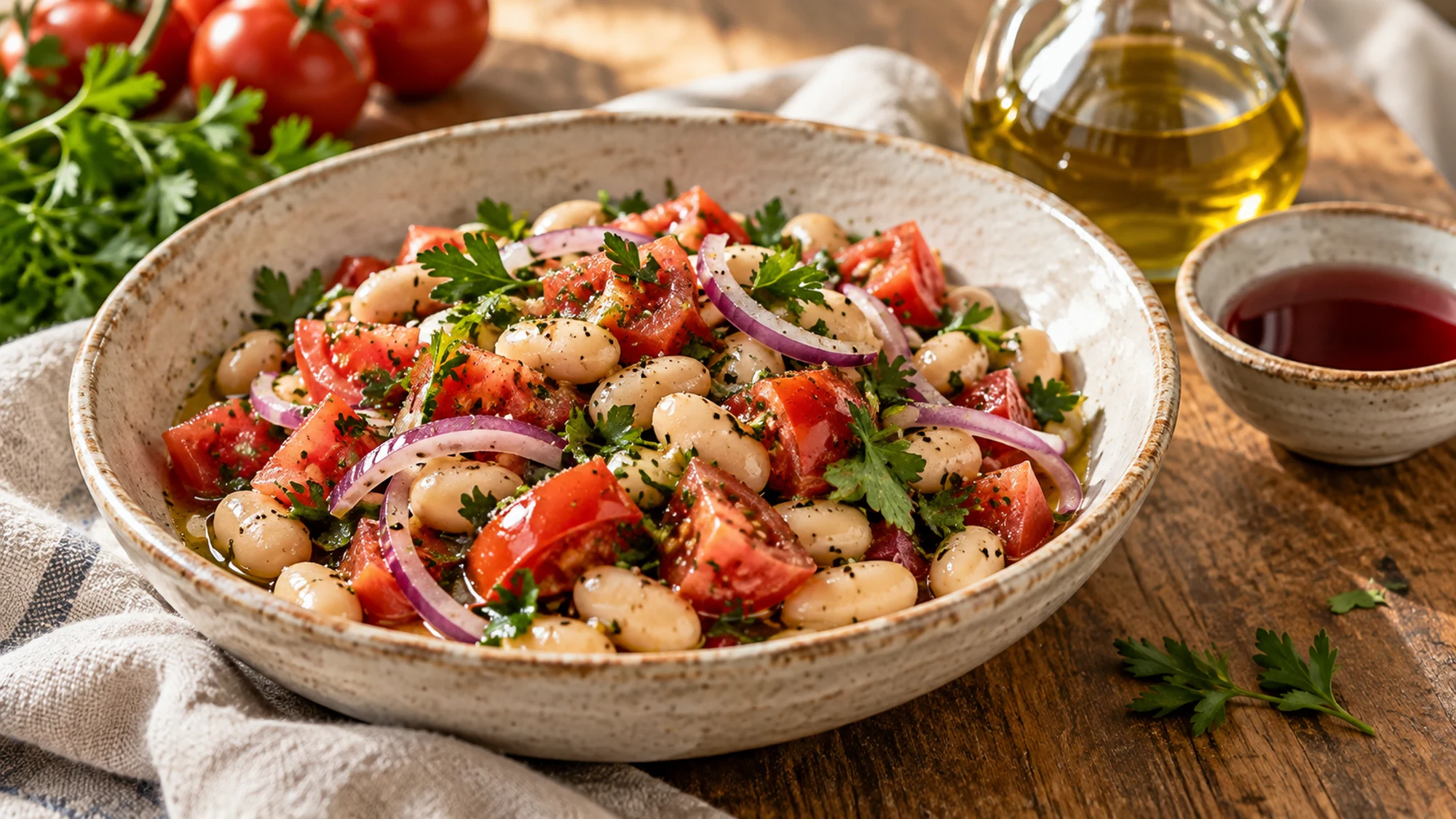
Red wine vinegar fits leafy salads, bean salads, sauces and marinades; these are also uses listed by producer Pompeian. It is especially handy where creamy beans, olive oil or rich roasted vegetables could use a sharper contrast.
Taste the food first, then add a little and taste again. For a dressing, assess it on a lettuce leaf or spoonful of beans rather than only by itself: the food changes how sharp the mixture seems. I prefer that small reality check to chasing a perfect dressing ratio.
- Toss cooked beans with vinegar, olive oil and herbs for a brighter side dish.
- Use a little in a pan sauce when the finished flavor needs acidity.
- Season roasted vegetables after cooking, adding gradually rather than soaking them.
- Keep raw-meat marinades separate from ready-to-eat dressings; vinegar is not a substitute for safe cooking.
Use vinegar to balance a dish, not overpower it. You can add another splash; removing one is much harder.
Choose a Substitute for the Dish
For ordinary cooking, choose according to flavor and color rather than searching for a universal replacement. Start conservatively and adjust. These are seasoning options for food you will serve normally—not instructions for shelf-stable pickles or other canned foods.
| Alternative | Likely difference | Useful context |
|---|---|---|
| White wine vinegar | Lighter color and a different wine character | Dressings and pale sauces |
| Sherry vinegar | A deeper, nutty-tasting character | Bean salads and roasted vegetables |
| Apple cider vinegar | Apple-like fruitiness | Everyday dressings |
| Balsamic vinegar | Often sweeter, darker and sometimes thicker | Dishes that welcome sweetness |
| Lemon juice | Citrus flavor rather than wine flavor | Fresh salads and finishing touches |
Do not add sugar automatically when substituting. Taste first, especially when using a sweeter balsamic.
Store the Bottle—and Respect Canning Rules
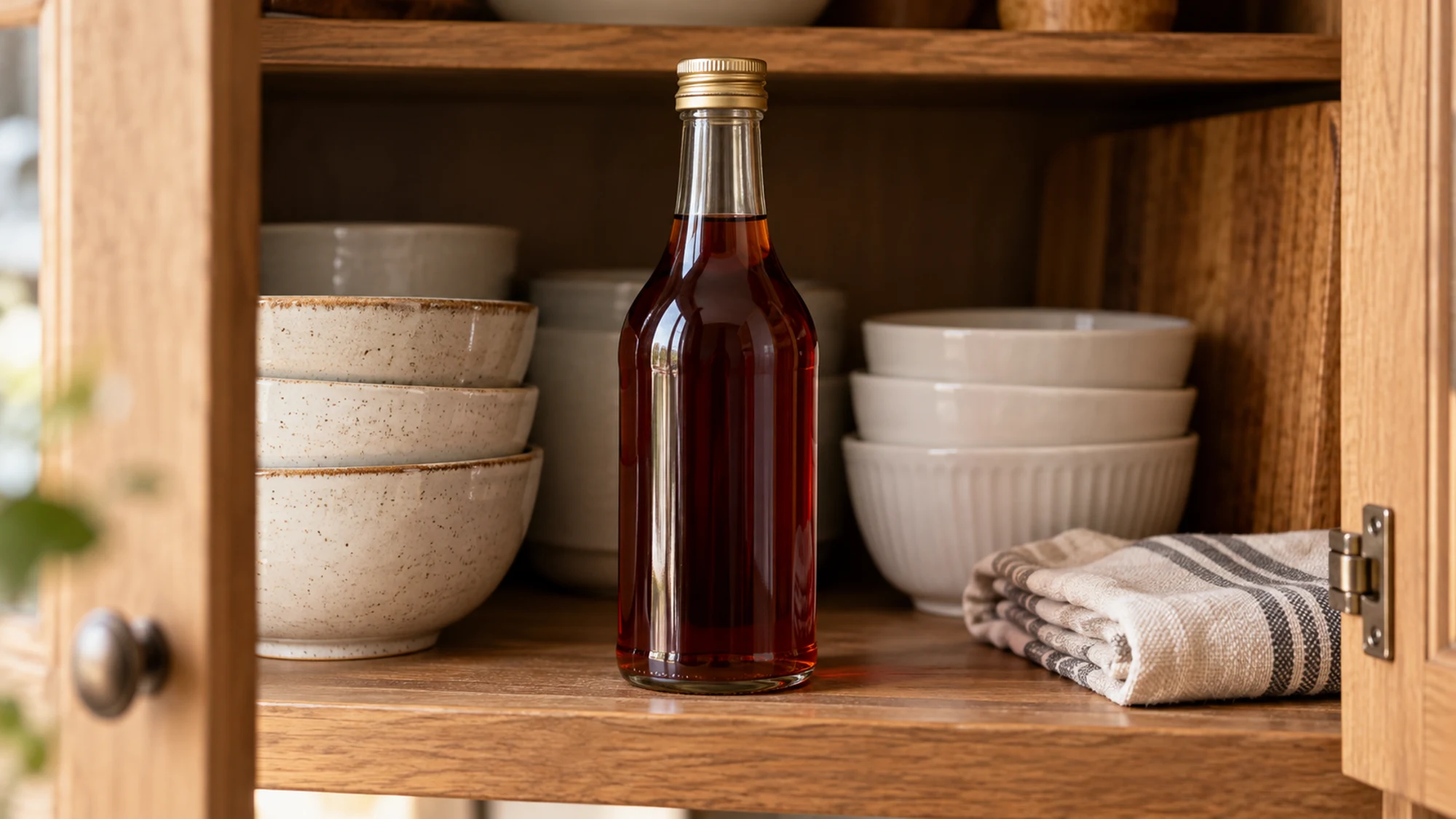
Plain vinegar is a durable pantry ingredient. Kansas State Extension recommends cool, dry, dark storage and notes that ordinary vinegar does not require refrigeration. Keep the cap closed and follow any product-specific instructions. Storage guidance for the plain bottle does not automatically apply after adding fresh herbs, garlic or other ingredients.
Some sediment, cloudiness or color changes can develop in vinegar without indicating spoilage, but do not assume every unfamiliar growth is harmless. If the bottle may be contaminated or shows mold, discard it rather than taste-testing. Flavor can change even when the vinegar remains usable.
- For home canning, use a current tested recipe from an authoritative preservation source.
- The National Center for Home Food Preservation recommends commercial white distilled or cider vinegar at 5% acidity for its general pickling guidance. Follow the particular recipe’s requirements.
- Do not reduce the vinegar, change the food-to-liquid proportions or substitute homemade vinegar of unknown acidity.
A salad dressing is adjusted for taste. A canning recipe is designed for safety. Keep those two decisions separate.
Bottom Line
Red wine vinegar earns its place in the pantry by making everyday food taste brighter. Choose a bottle you enjoy, season in small additions and store it capped away from heat and light. Swap for flavor when cooking—but never transfer casual substitution advice to a tested canning recipe.
Chef Amanda Freitag demonstrates red wine vinaigrette in the video below. It is an everyday dressing demonstration, not a food-preservation method.
Sources
- NC State Extension: Vinegar making and fermentation
- Pompeian: Red wine vinegar uses
- Kansas State Extension: Vinegar and its shelf life
- National Center for Home Food Preservation: General information on pickling

Hi, I’m Emily Pocker! I share recipes and food guides here at Recipes360 to help you find everyday meal inspiration and feel more confident in the kitchen. My goal is to make cooking approachable, enjoyable, and full of flavor.