
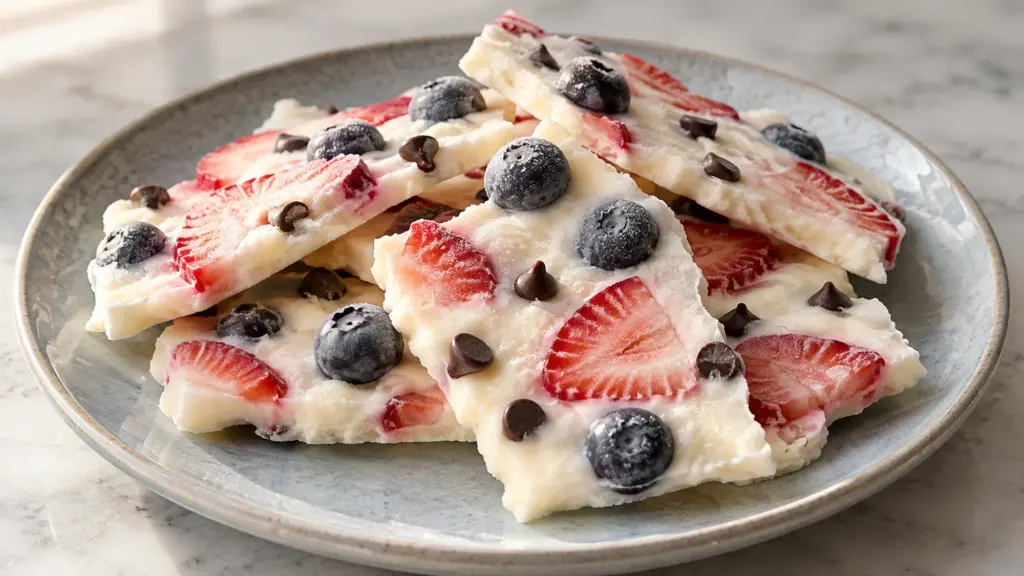
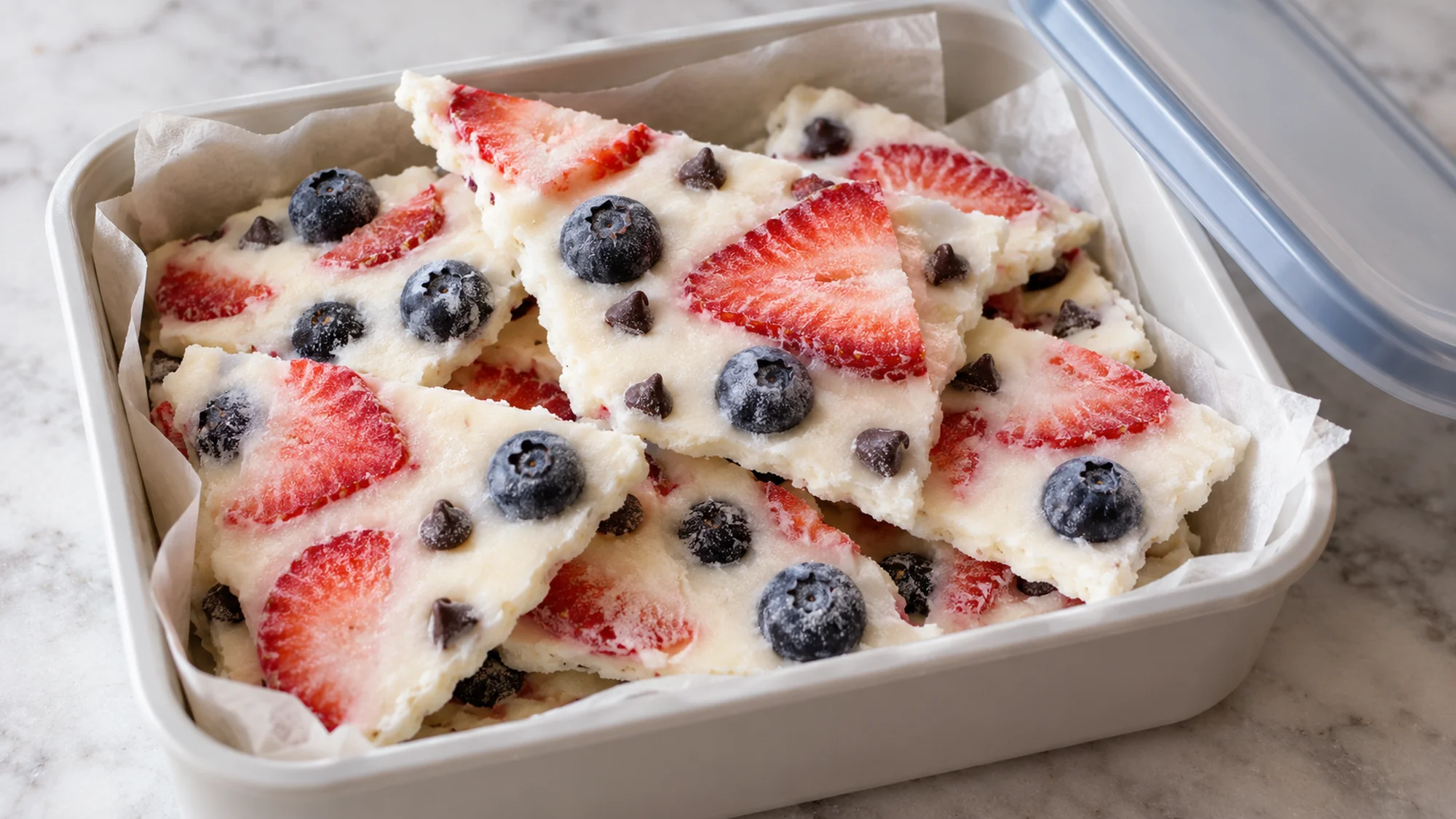
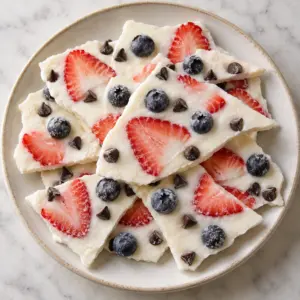
A tub of Greek yogurt becomes a different kind of snack when it is spread thinly and frozen with fruit on top. This frozen yogurt bark uses maple syrup and vanilla in the base, with strawberry slices, blueberries and a measured scattering of small dark chocolate chips.
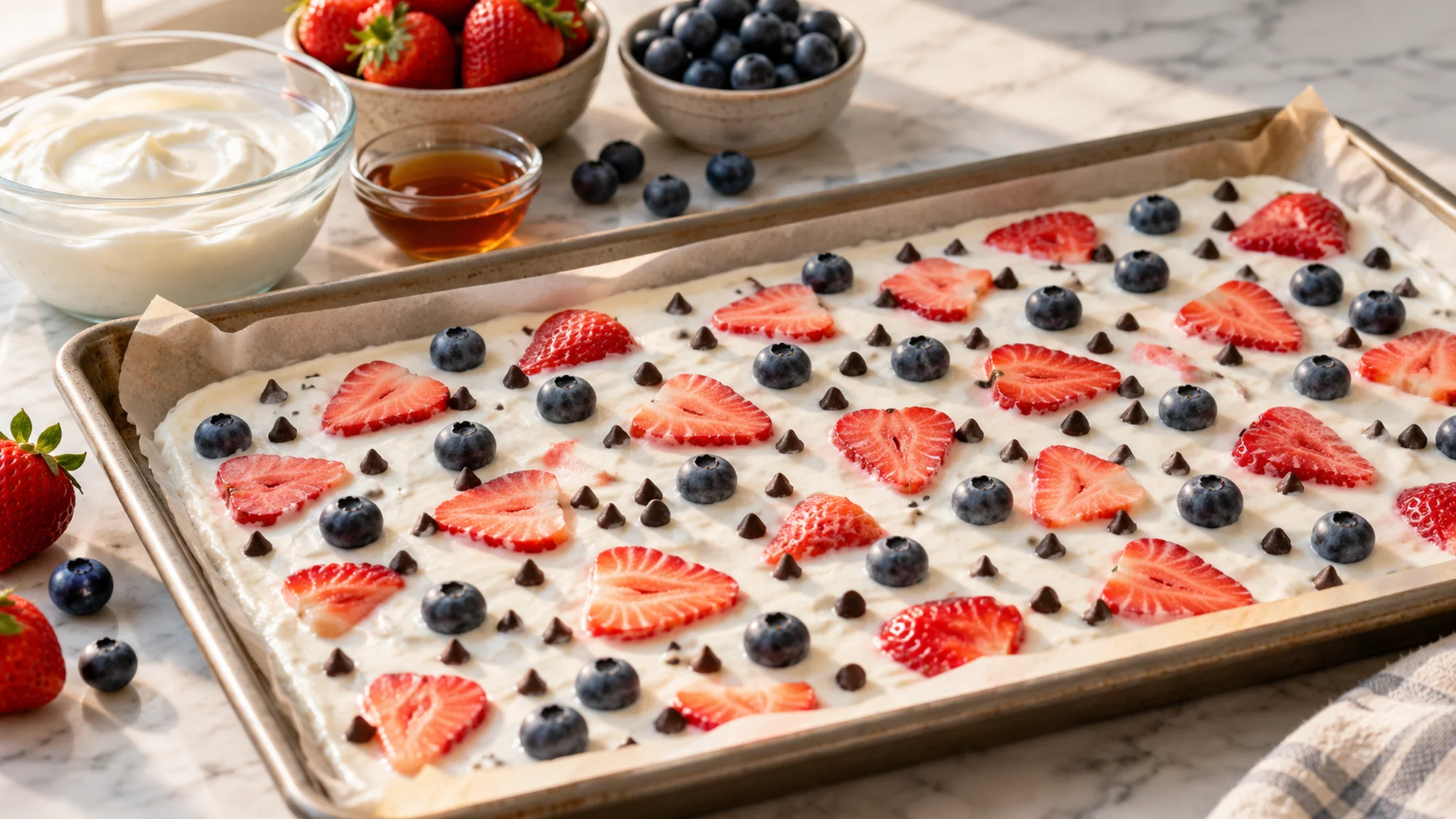
Spread the yogurt evenly, dry the berries thoroughly and freeze the sheet solid before breaking it into thin pieces.
I would pay more attention to the thickness than to making perfectly shaped shards. A thick frozen slab is awkward to bite, while a thin layer gives you the crisp edge and quick melt that make bark enjoyable. The freezer does the waiting; the active preparation is mostly stirring and spreading.
Serving frozen yogurt bark before it softens
Bring out a few pieces at a time and serve them straight from the freezer on a small chilled plate. They soften quickly in a warm room, which makes this better as a snack eaten promptly than a platter left on a buffet. If the first bite feels too hard, give a piece a brief moment on the plate.
Break the sheet into roughly twelve pieces for the stated estimate, or weigh the whole frozen batch and divide it into twelve similar portions. Irregular shapes are part of the appeal, but a much larger shard is also a larger serving. For a different format with a chocolate coating, chocolate strawberry yogurt clusters use frozen dollops rather than a flat sheet.
| Where it is | What to expect | Best approach |
|---|---|---|
| Freezer | Firm pieces that snap | Separate layers with parchment |
| Plate | Edges begin softening | Serve a few pieces at once |
| Lunch bag without cooling | Soft yogurt rather than crisp bark | Choose a chilled yogurt container instead |
Keep the main batch frozen and serve small rounds; a thin frozen snack has little patience for a warm table.
Yogurt swaps, fruit choices and thickness
Thick Greek yogurt holds the fruit in place more easily than a runny yogurt. The two-percent version here balances a little creaminess with a firm frozen bite. Full-fat Greek yogurt can taste richer; nonfat or thin conventional yogurt can feel icier. None of these substitutions should be described as having exactly the same texture.
Wash and dry the berries before measuring and slicing. Strawberry slices need to be thin enough to bite with the yogurt, and large blueberries can be halved. A puddle of juice around the fruit freezes into a separate hard patch, so draining thawed frozen fruit is particularly important.
- Different fruit: try small pieces of ripe peach or raspberries in place of the same weight of berries. Avoid thick chunks that rise far above the yogurt.
- Sweetness: taste the yogurt mixture before spreading it. Maple syrup is still added sugar; more makes the bark sweeter and changes the estimate.
- Plain chocolate: use tiny chips or finely chopped dark chocolate. A heavy coating is a different dessert and can overwhelm the thin yogurt layer.
- Tray size: spread the base into the measured rectangle rather than filling a smaller dish. I would use two smaller lined trays if the larger one cannot sit level in the freezer.
Small fruit pieces and an even yogurt layer matter more than a decorative pattern.
Health benefits and freezer habits
Greek yogurt provides protein, and berries bring fruit into a snack made mostly from dairy. The USDA’s dairy tips include plain yogurt with fruit as one practical option. That does not make every topping combination nutritionally identical: the quantity of syrup, chocolate and yogurt still matters.
The card estimates one twelfth of the whole batch, including every measured topping. Using a flavored sweetened yogurt instead of the plain version changes the added sugar and energy. Contains milk; check chocolate labels for any additional allergens, and choose alternatives based on their actual labels rather than assuming all plant-based yogurts have the same protein.
- Clean produce: the FDA recommends rinsing fruit under running water before cutting. Use a clean board and clean hands.
- Freeze and pack: keep at 0°F (−18°C) in an airtight container, with parchment between layers. Plan to use within two weeks for a fresher texture.
- Handle perishable yogurt: follow FDA cold-storage guidance. Do not keep portions that have stood out beyond two hours, or one hour above 90°F (32°C).
Treat the base as perishable yogurt and the freezer as its storage place; the frozen shape does not change safe handling.
Bottom Line
Frozen yogurt bark needs a level tray, dry fruit and a thin, consistent base. Break it only after it is fully firm, then keep the pieces frozen until serving for a crisp edge and a creamy finish.
Frozen Yogurt Bark Recipe

Ingredients
- 600 g plain 2% Greek yogurt pasteurized, thick; keep refrigerated until needed
- 30 g pure maple syrup about 1 1/2 tablespoons
- 1 teaspoon vanilla extract 5 ml
- 120 g strawberries hulled and cut into thin slices, about 1/8 inch / 3 mm
- 75 g blueberries halve very large berries
- 25 g mini dark chocolate chips or finely chopped dark chocolate
Equipment
- Large rimmed baking sheet that fits level in the freezer
- Parchment paper
- Mixing bowl and spatula
- Kitchen scale
- Freezer-safe airtight container
Instructions
- Clear a level space in a freezer kept at 0°F (−18°C) or below. Line a large rimmed baking sheet with parchment. Rinse berries under running water, drain and dry thoroughly with a clean towel. Hull and slice strawberries thinly; halve very large blueberries.
- Stir Greek yogurt, maple syrup and vanilla until smooth. Spread on the parchment into a rectangle about 10 × 16 inches (25 × 40 cm), about 1/4 inch (6 mm) thick. Keep the thickness even rather than spreading very thin edges around a thick center. If the tray will not fit, divide the mixture between smaller lined trays while keeping the same layer thickness.
- Scatter strawberry slices, blueberries and chocolate chips evenly over the yogurt, leaving a little yogurt visible between toppings. Press them gently into the surface. Cover loosely without touching the yogurt and freeze at least 4 hours, until fully firm and brittle. Freezer temperature, layer thickness and fruit affect the time.
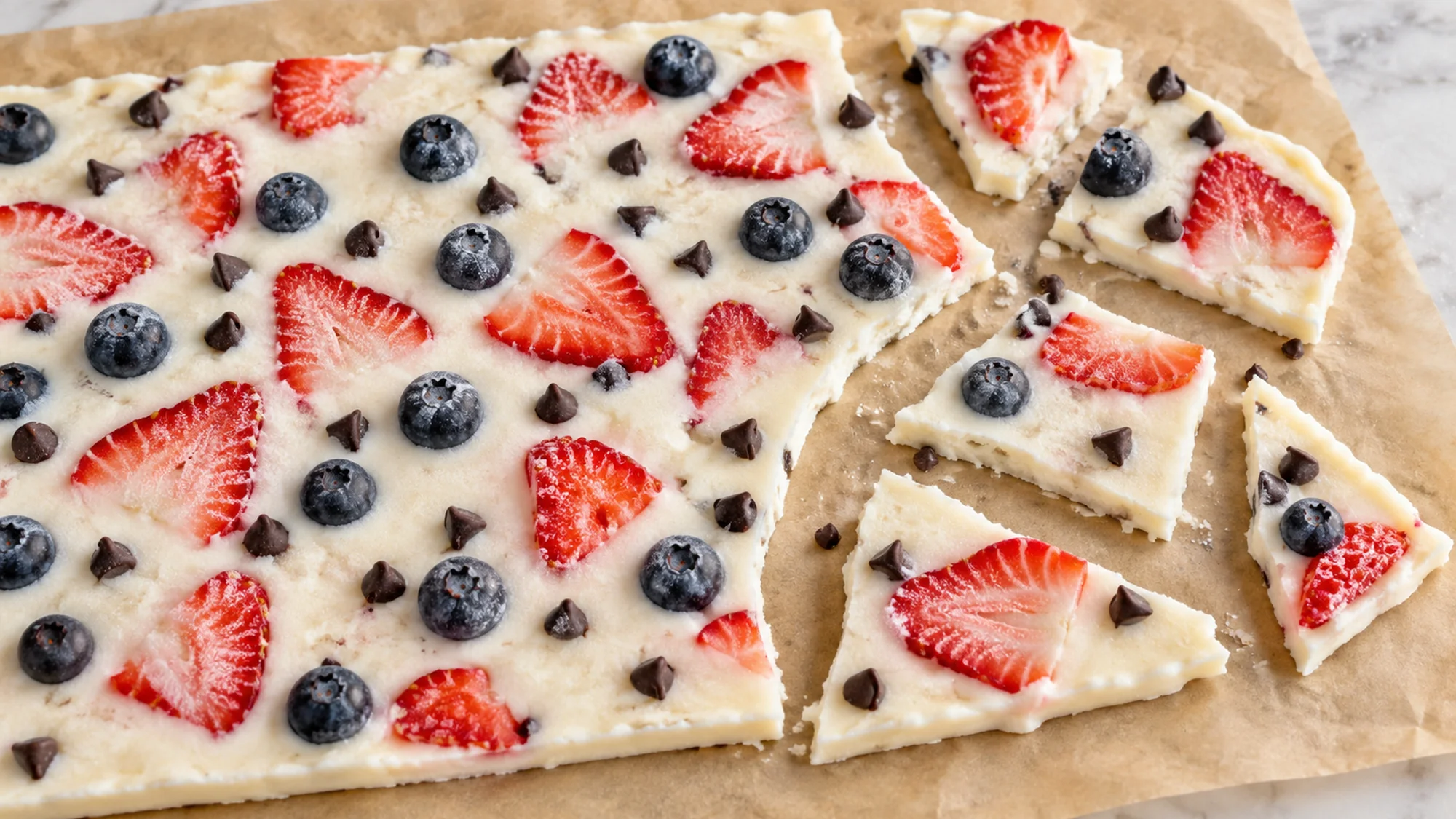
- Lift the frozen sheet by the parchment and break into about 12 similar-sized pieces. For more comparable portions, divide the whole frozen batch by weight into 12. Serve a few pieces straight from the freezer; let an individual piece stand briefly if too hard to bite. It softens quickly.
- Immediately pack the remaining pieces in an airtight freezer-safe container with parchment between layers. Keep at 0°F (−18°C) and plan to use within 2 weeks for a fresher texture. Take out only what you will eat. Do not save perishable portions left out more than 2 hours, or 1 hour above 90°F (32°C).
Nutrition
Video
Notes
Tried this recipe?
Let us know how it turned out!Hi, I’m Emily Pocker! I share recipes and food guides here at Recipes360 to help you find everyday meal inspiration and feel more confident in the kitchen. My goal is to make cooking approachable, enjoyable, and full of flavor.