
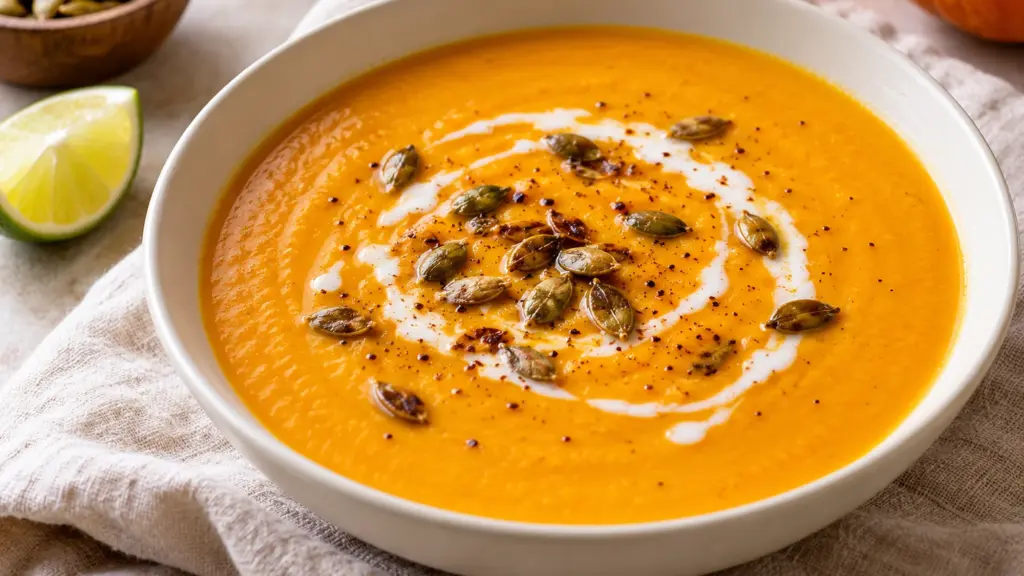
An orange bowl of soup can look inviting and still taste a little flat. Pumpkin coconut soup needs more than creaminess: fresh ginger brings warmth, lime adds a sharp finish, and a small amount of salt lets the pumpkin’s sweetness come through without turning dinner into dessert.

Simmer diced cooking pumpkin until completely tender, then blend it with unsweetened coconut milk. Add lime after blending and adjust the thickness gradually. The result should flow from a ladle, not sit in the bowl like mashed squash.
I prefer a small pie pumpkin here rather than a giant carving pumpkin. Weigh the flesh after removing the skin and seeds; the whole pumpkin’s weight includes plenty you will not eat. This version makes four generous bowls and uses vegetable broth, so there is no dairy or meat in the base.
Serving Suggestions for Pumpkin Coconut Soup
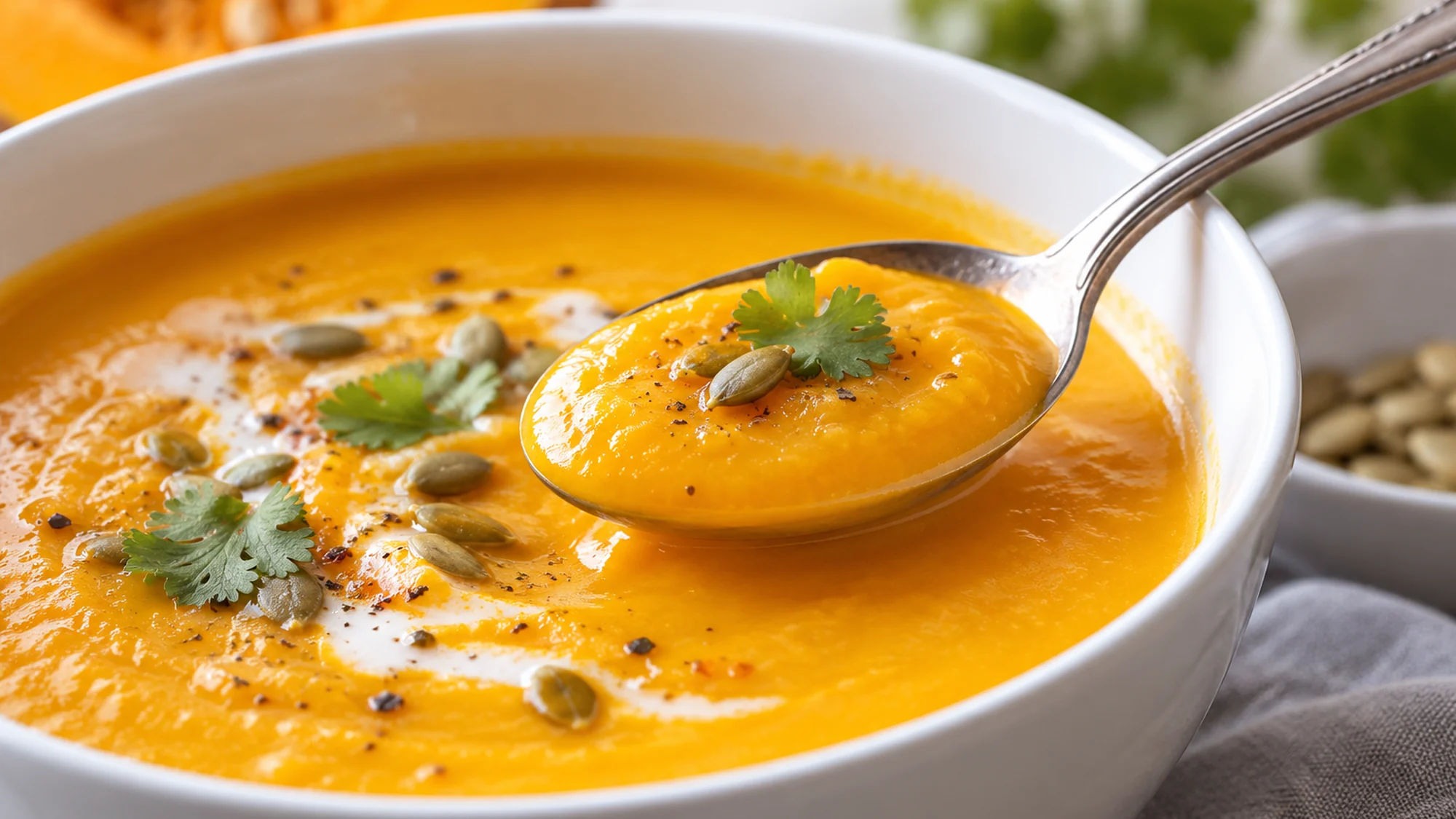
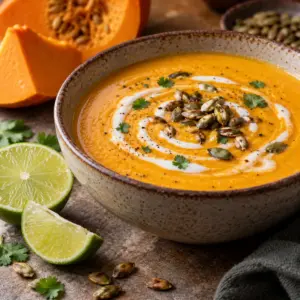
Serve the soup hot in warmed bowls, with a little reserved coconut milk swirled over the surface. Toasted pepitas provide a useful crunch against the silky base. I would choose those over a thick layer of cream: the soup already has enough richness, and contrast makes each spoonful more interesting.
A crunchy side keeps the meal from feeling one-note. Our carrot ribbon salad brings ginger and a fresh bite; a simple cucumber salad or toasted bread also fits. For a more substantial meal, serve cooked beans or an egg alongside rather than expecting this vegetable soup to supply much protein.
Let everyone add chile separately. Fresh ginger gives aromatic warmth, but it should not disguise the pumpkin. A few cilantro leaves are optional; if they are not your thing, leave them off without changing the soup.
A creamy soup benefits from something crisp and something bright. Keep the toppings small, and taste the lime in the bowl before adding another squeeze to the whole pot.
Variations and Substitutions
Use unsweetened canned coconut milk, not a sweetened cocktail ingredient. Our cream of coconut guide explains why those similar names matter. Shake or stir the can well so its separated cream and liquid are evenly mixed before measuring.
The most useful changes affect richness and seasoning, not the basic cooking method. The table below gives practical expectations rather than pretending every substitute produces an identical bowl.
| Change | What changes |
|---|---|
| Light coconut milk | A thinner, less rich soup; add extra broth only after blending. |
| Butternut squash instead of pumpkin | A similar smooth texture with a slightly different sweetness; cook until tender. |
| A pinch of chile flakes | More heat without changing the main texture. |
| A splash of water after reheating | Loosens soup that has thickened while chilled. |
Fresh pumpkin varies in moisture. Start with the measured broth, keep the pot partly covered, and add extra liquid only when needed. If the soup is watery, simmer it gently uncovered before adding the lime. Do not compensate with a large dose of salt; reducing the liquid also concentrates the seasoning.
Choose substitutions for a clear reason. Less coconut fat means a lighter mouthfeel, while more broth means a looser bowl; those are different adjustments.
Health Benefits and Nutrition
Pumpkin contributes vegetables and some fiber, but coconut milk is the main source of fat in this recipe. Illinois Extension’s pumpkin overview describes its vitamin and mineral contribution. That does not make the finished soup low in saturated fat: full-fat coconut milk adds a substantial amount.
The card estimates roughly 260 calories per serving before garnishes, calculated from the stated ingredients. Coconut milk brands and broth sodium vary considerably, so treat the numbers as a guide rather than a laboratory result. Check package labels if you are managing an allergy or a specific dietary requirement.
Cool leftovers in shallow containers and refrigerate within two hours, or one hour in temperatures above 90°F. Keep the refrigerator at 40°F or below and use the soup within three to four days. Illinois Extension’s leftover guidance recommends reheating to at least 165°F; stir thoroughly, and bring reheated soup to a boil before serving.
Think of this as a rich vegetable soup, not a complete protein meal or a health treatment. Portion size, the coconut milk label and what you serve beside it matter.
Bottom Line
The best pumpkin coconut soup is smooth but still tastes of pumpkin. Give the cubes time to soften, blend off the heat with care, and finish with lime rather than extra sweetness. If you make it ahead, keep the garnishes separate and loosen each reheated portion only as much as it needs.
Pumpkin Coconut Soup Recipe

Ingredients
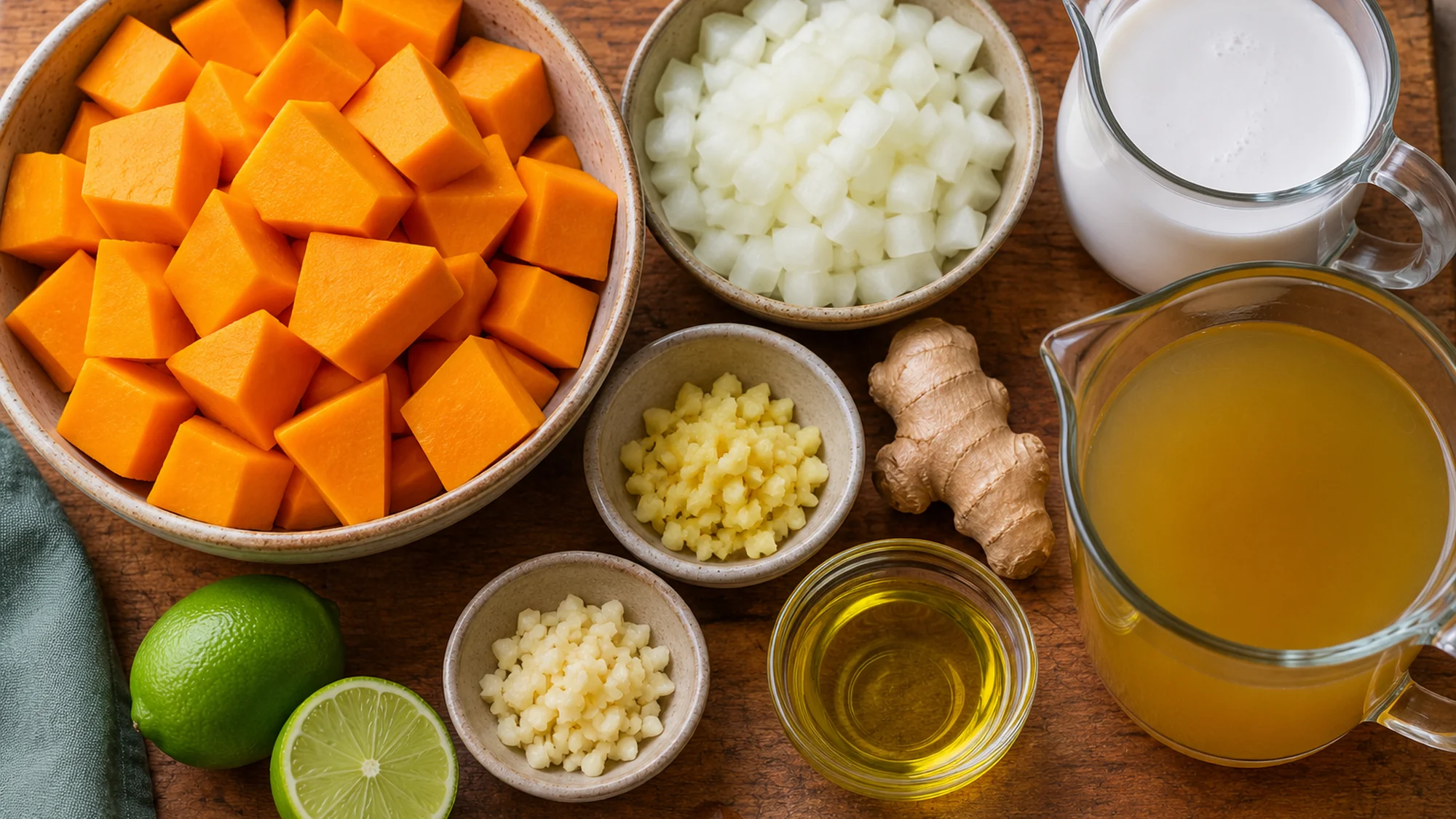
- 800 g peeled, seeded cooking pumpkin about 1 3/4 lb prepared flesh, cut into 3/4-inch cubes
- 1 tablespoon olive oil
- 1 medium yellow onion about 150 g, diced
- 2 cloves garlic about 6 g, minced
- 1 tablespoon fresh ginger about 15 g, finely grated
- 2 cups low-sodium vegetable broth about 500 ml; more hot water only if needed
- 400 g unsweetened full-fat canned coconut milk about one 13.5-fl-oz can, stirred smooth; reserve 1 tablespoon for serving if desired
- 1/2 teaspoon fine salt start with less if your broth is salty
- 1 tablespoon fresh lime juice plus extra to taste
- toasted pepitas
- cilantro leaves
- freshly ground black pepper
Equipment
- 1 Large saucepan with lid 3-quart or larger
- 1 Immersion blender Or a heat-safe countertop blender used in small batches
- 1 Kitchen scale For the prepared pumpkin flesh
Instructions
- Wash the pumpkin before cutting. Remove the seeds and skin, then weigh 800 g of flesh and cut it into 3/4-inch cubes. Dice the onion and prepare the garlic and ginger.
- Warm the olive oil in a large saucepan over medium heat. Add the onion and cook for 5–6 minutes, stirring, until softened but not browned. Add the garlic and ginger and stir for 30 seconds.
- Add the pumpkin, broth and salt. Bring to a simmer, partly cover and cook for 18–25 minutes, stirring occasionally, until a fork slides through the cubes without resistance. Add a splash of hot water if the pot becomes dry before the pumpkin softens.
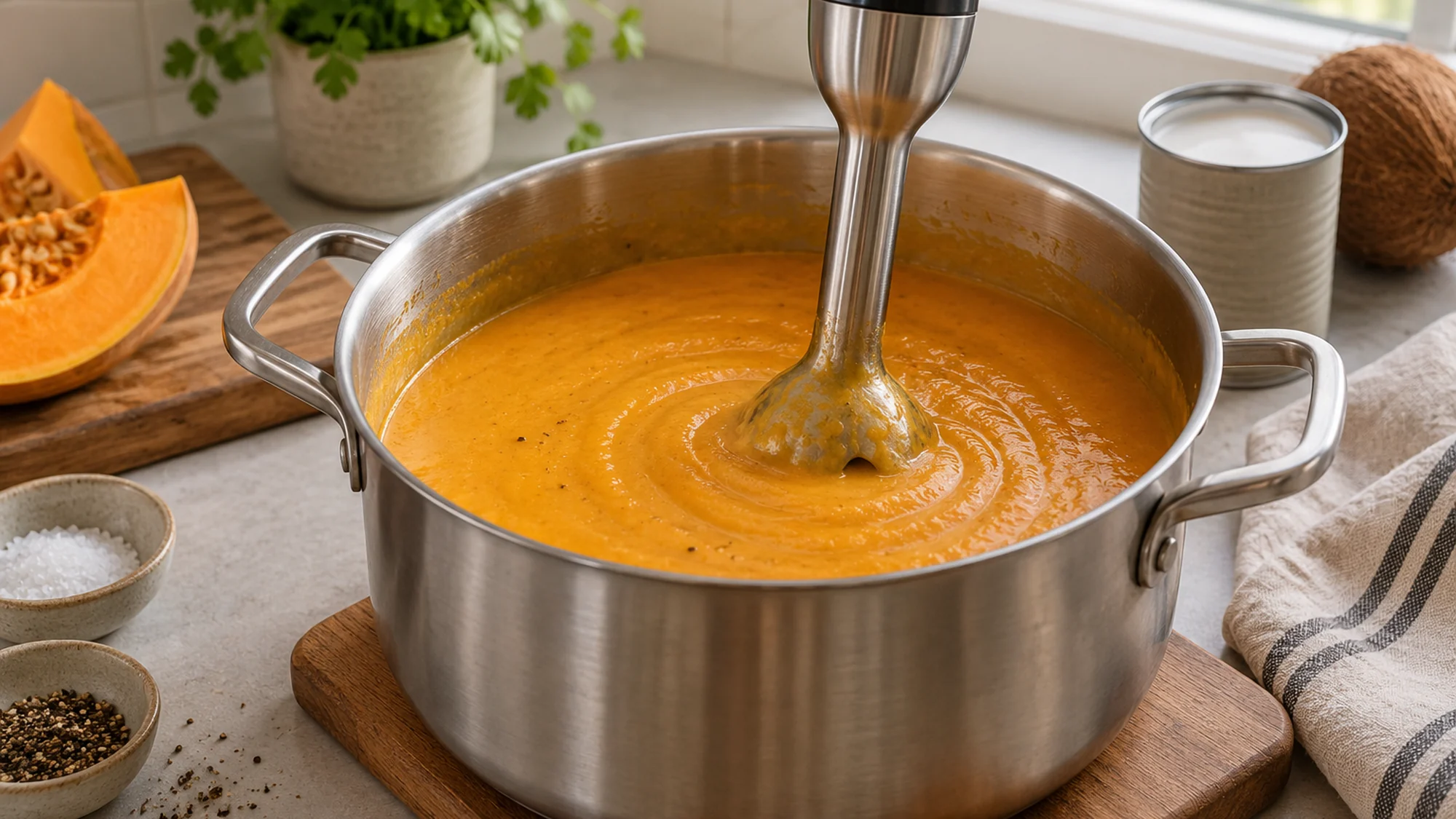
- Stir in the coconut milk, reserving a tablespoon for garnish if desired, and heat gently for 2 minutes. Remove the pot from the heat. Keep the immersion blender head submerged and blend until smooth. For a countertop blender, follow its hot-liquid instructions, vent the lid and blend small batches; never seal hot soup in a personal blender.
- Stir in the lime juice. Taste and adjust with a little more lime or salt if needed. Thin with hot water a tablespoon at a time until the soup flows easily from a ladle. Divide among four bowls and add any reserved coconut milk and optional garnishes.
Nutrition
Video
Notes
Tried this recipe?
Let us know how it turned out!Hi, I’m Emily Pocker! I share recipes and food guides here at Recipes360 to help you find everyday meal inspiration and feel more confident in the kitchen. My goal is to make cooking approachable, enjoyable, and full of flavor.