
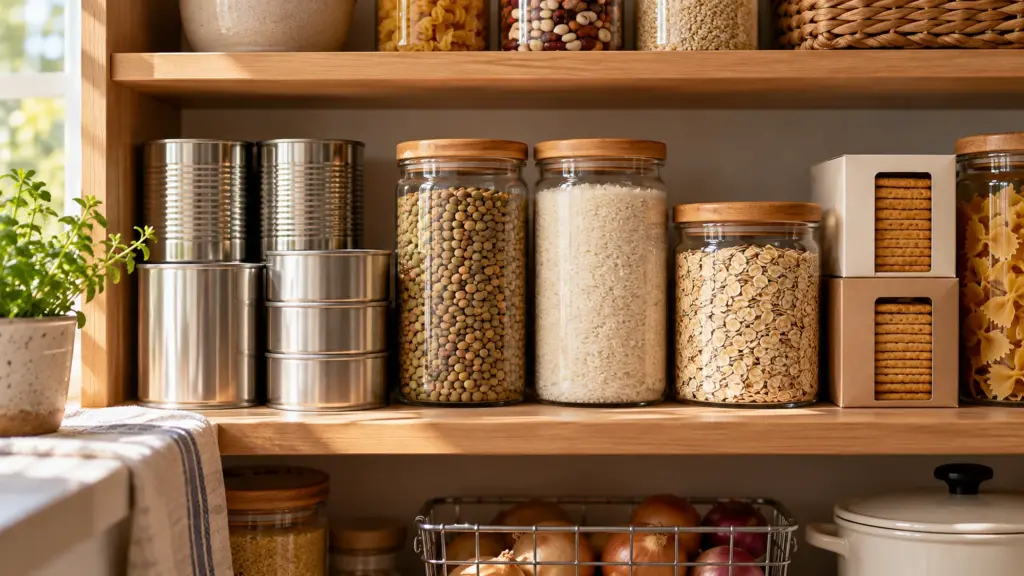
A cupboard full of cans can still leave dinner feeling surprisingly far away. The useful question is not just what lasts, but what you can turn into a meal. Non perishable food includes shelf-stable staples that do not need refrigeration before opening, provided you follow their storage instructions.
Build your pantry around food you enjoy, keep packages intact and properly stored, and check what changes after opening. Non perishable does not mean permanent.
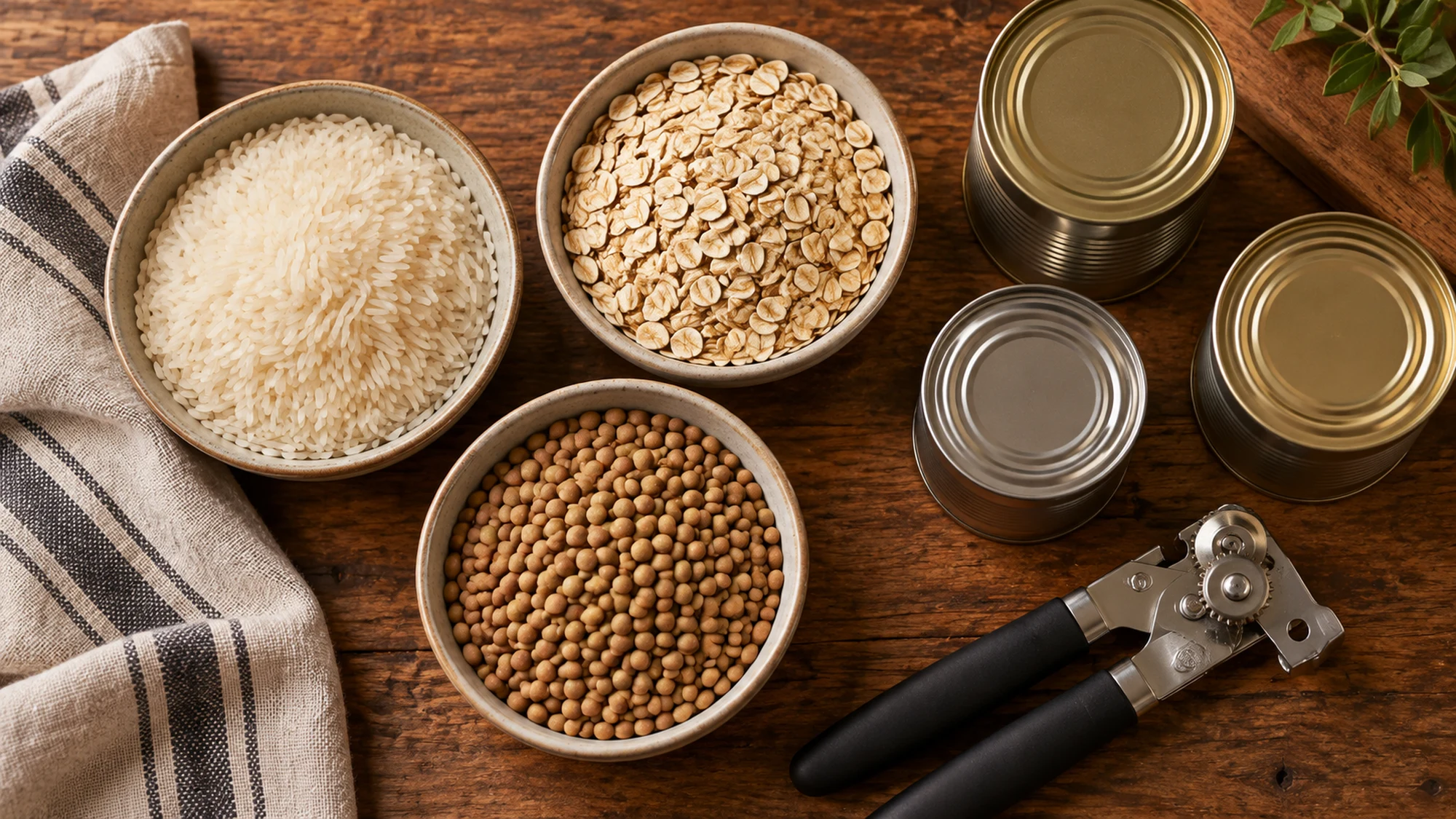
Which non perishable food belongs in your pantry?
The USDA definition of shelf-stable food covers products that can be safely kept at room temperature. Familiar examples include rice, pasta, flour, oils and many commercially canned foods. But some canned ham and seafood still require refrigeration; the container’s shape is not a safety instruction.
I’d organize a starter pantry by the meals it makes possible, rather than by how impressive the shelf looks. A few compatible ingredients are more useful than a collection of emergency purchases nobody wants to eat.
| Pantry choice | Useful role | Check before relying on it |
|---|---|---|
| Canned beans or lentils | Quick meal component | Ready-to-eat and storage directions |
| Dry rice or pasta | Base for a warm meal | Water, fuel and cooking time |
| Canned fish | Convenient protein option | Refrigeration wording and allergens |
| Canned vegetables or fruit | Produce when fresh choices run out | Serving size and added ingredients |
| Crackers or nut butter | No-cook snack or meal addition | Allergens and instructions after opening |
These are categories, not a compulsory shopping list. Choose options that fit your household’s needs, available equipment and usual appetite.
Buy for meals, not just for shelf life
Start with two or three combinations you would willingly eat on a busy evening: beans with rice, pasta with canned tomatoes, or crackers with canned fish. Our guide to canned salmon explains the differences between common pack styles when that is your protein choice.
- Check equipment: keep a working manual can opener if your cans need one; do not assume electricity will be available.
- Separate no-cook choices: dry beans and rice are useful pantry foods, but they are not ready-to-eat emergency meals.
- Account for the household: include familiar textures, allergies and any medically required diet rather than a generic survival list.
- Match package size to use: a smaller can may make more sense when you cannot safely store leftovers.
- Keep an inventory: write down what you have before buying more of the same ingredient.
- Keep water in the plan: drinking water and any water needed to prepare food are separate from the food itself. A cupboard of dry staples cannot solve a lack of safe water.
I prefer a pantry that rotates through normal meals. It makes forgotten purchases easier to spot, and it gives every can a job beyond occupying the back corner.
Keep storage conditions part of the plan
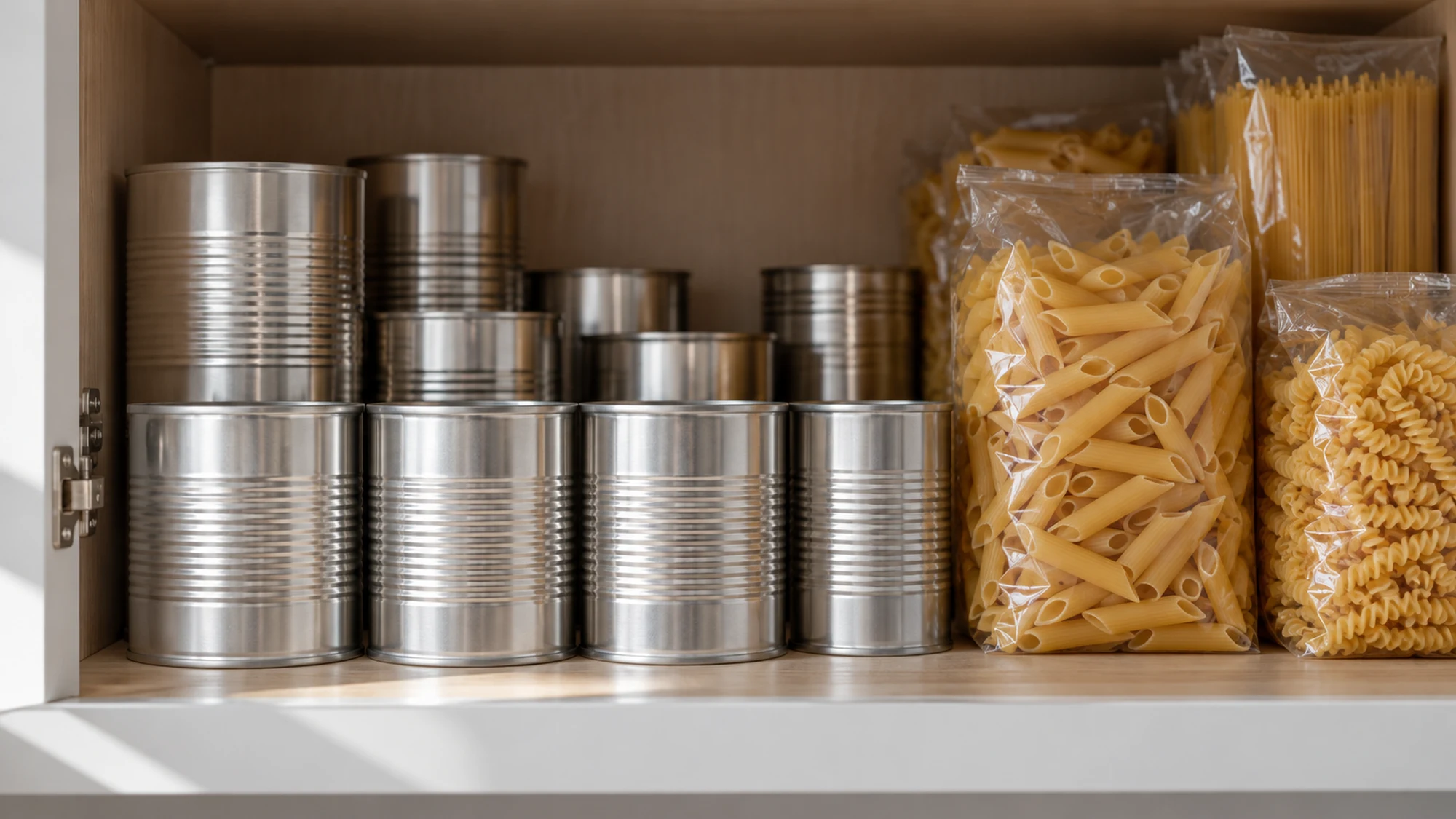
An unopened package still needs suitable storage. The USDA warns that canned foods do not last forever; heat and corrosion can damage their quality or integrity. A cool, dry cupboard is a better home than a hot car, damp basement or shelf beside the stove.
Package dates also need context. A best-if-used-by date generally describes quality, not a guarantee of safety. Do not use the date to excuse damage, poor storage or a product recall; infant formula has its own use-by requirements.
- Place older purchases where you can see and use them first.
- Keep original storage directions and product identification when reorganizing.
- Look for moisture, pests, broken seals and damaged packaging during routine checks.
- Avoid buying more than your storage space can keep clean, dry and accessible.
Opening the package changes the rules
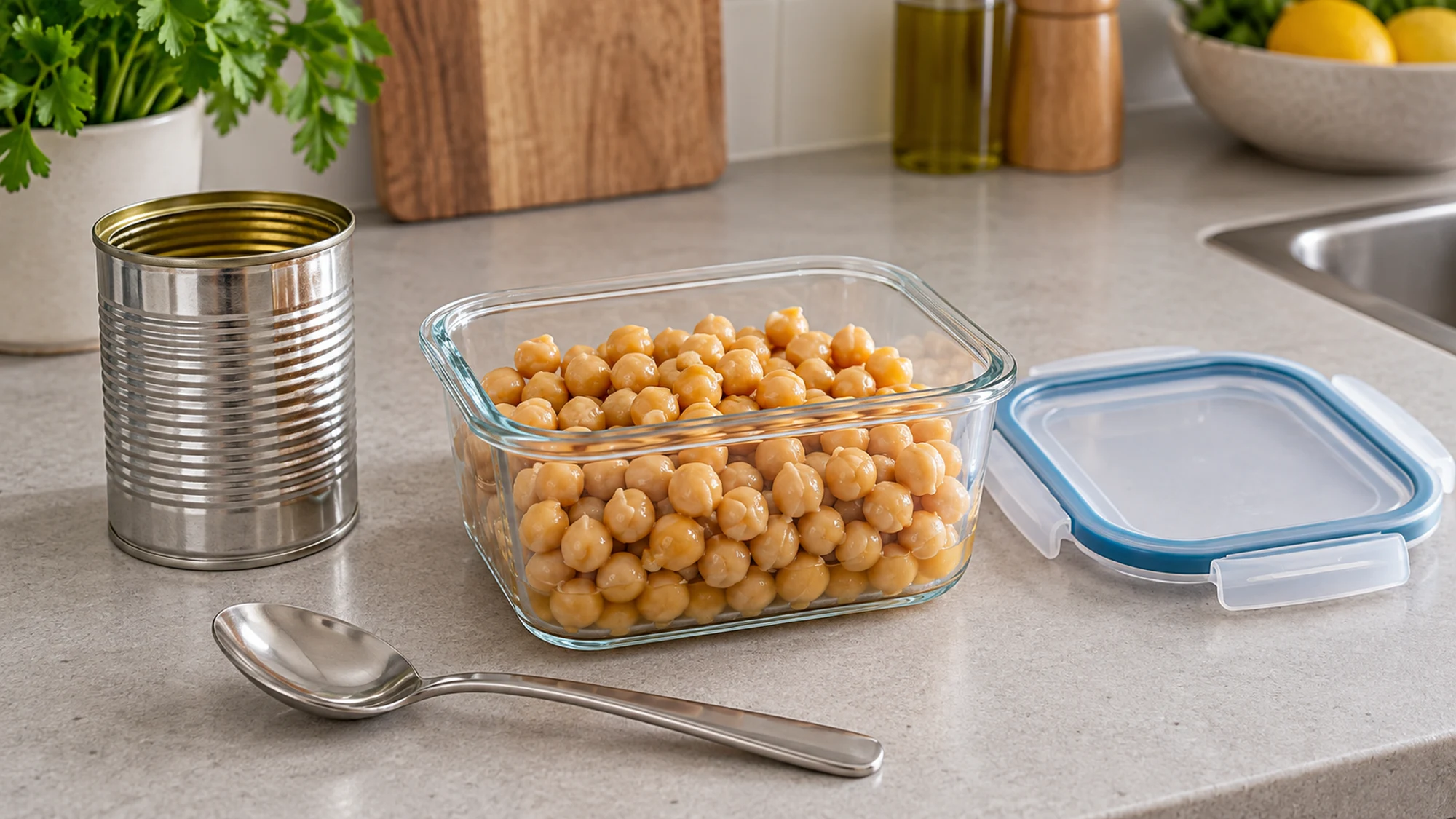
Once opened, many pantry foods become refrigerator foods. USDA guidance calls for refrigerating opened canned goods; a covered food-storage container can also preserve flavor better than leaving food in the opened can. Follow the specific product’s instructions rather than assigning every leftover the same timetable.
Do not taste food to investigate a suspect container. The USDA says not to use leaking, bulging or badly dented cans, cracked jars or jars with loose or bulging lids. An unusual odor or liquid spurting from a container is another warning, not an invitation to sample it.
- Read the after-opening instructions before you open a large package.
- Label refrigerated leftovers with the opening date.
- Use product-specific storage guidance, especially for milk, fish and meat.
- If safe refrigeration is unavailable, plan portions that will be eaten rather than stored.
Bottom Line
The best non perishable food is useful food, not a promise that nothing can ever spoil. Buy familiar staples, build simple meals around them and treat packaging, storage and opening instructions as part of the purchase.
I’d start small, use what is already on the shelf and replace what the household genuinely enjoys. A working pantry beats a forgotten stockpile.
Sources
- USDA: What shelf stable means
- USDA: Commercially canned foods and storage
- USDA: Opened canned goods
- USDA: Damaged cans

Hi, I’m Emily Pocker! I share recipes and food guides here at Recipes360 to help you find everyday meal inspiration and feel more confident in the kitchen. My goal is to make cooking approachable, enjoyable, and full of flavor.