
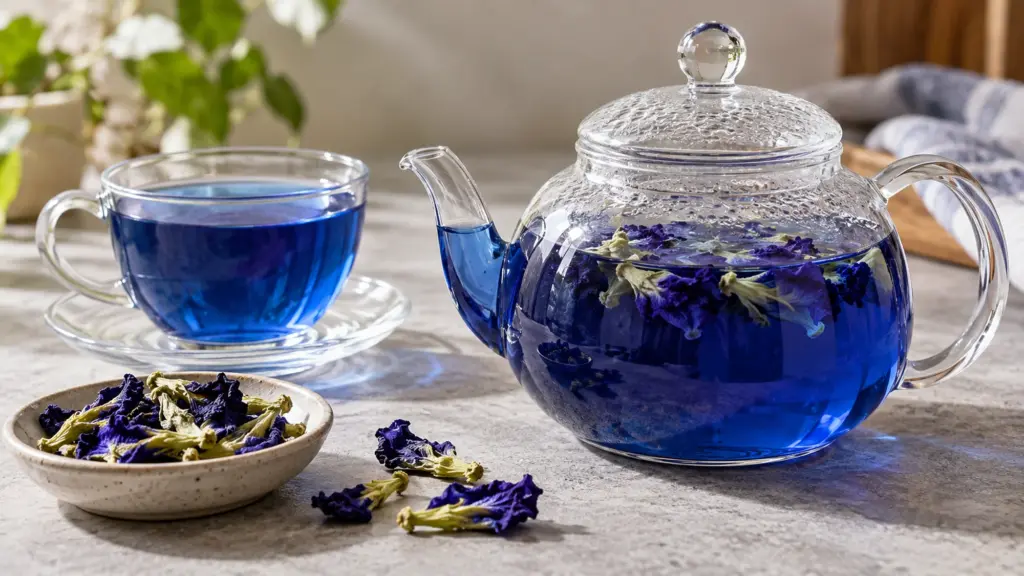
Butterfly pea tea is a blue herbal infusion made from the flowers of Clitoria ternatea. Plain flower tea contains no caffeine, and adding lemon can turn its blue color toward purple. Those are good reasons to find it interesting, but the color change is chemistry—not evidence that the drink detoxes your body or treats a disease.
Choose butterfly pea tea for its color and mild botanical flavor. Pure flower tea is caffeine-free; blends may contain caffeinated tea or other ingredients. Lemon changes the pigments’ color by changing acidity. Health claims need separate evidence, and a vivid blue cup is not a medical treatment.
What is butterfly pea tea like?
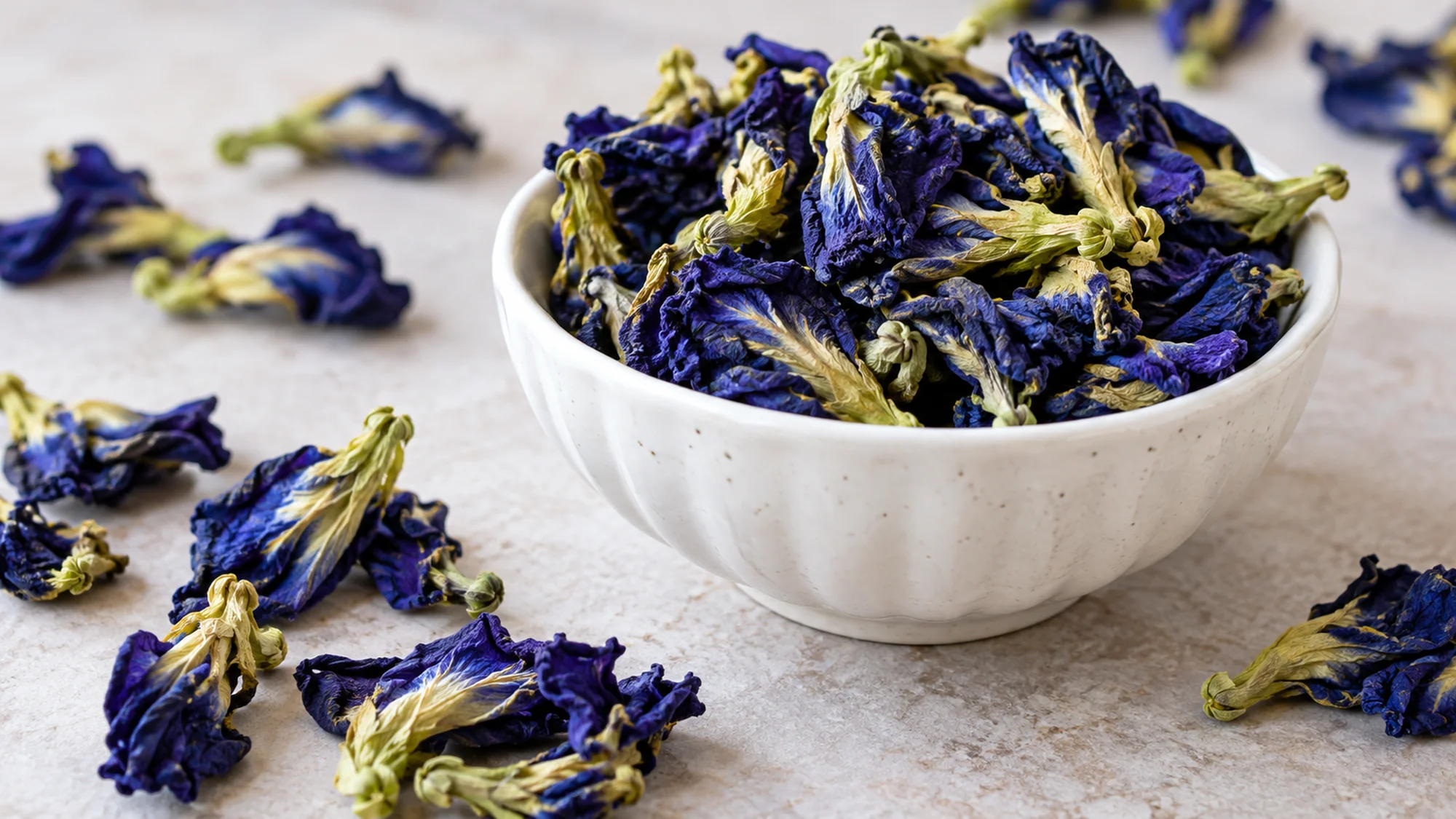
The flowers release blue pigments into water, creating a drink that looks much stronger than its flavor may suggest. Rishi’s single-ingredient flower tea is labeled caffeine-free and describes vegetal, pea-like notes. Treat a maker’s tasting notes as a starting point, since strength and blends change the experience.
This is an herbal infusion rather than a tea made only from Camellia sinensis leaves. A package can still combine the flowers with black or green tea, so “butterfly pea” on the front does not settle the caffeine question. Read the whole ingredient list.
Check whether you are buying dried flowers, a ready-to-drink beverage or a concentrated extract. They are different products. A sweetened bottled drink may taste nothing like a plain infusion, and a supplement’s directions should not be borrowed to decide how to prepare an ordinary cup.
Why lemon changes the color
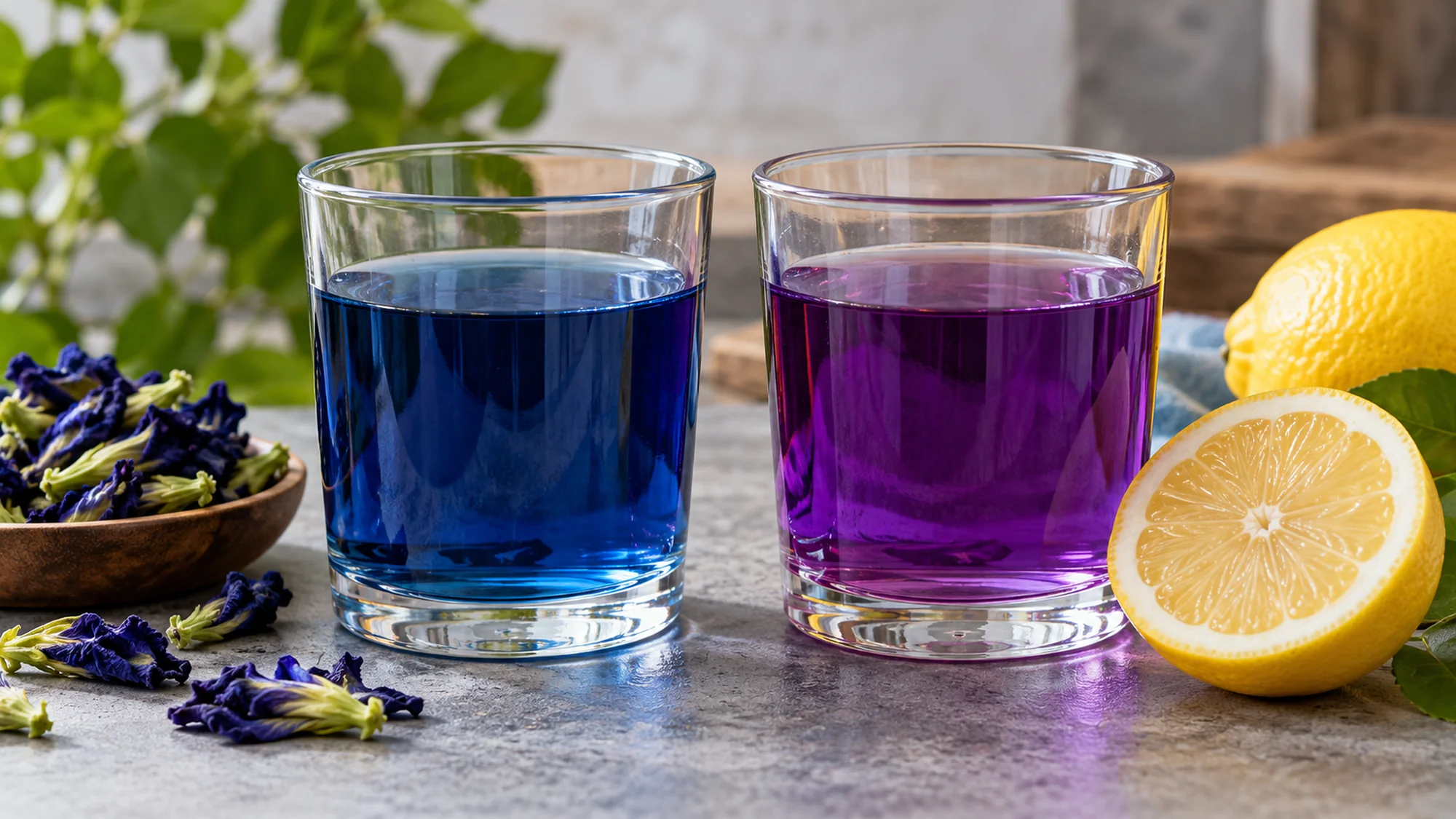
The flower pigments belong to the anthocyanin family. Changing the acidity changes the forms of these pigments and the colors you see. The American Chemical Society’s explanation uses butterfly pea tea to demonstrate this chemistry.
| What changes | What you may notice | What it does not establish |
|---|---|---|
| Adding lemon or lime | Blue can shift toward purple or pink | A detox effect or a health benefit |
| Using a weaker infusion or more ice | A paler-looking drink | Lower or higher medicinal potency |
| Adding another tea or herb | A different flavor and possibly caffeine | That every blend has the same ingredients |
| Adding milk or a plant drink | A cloudier appearance and changed taste | That the original drink had dairy |
The final shade depends on the infusion and its other ingredients, so do not expect every cup to match a photograph exactly. For drinks, use food ingredients only. The scientific color demonstration linked below includes nonfood chemicals; experimental mixtures are not beverages.
How to choose and enjoy it
Buy a clearly identified product intended for food use and follow its preparation directions. Food-grade dried flowers are a more useful starting point than unidentified garden blossoms. Keep the package information if you transfer the flowers to another container, especially when the blend contains several herbs.
Try the unsweetened infusion first so you can judge its flavor before adding anything. Lemon brings acidity as well as a color change. Milk, juice or sweeteners change the finished drink’s ingredients; a colorful glass does not tell you its sugar content or whether it contains allergens.
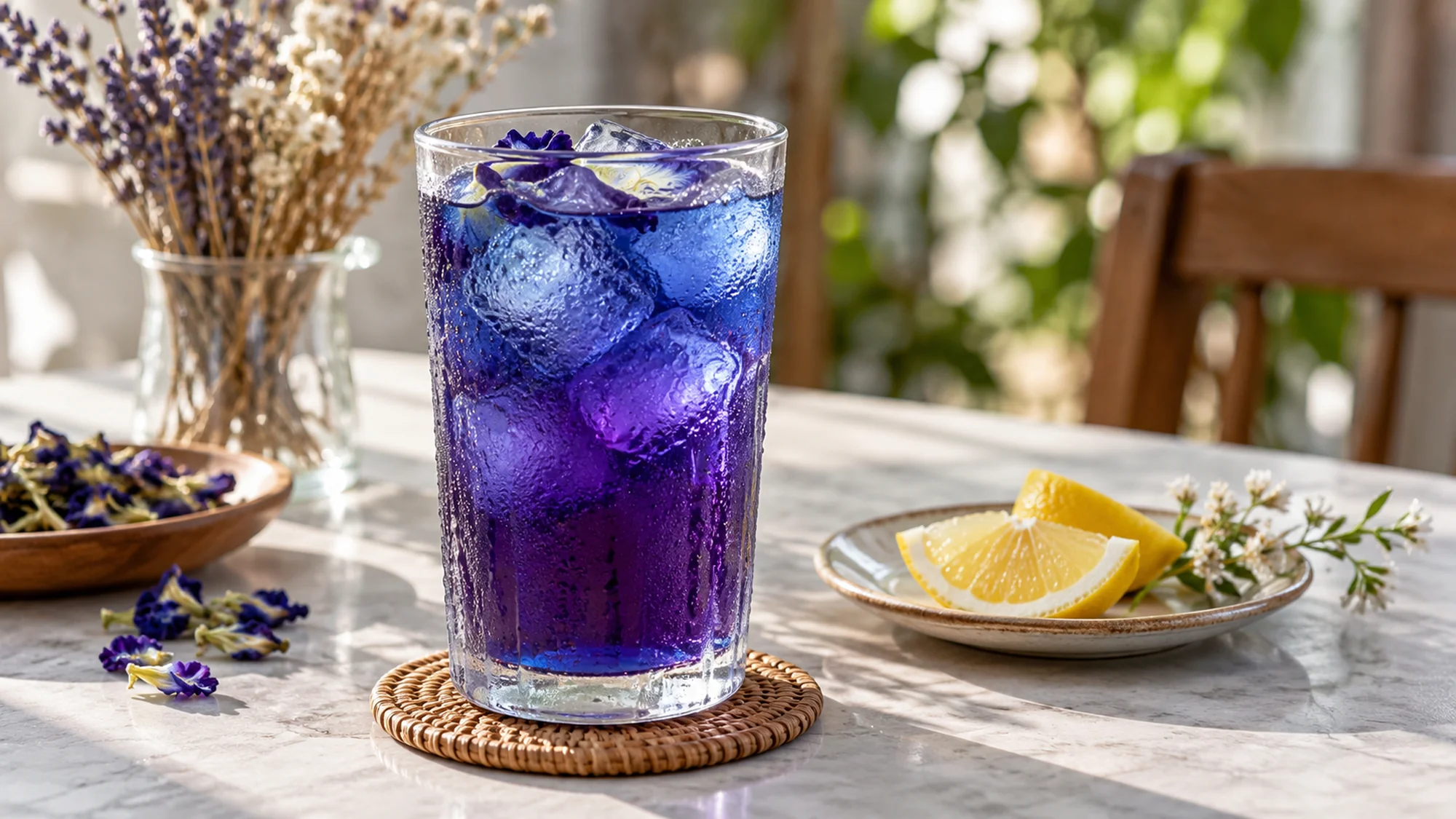
Store the dry product as its label directs, protecting it from moisture and keeping the container closed. For a prepared bottled drink, use the maker’s refrigeration and opening instructions. Freshly brewed tea and a commercially processed ready-to-drink product should not be assigned the same shelf life by guesswork.
What about benefits and safety claims?
A 2018 randomized crossover study examined flower-extract beverages in 15 healthy men over a short period, including drinks taken with sucrose. It measured blood glucose, insulin and antioxidant-related markers. That design does not establish long-term benefits, treatment for diabetes or an effect shared by every retail tea.
FDA lists butterfly pea flower extract as a permitted food color additive for specified uses and conditions. A color-additive listing is not FDA approval of disease claims, supplement doses or unlimited use of every preparation made from the plant.
Be especially cautious about concentrated products sold with wellness promises. NCCIH notes that supplements may differ from study products and can interact with medicines; many have not been tested in pregnancy or breastfeeding. Ask a clinician about an herbal supplement if you take medicines or have a relevant health condition, and do not replace prescribed treatment with tea.
Bottom Line
Butterfly pea tea offers a striking blue infusion and an interesting response to lemon. Check the ingredients for caffeine, sweeteners and other botanicals, and use a food-grade product as directed. Enjoy the drink for what it tastes and looks like; small short-term studies do not turn it into a cure.
Reactions, from the American Chemical Society, explains the color chemistry below. Its nonfood experiments are demonstrations only; do not drink the experimental mixtures.
Sources
- Rishi: Pure Butterfly Pea Flower Tea
- American Chemical Society: Color Chemistry
- Chusak and Colleagues: Short-Term Human Trial
- FDA: Color-Additive Listing
- NCCIH: Using Supplements Wisely

Hi, I’m Emily Pocker! I share recipes and food guides here at Recipes360 to help you find everyday meal inspiration and feel more confident in the kitchen. My goal is to make cooking approachable, enjoyable, and full of flavor.