
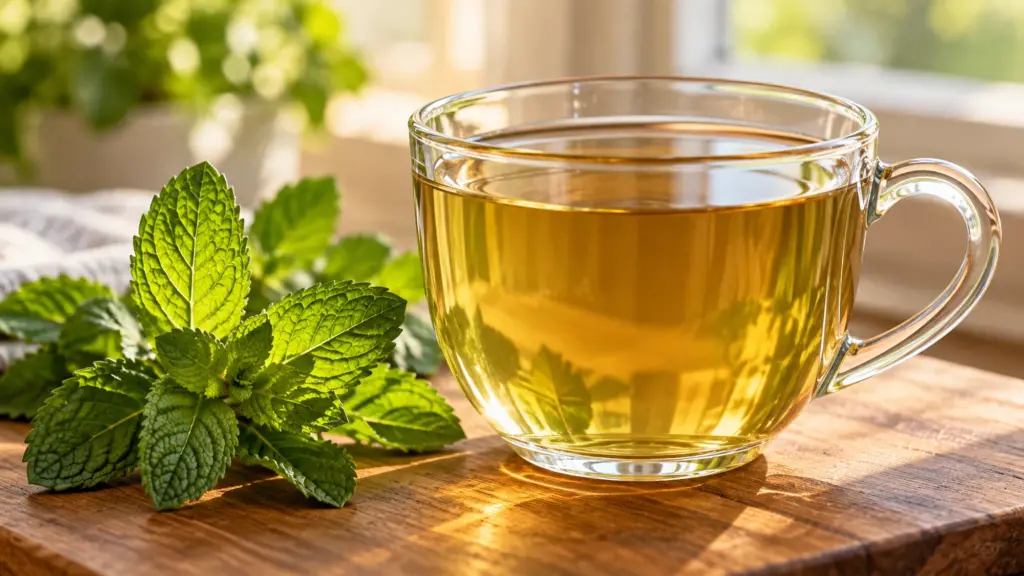
A box marked mint tea can promise a cooling peppermint cup, a gentler spearmint infusion or a blend that also contains green tea. Those are different drinks. Before deciding how to brew yours—or whether it contains caffeine—turn the packet over and read what is actually inside.
Mint tea made only from culinary mint leaves is a caffeine-free herbal infusion. Peppermint tastes more intensely cooling than spearmint. Use fresh or dried leaves, follow the blend’s brewing directions, and enjoy the flavor without expecting a cup to treat a health condition.
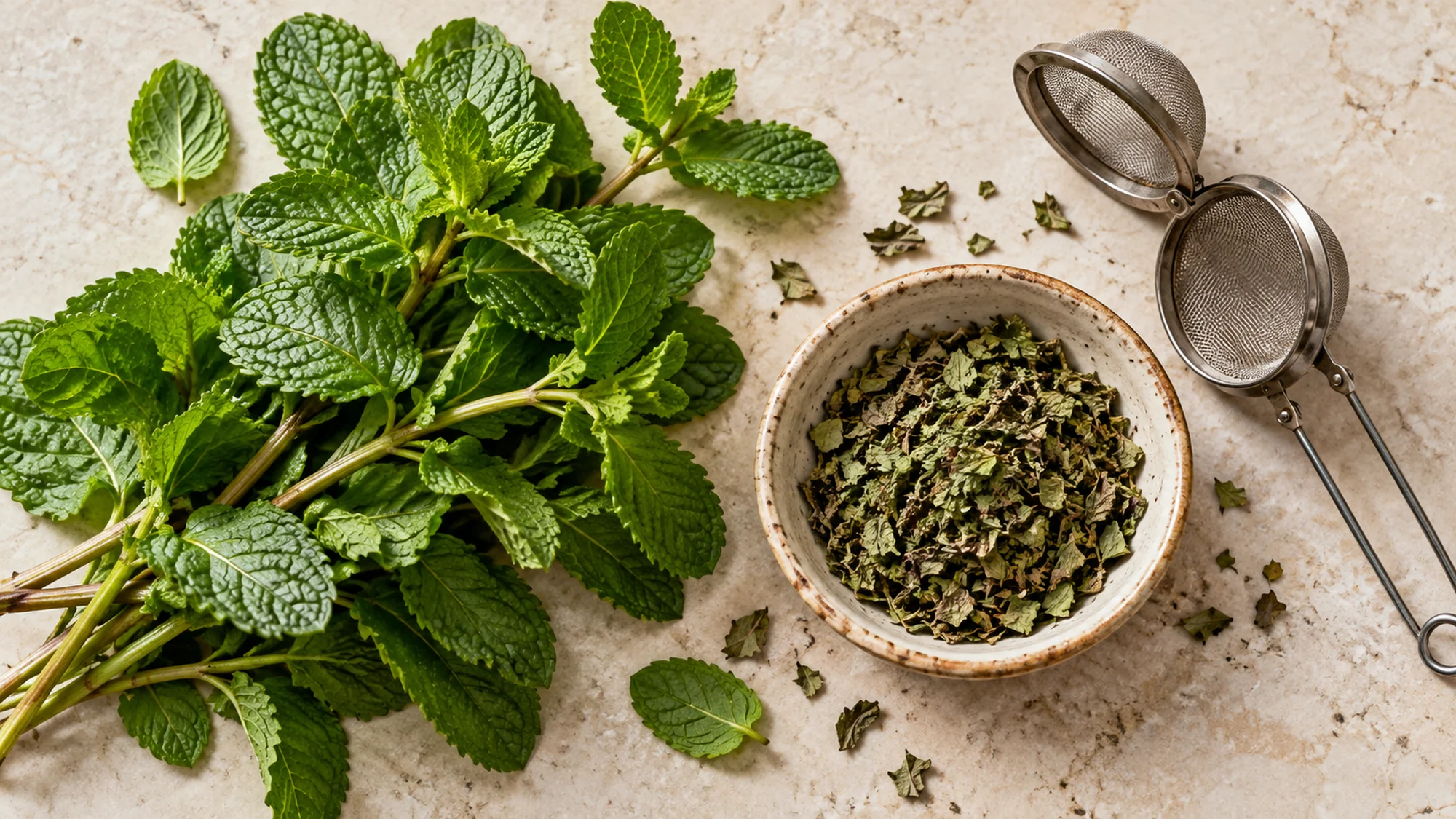
Which mint tea belongs in your cup?
Purdue Extension distinguishes sweet-tasting spearmint from peppermint, which contains more menthol and has a stronger flavor. Either can be a pleasant choice; “mint” on the front of a box does not tell you which experience to expect.
| Choice | Flavor or format | Check before buying |
|---|---|---|
| Peppermint | A more intense, cooling mint character | Whether it is pure leaf or a blend |
| Spearmint | A sweeter mint flavor | That the ingredient list names spearmint |
| Fresh culinary mint | Loose leaves you prepare yourself | Reliable plant identity and sound leaves |
| Mint with green or black tea | Mint plus true tea | Caffeine and the tea’s brewing directions |
I’d start with a small packet of a clearly named mint instead of a large assortment. Once you know whether you prefer gentle or brisk, choosing a blend becomes easier. Fresh leaves are enjoyable when you have them; dried leaves and tea bags are useful when convenience matters.
- Buy fresh mint with vibrant leaves rather than browned or wilted bunches.
- Use culinary mint from a reliable source, not unidentified garden leaves.
- Check every ingredient in flavored blends, especially when avoiding a particular food.
Does mint tea contain caffeine?
Plain mint infusion is different from tea made with Camellia sinensis. The Chicago Botanic Garden explains that black, green and oolong tea come from that naturally caffeinated plant. Adding mint does not remove their caffeine.
For a blend containing green tea, our green tea bags guide explains why the package’s water and steeping directions matter. A cooling taste is not a caffeine test, and the word “herbal” on a mixed product is not a substitute for reading its full label.
- Mint leaves alone: naturally caffeine-free.
- Mint plus green or black tea: may contain caffeine unless specifically decaffeinated.
- Evening choice: look for a clearly labeled caffeine-free product if that is important to you.
- Sweetness: check bottled versions separately; a plain infusion and a sweetened ready-to-drink tea are different purchases.
Brew for aroma, not a darker color
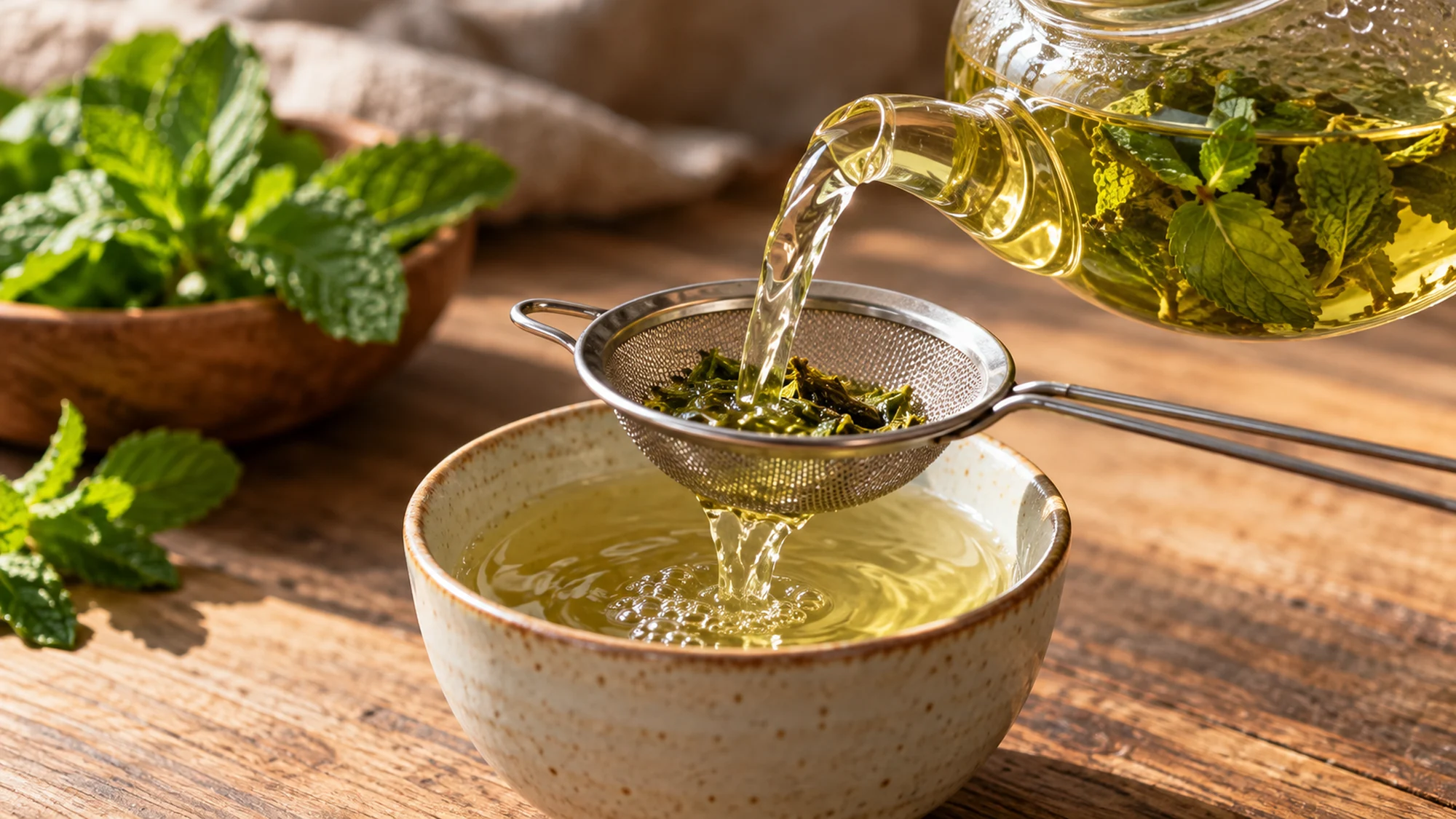
For purchased tea, start with its own directions. For loose garden herbs, Oregon State Extension recommends rinsing fresh leaves, steeping them in hot water and straining into a clean cup. Adjusting the amount of herb or the steeping time changes the strength.
- Use clean equipment and fresh drinking water.
- Rinse fresh mint under running water before preparing it.
- Put leaves in a roomy infuser or strain the finished drink; do not pack the infuser tightly.
- Let the drink cool enough to taste comfortably before judging the strength.
- Change one variable next time so you can tell what improved the cup.
The Chicago Botanic Garden’s brewing guidance suggests judging herbal tea by taste rather than color: pale green or amber can still be flavorful. I prefer that approach to leaving the leaves in indefinitely while waiting for a dark brew that mint may never provide.
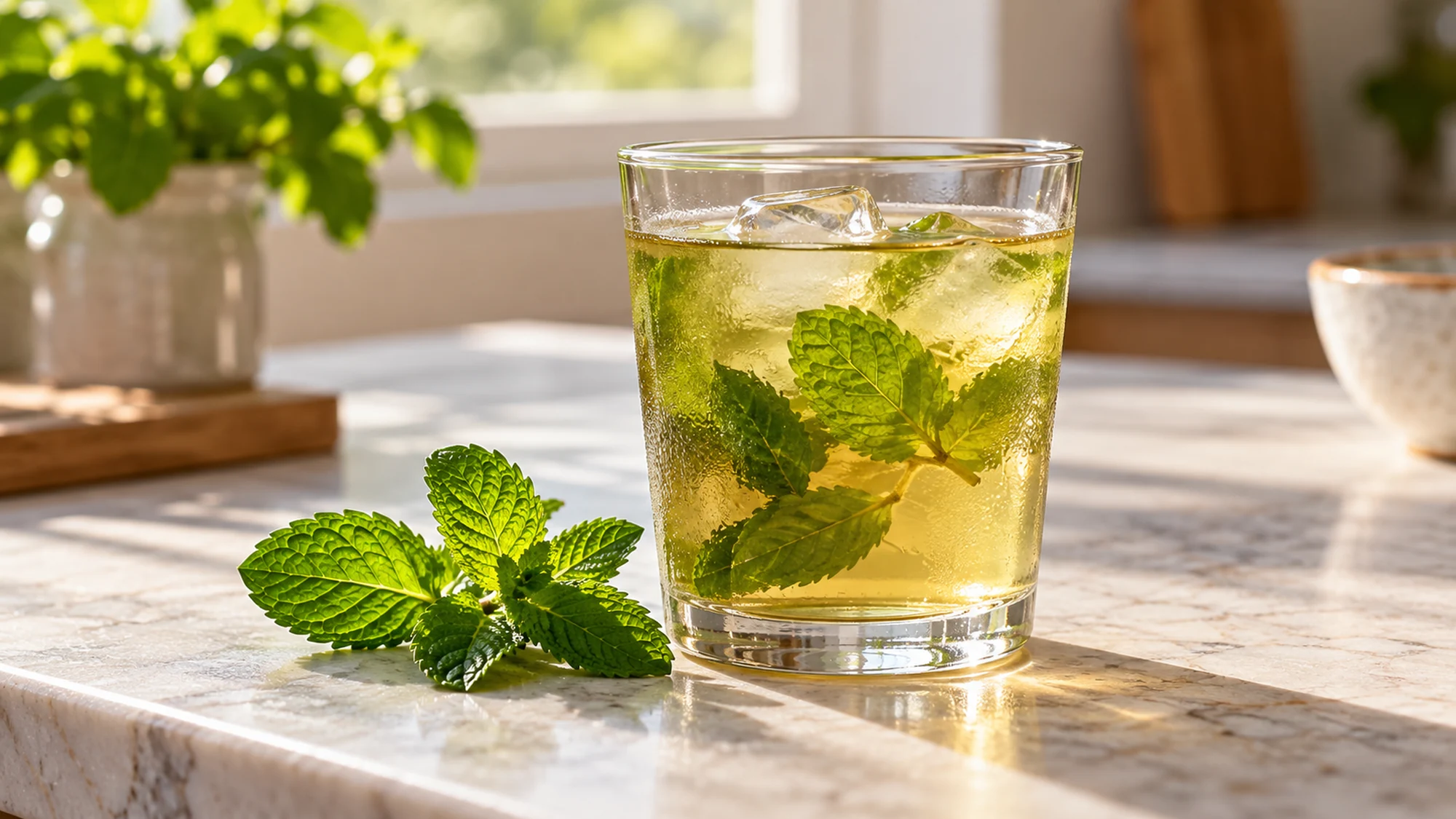
Keep the first cup simple. Sweetener, citrus or another herb can be an enjoyable adjustment, but adding everything at once hides which part you liked. For iced tea, remember that melting ice dilutes the drink; taste again after chilling rather than judging only the hot infusion.
Keep health claims and storage practical
NCCIH reports that evidence for peppermint leaf’s health benefits is insufficient. Research on enteric-coated peppermint-oil capsules is not proof that ordinary mint tea treats IBS or another condition. The tea appears safe, but the long-term safety of consuming large amounts of peppermint leaf is uncertain.
- Reflux: the European Medicines Agency’s peppermint-leaf summary notes that leaf preparations can worsen reflux and heartburn; it also advises caution with gallstones or other bile-related problems.
- Personal health needs: ask a clinician or pharmacist about herbal products if you take medicines, are pregnant or breastfeeding, or plan to use them medicinally.
- Fresh leaves: refrigerate them and use while sound; Purdue suggests a moist paper towel inside a zip-top bag.
- Prepared tea: refrigerate leftovers within two hours, following Oregon State’s guidance. Do not leave a pitcher on the counter all afternoon.
Bottom Line
Choose mint tea by its actual leaves and blend ingredients. Start with a clear brewing method, adjust for your preferred flavor, and keep the caffeine check separate from the cooling taste. A pleasant drink does not need a medical promise.
Innichka Chef’s video below demonstrates preparing mint tea. Use it for the brewing technique, not as evidence for health claims.
Sources
- Purdue Extension: mint varieties, selection and storage
- Chicago Botanic Garden: herbal tea and brewing
- Oregon State Extension: garden herbal tea and safe handling
- NCCIH: peppermint leaf evidence and safety
- European Medicines Agency: peppermint-leaf precautions

Hi, I’m Emily Pocker! I share recipes and food guides here at Recipes360 to help you find everyday meal inspiration and feel more confident in the kitchen. My goal is to make cooking approachable, enjoyable, and full of flavor.