
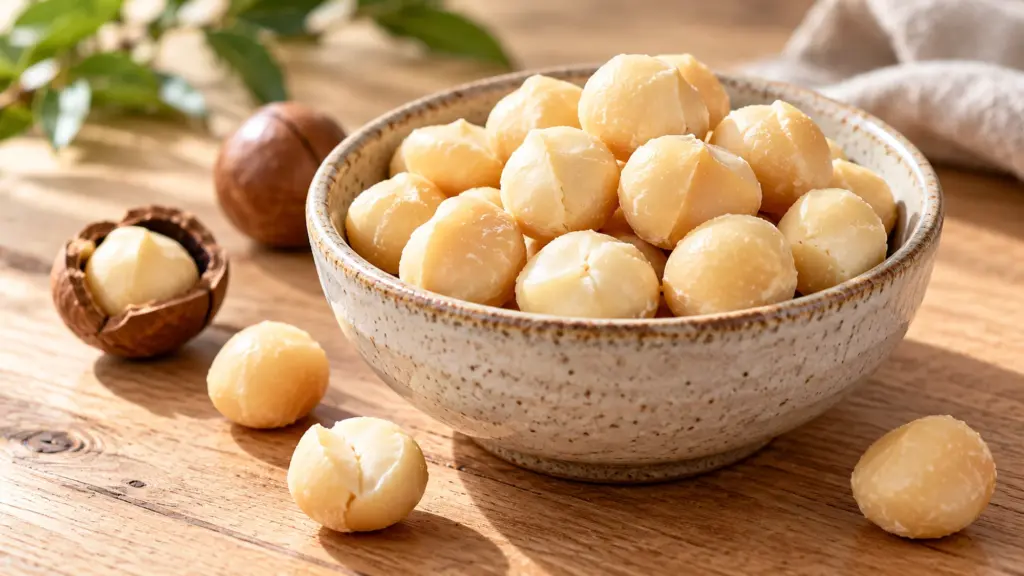
Macadamia nuts are mild, buttery nuts with a rounded crunch that works in savory food as well as cookies. Choose raw, unsalted kernels for flexibility, roasted nuts for a ready-to-eat topping, and pieces when you plan to chop them anyway. The most useful purchase is the one you will finish while it still tastes fresh.
For everyday cooking, buy unsalted macadamia nuts, match the form to the job, and refrigerate a tightly sealed supply if you will not use it within a few weeks. They are a flavorful ingredient, not a treatment for cholesterol or weight loss.
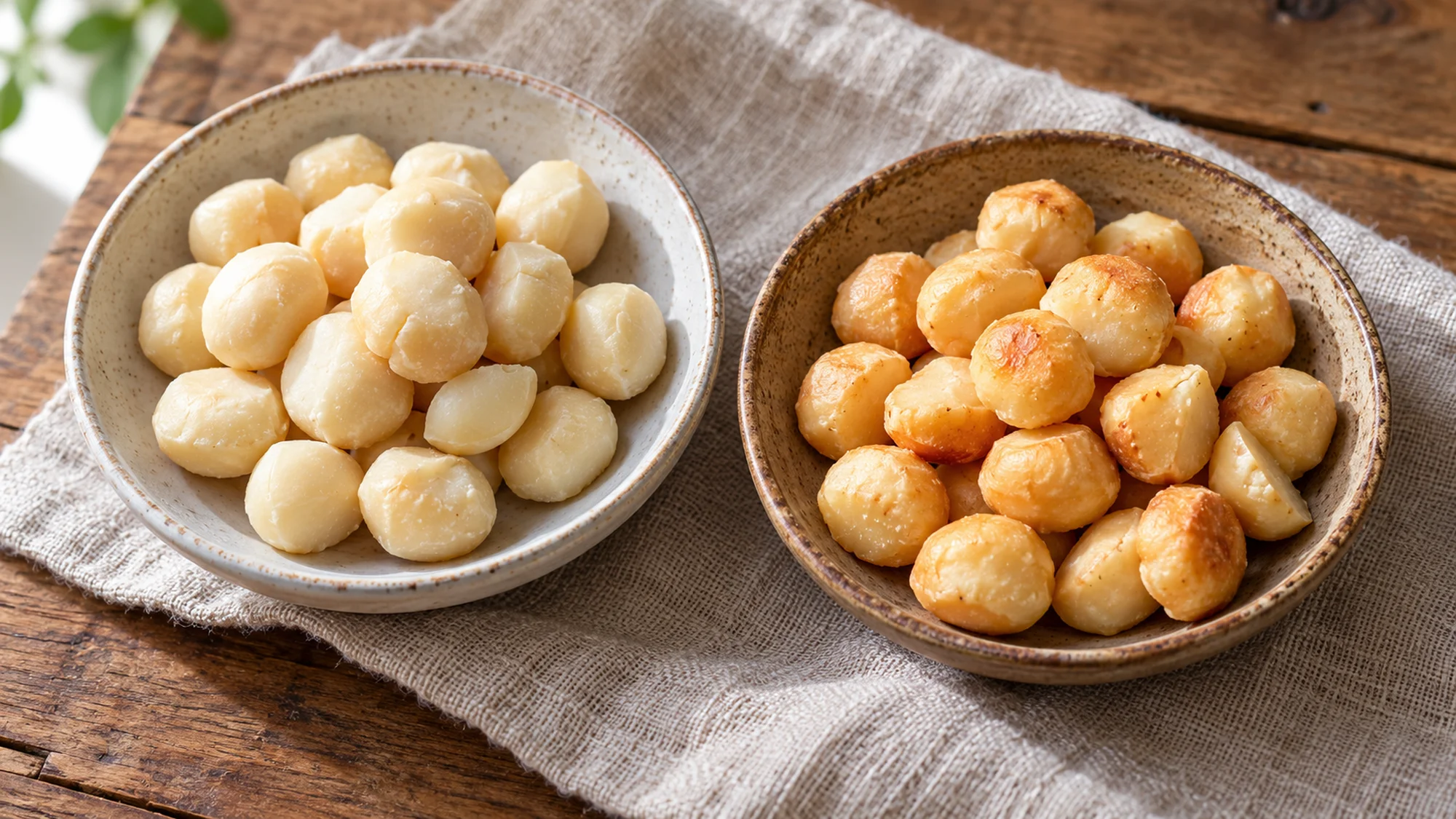
Choose macadamia nuts for the job
Macadamias originated in Australia, where their story begins in the rainforests of the east coast. Today, the supermarket decision is usually simpler than their history: whole or broken, raw or roasted, plain or seasoned. The Australian Macadamia Society explains their Australian origins.
Check the price per ounce rather than judging the bag by its size. Whole kernels look attractive on a snack board. I would choose pieces for cereal, baking and chopped toppings, where the finished appearance matters less. Compare products with the same coating and seasoning; a sweetened snack mix is a different purchase from plain nuts.
| Form | Useful for | What to check |
|---|---|---|
| Raw, unsalted | Roasting, chopping and flexible seasoning | A pale color and gentle flavor |
| Roasted, unsalted | Salads, grain bowls and quick snacks | A stronger toasted flavor; avoid reheating unnecessarily |
| Salted or flavored | A ready-seasoned finishing touch | Sodium and any added sugar on the label |
| Pieces | Baking and toppings | Similar flavor without paying for whole appearance |
| Macadamia butter | Spreads and sauces | Added oils, sweeteners and other nuts |
Make their buttery crunch count
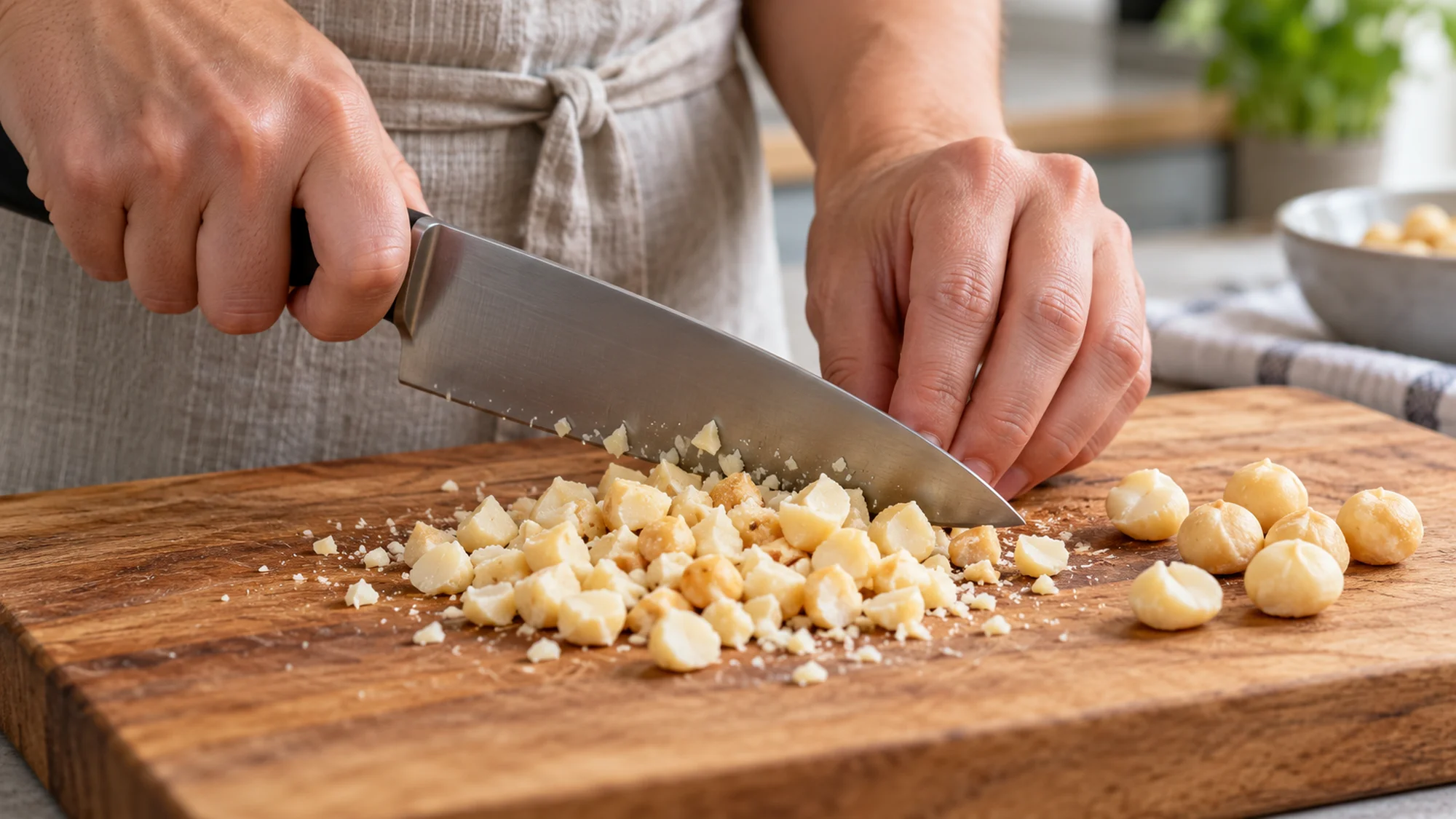
Start with a small amount where texture matters: chopped over oatmeal, scattered across roasted vegetables, or added to a citrusy salad just before serving. Their mild flavor is particularly useful when you want crunch without the stronger character of walnuts. Keeping the pieces visible helps a modest amount feel satisfying.
Chop on a stable board and aim for reasonably even pieces. When roasting, spread them in one layer and watch the color closely; small fragments brown sooner than whole kernels. Transfer toasted nuts off the hot tray promptly so residual heat does not carry them too far. These practical cues follow the Australian Macadamia Society’s roasting guidance.
For a nut swap, think about texture before measuring. Macadamias are larger and creamier than pine nuts, so chop them if you are replacing a small-nut topping. Our guide to pine kernels and pine nuts explains that ingredient. A substitution can work well without producing an identical result.
Read nutrition claims with some perspective
Macadamias contain substantial fat, so portion size matters when comparing labels. Use the serving weight printed on the package to compare calories, sodium and added sugars fairly. “Roasted” does not automatically mean salted, and “natural” tells you less than the actual ingredient list. Choose based on the food you intend to eat, rather than a promise on the front of the bag.
One 2023 randomized crossover trial studied 35 adults with abdominal obesity and elevated cardiometabolic risk. Participants ate macadamias providing about 15% of daily calories during an eight-week phase. Researchers did not find significant changes in body measurements or blood-sugar measures; the reported reductions in total and LDL cholesterol were also not statistically significant.
That small, short study does not establish that eating macadamias prevents disease, causes weight loss or reliably lowers cholesterol. Enjoy them as part of an eating pattern that suits you. If you manage a medical condition, a clinician or registered dietitian can help fit portions into your existing plan.
Protect freshness and take allergies seriously
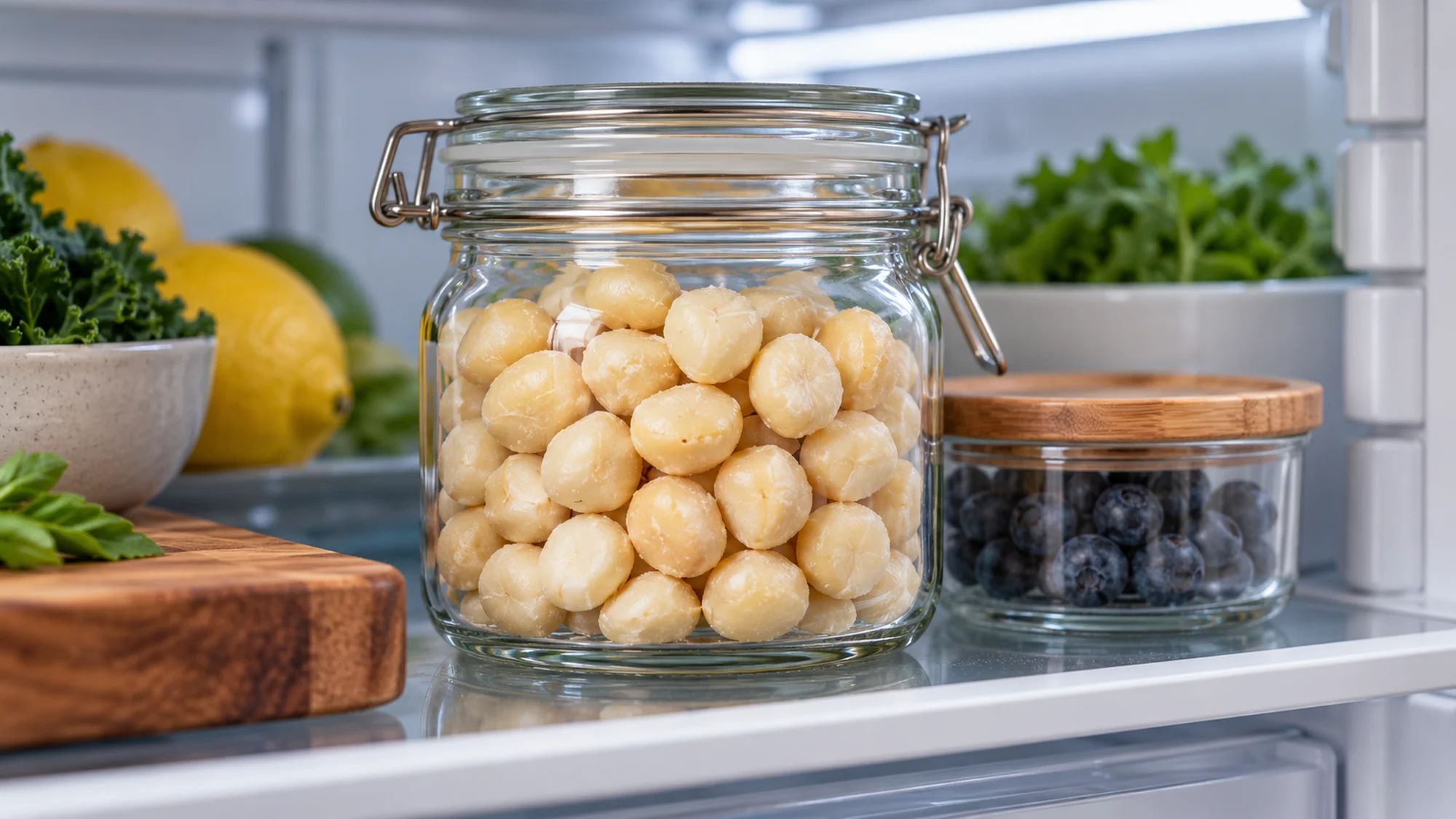
UC Davis recommends refrigeration in a sealed container, or freezing, when nuts will not be used within a few weeks. Keep the original label or mark the purchase date on the container. For a large bag, my preference is to divide it into smaller portions so only the amount needed is opened.
Macadamias are tree nuts and can cause serious allergic reactions. Children’s Hospital of The King’s Daughters advises reading labels each time and checking with the manufacturer when ingredients or cross-contact are unclear. Do not assume a different nut is a safe substitute for someone with an allergy; follow their individual allergy plan.
Bottom Line
Buy macadamia nuts for their flavor and the way you will use them. Unsalted kernels offer the most flexibility, pieces suit chopped dishes, and roasted nuts make an easy finishing touch. Store the extra supply cold and sealed, keep servings practical, and treat nutrition promises and allergy questions with care.
The producer video below follows macadamias from the farm through the Nutworks processing facility. It offers background on how the ingredient reaches the kitchen.
Sources
Australian Macadamia Society: origins · Roasting guidance · Jones et al., 2023 randomized trial · UC Davis: nut storage · CHKD: tree nut allergy · Nutworks: Farm to Plate video.

Hi, I’m Emily Pocker! I share recipes and food guides here at Recipes360 to help you find everyday meal inspiration and feel more confident in the kitchen. My goal is to make cooking approachable, enjoyable, and full of flavor.