
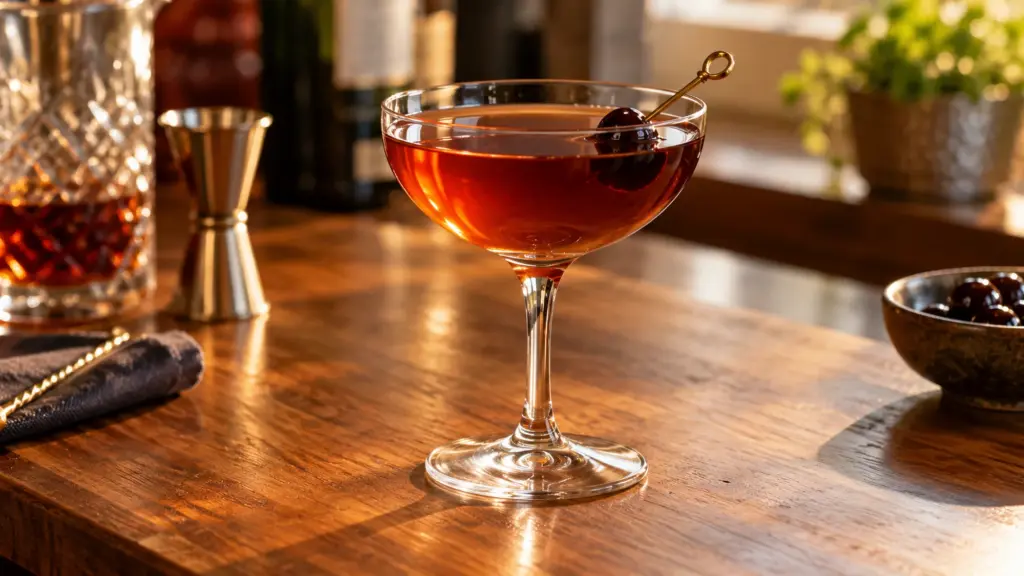
The glass is cold, the cherry is ready, and a small pour of vermouth is doing more work than it gets credit for. A good Manhattan recipe balances rye whiskey’s spicy edge with sweet vermouth and aromatic bitters, then uses stirring to bring everything together without a cloudy, foamy finish.
This Manhattan recipe makes one spirit-forward cocktail with rye whiskey, sweet vermouth and bitters. Stir it with ice until thoroughly chilled, strain into a cold coupe, and finish with a cocktail cherry. Measure the pours: one cocktail is not necessarily one standard drink.
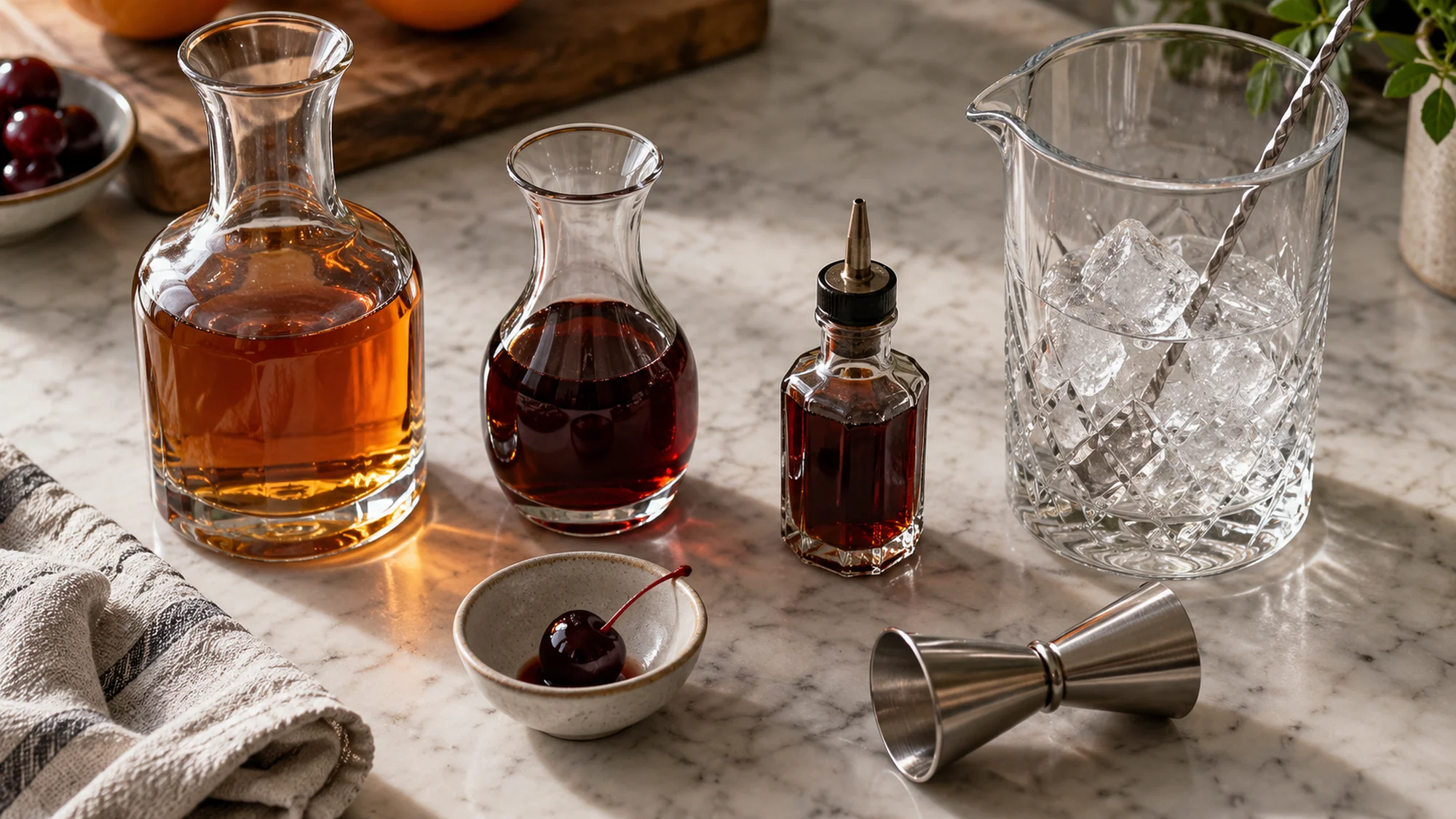
I’d put a measuring jigger ahead of an expensive mixing glass on the equipment list. Consistent amounts help you understand what you like, while a clean, sturdy glass and a long spoon can handle the mixing. There is no need for elaborate bar equipment to make a careful drink.
Serving Suggestions for This Manhattan Recipe
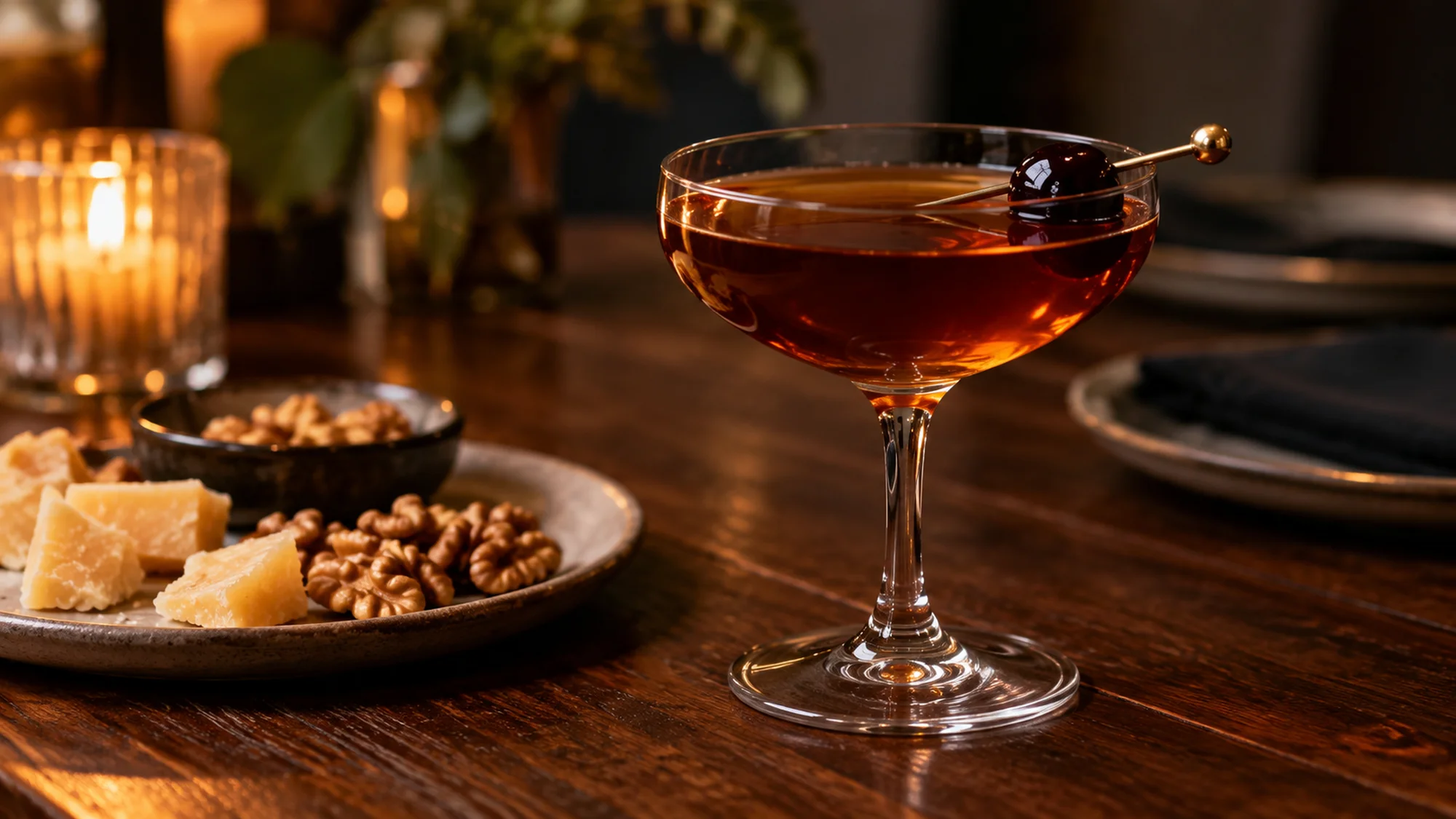
Serve the Manhattan promptly in a chilled coupe or small cocktail glass, without the mixing ice. The clear amber color and smooth texture are part of its appeal. A single dark cocktail cherry adds a concentrated sweet bite without turning the glass into a fruit salad.
- Offer a small savory plate, such as cheese, roasted nuts or olives, alongside the drink rather than treating it as a meal.
- Set out water and an appealing alcohol-free choice at the same time. Guests should not have to ask for either.
- For a drink served over ice, use a fresh large cube in a rocks glass. It will dilute further as it sits, unlike the strained version.
- Measure each serving separately when entertaining; casually topping up a glass makes the amount of alcohol difficult to track.
Keep the glass cold, the garnish simple, and the serving measured. The drink should arrive ready to sip, not waiting for a handful of melting ice to rescue its temperature.
Manhattan Recipe Variations and Ingredient Choices
Rye and bourbon both work, but they do not taste identical. Rye often brings a drier, spicier impression; bourbon can lean toward sweeter vanilla and caramel notes. Those are flavor impressions, not promises that one bottle contains less sugar or alcohol than another. Check the label for strength.
| Choice | What changes | Practical note |
|---|---|---|
| Rye whiskey | Spicier, more assertive flavor | Start here for this version |
| Bourbon | Rounder vanilla and caramel notes | Use the same measured amount |
| Half sweet, half dry vermouth | A less sweet impression | This is commonly called a perfect Manhattan |
| Orange twist instead of cherry | Citrus aroma without a fruit bite | Express the peel gently over the surface |
The International Bartenders Association’s Manhattan uses the same whiskey, sweet vermouth and bitters foundation with a different ratio. This version uses a familiar two-to-one whiskey-to-vermouth balance. Stirring chills and dilutes it; shaking is unnecessary for these clear, non-citrus ingredients.
- Use sweet red vermouth, not dry vermouth, for the base recipe. Refrigerate the opened bottle and follow its producer’s storage guidance.
- Taste the finished drink before changing several things at once. A different vermouth can change sweetness and herbal character noticeably.
- Do not add cherry syrup by habit. The garnish already brings sweetness, and extra syrup changes the intended balance.
I’d change one ingredient at a time. Keeping the measurements consistent makes a whiskey or vermouth swap easier to understand.
Health Considerations: Know What Is in the Glass
A Manhattan is an alcoholic drink, not a source of health benefits. NIH explains that alcohol carries immediate and longer-term health risks, and risk generally increases with greater consumption. Choosing not to drink is a valid option; no one needs alcohol for health.
- Using 40% ABV whiskey and 16% ABV vermouth, the main pours contain about 1.6 U.S. standard drinks before the small contribution from bitters.
- Higher-proof whiskey increases the alcohol content even when the glass and recipe measures stay the same.
- Avoid alcohol if you are under the legal drinking age, pregnant, driving, or taking medicines that interact with it.
- Ice and water reduce concentration, not the total alcohol already poured. Food does not make driving after drinking safe.
The card’s calories are an estimate, not a laboratory analysis. The NIAAA calorie reference shows why spirit strength, vermouth and garnishes matter. Brand-specific labels are more useful than assuming every Manhattan has the same nutrition.
Measure the actual ingredients and consider the alcohol amount, not simply the number of glasses. A smaller serving or an alcohol-free drink is always an option.
Bottom Line
A measured pour, fresh-tasting sweet vermouth and a properly chilled glass make this Manhattan recipe straightforward. Keep the stirring gentle, skip unnecessary syrup, and let the whiskey, vermouth and bitters stay distinct.
Manhattan Recipe

Ingredients
- 2 fl oz rye whiskey 40% ABV for the calorie estimate; about 60 ml
- 1 fl oz sweet red vermouth about 30 ml
- 2 dashes aromatic bitters
- 1 cocktail cherry for garnish
- 1 cup ice cubes for stirring; discarded after straining
Equipment
- Jigger
- Mixing glass
- Long bar spoon
- Cocktail strainer
- Coupe or small cocktail glass
Instructions
- Place a coupe or small cocktail glass in the freezer briefly, or fill it with ice and cold water while preparing the drink.
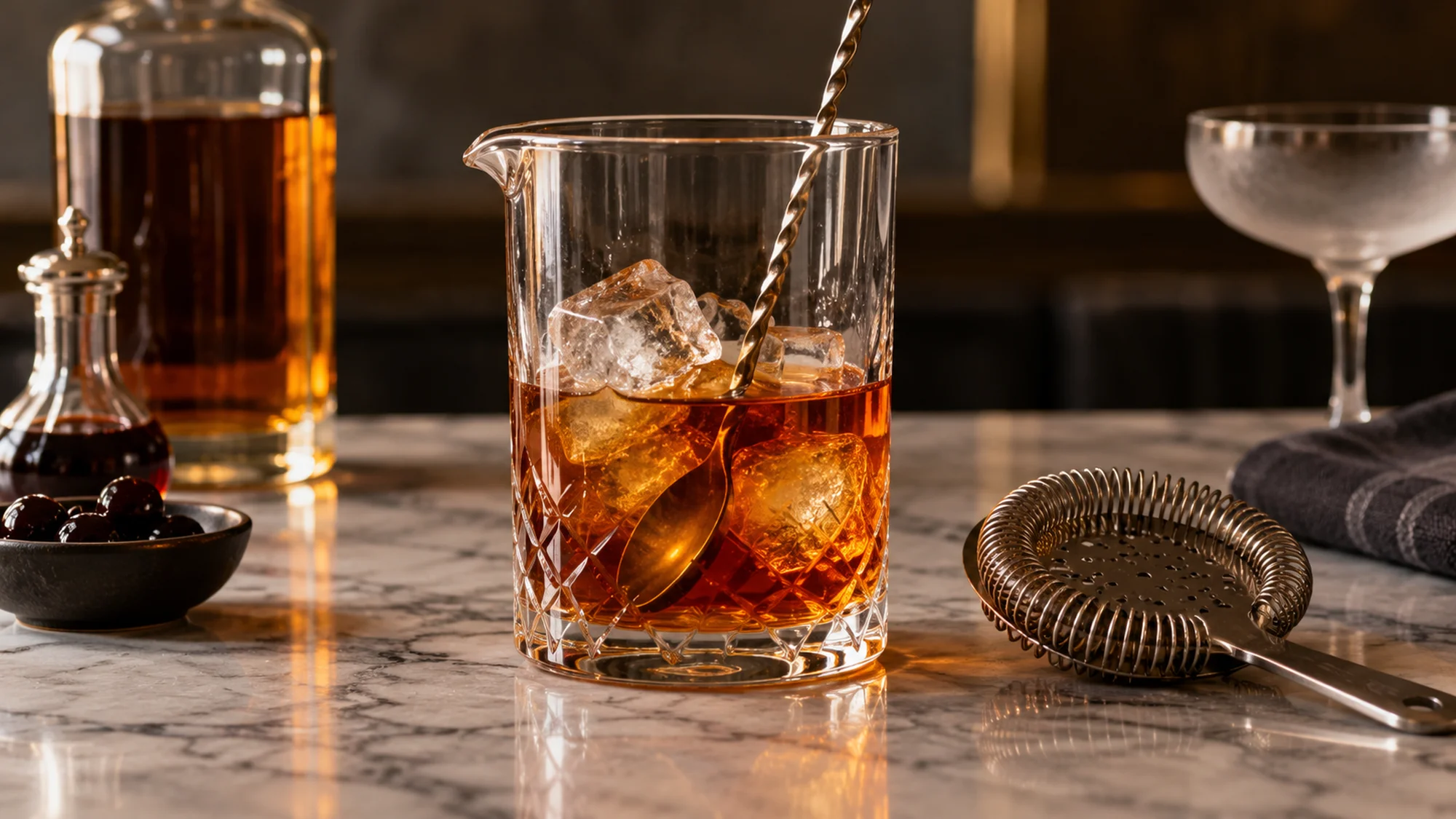
- Pour the rye whiskey, sweet red vermouth and bitters into a mixing glass. Add the ice cubes.
- Stir gently for about 20–30 seconds until the mixing glass feels very cold. Empty any chilling water from the serving glass, then strain the cocktail into it without the mixing ice.
- Add the cocktail cherry and serve promptly. This recipe makes one cocktail, not necessarily one standard alcoholic drink.
Nutrition
Video
Notes
Tried this recipe?
Let us know how it turned out!Hi, I’m Emily Pocker! I share recipes and food guides here at Recipes360 to help you find everyday meal inspiration and feel more confident in the kitchen. My goal is to make cooking approachable, enjoyable, and full of flavor.