

A browned chicken thigh brings plenty of flavor to dinner, but its nutrition story is bigger than the calorie number. Chicken thigh nutrition includes protein, several vitamins and minerals, and fat; the useful answer depends on whether you are measuring cooked edible meat, skin-on meat or the raw package.
For a clear reference, 100 grams of roasted chicken thigh meat without skin provides about 24.8 grams of protein, 8.2 grams of fat and 179 calories in USDA data. Those numbers describe cooked meat only—not a whole bone-in thigh or a breaded, sauced serving.
I like starting with what the chicken contributes to the meal, then deciding what belongs beside it. That makes dinner planning more useful than trying to crown one cut the winner.
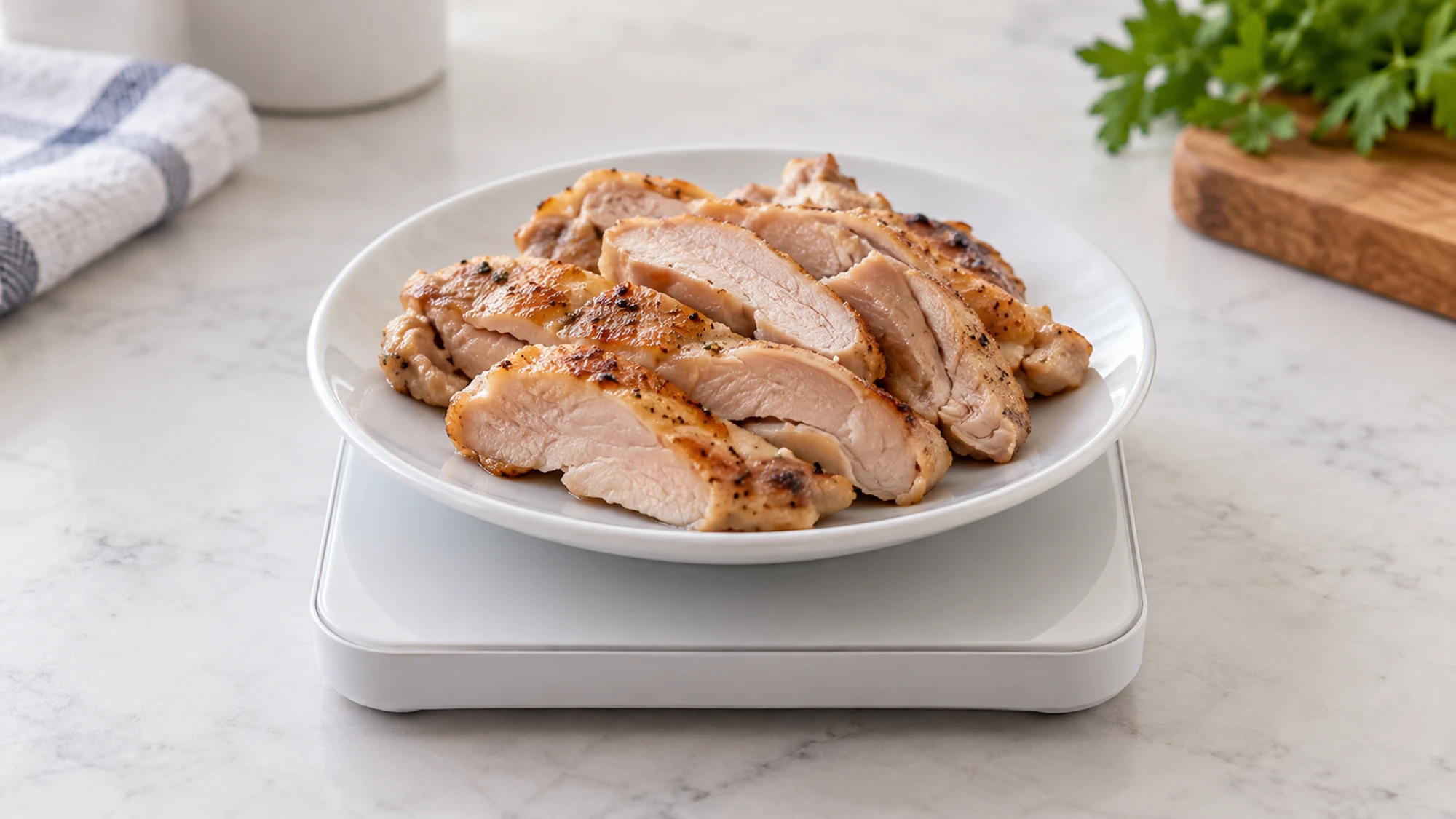
Chicken Thigh Nutrition Beyond Calories
The USDA FoodData Central roasted thigh entry, record 172388, gives a consistent starting point: meat only, cooked by roasting, with no skin or bone counted in the edible portion. The table shows a 100-gram reference and a calculated 85-gram portion, approximately 3 ounces.
| Nutrient | 100 g cooked meat | 85 g cooked meat |
|---|---|---|
| Protein | 24.8 g | 21.0 g |
| Total fat | 8.2 g | 6.9 g |
| Carbohydrate | 0 g | 0 g |
| Iron | 1.13 mg | 0.96 mg |
| Zinc | 1.92 mg | 1.63 mg |
| Niacin | 6.21 mg | 5.28 mg |
| Selenium | 27.1 micrograms | 23.0 micrograms |
The smaller portion is calculated by multiplying the source values by 0.85, with rounding. It is a comparison, not a serving recommendation; individual products and preparation vary.
Protein is the headline contribution, but the minerals deserve attention too. Plain meat also supplies no dietary fiber in this entry, which gives vegetables, beans or whole grains a useful job on the plate.
What the Minerals Mean—and What They Do Not
Zinc supports normal immune function and the production of DNA and proteins, as the NIH zinc fact sheet explains. Poultry is one dietary source. That is different from claiming that a chicken dinner prevents infections or that eating extra thighs treats a deficiency.
- Iron: the reference portion contributes some iron; it is not a complete answer to iron needs or a treatment for anemia.
- Niacin: this B vitamin is part of the thigh’s nutrient profile, alongside protein and minerals. More of one food is not automatically better.
- Selenium: the USDA entry contains a measurable amount, but a nutrient number does not establish a special health outcome from this cut.
- Dietary variety: other protein foods and plant foods contribute different nutrients. There is no need for one dinner ingredient to do every job.
My practical takeaway is modest: thighs can be a useful protein choice that also contributes micronutrients. Their flavor is a good enough reason to choose them without a dramatic wellness claim.
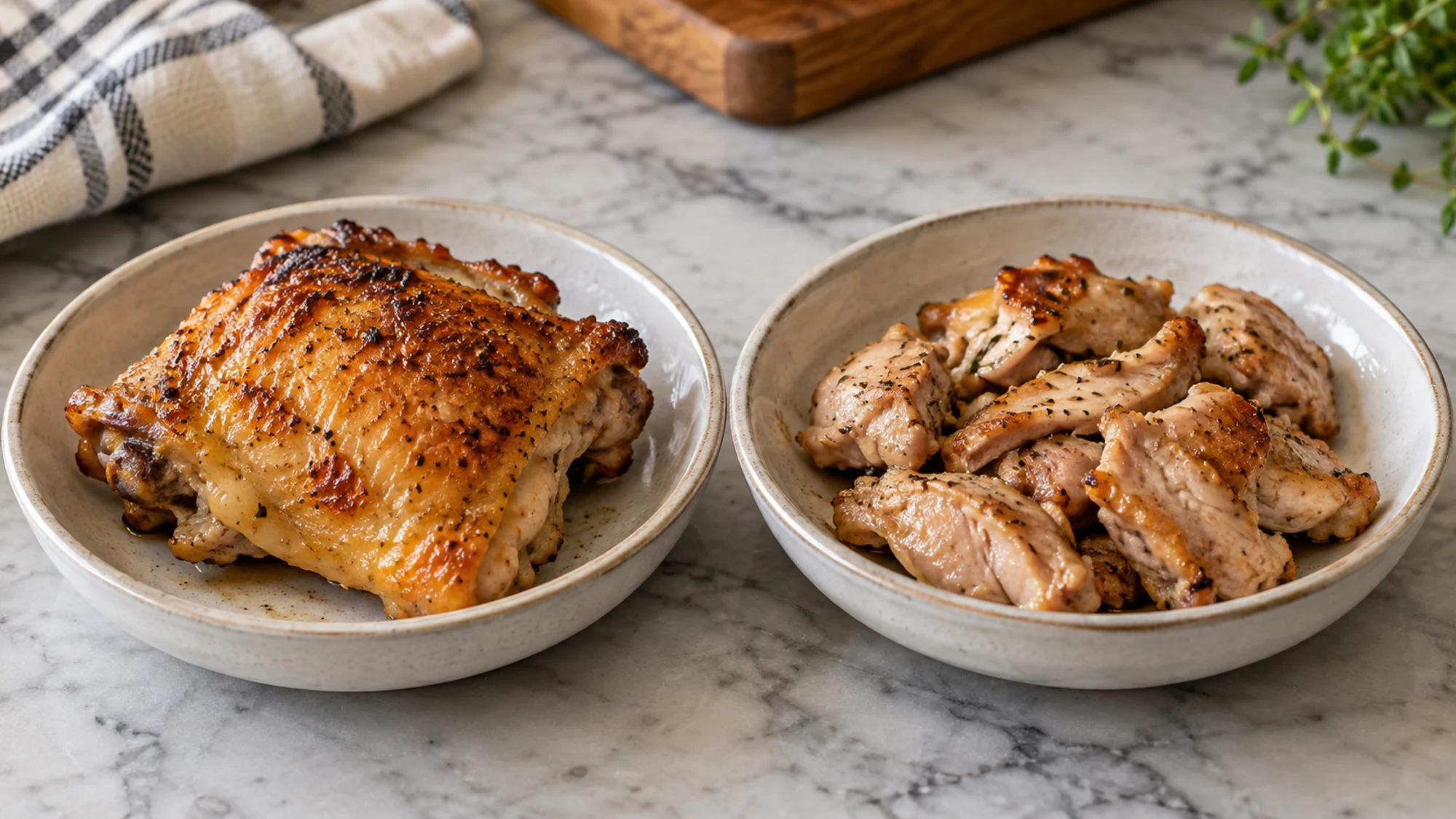
Skin, Bones and Seasoning Change the Comparison
Use a nutrition entry that matches what you actually eat. A bone adds weight but is not part of an edible-meat calculation, and a meat-only entry does not include the skin. Nor should a raw package weight be treated as the same amount of cooked meat: cooking changes moisture and final weight.
- For skinless portions: weigh the cooked edible meat and use a cooked meat-only entry.
- For skin-on portions: use an entry that includes meat and skin rather than borrowing the table above.
- For prepared products: read the label for added solutions, salt, breading and sauces.
- For a full dish: include the other ingredients instead of treating plain-chicken figures as the complete meal.
Sodium deserves a separate look in seasoned or injected products. FDA recommends comparing sodium on the actual Nutrition Facts label, because similar foods can differ substantially. If your main question is energy rather than nutrients, our chicken thigh calories guide explains how to match those numbers to the portion.
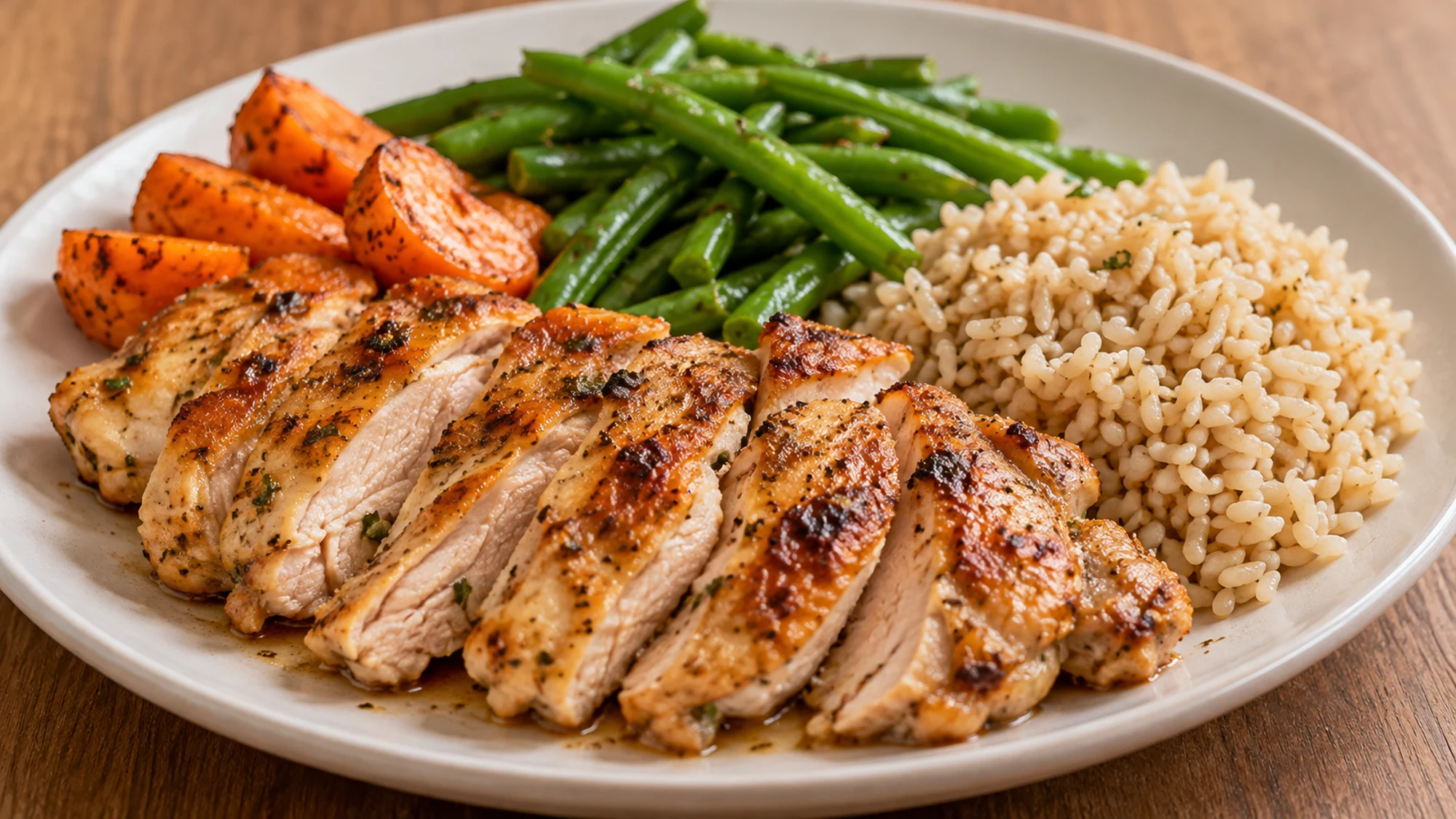
Build a Meal Around the Thigh
I would pair the rich, savory meat with something fresh or crisp and a satisfying starch. A simple plate might include green beans and brown rice; a bowl might combine sliced thigh, vegetables and beans. These are meal ideas, not a fixed dietary prescription.
- Choose vegetables you enjoy rather than adding a token garnish that stays on the plate.
- Use beans or a whole grain when you want the meal to include foods that provide fiber.
- Season with herbs, citrus or spices for flavor, while counting any sauces or added fats if you are tracking the meal.
- Cook poultry to a safe internal temperature; appearance and a golden surface do not establish safety.
FoodSafety.gov specifies 165°F (74°C) for chicken, including thighs, checked with a food thermometer. Nutrition information is most useful when the food is prepared safely, so make that check part of the plan rather than relying on color.
Bottom Line
Chicken thighs offer substantial protein along with minerals and B vitamins. Match nutrition data to cooked or raw edible portions and whether skin is included, then consider the vegetables, grains, sauces and seasoning that complete the meal.
USDA Food Safety’s video demonstrates safe-temperature checks with a food thermometer. It supports the preparation advice above; it does not measure the nutrients in your individual portion.
Sources
- USDA FoodData Central: roasted chicken thigh, meat only (172388)
- NIH: Zinc Fact Sheet
- FDA: Sodium in Your Diet
- FoodSafety.gov: Safe Minimum Internal Temperatures
- Iowa State University Extension: USDA thermometer video

Hi, I’m Emily Pocker! I share recipes and food guides here at Recipes360 to help you find everyday meal inspiration and feel more confident in the kitchen. My goal is to make cooking approachable, enjoyable, and full of flavor.