
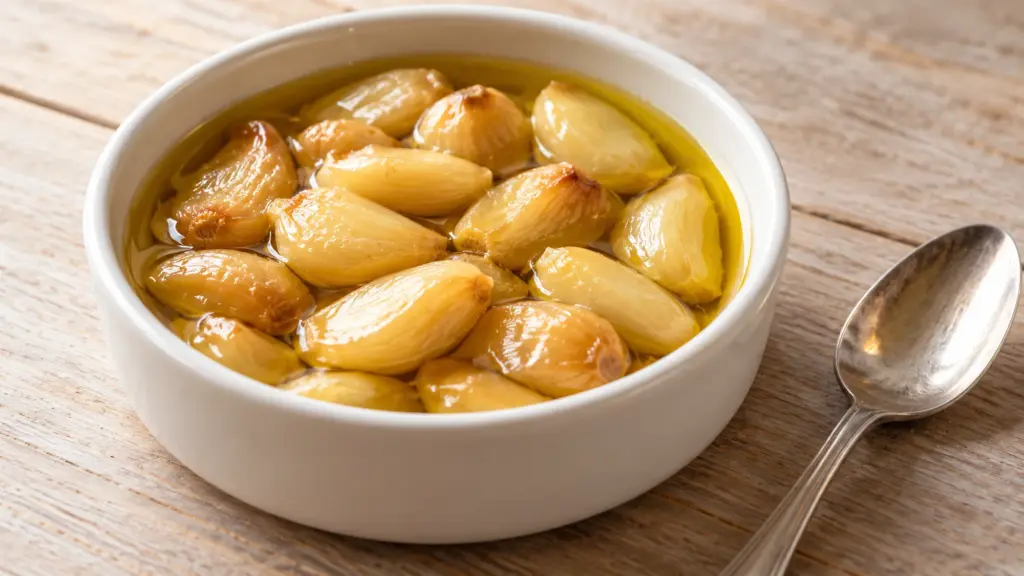
A raw garlic clove and a soft, slow-cooked one do very different jobs on a piece of toast. If you are learning how to make garlic confit, the goal is tender cloves that yield easily to a spoon, gently cooked beneath olive oil rather than browned aggressively.
Cook slowly until the cloves are soft, then refrigerate the garlic and oil immediately in small shallow containers. Use within four days or freeze promptly for longer storage. This homemade garlic-in-oil mixture is not shelf stable.
The recipe uses only garlic and olive oil. I’d make a small batch with a plan for using it, rather than fill a large jar simply because it looks attractive. Storage is part of the recipe, not an optional finishing detail.
Serving Suggestions for Garlic Confit
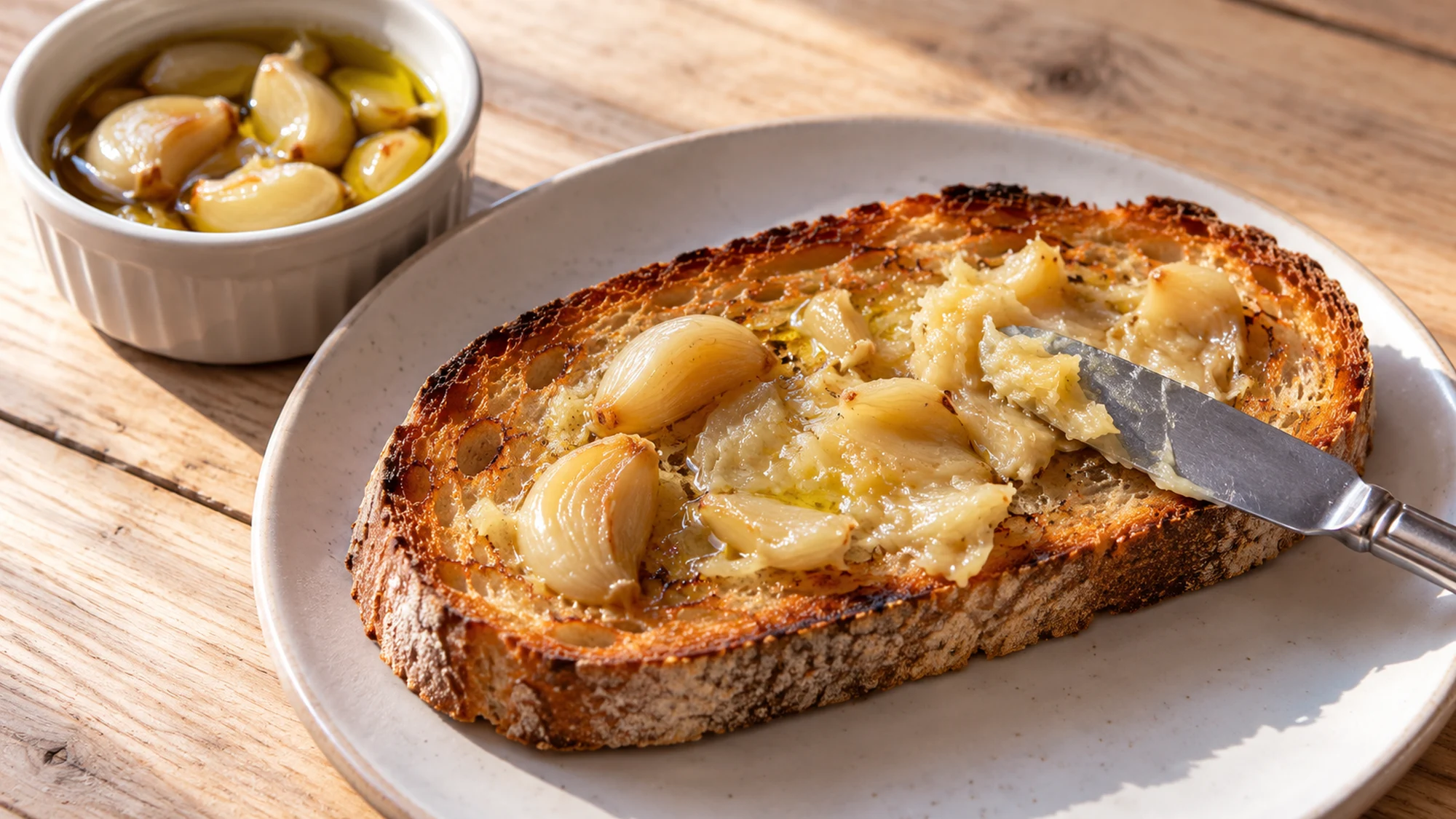
Mash a soft clove across warm toast, blend a little into a dressing or stir it into cooked beans. The oil can season the same dish, but measure it deliberately: it contributes most of the energy in the recipe. Use a clean spoon and return the remaining mixture to the refrigerator promptly.
Our baguette recipe offers a crisp bread base for the spreadable cloves. Slice the bread before taking out a small serving of confit, so the storage container does not remain on the table while you prepare the rest of the meal.
- For vegetables: Mash a little garlic with lemon juice just before dressing cooked greens or potatoes.
- For a sauce: Blend a measured spoonful into plain yogurt or another sauce you are serving now.
- For a meal-sized batch: Portion what you need into a separate dish and keep the rest refrigerated or frozen.
Use garlic confit as a measured condiment. Take out only the portion needed and keep the remaining garlic and oil cold.
How to Make Garlic Confit With Gentle Heat
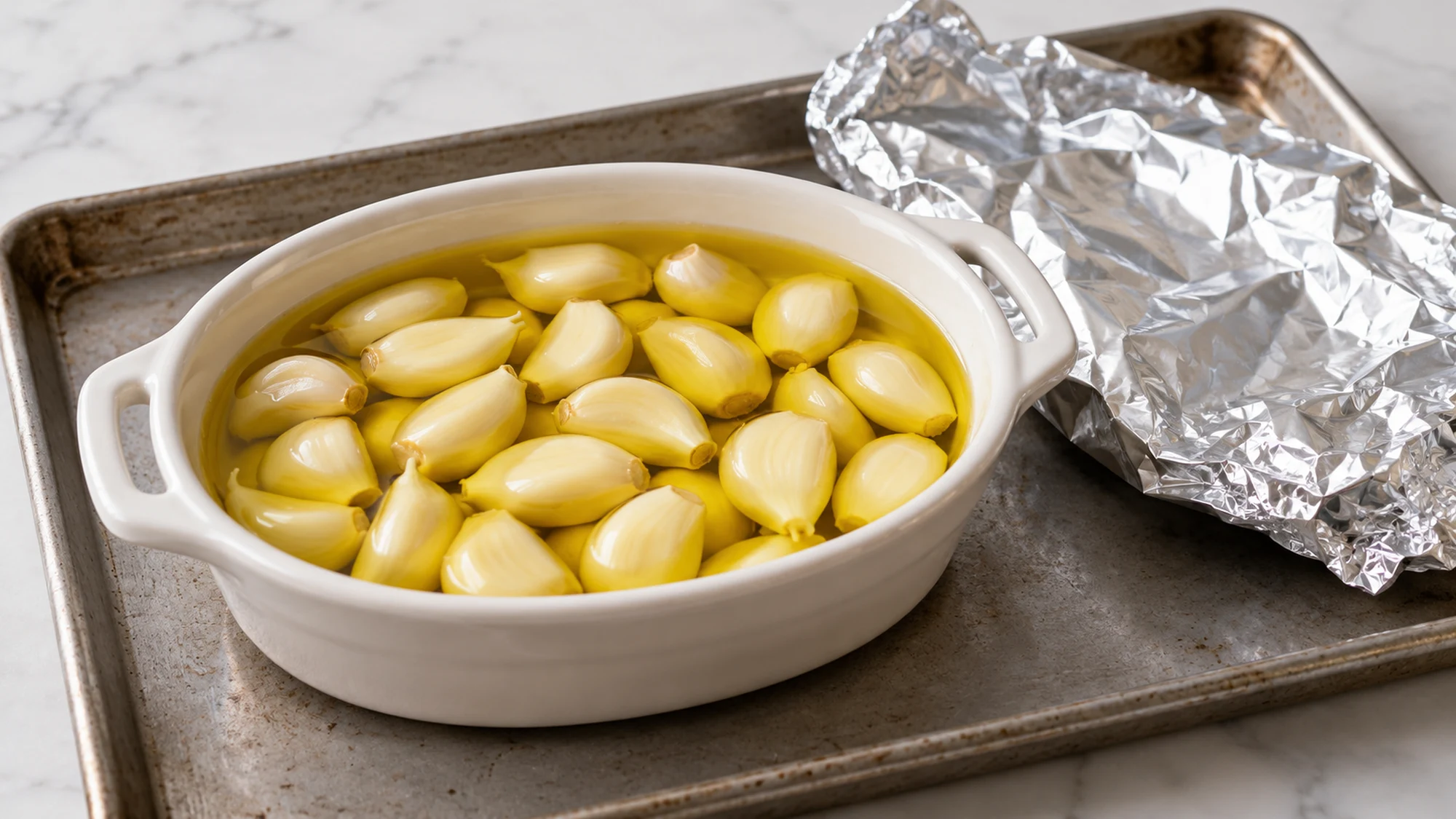
Choose a small ovenproof dish that holds the peeled cloves snugly. A very wide dish needs more oil to cover the same garlic, so the vessel affects both ingredient quantity and the nutrition estimate. Keep the cloves under the oil and look for gentle activity rather than vigorous frying.
I prefer pale-golden, very tender garlic to dark cloves with a firm center. Check a large clove with a clean spoon or thin knife: it should mash easily. Different clove sizes and ovens change the timing, so do not use color alone as the stopping point.
| Choice | Why it matters | Useful cue |
|---|---|---|
| Similar-sized cloves | They soften more evenly | Check one of the largest |
| Small deep dish | Less oil is needed to cover garlic | Cloves stay submerged |
| Gentle oven heat | Avoids fast surface browning | Oil should not fry vigorously |
| Plain two-ingredient batch | Keeps the flavor flexible | Add fresh seasonings at serving |
- If the oil bubbles hard: Check the oven temperature and reduce heat if needed; the aim is slow, gentle cooking.
- If small cloves brown first: Remove finished cloves with a clean utensil while larger ones continue softening.
- If you want herbs or chili: Add suitable seasonings to the portion you are serving, rather than treating additions as a preservation method.
Judge softness in a large clove and keep the heat gentle. The cooking technique develops texture and flavor; it does not create a room-temperature preserve.
Health Benefits and Safe Storage
Garlic contributes flavor in a small portion, while olive oil supplies the fat. The card estimate divides the complete batch into sixteen portions, including all the oil. If you eat mainly the cloves and leave much of the oil behind, your portion will differ from that calculation.
The storage rule is essential. University of Missouri Extension explains that fresh or roasted garlic in oil can support botulinum toxin formation when improperly handled. Its guidance calls for immediate refrigeration and use within four days, or freezing, and discarding garlic oil left at room temperature beyond two hours.
- Keep it cold: Refrigerate at 40°F (4°C) or below immediately after preparation in small shallow containers.
- Date the containers: Use both the garlic and its oil within four days; draining the cloves does not give the oil a longer storage window.
- Freeze promptly for longer use: Oregon State University Extension also gives the four-day refrigerated limit and freezing option. Do not taste a questionable batch to judge safety.
Refrigerate immediately, use within four days or freeze. Discard garlic-in-oil left at room temperature for more than two hours.
Bottom Line
Garlic confit is a simple way to make cloves soft and spreadable when you combine gentle cooking with a clear storage plan. I’d portion the batch immediately, keeping a little for upcoming meals and freezing the rest.
Cook until tender, then move straight to small refrigerated or frozen portions. Keep the four-day refrigerated maximum attached to both the garlic and the oil.
How to Make Garlic Confit Recipe

Ingredients
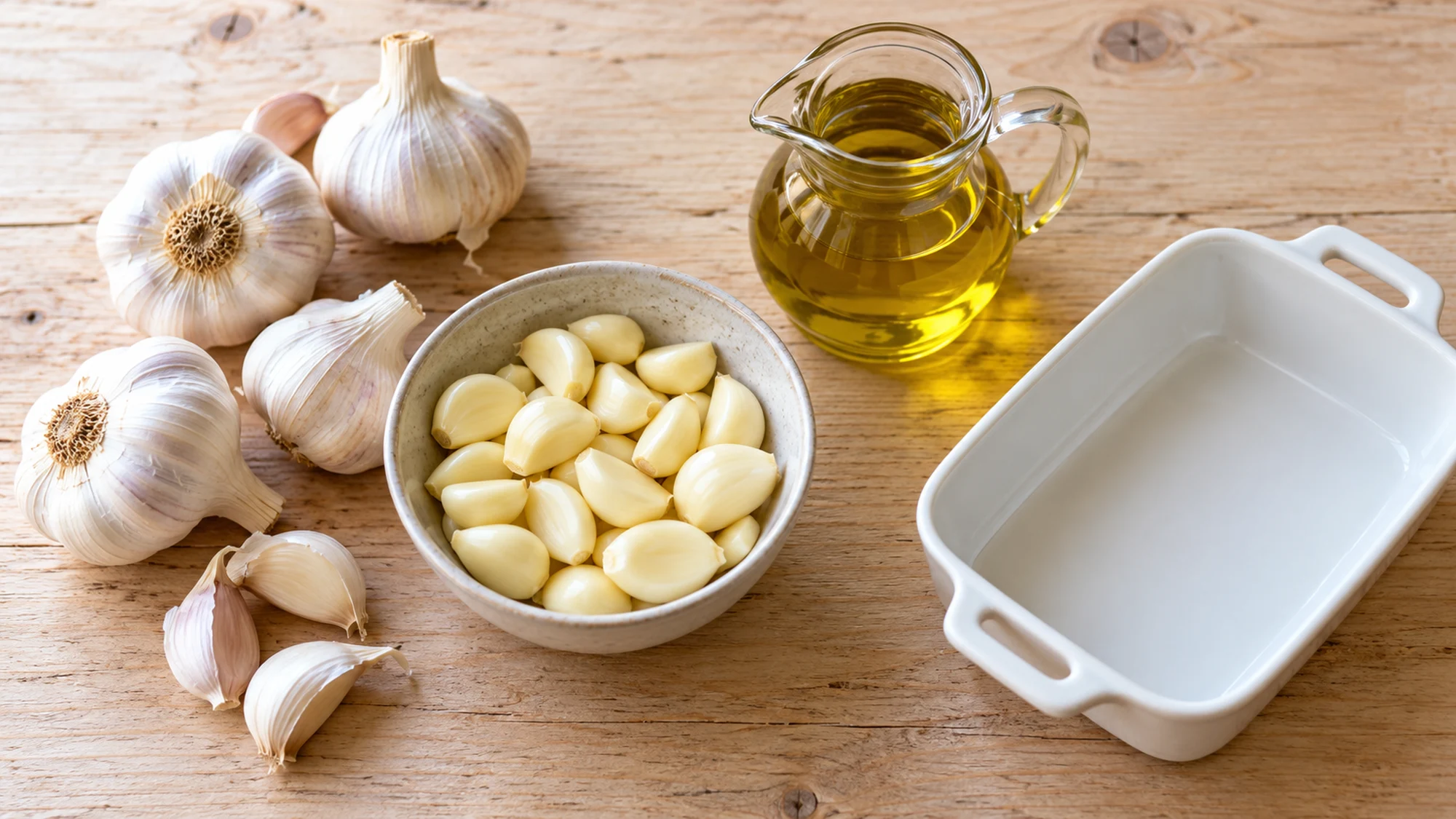
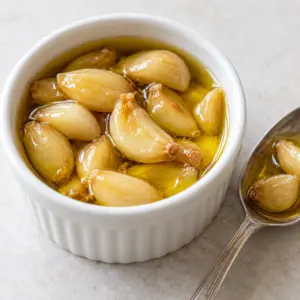
- 150 g peeled fresh garlic cloves firm, undamaged cloves, similar sizes
- 250 ml olive oil about 227 g; enough to cover garlic in a snug dish
Equipment
- Small ovenproof baking dish
- Foil or oven-safe lid
- Rimmed baking tray
- Clean spoon
- Small shallow food-safe storage containers
Instructions
- Heat the oven to 250°F (120°C). Choose a small ovenproof dish that holds the garlic snugly. Put the peeled cloves in the dish and add the olive oil so the garlic is fully submerged. If your dish is too wide, use a smaller dish rather than leaving cloves exposed.
- Cover with an oven-safe lid or foil and set on a rimmed baking tray. Cook gently for about 90–120 minutes, checking from 90 minutes, until a large clove mashes easily with a spoon and the cloves are pale golden. The oil should show gentle activity, not vigorous frying. Timing depends on clove size and your oven.
- Remove carefully; the oil is hot. Use a clean spoon to take only the portion needed for immediate serving. Transfer the remaining garlic and oil promptly into small shallow heat-safe food containers and refrigerate immediately at 40°F (4°C) or below. Do not leave the batch on the counter to cool for hours.
- Label with the preparation date and use both garlic and oil within four days. Freeze small portions promptly if you will not use them within that period. This recipe is not a shelf-stable or canning process.
- Discard any prepared garlic-in-oil mixture left at room temperature for more than two hours. Do not rely on smell, appearance or a taste test to establish safety.
Nutrition
Video
Video credit and storage correction: Chef Studio demonstrates the same gentle oven-cooking method. Follow this card’s storage rule, not the video’s two-week refrigerator suggestion: refrigerate immediately and use within four days, or freeze promptly. This homemade garlic-in-oil mixture must not be stored at room temperature.
Notes
Tried this recipe?
Let us know how it turned out!Hi, I’m Emily Pocker! I share recipes and food guides here at Recipes360 to help you find everyday meal inspiration and feel more confident in the kitchen. My goal is to make cooking approachable, enjoyable, and full of flavor.