
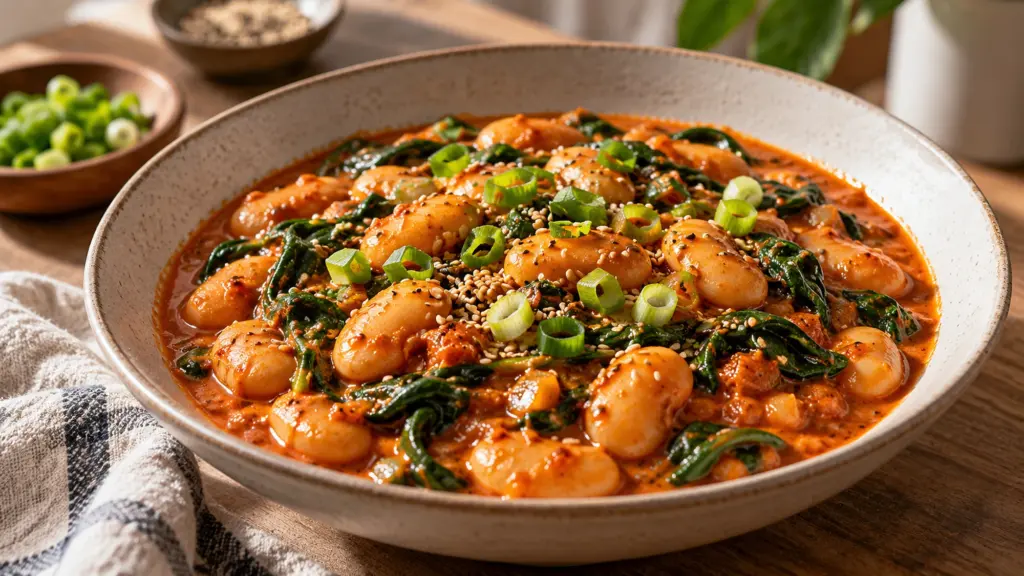
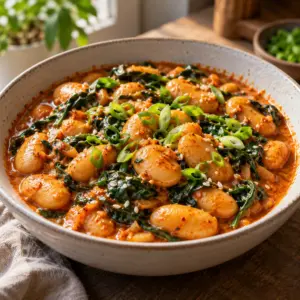
Gochujang butter beans turn two cans of large white beans into a saucy skillet with gentle coconut richness, fermented chili flavor, and soft spinach. Onion and garlic build the base, tomato paste gives the sauce body, and rice vinegar lifts the finish. The beans stay whole enough to spoon over rice or scoop up with bread.

The butter in the name refers to the beans, not dairy butter. Full-fat canned coconut milk supplies the creamy texture here. This is a Korean-inspired pantry meal using gochujang, rather than a claim to a traditional Korean bean dish. Its quantities and timing are written for drained canned beans, so dinner does not depend on an overnight soak.
Stir gently once the beans enter the pan. A few broken beans thicken the sauce, but vigorous stirring turns a creamy skillet into a mash.
Choose plain canned butter beans, also labeled large lima beans, and check the drained weight. About 500 grams is the target. Gochujang is a thick fermented red pepper paste; a pourable prepared sauce or dry gochugaru will not behave the same way. Start with a paste whose heat level you already enjoy.
Serving
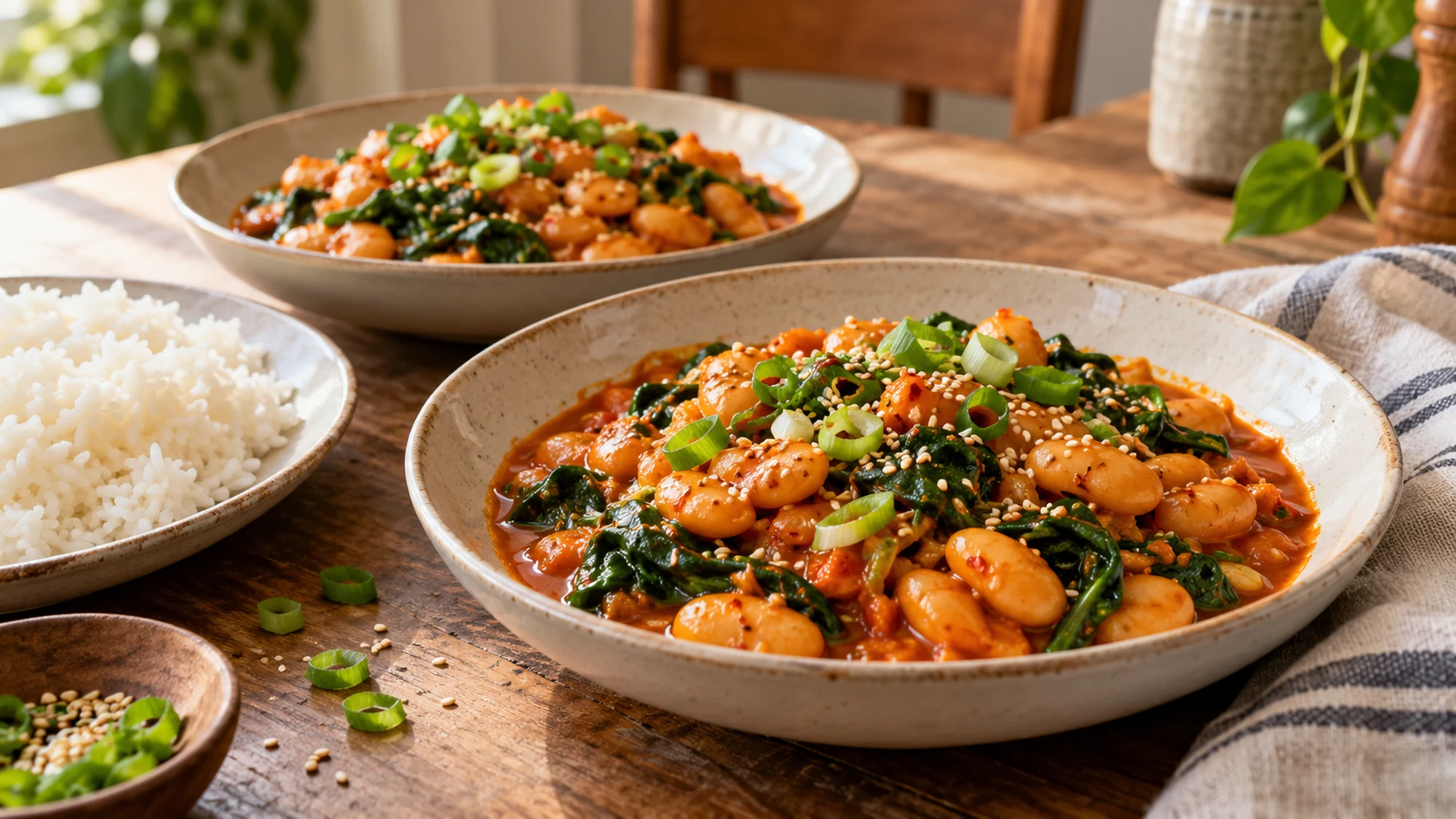
Divide the pan into four light main-course portions. Rice, flatbread, or a baked potato makes the plate more substantial, and a crisp cucumber salad gives a cool contrast to the sauce. The nutrition estimate covers the beans and their measured toppings, with these additional foods counted separately.
Bring the pan to the table after folding in the vinegar and soy sauce. Scatter the sliced scallions and sesame seeds over individual bowls for fresh crunch. For another direction with canned legumes, the blog’s French onion chickpeas use a slower onion base and a different finish.
| Choice | What to expect |
|---|---|
| Rice bowl | Spoon the beans beside rice; keep extra sauce available. |
| Bread supper | Serve in shallow bowls so bread can reach the sauce. |
| Lunch portion | Reheat gently with water, then add fresh scallions. |
Taste a bean and a spoonful of sauce together before adding anything salty. The canned beans, gochujang, and soy sauce can each contribute sodium. A sauce that seems balanced alone may taste different once spread across the whole serving.
Variations
For a milder pan, begin with one tablespoon of gochujang rather than two. You can stir in more at the end and simmer briefly if needed. Coconut milk softens the impression of heat but does not remove it, so choosing a mild paste is more reliable than trying to fix an overly fiery batch afterward.
- Cannellini beans can replace butter beans at the same drained weight; their smaller shape changes the appearance and bite.
- Chopped tender kale can replace spinach, but it needs a few extra minutes in the simmering sauce.
- For a looser sauce, add water a tablespoon at a time; for a thicker one, simmer uncovered before adding the spinach.
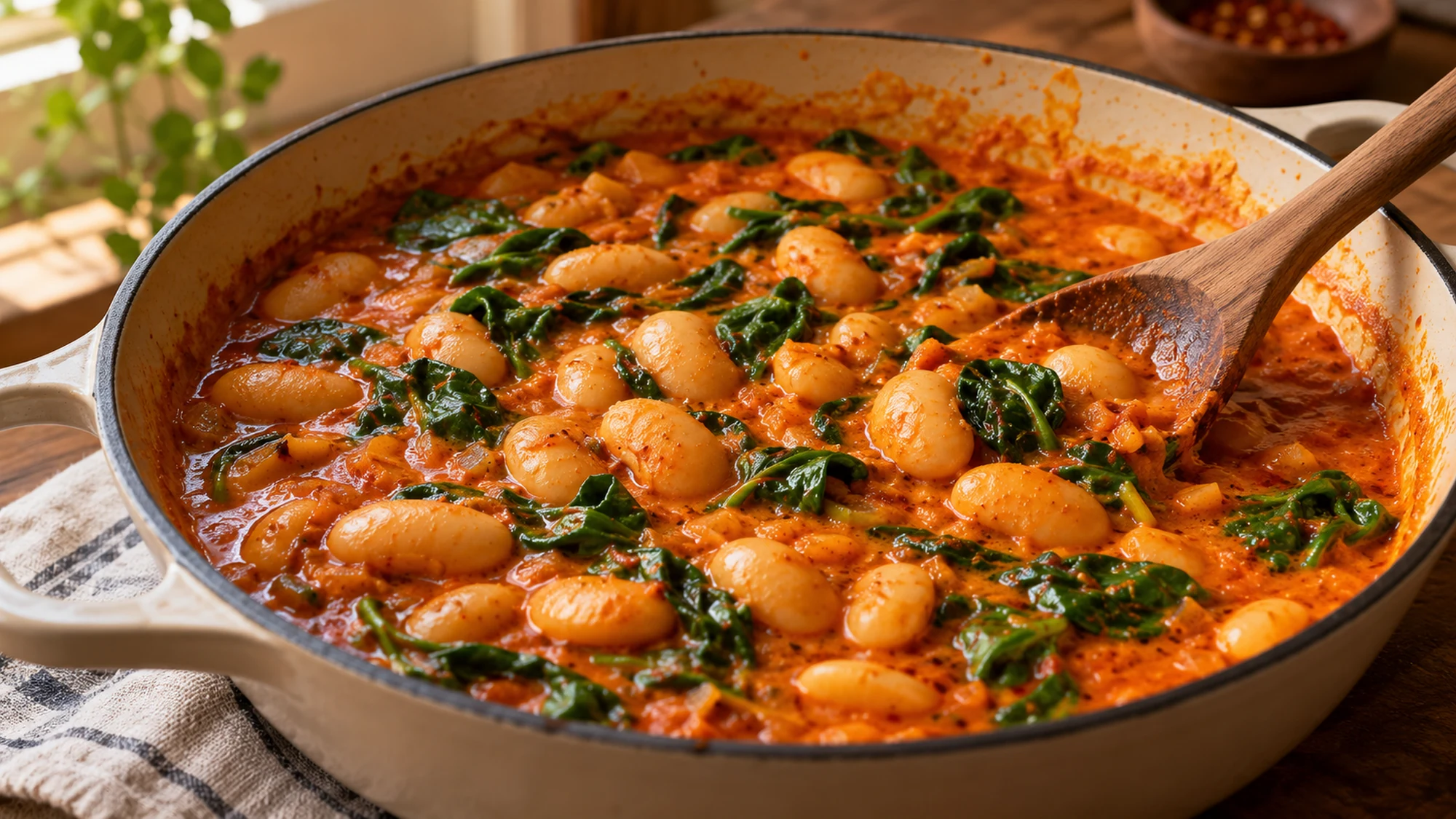
Stir the coconut milk in its can before measuring because the fat often separates. Use the full-fat cooking product rather than a sweetened coconut beverage. Add the beans only after the pastes have mixed into the liquid, and keep the simmer gentle. Hard boiling can break their skins and reduce the sauce faster than intended.
Health
A quarter of the batch is estimated at about 310 calories, 11 grams of protein, and 10 grams of fiber. Those rounded figures use the listed drained beans, coconut milk, oil, vegetables, pastes, and garnish divided by four. Brands differ, particularly in the coconut milk’s fat content and the beans’ drained weight.
Check every label when cooking for allergies. Gochujang commonly contains soy and may contain wheat; soy sauce can contain both, and the garnish contains sesame. The FDA’s food allergen guidance explains these major allergens. A dairy-free ingredient list does not automatically make a dish suitable for every allergy.
Refrigerate leftovers in shallow containers within two hours, then use within three to four days. University of Illinois Extension advises reheating leftovers to 165°F. A splash of water loosens the thickened sauce; stir carefully so the beans do not crush.
Allow about US$6 for the whole recipe, or US$1.50 per portion before rice or bread. The estimate assigns about US$3 to two cans of beans and US$3 to the measured coconut milk, vegetables, paste, oil, and seasonings. It is a budgeting estimate, not a local checkout quote.
Bottom Line
These gochujang butter beans bring a creamy, spicy skillet to the table in about thirty minutes. Measure the paste, simmer gently, and leave the vinegar until the finish. The recipe below keeps the beans, sauce, greens, and garnish in one clear sequence.
Gochujang Butter Beans Recipe

Ingredients
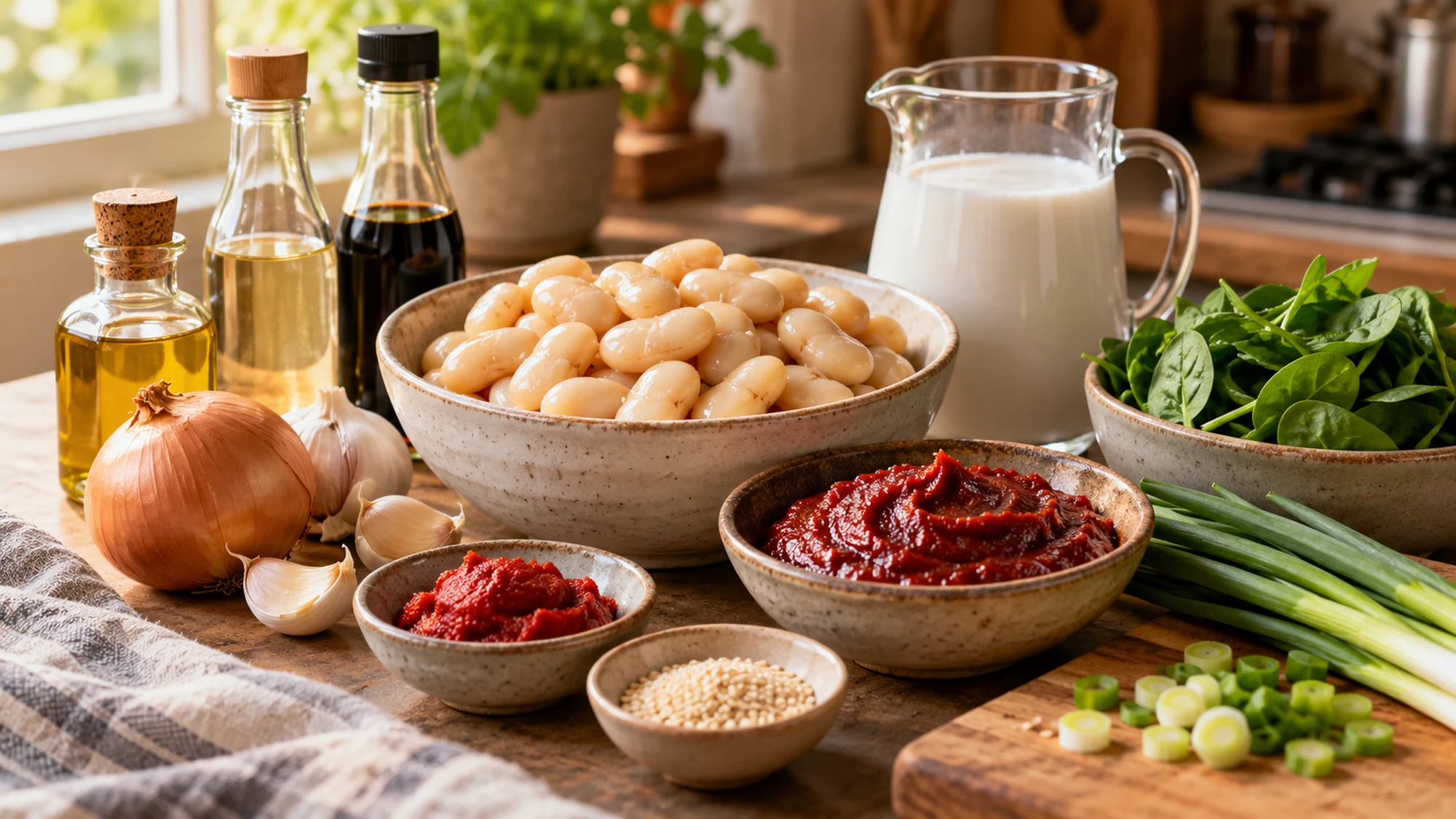
- 2 cans plain butter beans 15.5 oz each; drained and rinsed, about 500 g total drained weight
- 1 tbsp neutral oil 14 g
- 1/2 small onion about 75 g, finely chopped
- 2 garlic cloves about 6 g, minced
- 2 tbsp gochujang paste about 35 g; use mild paste if preferred
- 1 tbsp tomato paste 16 g
- 3/4 cup full-fat canned coconut milk 180 mL; stir before measuring
- 1/2 cup water 120 mL
- 2 cups baby spinach 60 g
- 1 tbsp rice vinegar 15 mL
- 1 tsp lower-sodium soy sauce 5 mL
- 2 scallions about 30 g, thinly sliced
- 1 tsp toasted sesame seeds about 3 g
Equipment
- 1 Wide deep skillet
- 1 Wooden spoon
- 1 Colander
Instructions
- Drain and rinse the beans. Chop the onion, mince the garlic, wash the spinach, and slice the scallions. Stir the canned coconut milk before measuring.
- Heat oil in a wide deep skillet over medium heat. Cook the onion for 4–5 minutes, stirring, until softened. Add garlic and stir for 30 seconds. Stir in gochujang and tomato paste for about 1 minute, lowering the heat if they stick.
- Pour in coconut milk and water. Stir until the pastes are fully dispersed, then fold in the beans. Bring to a gentle simmer and cook uncovered for 8–10 minutes, stirring carefully, until the sauce lightly coats the beans. Add a tablespoon of water if it becomes too thick.
- Fold in spinach and cook for about 2 minutes, until wilted and hot. Remove from the heat and stir in rice vinegar and soy sauce. Taste before adding any extra seasoning.
- Divide into four light main portions. Top with scallions and sesame seeds. Rice or bread may be served separately and is excluded from the nutrition and cost estimates.
Nutrition
Video
Notes
Tried this recipe?
Let us know how it turned out!Hi, I’m Emily Pocker! I share recipes and food guides here at Recipes360 to help you find everyday meal inspiration and feel more confident in the kitchen. My goal is to make cooking approachable, enjoyable, and full of flavor.