
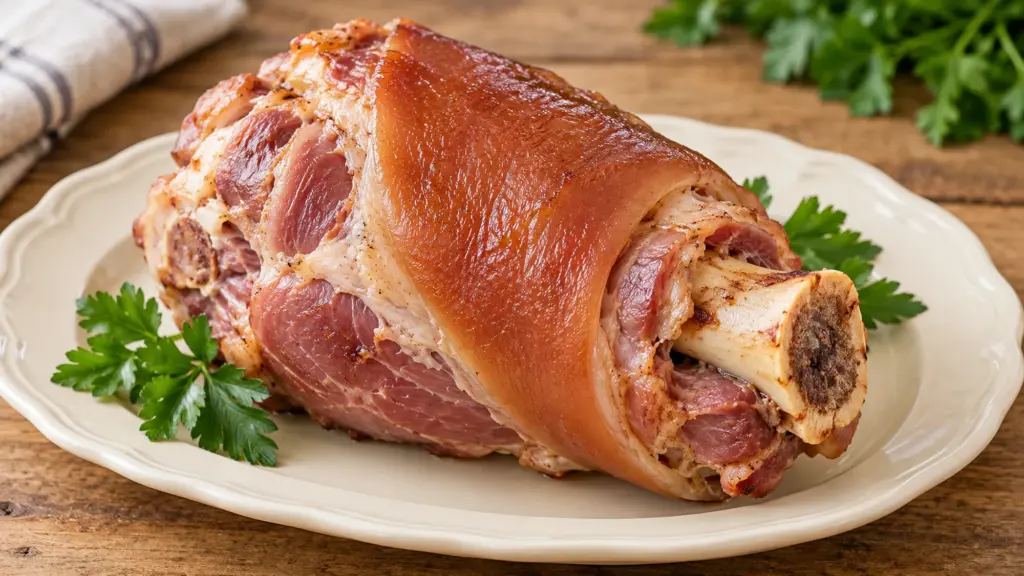
A small bone-in joint can look like a shortcut to ham, but a gammon hock usually needs cooking first. It is a cured pork cut from the lower hind leg, with rind, bone and meat that suit slow, moist cooking. Check whether yours is uncooked or already cooked before choosing a method.
A gammon hock is cured pork from the lower leg, usually sold on the bone. Choose smoked or unsmoked deliberately, follow the package’s cooking instructions and allow time for tenderness as well as safe cooking.
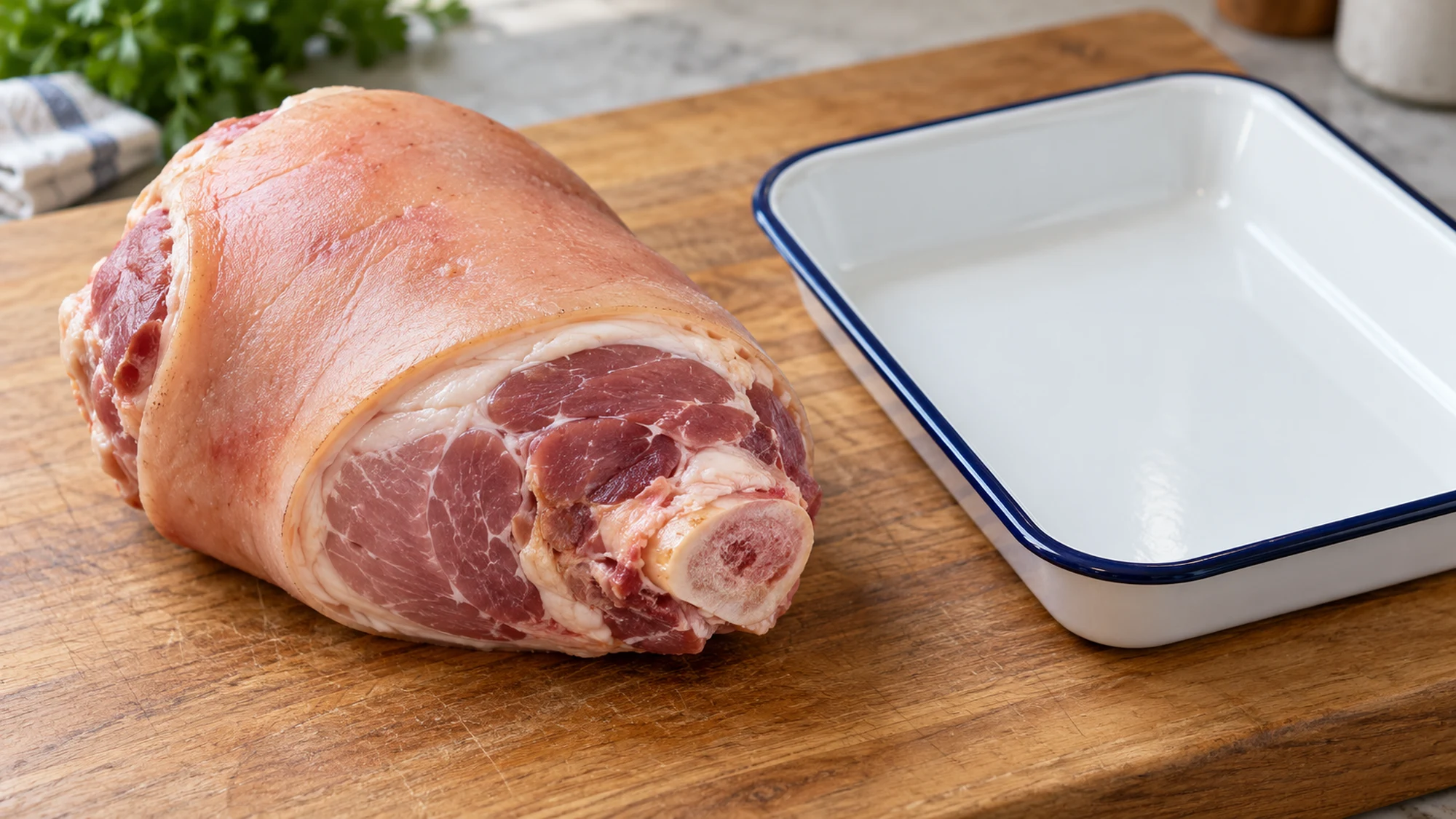
What is a gammon hock?
The name describes both the cut and its treatment. Butcher Douglas Willis identifies it as cured hindquarter shank, also sold as ham hock. It is a compact joint rather than a boneless piece of ready-to-slice sandwich ham.
Names are less useful than the product description when deciding whether it is ready to eat. A cooked hock and an uncooked cured hock can require very different handling. I’d make that the first question at the counter; it prevents a reheating instruction being mistaken for a cooking method.
- Gammon hock: Usually an uncooked cured joint in British butchery; check the actual label.
- Fresh pork hock: An uncured cut, so it does not bring the same cured flavor.
- Cooked ham hock: A prepared product whose label gives its own heating and storage directions.
Choose smoked, unsmoked or already cooked
Smoking is a separate choice from curing. Wild Meat Company offers both smoked and unsmoked cured hocks. Choose the flavor that suits the dish rather than assume every hock will contribute smokiness.
The bone and rind also mean the pack weight is not the weight of edible shredded meat. I’d plan a hock as part of a meal with vegetables, beans or potatoes rather than promise an exact number of portions from an unfamiliar joint.
| Product | Main distinction | What to check |
|---|---|---|
| Uncooked cured hock | Needs cooking | Full cooking directions |
| Smoked cured hock | Adds smoke flavor | Whether it is cooked |
| Unsmoked cured hock | Cured without smoke flavor | Seasoning and cooking directions |
| Already cooked hock | Prepared by the producer | Heating, opening and use-by instructions |
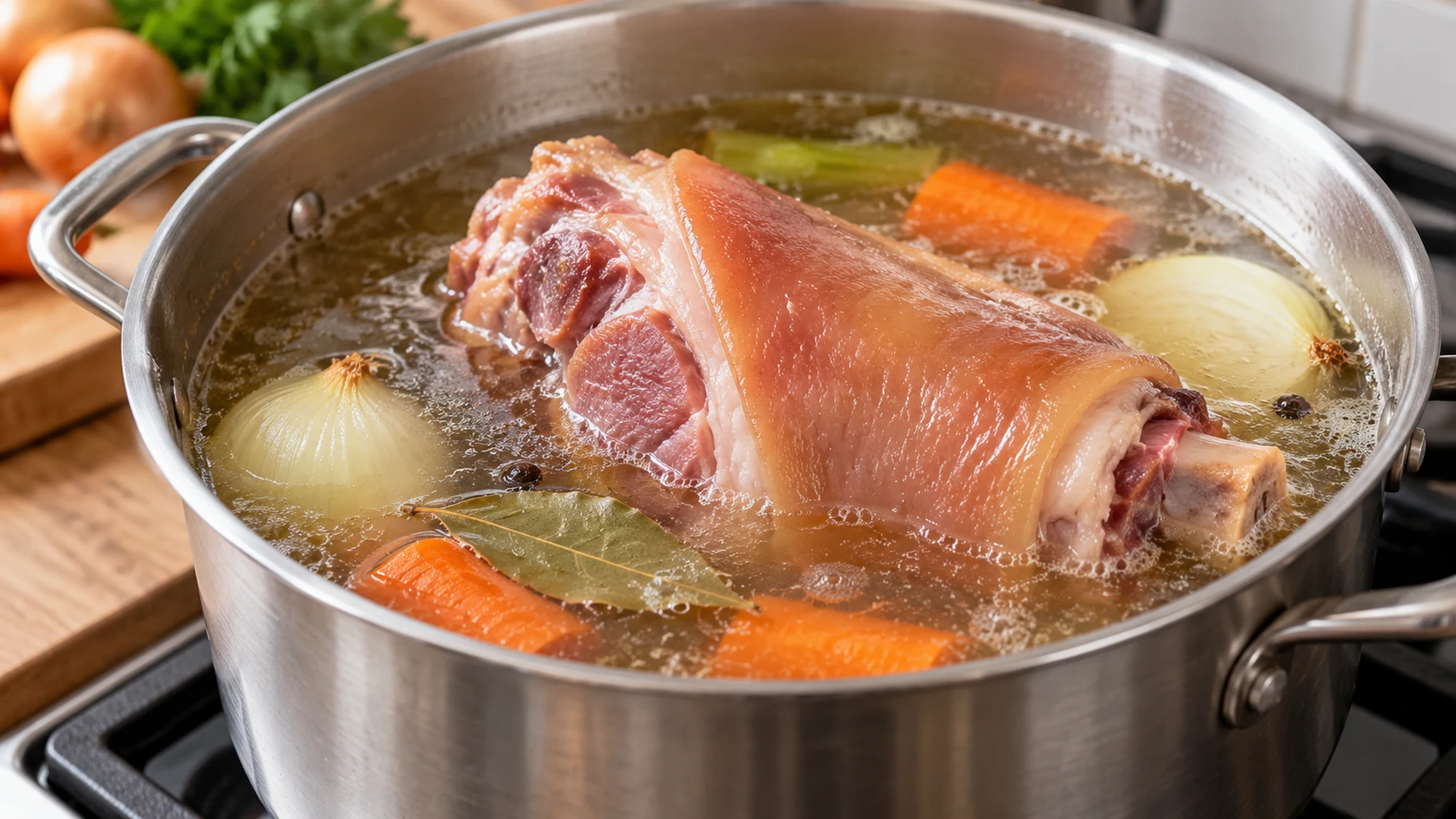
Cooking gammon hock: tenderness and safety
Slow simmering or braising gives this cut time to soften. Use a reliable hock method that matches your product, keep the heat controlled and follow its instructions. If the butcher recommends soaking, ask how to do it safely and keep the meat refrigerated; do not treat soaking as a substitute for cooking.
Use a thermometer rather than cured pinkness to judge safety. The UK Food Standards Agency gives 75°C (167°F) for 30 seconds as one safe temperature-time combination. Check the thickest meat, avoiding bone. Reaching a safe temperature does not by itself mean the hock has become tender enough to pull.
- Pick a suitable pot: Allow room for the joint and the liquid specified by your method.
- Keep the checks separate: Verify safe temperature, then assess whether the cooked meat yields and separates readily.
- Season late: After everything is safely cooked, taste the cooking liquid before adding salt; the cure already brings seasoning.
- Remove carefully: Lift the hot joint onto a stable dish and watch for small bones when separating the meat.
Using the meat and storing leftovers
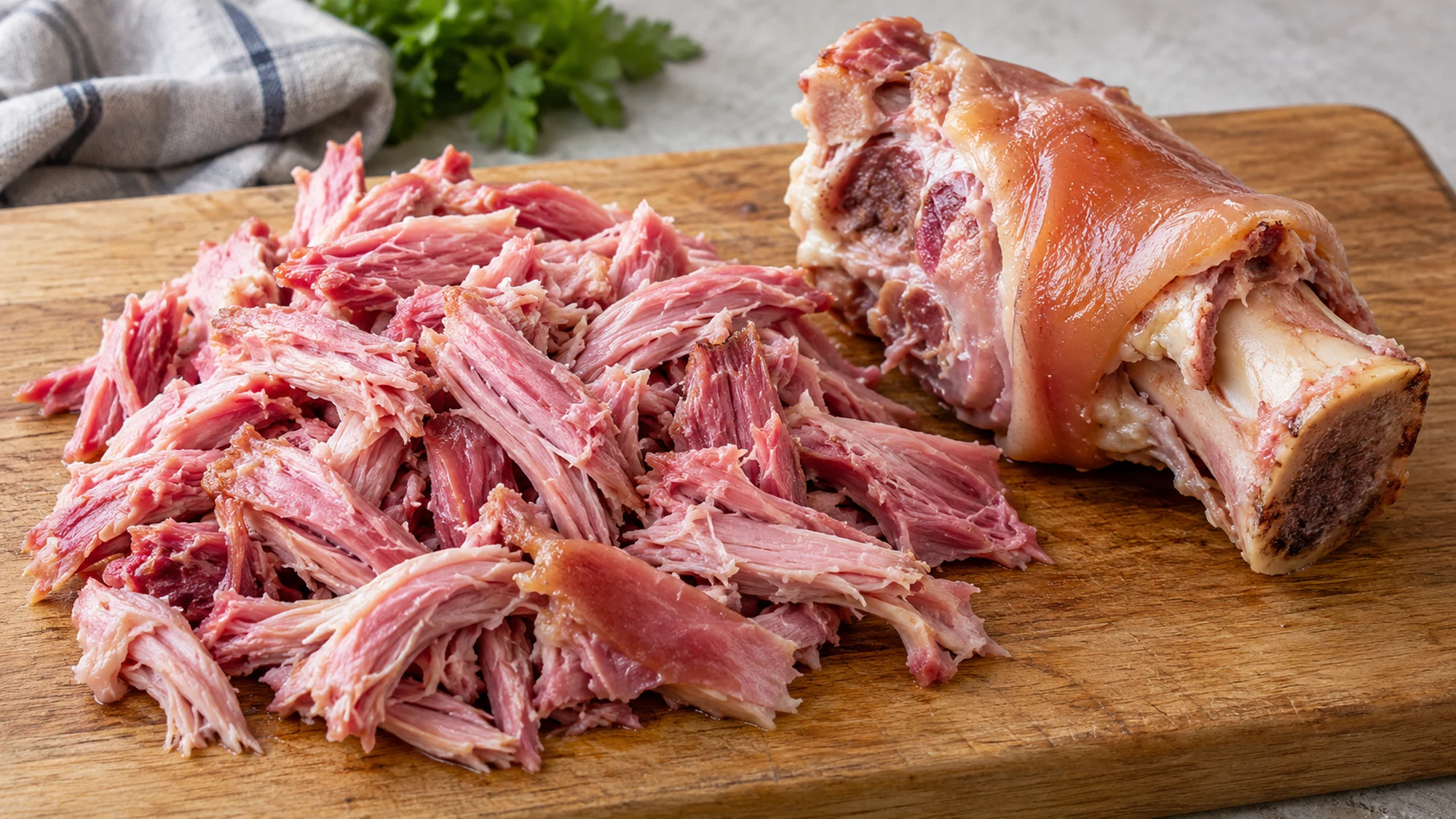
Tender meat can go into a pea soup, a vegetable pie filling or a warm bean dish. Treat the cooking liquid as an ingredient to assess, not something that must all be used. If it tastes too salty once fully cooked, choose another liquid for the next dish instead of concentrating it further.
Keep the original label for allergens and storage. Cures vary: Harveys’ smoked hock ingredient list includes soya. Sauces, stock and accompaniments need their own checks, even when the main ingredient looks like plain meat.
- Chill promptly: FSA advises dividing cooked food into smaller portions and refrigerating within one to two hours.
- Keep it cold: Its chilling guidance recommends a fridge between 0–5°C (32–41°F).
- Plan the next meal: Follow any stricter package instruction; FSA advises eating properly handled leftovers within 48 hours or freezing them.
- Defrost safely: Follow the label and thaw in the refrigerator, keeping raw meat separate from ready-to-eat food.
Bottom Line
Choose a gammon hock by its cure, smoke flavor and cooking status. Cook it safely, give it time to become tender and use its seasoning thoughtfully; a little attention to the label makes the whole joint easier to handle.
Sources
- Douglas Willis: Gammon hock cut
- Wild Meat Company: Smoked and unsmoked gammon hock
- Food Standards Agency: Cooking temperatures
- Food Standards Agency: Chilling and defrosting
- Harveys Butchers: Product ingredients

Hi, I’m Emily Pocker! I share recipes and food guides here at Recipes360 to help you find everyday meal inspiration and feel more confident in the kitchen. My goal is to make cooking approachable, enjoyable, and full of flavor.