
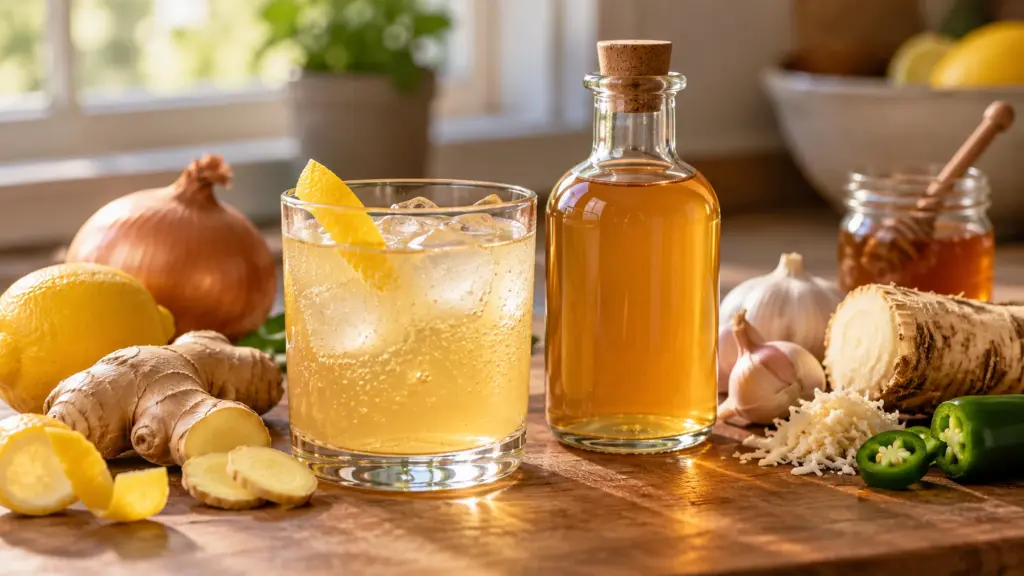
A bottle of sharp, gingery vinegar can do more for a plain dressing than another pinch of salt. Fire cider combines that acidity with horseradish, garlic, onion and chile, then rounds the edges with honey. This version treats it as a concentrated culinary infusion, with a warm preparation step and refrigeration throughout the steeping period.
Use commercial apple cider vinegar labeled 5% acidity, keep the sliced flavorings modest and check the heated mixture with a thermometer. After a refrigerated two-week infusion, filter out the solids and add honey. Start with a little in food or a diluted drink; this is a seasoning, not a medicine.
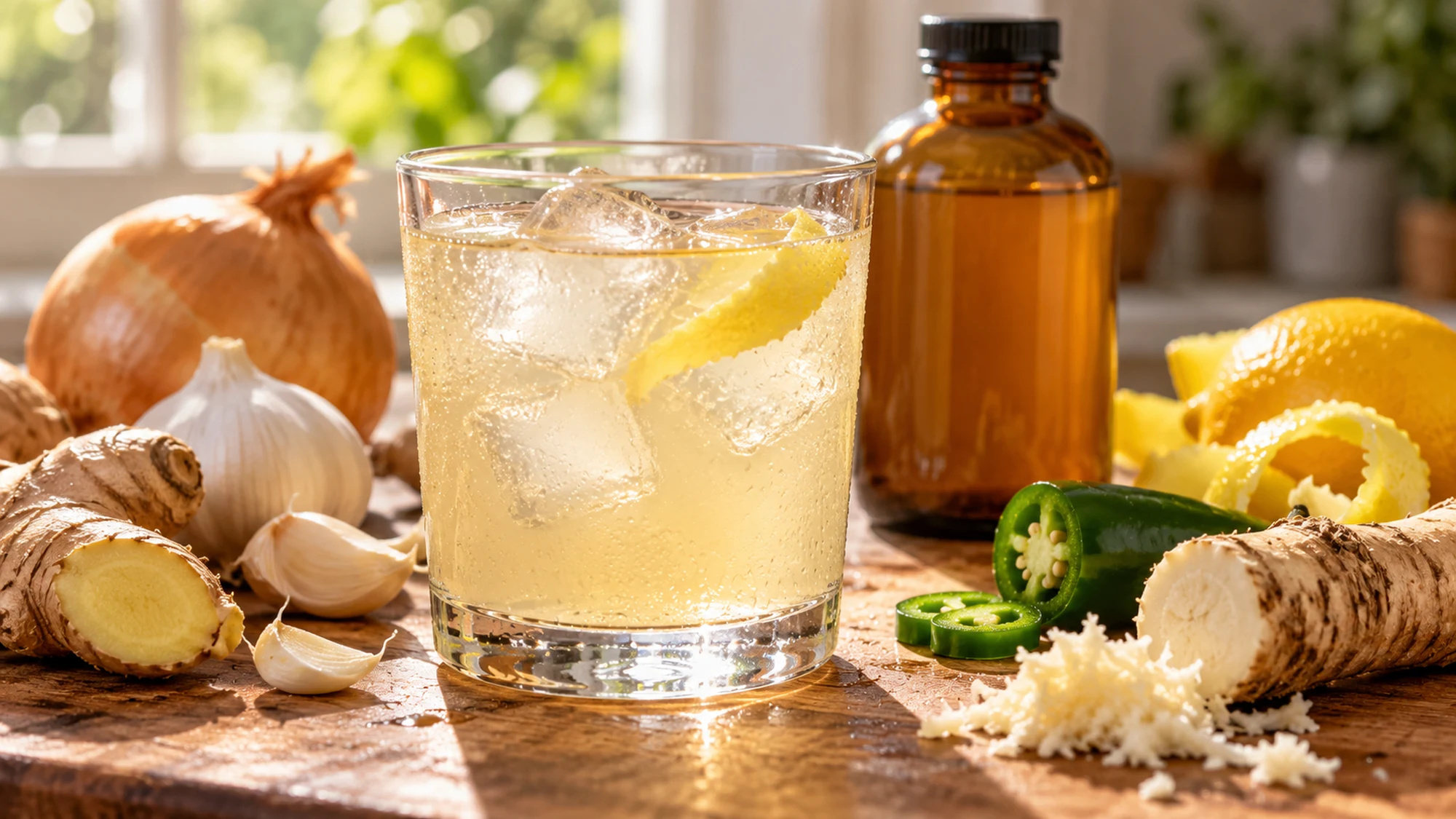
Serving Suggestions for Fire Cider
Think of the finished liquid as seasoned vinegar. A small splash can brighten beans, slaw or a pan of cooked vegetables. Taste the food before adding more, especially if it already contains lemon, pickles or a sharp cheese. The honey softens the taste but does not remove the acidity.
I’d begin with a teaspoon whisked into an individual portion of dressing, then adjust on a leaf or spoonful of food. The site’s guide to red wine vinegar explains why different vinegars change flavor rather than acting as identical replacements. For a meal, serve the dressing beside a crisp chickpea and cucumber salad, adjusting its existing lemon.
- Dress a small serving first so a sharp batch does not overwhelm the whole bowl.
- Add the concentrate to an individual drink; never dilute the storage bottle with water.
- Keep a dated label on the bottle, including the honey and chile ingredients.
For a drink, dilute a small amount in plenty of water and stop if it feels irritating. Avoid treating a concentrated spoonful as a daily challenge. Keep the main bottle refrigerated while serving, use a clean spoon and return any mixed drink to normal chilled storage rather than pouring it back.
Fire Cider Variations and Flavor Balance
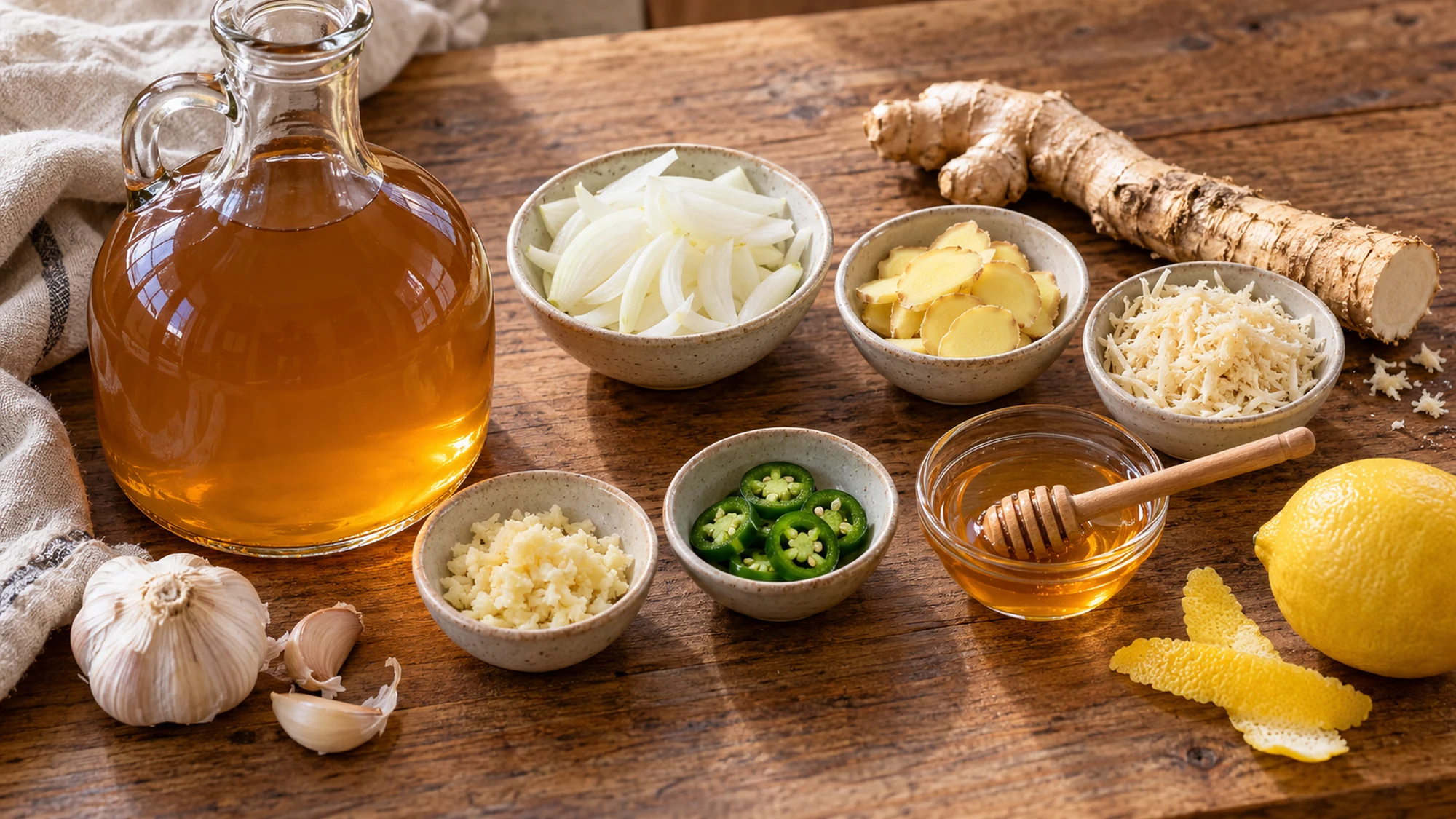
Horseradish gives a different kind of pungency from jalapeño: one can feel brisk and nose-clearing, while the other brings lingering chile heat. Use the measured small amounts before considering a hotter batch. Wearing gloves for the pepper and keeping your face away from freshly cut horseradish makes preparation more comfortable.
Lemon peel contributes aroma without adding a large amount of juice. Remove only the colored skin, since thick white pith brings bitterness. I prefer that small citrus detail to adding several spices at once; it leaves the ginger recognizable. Do not exchange the commercial vinegar for homemade vinegar of unknown strength.
Change flavor cautiously, keeping the total sliced produce within the card’s limit. University of Minnesota Extension’s fire cider guidance emphasizes a modest solids-to-vinegar ratio and checking the temperature through the mixture. These directions are for a refrigerated infusion; they do not establish a shelf-stable canning process.
| Adjustment | Flavor effect | Keep in mind |
|---|---|---|
| Less jalapeño | Milder chile heat | Horseradish still tastes pungent |
| Extra base vinegar after filtering | Less concentrated flavor | Use the same commercial vinegar |
| Less honey | Sharper, less sweet finish | Honey is added after straining |
| Longer steeping | A stronger infusion may develop | Keep refrigerated and inspect before use |
Health Benefits and Portion Balance
The useful benefit here is culinary variety, not a demonstrated effect on illness. Cleveland Clinic’s review of fire cider finds no evidence supporting claims that the mixture prevents sickness. An ingredient’s reputation does not establish a benefit for the strained liquid, and this recipe makes no immunity or weight-loss promise.
Acid and chile can aggravate reflux or a sensitive stomach. If either bothers you, choose another seasoning instead of pushing through discomfort. Straining also removes the vegetable solids, so the bottle should not be counted as a vegetable serving. Honey contributes sugar; the card’s small serving estimate does not describe a whole glass.
Keep the infusion refrigerated, and discard it without tasting if mold, bubbling, new cloudiness or sliminess appears. It is not intended for babies, and honey-containing foods must never be given under 12 months. Clean equipment and the heating step matter even though the starting ingredient is acidic; vinegar does not excuse careless handling.
Bottom Line
Use fire cider where a little sharpness, ginger and heat will improve an actual dish. Keep the bottle cold, filter it well and taste a small diluted portion before deciding how much to use. I’d let the finished flavor determine its place at the table, without asking a vinegar infusion to stand in for medical care.
Fire Cider Recipe

Ingredients
- 600 ml pasteurized filtered apple cider vinegar commercially produced; labeled 5% acidity
- 40 g onion peeled and very thinly sliced
- 20 g fresh ginger washed, peeled and thinly sliced
- 20 g fresh horseradish root washed, peeled and thinly sliced
- 10 g garlic peeled and thinly sliced
- 5 g jalapeño thinly sliced; wear gloves
- 2 strips lemon peel washed lemon; colored skin only, no white pith
- 60 g honey
Equipment
- Heatproof quart glass jar and nonreactive lid
- Saucepan
- Digital food thermometer
- Fine strainer and coffee filter
- Clean glass storage bottle
Instructions
- Clean and sanitize the work surface and utensils. Wash the heatproof jar, then sterilize in boiling water for 10 minutes; keep it warm. Prepare the nonreactive lid according to its manufacturer’s directions.
- Wash produce under running water before peeling and slicing. Combine the sliced onion, roots, garlic, chile and lemon peel. Use no more than 1 loosely filled cup (240 ml) in total; reserve any excess for another dish. Put these flavorings in the warm jar.
- Heat the vinegar in a saucepan to 190–195°F (88–91°C). Carefully pour over the flavorings. With a clean thermometer, check several locations including the center of the solids; the whole mixture must remain at or above 165°F (74°C) for at least 1 minute 12 seconds. If needed, transfer to the saucepan and gently reheat the entire mixture while stirring, then return to the warm jar.
- Cover with the clean nonreactive lid. Let the jar cool enough to handle and refrigerate promptly at 40°F (4°C) or below. Keep refrigerated for 14 days. Check that the solids remain submerged; do not add water.
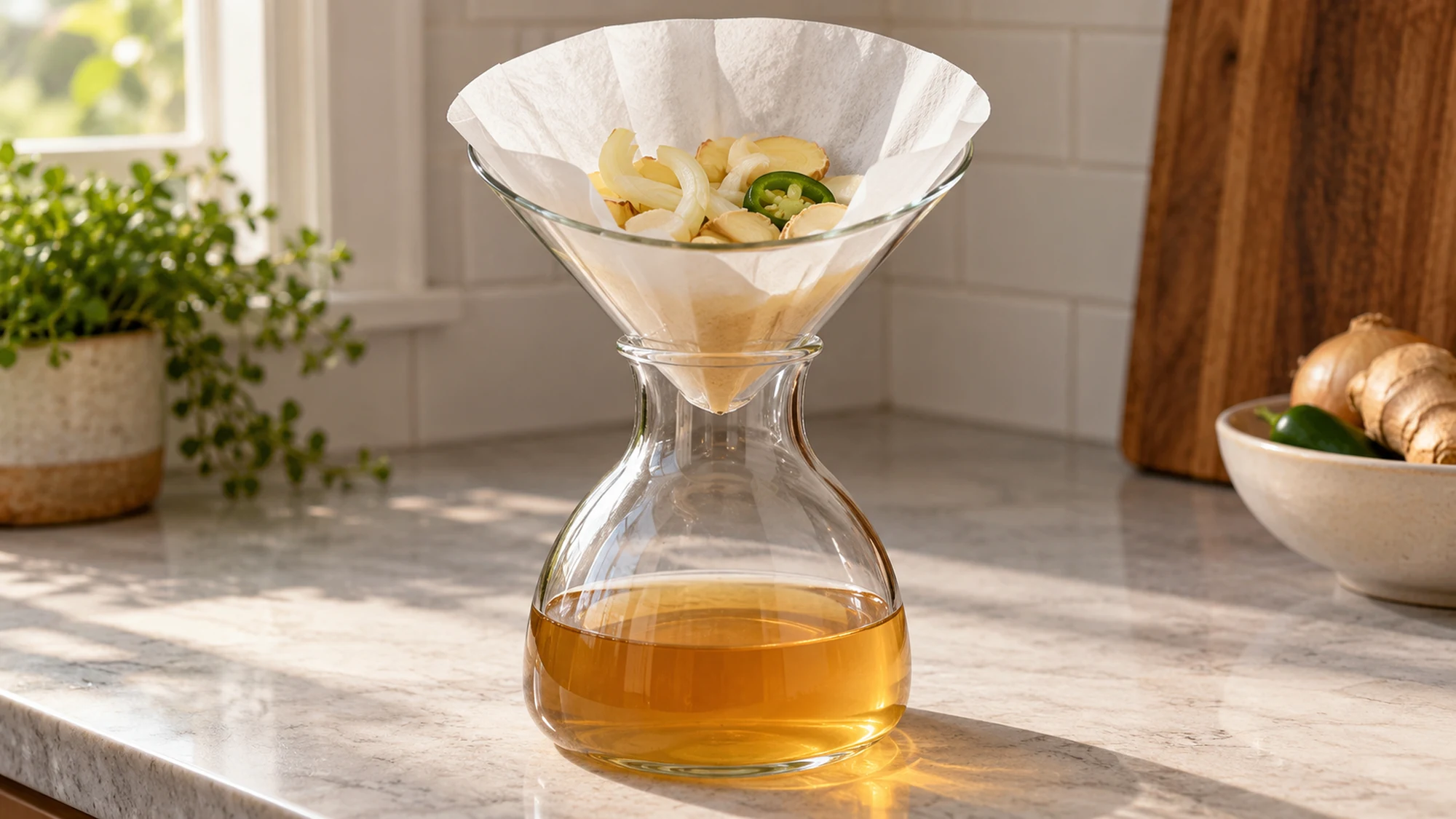
- Wash and sterilize the storage bottle in boiling water for 10 minutes. If the infusion has no signs of spoilage, strain through a fine strainer followed by a coffee filter into the freshly prepared bottle. Discard the solids. Stir in the honey until dissolved. Yield is approximately 600 ml and will vary with liquid retained by the solids.
- Cap, date and keep refrigerated. Make a small batch for prompt use; this is not a shelf-stable preserve. Discard without tasting if mold, bubbling, new cloudiness or sliminess develops. Start with 1 teaspoon in a portion of dressing or dilute in at least 150 ml water for a drink, adjusting only if comfortable.
Nutrition
Video
Notes
Tried this recipe?
Let us know how it turned out!Hi, I’m Emily Pocker! I share recipes and food guides here at Recipes360 to help you find everyday meal inspiration and feel more confident in the kitchen. My goal is to make cooking approachable, enjoyable, and full of flavor.