

A coffee break followed by a bathroom trip can make the dehydration warning sound convincing. Does coffee dehydrate you? In ordinary moderate use, the water in coffee generally contributes to fluid intake rather than causing a net loss. Caffeine can increase urine production, but that does not mean each cup leaves you drier than before.
Moderate coffee usually contributes to hydration. Caffeine’s diuretic effect does not automatically outweigh the water in the drink, although larger doses and unfamiliar caffeine intake can affect urine output. Water remains a straightforward everyday choice, and individual caffeine tolerance still matters.
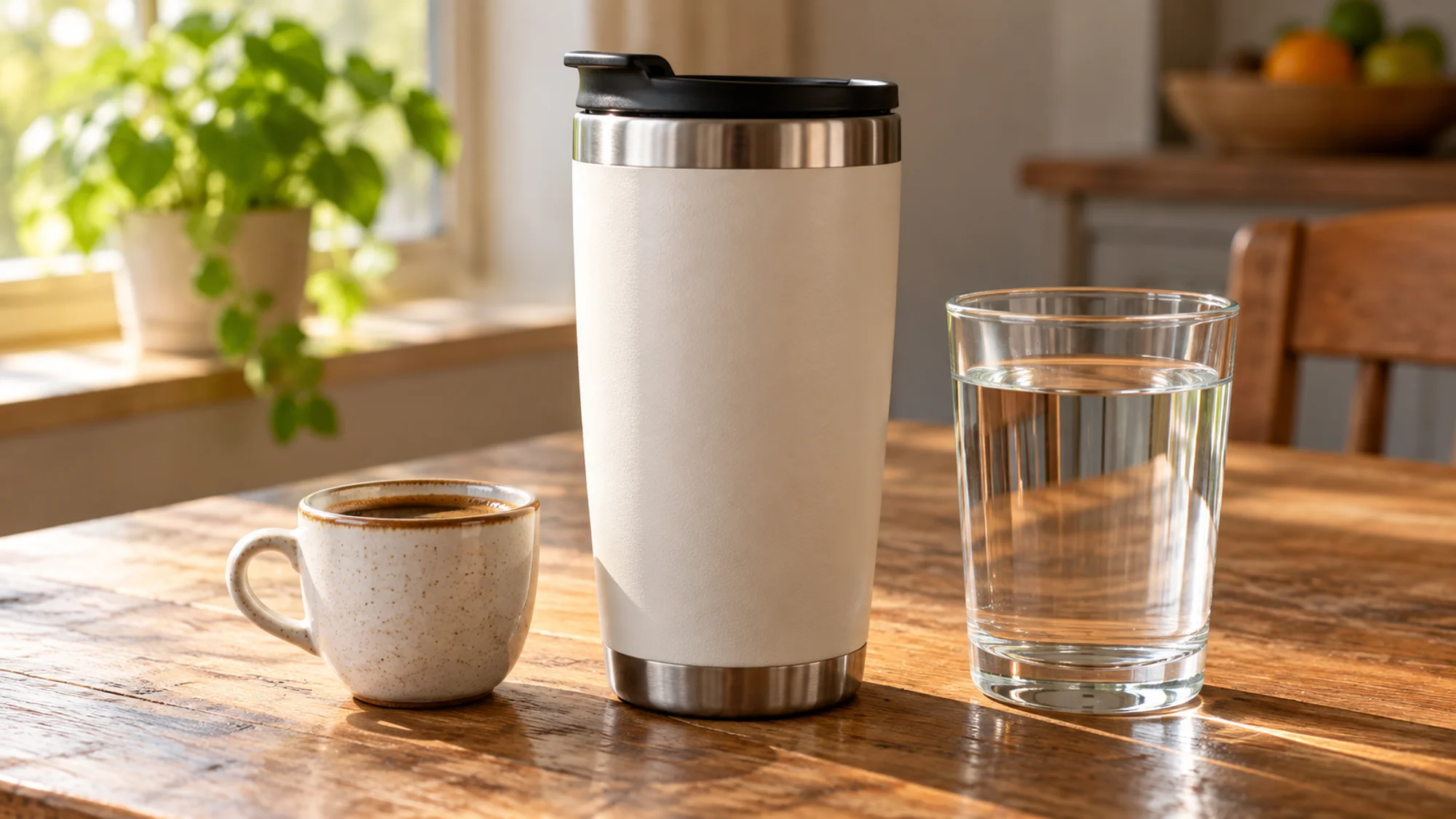
Does coffee dehydrate you, or just increase urination?
Mayo Clinic explains that fluid in caffeinated drinks generally balances the diuretic effect at typical caffeine levels. “Diuretic” means something that increases urine production; it is not a synonym for inevitable dehydration. Needing the bathroom after drinking a beverage does not, by itself, tell you whether your overall fluid balance is inadequate.
The distinction is useful without turning coffee into a hydration assignment. I would keep a glass or bottle of water available and enjoy coffee in an amount that suits me. There is no reason to force an extra cup because it contains water, or to invent a compulsory glass-for-every-cup repayment rule.
| Situation | What the evidence suggests | Practical response |
|---|---|---|
| Moderate habitual coffee use | Coffee can contribute fluid | Consider it within your overall drinks |
| A large caffeine dose at once | Urine production may increase | Do not chase a hydration benefit with more caffeine |
| Little usual caffeine intake | Responses may differ from habitual drinkers | Start with your own tolerance |
| A prescribed fluid restriction | General advice may not fit | Follow your care team’s plan |
What the coffee-and-water study actually tested
A 2014 crossover study in PLOS ONE compared coffee and water in 50 men who already drank coffee regularly. Each trial lasted three days, with four 200-milliliter portions of the assigned beverage per day and controlled food, fluid and activity. The researchers found no significant differences across several measures of hydration.
That is evidence against the blanket claim that moderate coffee inevitably dehydrates habitual drinkers. It is not a prescription to drink four cups, nor a demonstration that every dose suits children, pregnant people, someone who rarely uses caffeine or a person with a relevant illness. The study was funded by the Institute for Scientific Information on Coffee, and its short duration and selected participants limit how broadly to apply it.
- A crossover design compares the same participants under different conditions.
- The findings concern coffee in the tested setting, not pure caffeine powder.
- No significant difference in measured hydration is different from proving a benefit from drinking more coffee.
- Use the study to question an absolute claim, not create a new absolute rule.
The useful finding is that moderate coffee did not behave like an unavoidable dehydrating drink in these habitual coffee drinkers.
Separate hydration from caffeine tolerance

The FDA cites 400 milligrams of caffeine per day for most adults as an amount not generally associated with negative effects. It also emphasizes wide differences in sensitivity and caffeine elimination. This is not a target, and cup counts can mislead because size, preparation and product strength differ.
Sleep problems, shakiness, an uncomfortable heartbeat or other symptoms deserve attention even when the daily total seems modest. Pregnancy, breastfeeding, medical conditions and medicines can change the advice you need. Our guide to coffee, portion size and timing covers that broader decision without treating hydration as the only issue.
- Count caffeine from tea, energy drinks and other relevant sources.
- Check the size of a travel mug before calling it one cup.
- Consider a smaller serving or decaf when you want less caffeine.
- Ask about individual restrictions rather than borrowing someone else’s daily limit.
Make the rest of the day easy to manage

Your fluid needs vary with activity, body size, weather and other circumstances, as Mayo Clinic’s hydration explanation notes. Coffee should not distract from drinking enough suitable fluids overall. An ordinary desk day and a day working outdoors in heat are different situations; one fixed cup rule cannot describe both.
I prefer making water convenient instead of treating it as a corrective chore. Keep it where you spend time, and choose drinks deliberately rather than relying on repeated coffee refills. If you have a prescribed fluid limit, follow that plan; do not add large amounts of water based on a general article.
Bottom Line
Does coffee dehydrate you? Moderate coffee generally contributes fluid, especially in habitual drinkers, but caffeine dose and personal circumstances still matter. Enjoy a tolerable portion, keep water available and avoid turning either drink into a rigid daily quota.
SciShow explains the distinction between caffeine, urine output and hydration in the video below. It offers context for the research rather than an individualized drinking plan.
Sources
- Killer, Blannin and Jeukendrup: 2014 coffee–water crossover study
- Mayo Clinic: Caffeine and hydration
- FDA: How Much Caffeine Is Too Much?

Hi, I’m Emily Pocker! I share recipes and food guides here at Recipes360 to help you find everyday meal inspiration and feel more confident in the kitchen. My goal is to make cooking approachable, enjoyable, and full of flavor.