
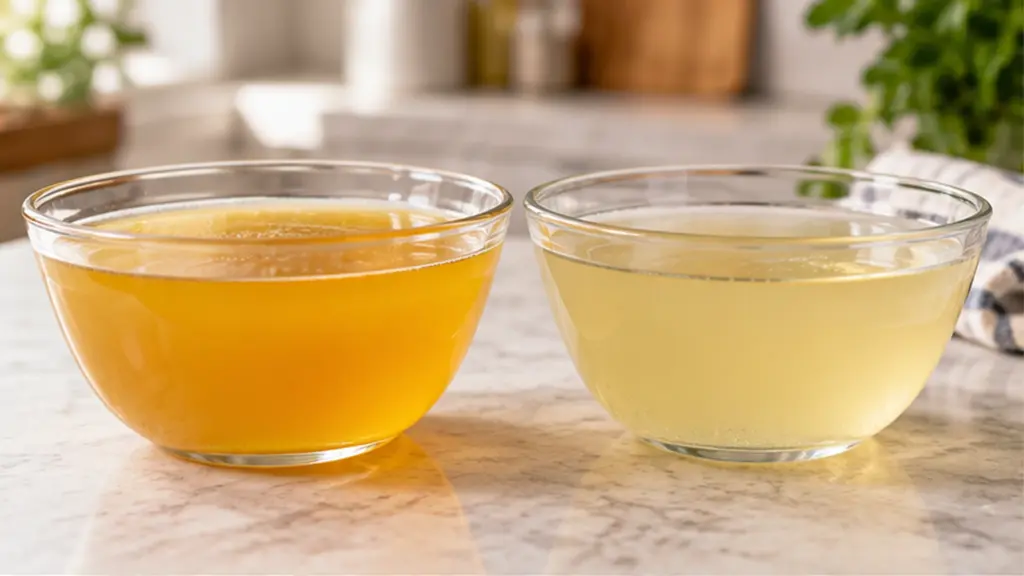
The recipe says stock, the carton says broth, and dinner is already on the stove. Before making an extra grocery trip, look at what the liquid needs to do: provide a light savory background, give a sauce body, or become the main part of a soup.
The traditional difference between stock and broth is emphasis: stock is generally a bone-based cooking foundation, while broth leans toward meat flavor and a ready-to-eat liquid. In real kitchens and store cartons, the categories overlap.
I would choose by flavor, body, and seasoning before relying on the front label. A beautifully named stock that is too salty for your reducing sauce is still the wrong fit.
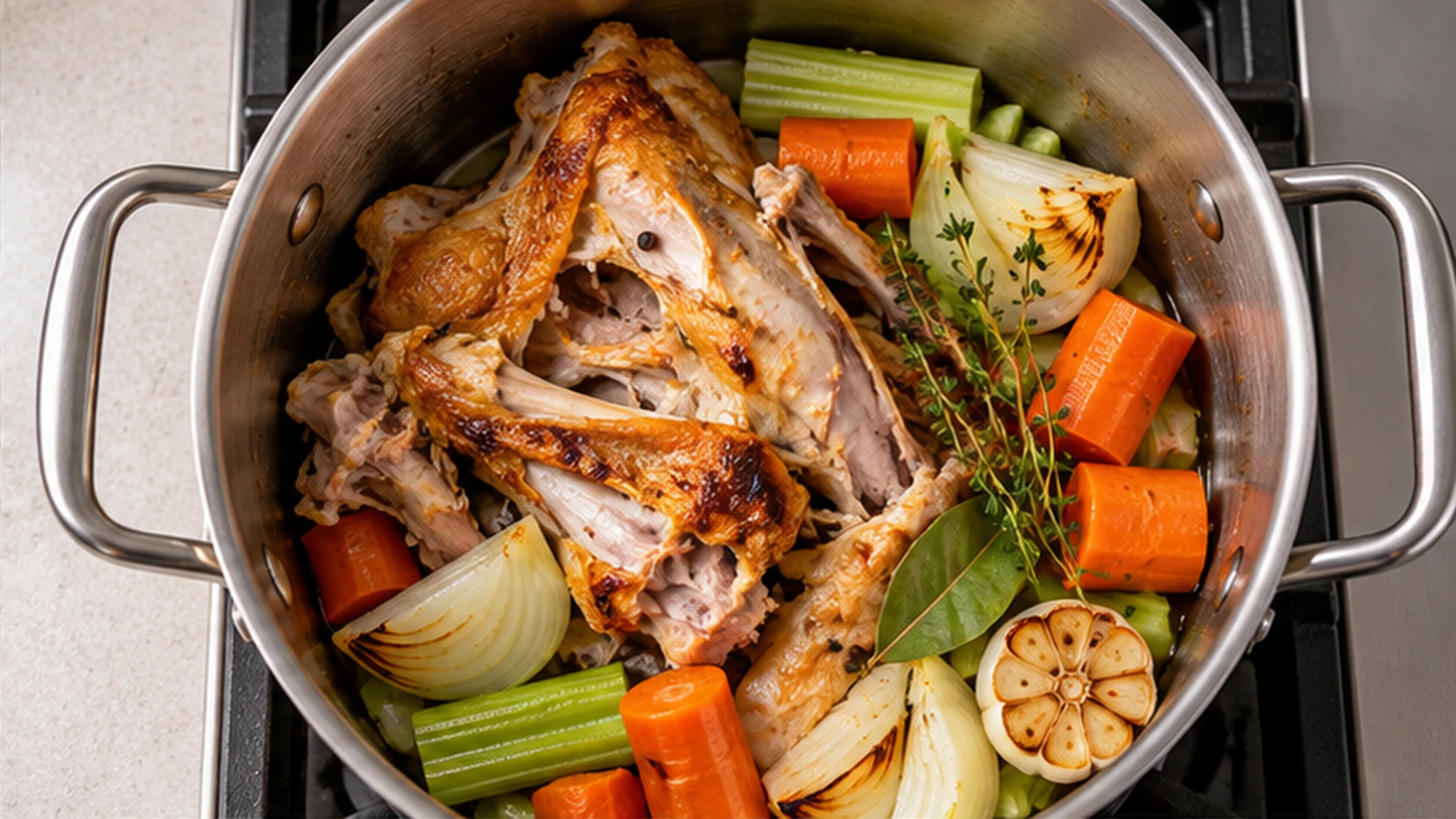
The traditional difference between stock and broth
Rouxbe chef Eric Wynkoop describes stock and broth as a spectrum, not an absolute dividing line. Bone-based stock can contain meat scraps, while a meat-based broth may include bones. Both can carry flavor from vegetables and other aromatics.
That makes the familiar bones-versus-meat shortcut useful, but incomplete. A pot is not magically reclassified because a little meat remains on a carcass. What matters in the finished dish is the liquid you actually have.
| Question | Stock, traditionally | Broth, traditionally |
|---|---|---|
| Main emphasis | Bones and a cooking foundation | Meat flavor and a finished liquid |
| How it is used | Base for sauces and other dishes | Soup base or a liquid to serve |
| How firm is the distinction? | Recipes and products vary | Ingredients can overlap with stock |
The table describes customary culinary language, not a guarantee about every package. Vegetable versions are another reason not to apply a bones-versus-meat rule literally: read their ingredients and intended use instead.
Choose the liquid for the dish
Swanson describes its stocks as lightly seasoned foundations for sauces and meats, while its broths combine stock, vegetables, and seasonings. These are one manufacturer’s descriptions, but they demonstrate why broth and stock need not be completely separate ingredients.
- For a reducing sauce: choose a liquid with a suitable savory flavor and restrained salt. Evaporation concentrates what stays in the pan.
- For a simple soup: the liquid is more exposed. Choose a flavor you want to taste directly, then build the soup around it.
- For rice or grains: preserve the recipe’s liquid quantity. Changing the liquid’s name does not change the grain’s cooking instructions.
- For a vegetable dish: match the ingredients to the people eating it; chicken stock does not become vegetarian because the finished dish contains vegetables.
I would rather use a compatible broth already on hand than buy a second carton solely for its name. The exception is a recipe that depends on a particular stock’s concentration or texture; a thin substitute may not give the same result.
Can you substitute one for the other?
Often, yes, for ordinary soups, braises, and grain dishes—but make the swap thoughtfully. Start with the same required volume when both liquids are ready to use, then consider flavor and salt. A concentrate needs its own dilution directions first.
- Compare like with like. Ready-to-use liquid, condensed stock, and concentrated paste are not equal-volume substitutes.
- Check sodium per equal serving. “Stock” does not by itself mean unsalted, and “broth” does not always mean heavily seasoned.
- Consider the finished texture. A recipe calling for a rich homemade stock may rely on more than its savory taste.
- Taste at the appropriate stage. For a sauce that will reduce, make the final seasoning adjustment near the end.
Our chicken bouillon guide covers concentrate dilution separately. That is the useful next step if your cupboard contains cubes or paste rather than a carton of ready-to-use liquid.
Substitute according to concentration and the dish’s needs; the package name is only your first clue.
Cool and store the leftovers safely
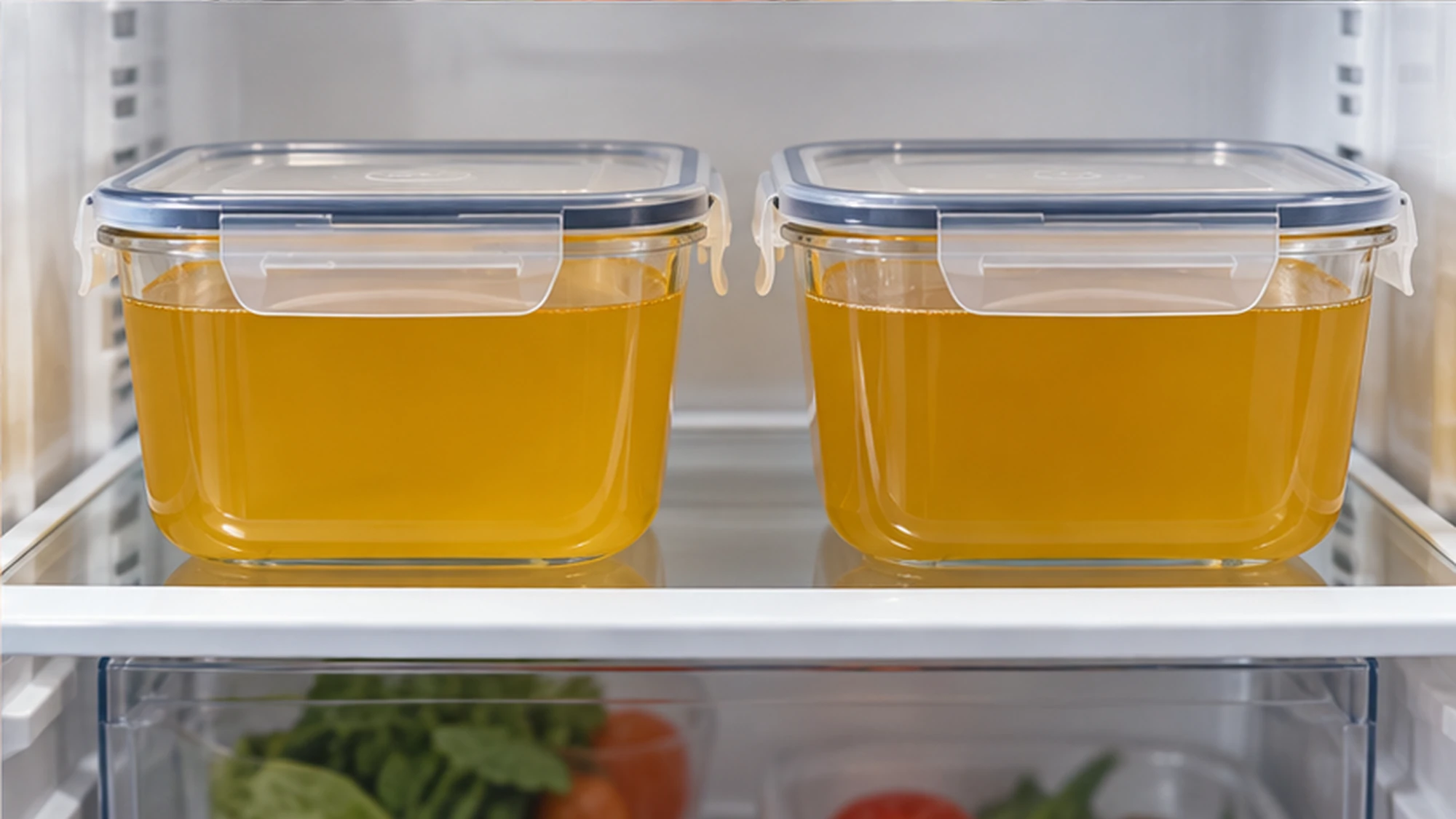
Homemade stock and broth both need careful handling. FoodSafety.gov recommends shallow containers and prompt refrigeration for leftovers. Do not leave a large pot sitting out until it feels completely cold.
- Keep the refrigerator at 40°F (4°C) or below. The federal cold-storage chart lists three to four days for soups and stews; freeze portions you will not use within that window.
- Watch time out of refrigeration. Nebraska Extension gives a two-hour limit for perishable food at room temperature, shortened to one hour at 90°F (32°C) or hotter.
- Follow packaged-product directions. An unopened shelf-stable carton and an opened carton have different handling needs. Mark the opening date so it is not a guessing game.
Reboiling is not a rescue plan for liquid left out too long. Some bacterial toxins resist heat, so safe storage matters before the next saucepan comes out.
Bottom Line
Use the stock-versus-broth distinction as a cooking guide, not an inflexible rule. Match the liquid’s ingredients, concentration, seasoning, and texture to your dish, and give either one the same careful storage.
Chef Jean-Pierre demonstrates a classic chicken broth/stock below, showing how the two words can overlap in everyday cooking.
Sources
- Rouxbe: Stock, broth, and bone broth
- Swanson: Stocks
- Swanson: Broths
- FoodSafety.gov: Four Steps to Food Safety
- FoodSafety.gov: Cold Food Storage Chart
- Nebraska Extension: Reheating food left out too long

Hi, I’m Emily Pocker! I share recipes and food guides here at Recipes360 to help you find everyday meal inspiration and feel more confident in the kitchen. My goal is to make cooking approachable, enjoyable, and full of flavor.