
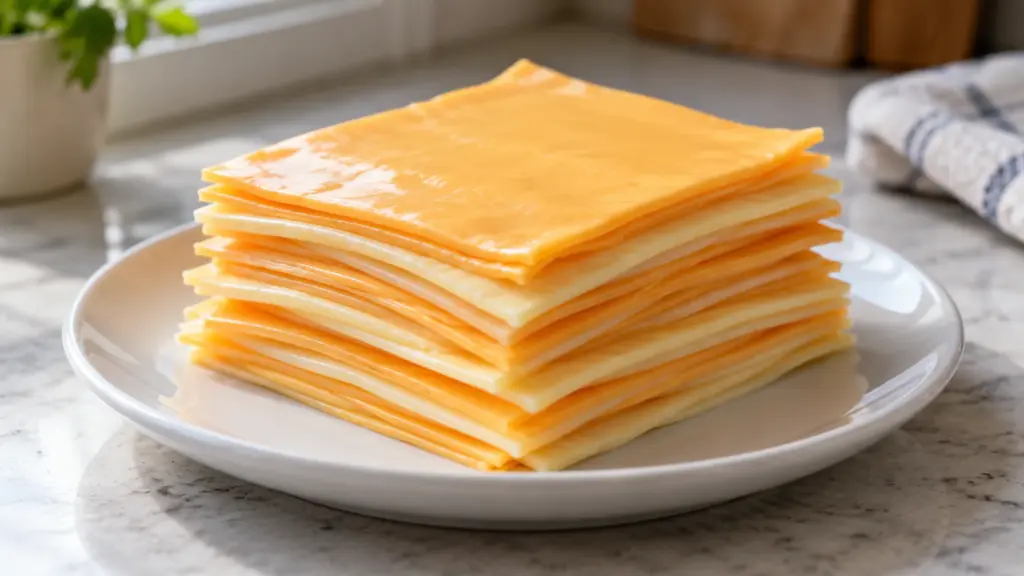
A slice of American cheese can turn a toasted sandwich into something soft and creamy before the bread gets too dark. That dependable melt is its main attraction—not proof that every yellow square at the store has the same ingredients. The package name matters more than the shape.
American cheese is a processed cheese style designed for a smooth, even melt. Check the full product name and ingredient list, choose it for the dish you are making, and compare nutrition using equal serving weights rather than counting slices.
I’d think of it as a practical cooking choice. A sharp cheddar may bring more pronounced flavor; American cheese brings a different texture. Neither has to replace the other in every sandwich, sauce, or snack.
What American Cheese Actually Means
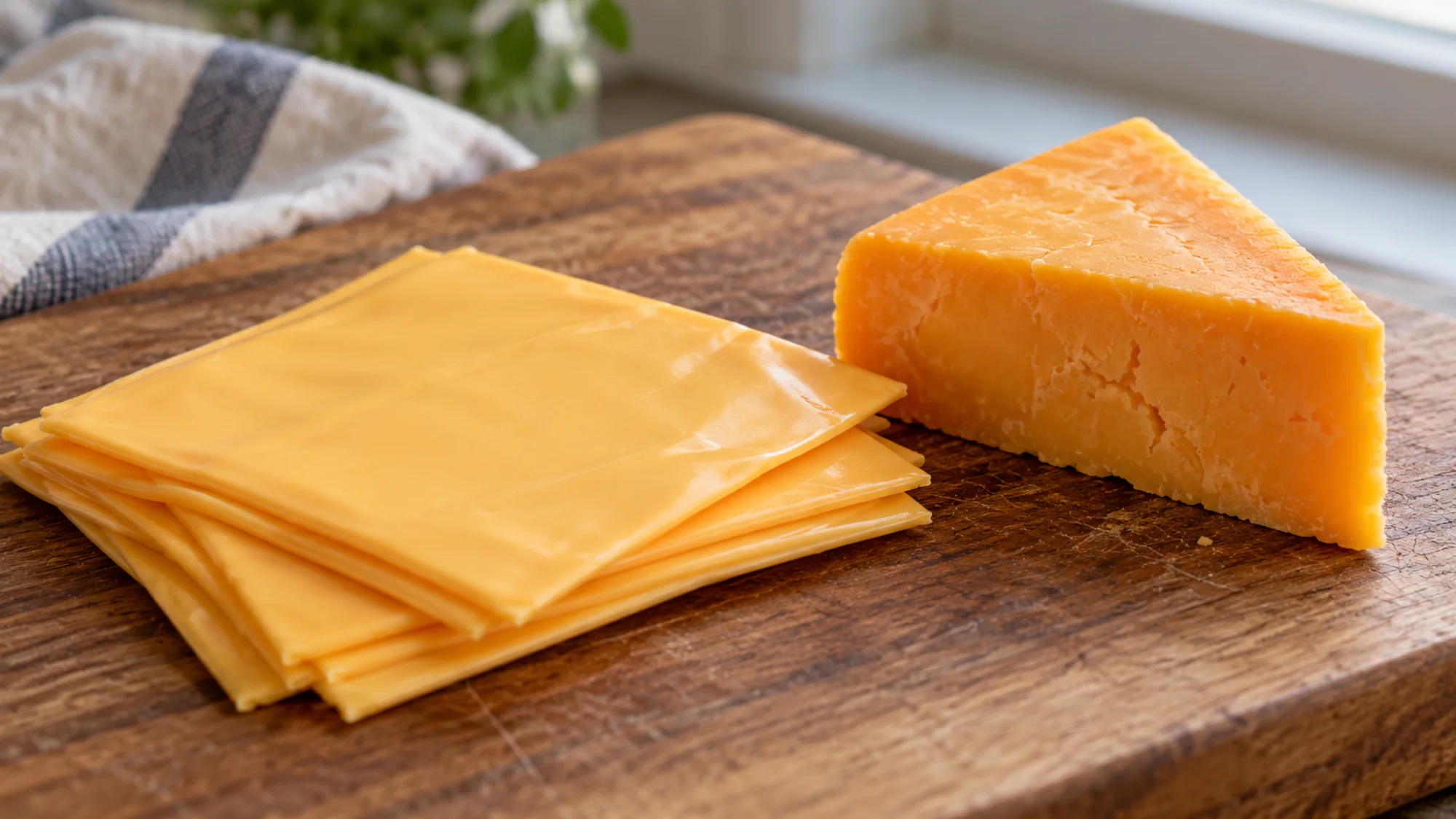
Pasteurized process American cheese begins with cheese that is blended and heated with emulsifying ingredients. USDA’s procurement requirements identify it as a specific pasteurized process cheese product tied to the federal standard, not a catch-all name for anything sold in slices.
In everyday shopping, however, “American” can appear beside several different product descriptions. Read the complete wording. Pasteurized process cheese, cheese food, and other cheese products need not have the same formulation. The familiar orange wrapper does not settle the question.
| What to read | Why it matters | Useful shopping habit |
|---|---|---|
| Full product name | Identifies the type of product being sold | Read beyond the large word “American” |
| Ingredient list | Shows the cheeses, dairy ingredients, and other components | Compare products directly rather than guessing from appearance |
| Serving weight | Slices can differ in thickness and size | Compare grams as well as slice counts |
| Storage instructions | Handling depends on the actual product and package | Follow the label after opening |
A white slice is not automatically less processed than an orange one, and deli-cut cheese is not automatically the same formula as individually wrapped slices. Choose by the information available on that product, not by a color-based ranking.
Why the Melt Stays Smooth
The USDA’s technical review of phosphates describes process cheese as a blend of cheese, water, salt, and emulsifying salts. These ingredients help manage the mixture during processing. They are part of why a slice can soften evenly rather than simply releasing a puddle of fat.
The U.S. Dairy Export Council’s cheese reference manual explains that formulation and processing influence melt and flow. Cheese performance is not controlled by one ingredient alone: moisture, fat, protein, and the way the cheese was made also matter. Two products can both melt while spreading or thickening differently.
- For a burger: choose a slice that fits the patty instead of stacking extra layers merely to cover the edges.
- For a sandwich: let the filling warm as the bread toasts; turning the heat excessively high can brown the outside first.
- For a sauce: use a recipe designed for its chosen cheeses and liquids rather than assuming any combination will behave identically.

Choose It for Texture, Then Add Flavor
In her Epicurious demonstration, chef Shilpa Uskokovic uses American cheese for creamy melts and pairs it with more assertive cheese when she wants additional flavor. That is a helpful way to think about its role: one ingredient can provide smoothness while another adds character.
A sandwich also gets flavor from its bread, filling, and seasoning. Before doubling the cheese, consider whether you want a sharper taste, more moisture, or simply a thicker filling. Those are different goals, and more of the same slice will not always solve the one you have.
For cold eating, texture preferences matter too. If you want a crumbly bite or a strongly aged flavor, another cheese may suit the plate better. American cheese is useful without needing to be the answer to every cheese decision.
Read Nutrition and Storage Together
Use the FDA’s Nutrition Facts guidance to compare serving size, sodium, and saturated fat. A thin slice and a thick deli slice are not equal portions just because each is called one slice. Compare the weights first, then consider how much the whole meal contains.
Milk-derived cheese also requires attention when a milk allergy is involved. Check the allergen information on the exact package; a different product name or a smooth texture does not make it dairy-free. There is no need to describe cheese as either a miracle food or something frightening to make a useful choice.
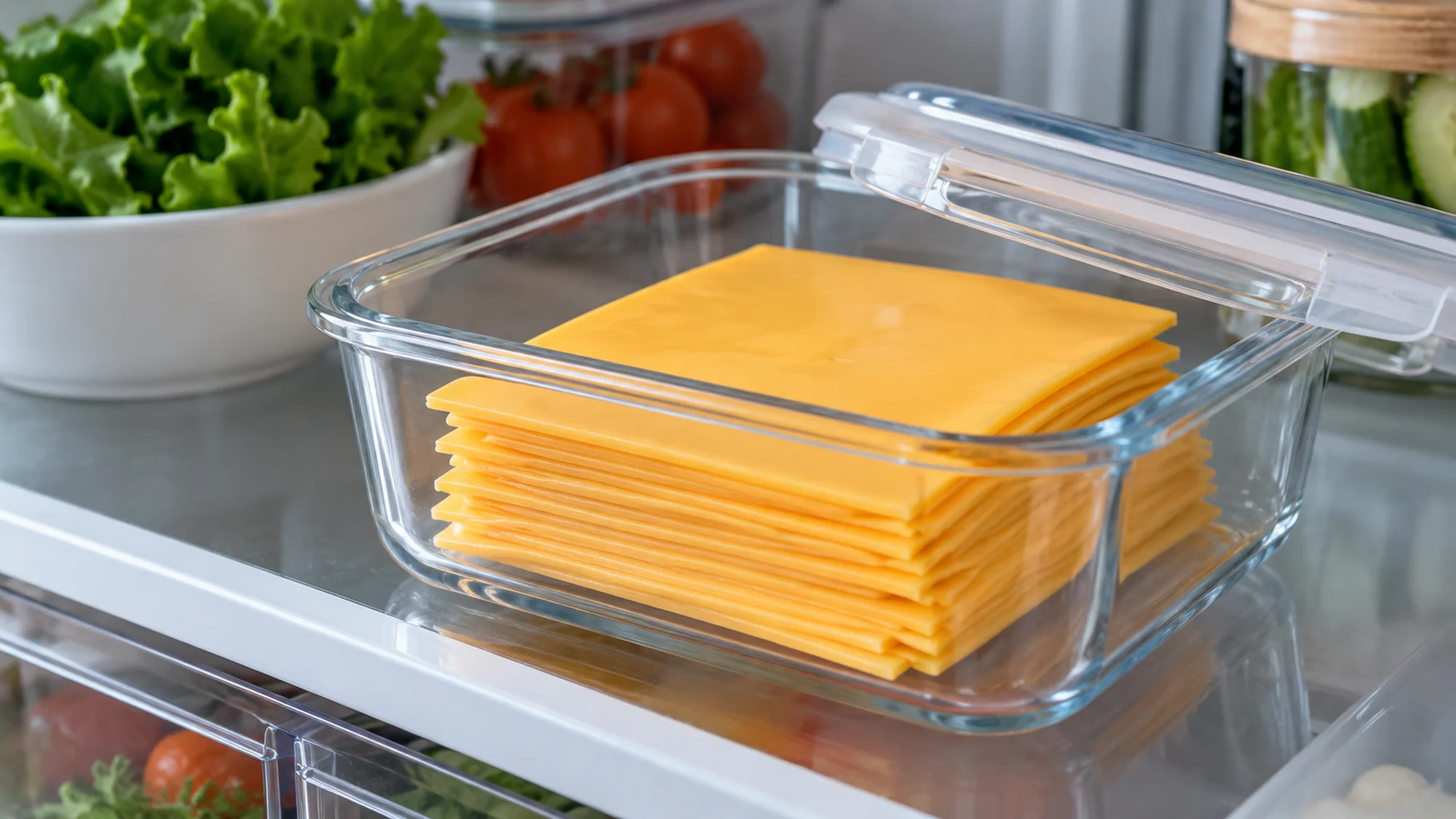
- Follow the package: keep refrigerated products cold and reseal opened packages. The FDA recommends refrigerators at 40°F or below.
- Protect the slices: cover them between uses so exposed edges do not dry out while you plan the next meal.
- Keep track: note when you opened the package and use its storage directions, rather than applying a universal shelf life to every cheese product.
- Handle promptly: put unused refrigerated cheese away after assembling the meal instead of leaving the whole package beside the stove.
Bottom Line
Choose American cheese for a mild flavor and a smooth melt, then read the exact package to understand what you are buying. The most useful comparison is the product, portion, and dish—not whether one cheese looks more traditional.
Sources
- USDA: Pasteurized process American cheese requirements
- USDA: Technical review of phosphates in food
- U.S. Dairy Export Council: Reference manual for U.S. cheeses
- Epicurious: Chef Shilpa Uskokovic on American cheese
- FDA: Understanding the Nutrition Facts label
- FDA: Safe food storage

Hi, I’m Emily Pocker! I share recipes and food guides here at Recipes360 to help you find everyday meal inspiration and feel more confident in the kitchen. My goal is to make cooking approachable, enjoyable, and full of flavor.