
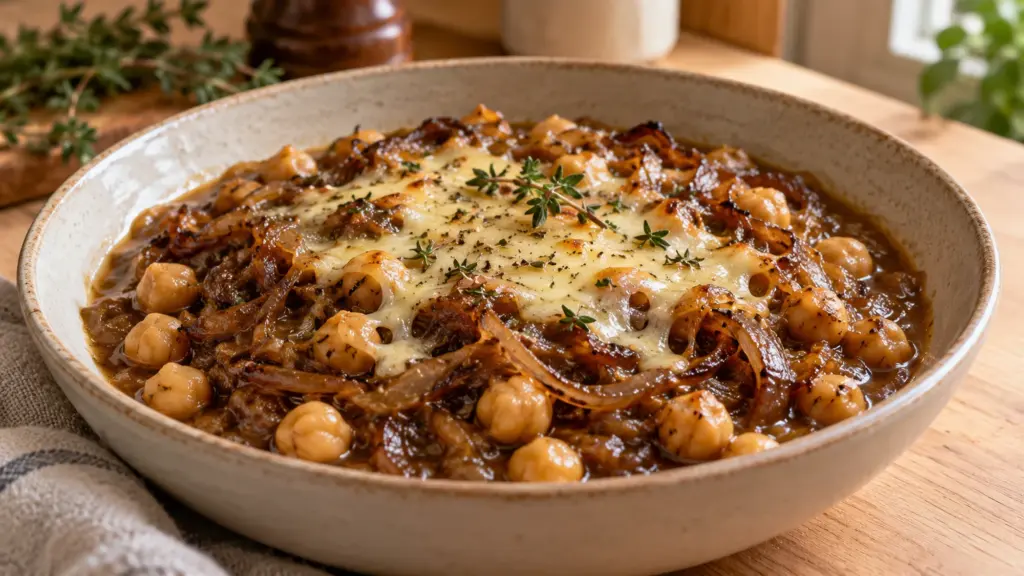
The pan looks overcrowded with onions at first, then the slices gradually collapse into soft golden strands. That slow start is the point of French onion chickpeas. Canned chickpeas make the final simmer straightforward, but they do not shorten the time the onions need to develop their flavor.
Let the onions turn deeply golden before adding the chickpeas and broth. A little flour gives the sauce body, and a covered stovetop finish melts the cheese without needing a broiler.
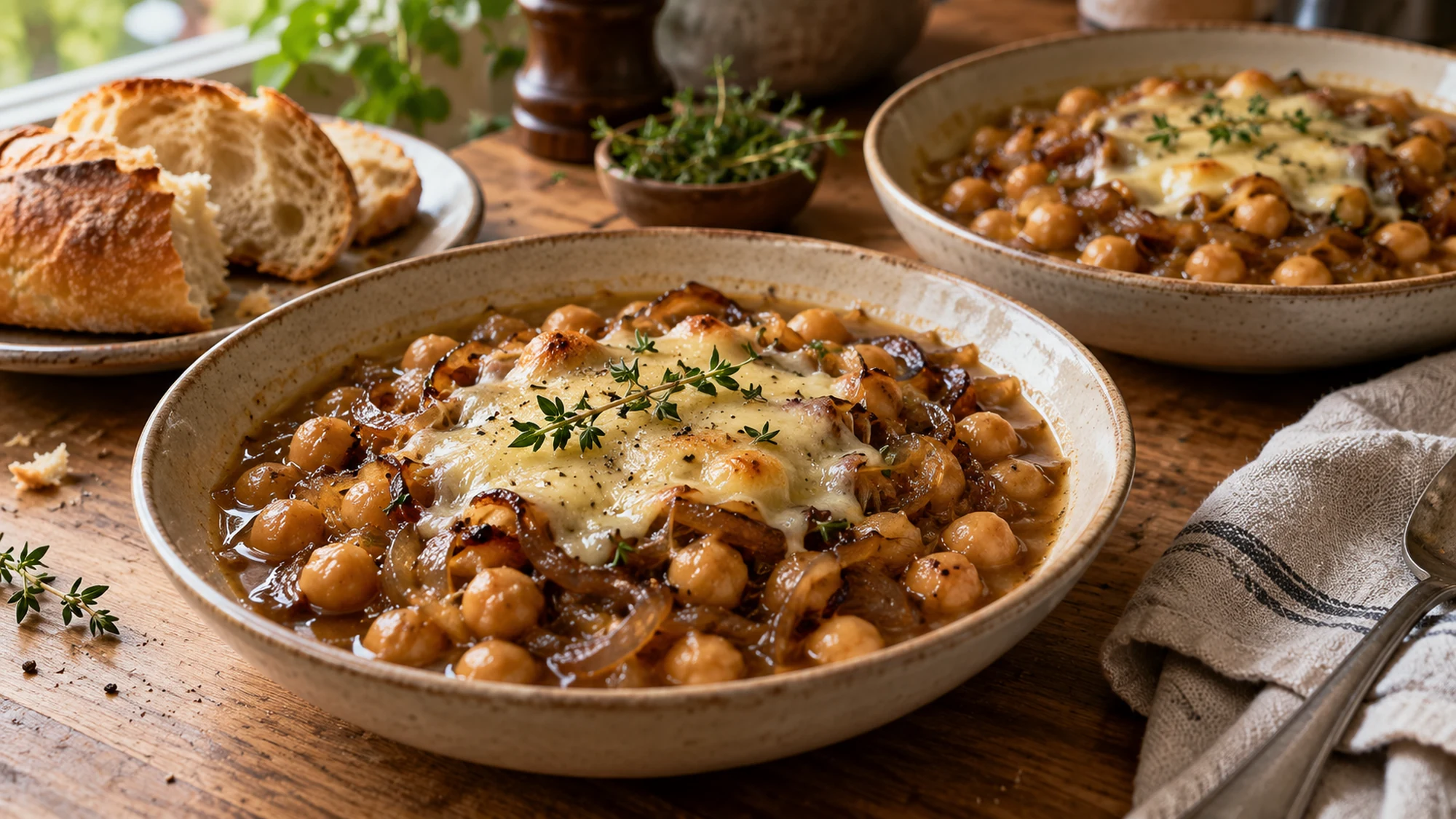
This is a chickpea skillet inspired by French onion soup, with thyme, a small spoonful of Dijon and a measured splash of sherry vinegar. I’d keep the cheese modest so the onion sauce remains noticeable beneath it. Serve in shallow bowls where the chickpeas and long onion strands are easy to scoop together.
Serving Suggestions for French onion chickpeas
Give each portion a share of the melted cheese and sauce. The mixture should be spoonable rather than soupy, with enough liquid to coat the chickpeas. If it has thickened while you set the table, stir in a small splash of hot water before dividing it.
| Choice | What to expect |
|---|---|
| A | c |
| W | h |
The site’s air fryer jacket potato is a useful option if you want a fluffy center beneath the chickpeas. Bread, potatoes and salad are all optional additions, and none is included in the card’s nutrition figures.
Divide leftovers into shallow containers instead of cooling the whole heavy pan on the counter. Illinois Extension recommends refrigerating within two hours, using leftovers within three to four days and reheating to 165°F (74°C). A little added water can loosen the sauce as it reheats.
Keep the sauce loose enough to spoon and choose one accompaniment that suits the meal. Warm the leftovers thoroughly before judging whether the sauce needs more liquid.
Variations and Onion Troubleshooting
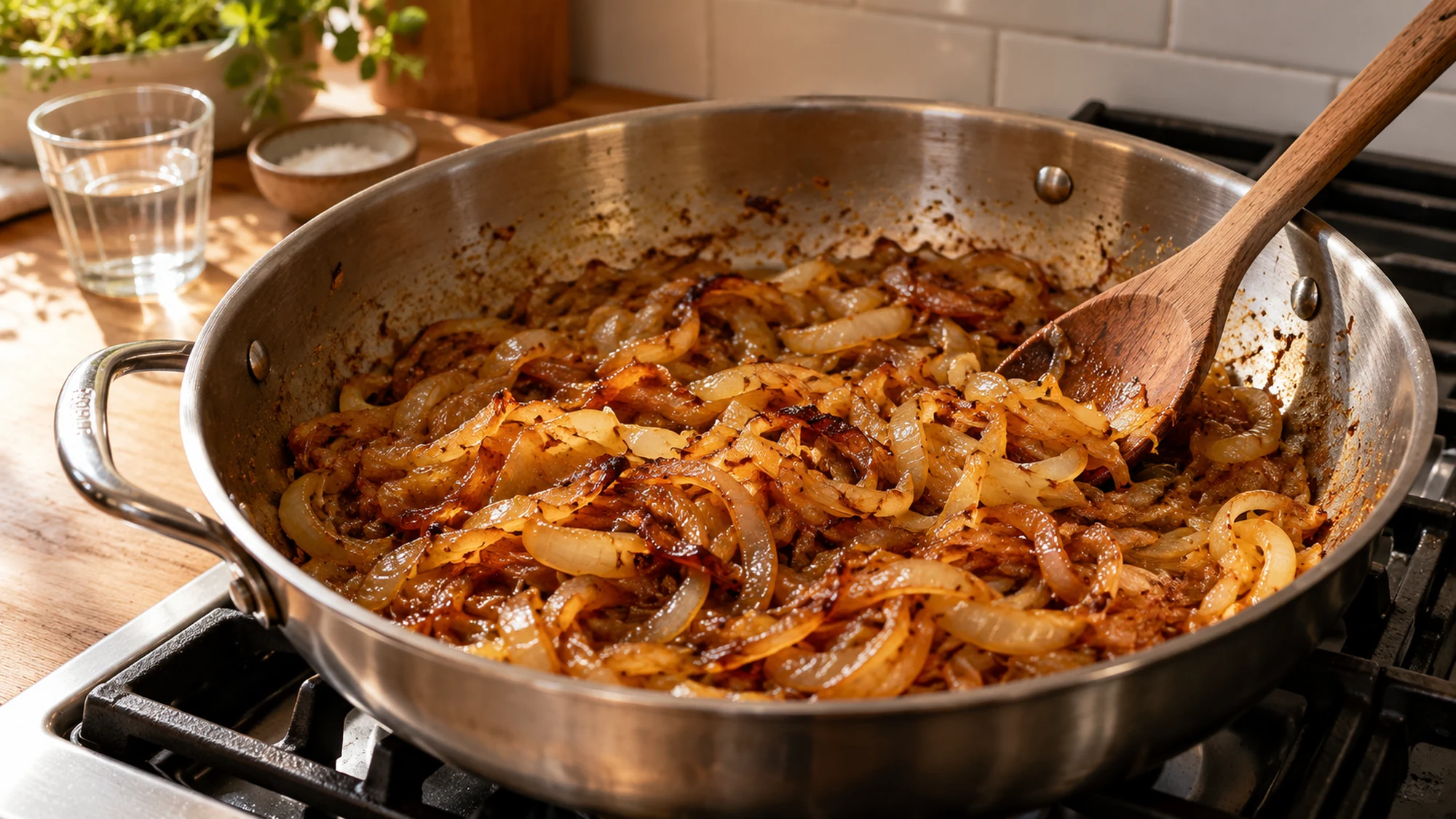
Onions pass through several stages: firm slices, a soft pale heap, then a smaller golden mass. The middle stage can last longer than you expect. Mississippi State University Extension’s caramelizing guidance emphasizes time and using small amounts of water to release sticking bits before they burn.
- Dark patches too soon: reduce the heat and add a tablespoon of water, scraping the pan gently. Blackened bits will not become sweet sauce.
- Different beans: cooked white beans can replace chickpeas by drained weight, but they are softer and may break as you stir.
- Different cheese: Swiss-style cheese can replace Gruyère with a different flavor. Check labels if vegetarian rennet is important to you.
- No fresh thyme: use a smaller amount of dried thyme. Add it with the garlic so it can infuse the sauce.
I’d use a wide, heavy pan rather than a narrow saucepan for the onions. The extra surface helps moisture escape, while tall sides make stirring the initial heap easier. Keep the heat moderate and allow extra time if your onions remain pale; the clock is a planning estimate, not a shortcut through browning.
Brown onions before building the sauce, and keep burnt flavors out of the pan. A little water can help you manage sticking without turning the onions into a long boil.
Health Benefits in Context
Chickpeas provide plant protein and fiber, and onions contribute vegetables to the serving. That is useful meal variety, but the cheese, butter and oil remain part of the dish. Their amounts are included in the estimate rather than treated as nutritionally invisible finishing touches.
- Salt control: use lower-sodium vegetable broth and rinse canned chickpeas. Taste after the cheese melts before deciding whether more salt is needed.
- Allergens: the flour contains wheat and the cheese and butter contain milk. The FDA’s allergen reference makes clear why ingredient labels deserve attention.
- Serving size: the card estimates one-quarter of the skillet, excluding any bread or other sides.
A vegetable broth keeps the sauce free of beef broth, while a vegetarian version also needs an appropriate cheese. Brands differ in sodium, fat and rennet source. The approximate nutrient numbers support meal planning; they are not a laboratory analysis or a promise about a health outcome.
Consider the chickpeas, sauce and cheese together when choosing your portion. Ingredient variety is helpful without requiring an exaggerated health claim.
Bottom Line
French onion chickpeas begin with time spent on the first ingredient. Soften and brown the onions, build a light gravy and melt the cheese gently. Canned chickpeas keep the finishing steps manageable while the onions supply the dish’s character.
French Onion Chickpeas Recipe

Ingredients
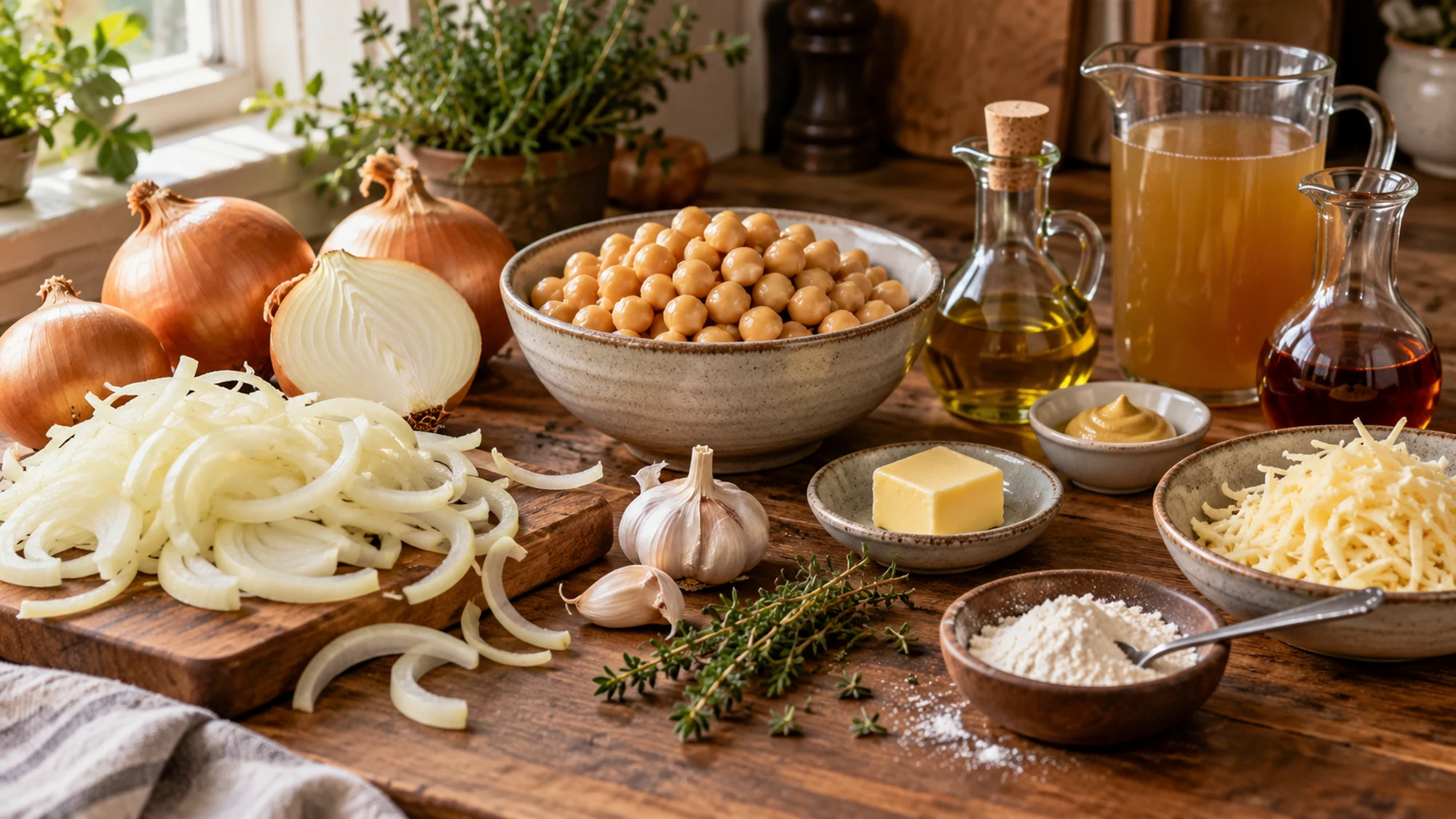
- 2 pounds peeled yellow onions 900 g, halved and thinly sliced
- 1 tablespoon olive oil 14 g
- 1 tablespoon unsalted butter 14 g
- 3 garlic cloves 12 g, minced
- 1 tablespoon all-purpose flour 8 g
- 2 teaspoons fresh thyme leaves 2 g, or 1/2 teaspoon dried thyme
- 2 cups lower-sodium vegetable broth 480 mL
- 2 cans chickpeas 15.5 ounces each, drained and rinsed; about 500 g drained total
- 1 teaspoon Dijon mustard 5 g
- 1 tablespoon sherry vinegar 15 mL
- 1/4 teaspoon fine salt 1.5 g, only as needed after tasting broth and cheese
- 1/4 teaspoon ground black pepper
- 2 ounces Gruyère cheese 60 g, grated; choose vegetarian rennet if needed
Equipment
- 1 Wide heavy 12-inch sauté pan with lid
- 1 Wooden spoon
- 1 Knife and cutting board
- 1 Colander
- 1 Cheese grater
Instructions
- Heat olive oil and butter in the wide sauté pan over medium heat. Add onions and stir to coat. Cook about 8 minutes until softened, stirring frequently. Reduce heat to medium-low.
- Continue cooking for 30–45 minutes, stirring regularly, until onions are deeply golden and very soft. Add water a tablespoon at a time if the browned coating starts to stick, scraping it back into the onions. Reduce heat if dark spots develop quickly. Allow extra time if the onions are still pale.
- Stir in garlic and thyme and cook for 30 seconds. Sprinkle flour over the onions and stir for 1 minute. Gradually add broth while stirring to loosen the browned coating and prevent flour lumps.
- Stir in drained chickpeas, Dijon and pepper. Simmer gently, uncovered, for 8–10 minutes until hot through and the sauce lightly coats the chickpeas. Add sherry vinegar and taste. Use the measured salt only as needed.
- Scatter grated Gruyère across the top. Cover and cook on low for 2–3 minutes until the cheese melts. Remove from heat and divide among four bowls. If the sauce has become too thick, loosen it with a small splash of hot water before serving. Optional bread or potatoes are not included in the recipe quantities.
Nutrition
Video
Notes
Tried this recipe?
Let us know how it turned out!Hi, I’m Emily Pocker! I share recipes and food guides here at Recipes360 to help you find everyday meal inspiration and feel more confident in the kitchen. My goal is to make cooking approachable, enjoyable, and full of flavor.