
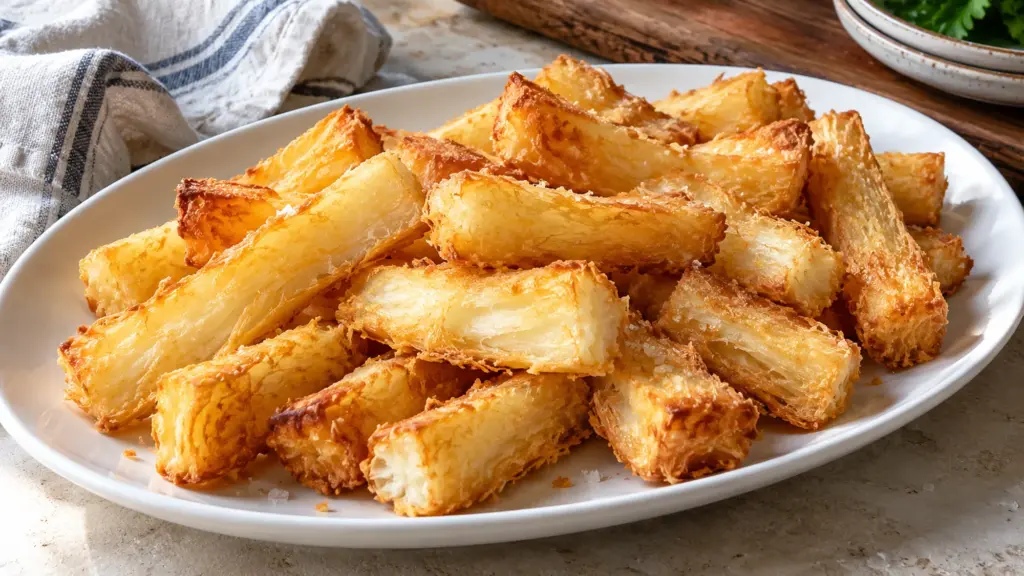
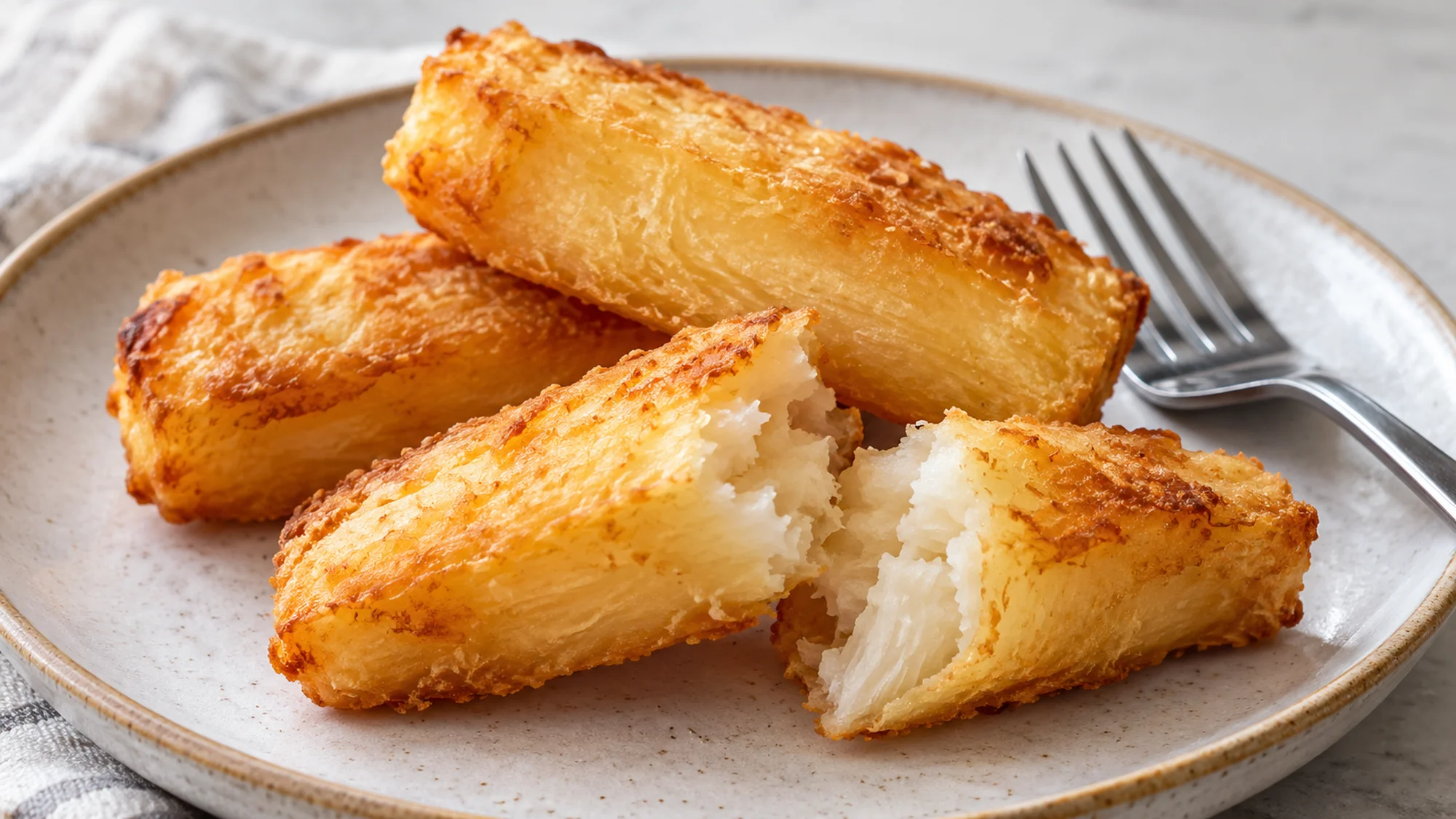
A crisp edge is only half the appeal of yuca fries. Inside, the root stays dense, starchy, and softly fluffy, with a different bite from a potato fry. This version starts with commercially sold sweet yuca, boils the peeled pieces thoroughly, and then pan-fries the dried batons until golden. The boiling step comes before any attempt at browning.
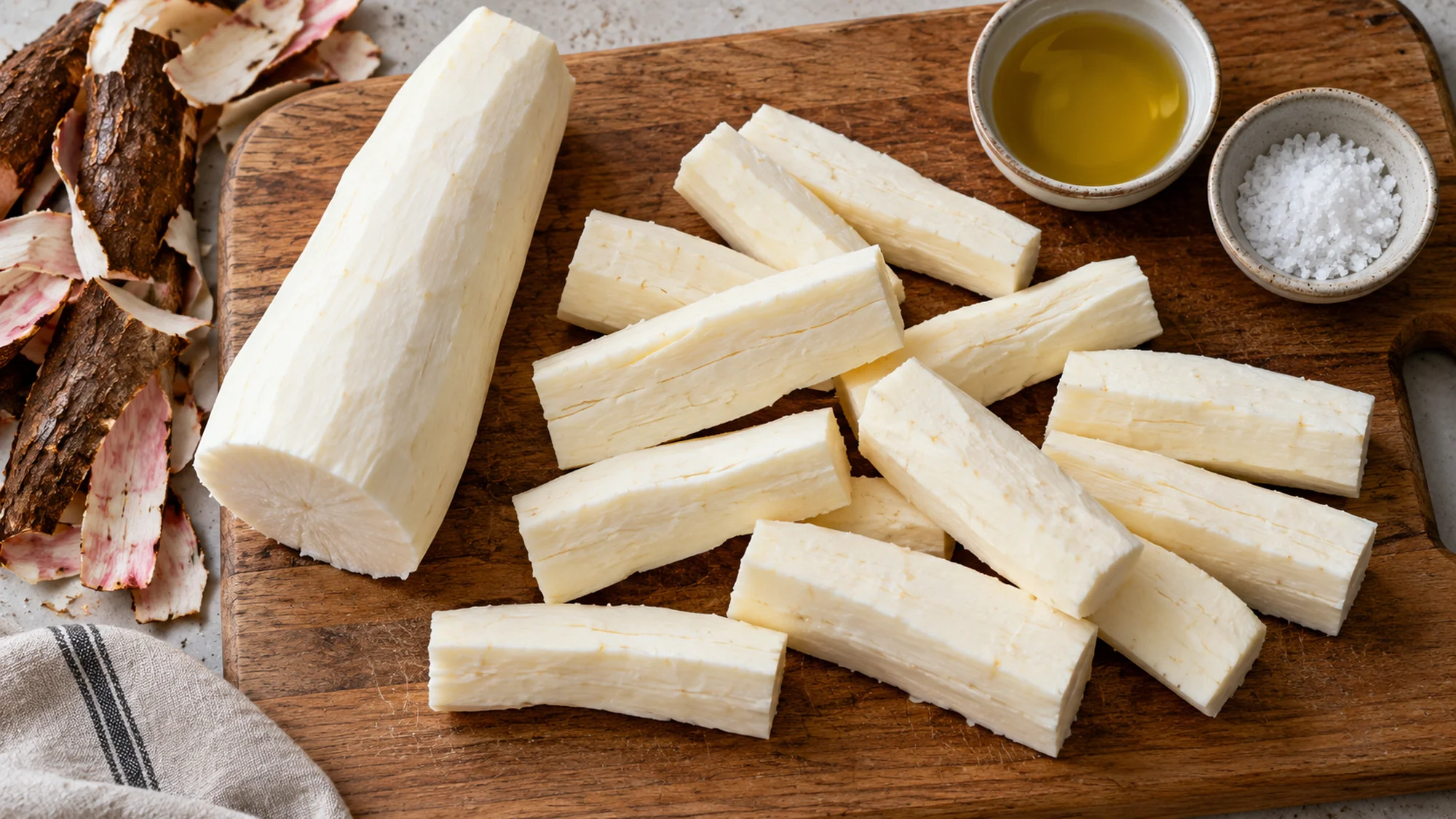
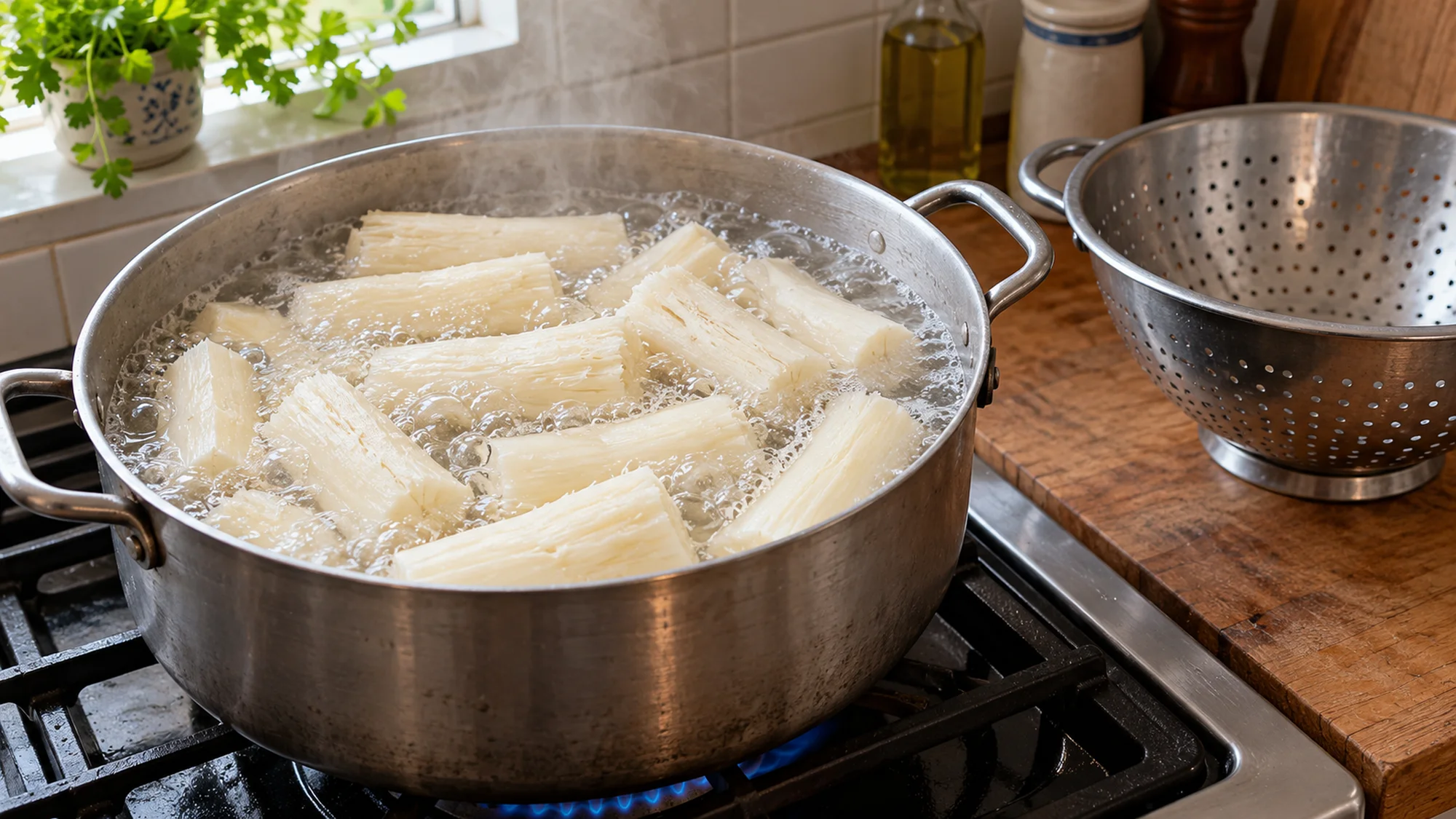
Use known food-grade sweet yuca, remove the peel completely, and boil it until thoroughly tender before frying. Drain away the cooking water, remove the woody center, and dry the pieces well.
Serving Suggestions for Yuca Fries
Serve the fries soon after they leave the pan, when the rough edges still feel crisp. I’d put any sauce alongside rather than across the whole platter; a wet topping softens the crust quickly. A little lime, a garlic dip, or a simple herb sauce can be offered separately, but the plain salted version is a useful place to start.
- Pair a modest portion with grilled fish, chicken, or beans and a fresh vegetable side. Yuca supplies the starchy part of the meal.
- Recipes360’s carrot ribbon salad adds a cool, crisp contrast without another pan on the stove.
- Bring out small batches as an appetizer and leave room between the fries rather than piling hot pieces into a deep bowl.
- Season while the surfaces are still hot. Add strong flavored sauces gradually so the yuca’s own mild flavor is not completely covered.
| Stage | What to look for | Why it matters |
|---|---|---|
| After boiling | Tender through the center | Frying is not a substitute for thorough cooking |
| Before frying | No wet surface or dripping water | Reduces splattering and helps browning |
| At serving | Golden rough edges | Best enjoyed promptly |
A shallow platter and sauce on the side protect the contrast between the crisp exterior and the soft center. Build the rest of the meal around that starchy serving.
Variations and Preparation Decisions
Yuca is also called cassava, but this recipe is specifically for commercial sweet cassava intended for household cooking. It is not a method for processing bitter cassava or an unidentified root. I’d buy it from a reliable food retailer and ask about the product if its variety or preparation instructions are unclear.
- Frozen peeled sweet yuca can be convenient, but follow its package directions and still ensure it is fully cooked before frying.
- Keep the batons reasonably even so one piece does not remain firm while another breaks apart in the pot.
- Remove any woody central cord after boiling, when it is easier to see. That fiber will not turn into a pleasant fry.
- Try a pinch of paprika or garlic powder after frying. Adding powdered seasoning too early can make it burn in the oil.
- Do not treat a raw yuca piece like a raw carrot to taste. Peeling, cutting, and thorough cooking are essential parts of preparation.
Drain carefully, then let the pieces cool just enough to handle before patting them dry. Small splits and rough edges are welcome; pieces that disintegrate will be harder to turn. If the oil starts smoking, lower the heat and let it settle before adding more food. Hot oil rewards patience rather more reliably than enthusiasm.
Keep the sweet-yuca requirement and the full boiling step even when you change the seasoning. Those are preparation boundaries, not optional texture tricks.
Health Benefits and Safe Handling
Yuca provides carbohydrate and some fiber, while the frying oil adds fat and energy. It is a starchy side rather than a stand-in for the whole vegetable portion of a meal. The nutrition estimate counts all the measured pan oil; some may remain behind, and no claim about measured absorption is being made.
- The Canadian Food Inspection Agency distinguishes sweet from bitter cassava and explains why cooking is needed to reduce naturally occurring toxins.
- Hong Kong’s Centre for Food Safety advises buying cassava from a reliable source and preparing it thoroughly, including cutting, soaking, and boiling.
- Discard the soaking and boiling water. Do not use either as stock, soup liquid, or a drink.
- Refrigerate leftovers within two hours, or one hour above 90°F (32°C), in a shallow container at 40°F (4°C) or below.
Use refrigerated leftovers within three days and reheat them to 165°F (74°C). Their crust will soften during storage, so treat a second serving as a reheated side rather than expect the texture of a fresh batch. FoodSafety.gov’s cooling guidance applies even when the food contains no meat or dairy.
Enjoy yuca fries as a measured starchy side, with the oil estimate kept honest. Safe ingredient selection and complete preparation matter before the crisp edges do.
Bottom Line
Yuca fries offer a firm, fluffy center beneath a golden crust. Start with known food-grade sweet yuca, peel and boil it thoroughly, discard the water, and dry before pan-frying. Serve promptly with a fresh side and any dip alongside.
Yuca Fries Recipe

Ingredients
- 500 g peeled food-grade sweet yuca commercial sweet cassava only; about 700–800 g whole root before peeling
- 1/4 cup neutral frying oil 56 g; all is included in the nutrition estimate
- 1/2 teaspoon fine salt 3 g
Equipment
- Sharp knife and sturdy cutting board
- Large saucepan
- Colander
- 12-inch heavy skillet
- Tongs
- Paper towels
Instructions
- Use only commercially sold food-grade sweet yuca. Wash the root, trim the ends and cut into manageable sections. Stand each section securely and cut away all brown bark and the pinkish inner peel. Do not use bitter or unidentified cassava.
- Cut the white flesh into batons about 1/2 inch (1.3 cm) thick. Soak in plenty of fresh cool water for 30 minutes, then drain and discard that water.
- Put the batons in a large saucepan with fresh water covering them by at least 2 inches (5 cm). Bring to a boil, then maintain a steady boil for 20–30 minutes or until every piece is thoroughly tender through the center. Add time if needed; do not proceed with a firm center.
- Drain and discard the cooking water. Cool for about 10 minutes until safe to handle, remove any woody central cord, then pat the pieces very dry with clean paper towels.
- Heat the measured oil in a heavy skillet over medium-high heat until shimmering, not smoking. Fry the cooked, dry yuca in 2 batches, turning carefully, for about 6–8 minutes per batch until golden on several sides. Adjust heat to prevent scorching. Never add wet pieces to hot oil.
- Transfer with tongs to paper towels, sprinkle with the measured salt, and serve in 4 portions. Dips and other accompaniments are optional and excluded from the estimate.
Nutrition
Video
Notes
Tried this recipe?
Let us know how it turned out!Hi, I’m Emily Pocker! I share recipes and food guides here at Recipes360 to help you find everyday meal inspiration and feel more confident in the kitchen. My goal is to make cooking approachable, enjoyable, and full of flavor.