
A yogurt label gives one number, a fitness post gives another, and dinner is still waiting to be planned. If you are asking “how much protein do I need a day,” it helps to identify which recommendation each number actually represents.
Protein guidance is not one universal prescription. The adult RDA is 0.8 g per kilogram of body weight daily, while the 2025–2030 U.S. Dietary Guidelines give a 1.2–1.6 g/kg daily target; your circumstances still matter.
I’d sort out the benchmark before buying a bigger tub of powder. Then look at the foods already on the menu.
How much protein do I need a day—and which benchmark?
The American Heart Association explains the adult Recommended Dietary Allowance as 0.8 grams per kilogram of body weight per day. An RDA is a reference designed to cover the needs of nearly all healthy people in the relevant group; it is not a maximum.
The current 2025–2030 Dietary Guidelines for Americans present a higher protein target of 1.2–1.6 g/kg/day. The accompanying scientific report also identifies the existing 0.8 g/kg RDA. These are different benchmarks, not two ways of writing the same calculation.
- Check the source and date before treating a number as current general guidance.
- Keep the units: grams of protein per kilogram of body weight per day.
- Do not turn a population target into a personalized medical plan.
- Remember that children, pregnancy, illness and athletic training require their own context.
A calculation example, not a prescription
To understand a weight-based number, convert pounds to kilograms by dividing by approximately 2.2, then multiply kilograms by the chosen benchmark. Use the calculation to understand guidance, not to diagnose a shortage.
For an illustrative 70 kg adult—about 154 pounds—the arithmetic below shows why two articles can produce different totals. It does not establish the right intake for a particular reader.
- These are grams of the nutrient, not grams of chicken, tofu or yogurt.
- The weight of a food includes water and other components; a 100 g portion is not 100 g protein.
- Food-group ounce-equivalents are another measurement again. Do not substitute them for protein grams.
| Reference used | Calculation for 70 kg | Daily protein |
|---|---|---|
| Adult RDA reference | 70 × 0.8 g/kg | 56 g |
| Lower end of current guideline target | 70 × 1.2 g/kg | 84 g |
| Upper end of current guideline target | 70 × 1.6 g/kg | 112 g |
A useful protein number always comes with a reference, units and a reason for applying it.
Build meals before adding supplements
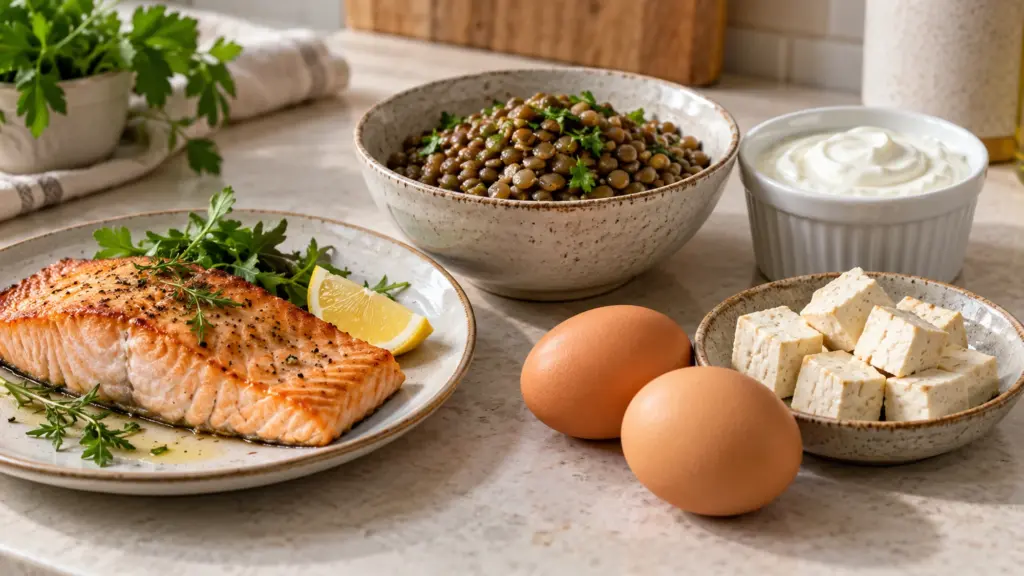
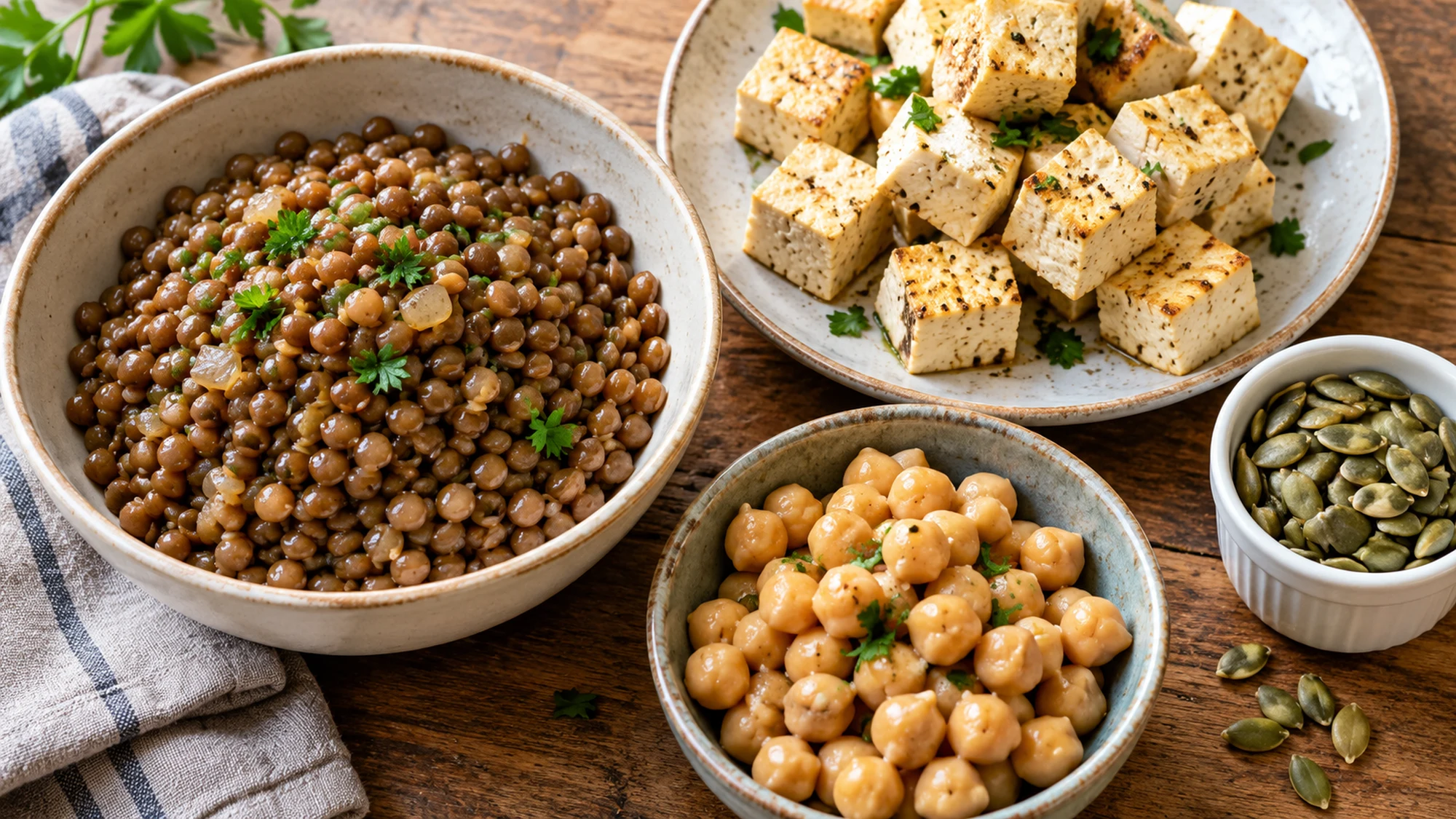
Protein comes from both animal and plant foods. The New Mexico State University protein guide describes options including seafood, eggs, beans, peas, soy foods, nuts and seeds. Dairy foods can also contribute protein even when shown in a separate food group.
I’d use that variety to make meals more interesting, not to create a daily arithmetic contest. Think about the whole food: what you enjoy, what it costs, how it fits your cooking routine, and what else it brings to the plate.
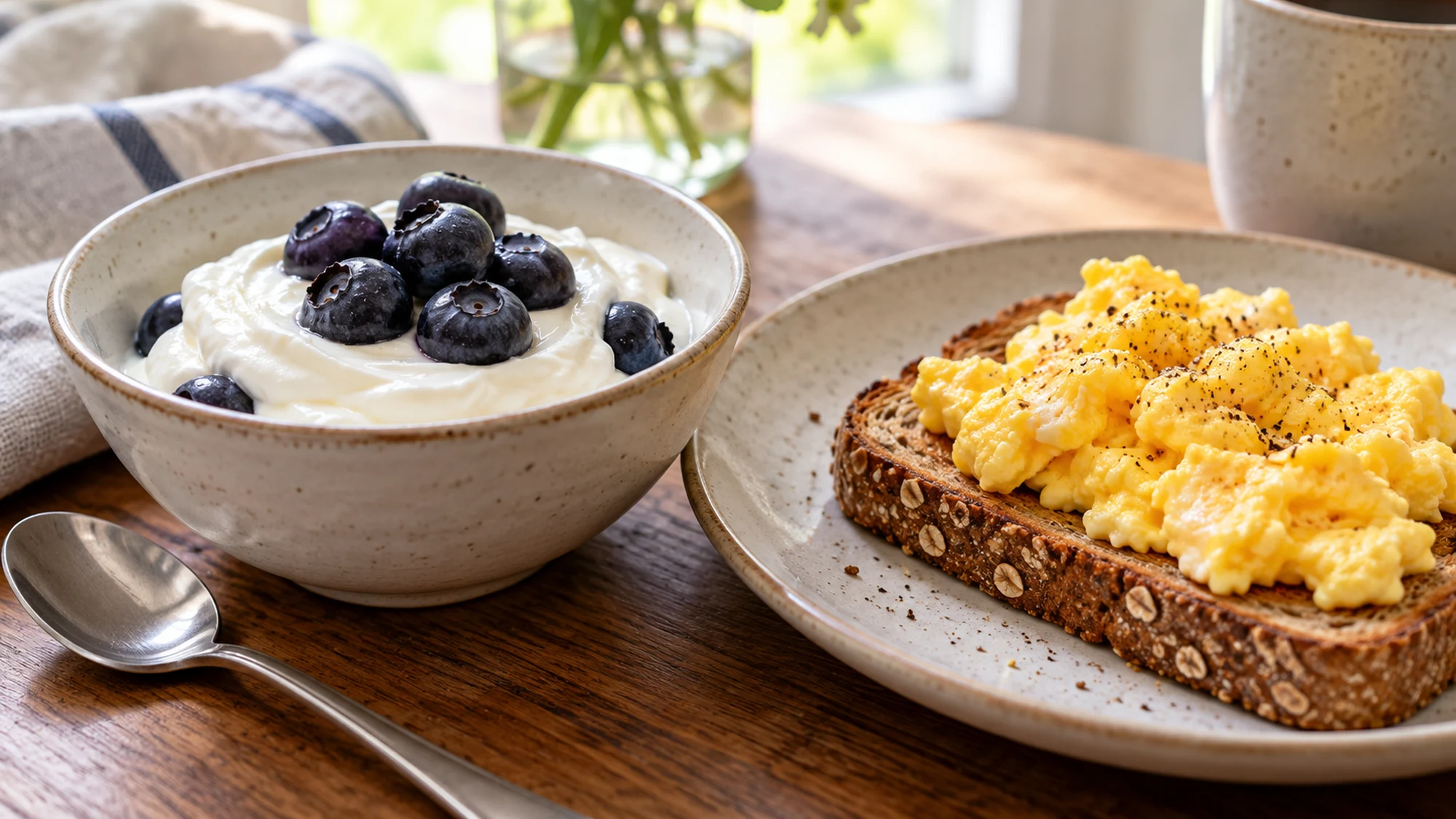
- At breakfast, consider yogurt, eggs or a suitable soy food alongside the rest of the meal.
- At lunch, beans or lentils can be the main protein-containing ingredient rather than a decorative spoonful.
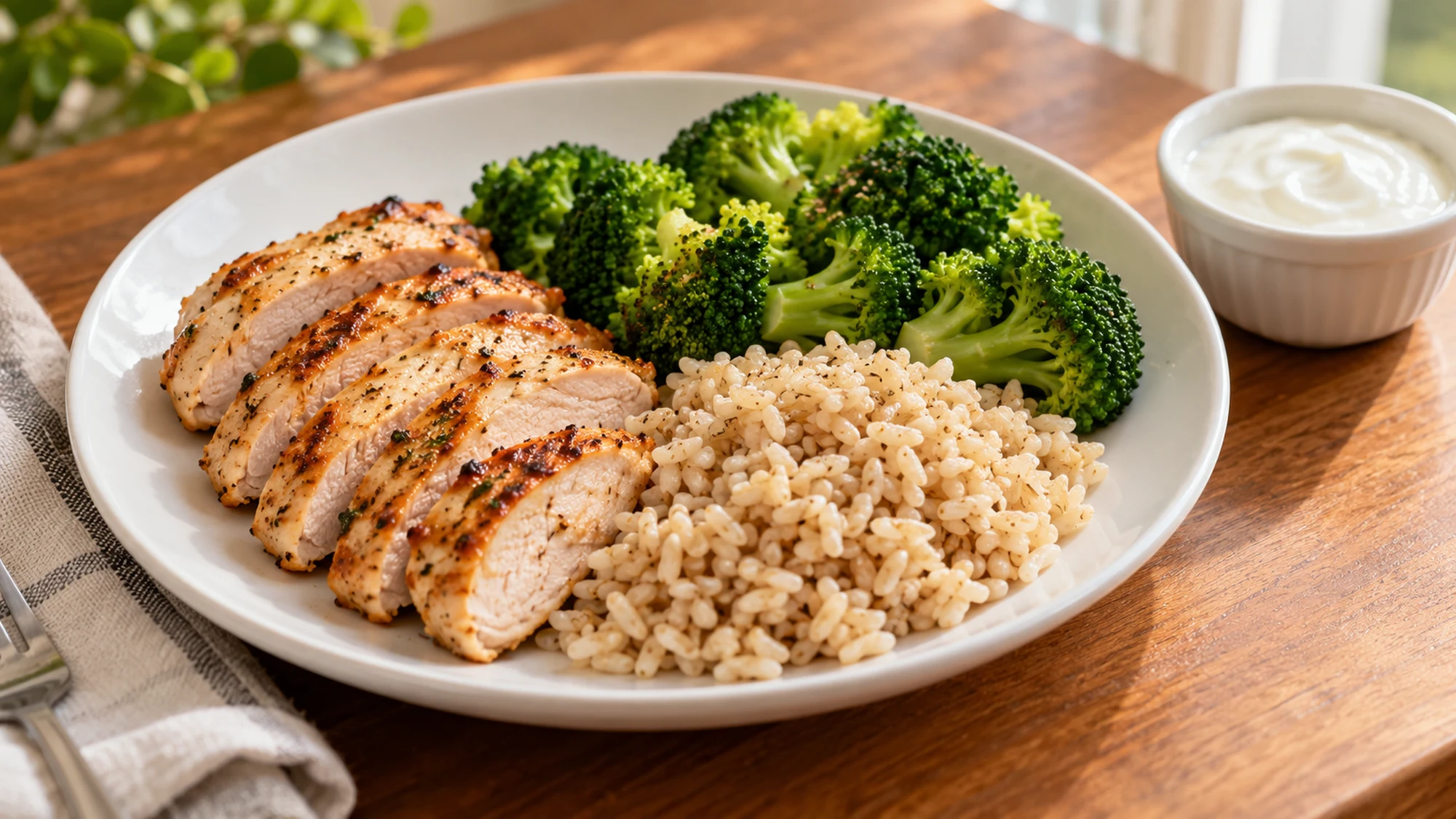
- At dinner, rotate choices such as tofu, fish, poultry or legumes instead of assuming meat is compulsory.
- For a packaged food, use its protein grams and serving size rather than judging by the front-label slogan.
- A powder can be convenient in some circumstances, but a general protein target does not automatically require one.
When a personal target needs professional help
Medical conditions can change both the amount and type of dietary advice you need. NIDDK’s guidance for chronic kidney disease explains that protein needs may require individualized planning, including differences related to treatment. Do not raise or restrict protein on your own from this table.
A registered dietitian can also help when appetite, food access, allergies, a restrictive diet or training demands make meals difficult. A tailored plan should leave room for adequate energy, vegetables, fruit and other nutrients—not make protein the only thing that counts.
- Bring a realistic account of your usual meals, including snacks and drinks.
- Ask which benchmark fits your health, life stage and activity, and why.
- Mention kidney disease, pregnancy, medicines and any dietary restrictions.
- Ask for food-based examples that fit your budget and preferences, not just a target number.
Bottom Line
Understand the recommendation before chasing it: the adult RDA and current U.S. guideline target serve different roles. Use actual serving information, keep meals varied, and get an individualized answer when health or life-stage needs complicate the picture. I’d aim for a workable eating pattern rather than letting one nutrient take over the kitchen.
This older SNAP4CT food-group demonstration shows familiar protein foods. Its MyPlate framework predates the 2025–2030 guidelines; use it for food examples, not the current protein target.
Sources
- 2025–2030 Dietary Guidelines: current protein target
- Scientific foundation report
- American Heart Association: adult RDA
- NIDDK: kidney disease and eating
- NMSU Extension: protein food choices

Hi, I’m Emily Pocker! I share recipes and food guides here at Recipes360 to help you find everyday meal inspiration and feel more confident in the kitchen. My goal is to make cooking approachable, enjoyable, and full of flavor.