
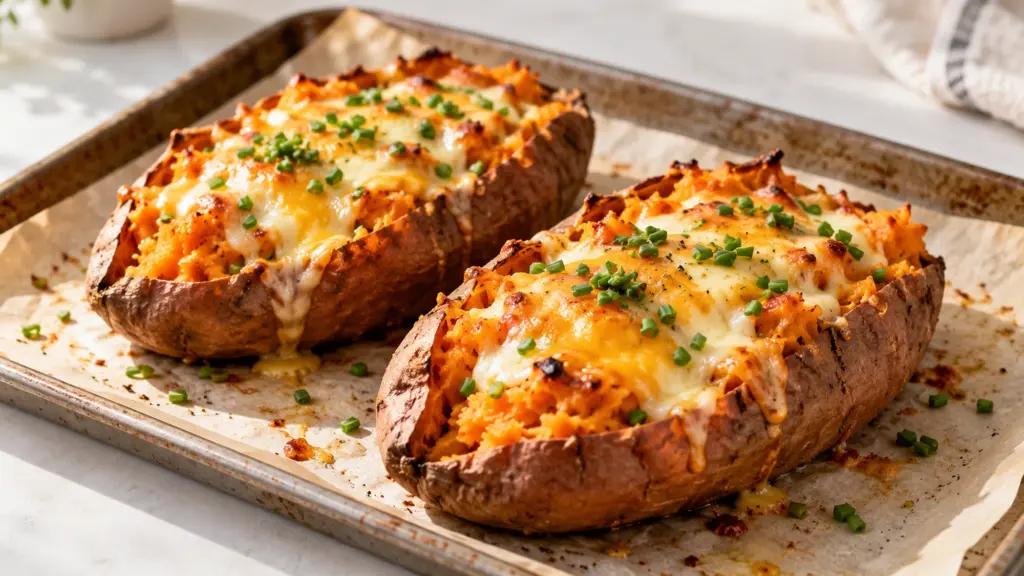
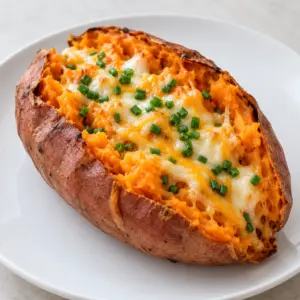
A baked sweet potato already has a soft, sweet center; the interesting part is deciding what should go inside. This cheese stuffed sweet potato pairs that orange flesh with stretchy mozzarella, sharper cheddar and a little chive. It is a savory filling that keeps the potato itself in the foreground.

Roast the potato until the center is completely tender, loosen the flesh with a fork, then add the cheese and return it to the oven just long enough to melt. Tender potato comes first; melted cheese cannot fix a firm middle.
The card makes two whole stuffed potatoes. I’d choose similar sizes so they finish together. A lengthwise opening also makes the filling easier to distribute.
Serving Suggestions for Cheese Stuffed Sweet Potato
Serve while the cheese is melted and the potato is comfortably hot. A fork should pass through the center without pushing against a dense core.
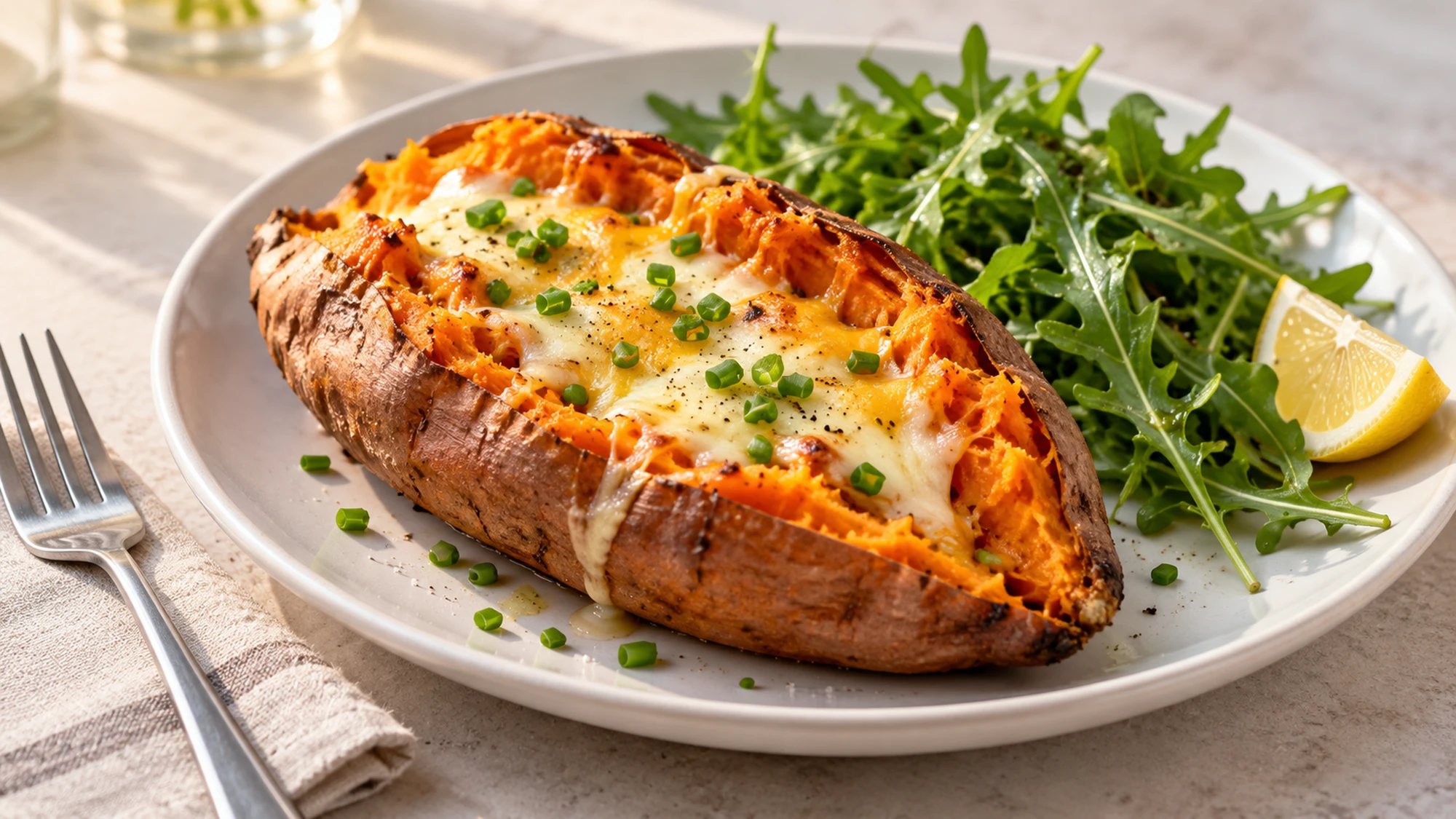
For a simple lunch, add leafy greens with lemon or a lightly dressed crunchy salad. For a side dish, pair a smaller portion with cooked chicken, fish or beans. I prefer an acidic accompaniment here: it gives the rich filling a clear contrast without requiring another sauce.
- At the table: Put each whole potato on its own plate so the soft filling stays contained.
- For smaller appetites: Split a stuffed potato between two plates and add the rest of the meal alongside.
- For a russet alternative, follow our jacket potato in air fryer recipe rather than borrowing its timing for sweet potatoes.
Choose something fresh or tangy alongside, and serve before the cheese cools and firms. The potato is the substantial part of the plate.
Variations and Texture Choices
Mozzarella supplies a mild, stretchy melt while cheddar adds a more noticeable savory flavor. Low-moisture mozzarella is convenient because it introduces less loose liquid than very fresh mozzarella. Grate a block if you have one, but do not let that small preference keep dinner waiting.
Use the comparison below to choose changes deliberately. Soft spreadable cheeses, firm melting cheeses and crumbly finishing cheeses behave differently; swapping equal weights does not guarantee an identical center.
| Choice | What changes | Practical cue |
|---|---|---|
| More cheddar, less mozzarella | Sharper flavor, less stretch | Keep the total cheese weight similar |
| Monterey Jack | Mild, creamy melt | Use in place of the mozzarella |
| A little crumbled feta | Saltier, crumbly finish | Use as an accent, not the whole melting layer |
| Cooked beans | A more substantial filling | Warm and drain well before adding |
- For heat: Add a small pinch of chili flakes to the loosened flesh, then taste before adding more.
- For herbs: Use sliced scallion greens instead of chives if that is what you have.
- For make ahead: Roast the plain potatoes in advance and refrigerate promptly. Reheat thoroughly before adding and melting the cheese.
- For troublesome texture: If the flesh is still firm, continue roasting the plain potato. Do not bury the problem under more cheese.
Keep the potato fluffy and the filling modest. Choose substitutions for the melt and flavor you want, rather than assuming every cheese works alike.
Health Benefits and Estimated Nutrition
Orange sweet potatoes contribute carotenoids that the body can convert to vitamin A. NIH’s vitamin A guidance explains the nutrient’s role in normal vision and immune function; that supports including varied foods, not a promise that this dish prevents illness. Sweet potatoes also contribute carbohydrate and fiber.
The cheeses add protein and calcium, along with sodium and saturated fat. The card estimates one whole stuffed potato from the listed raw potato weight and the measured filling. Potato size, cheese type and how much skin you eat can change the result, so use your own ingredient labels for a closer estimate.
- Keep the serving basis clear: The estimate is one of two whole potatoes, without salad or other accompaniments.
- Consider the whole plate: Add vegetables and a protein food according to your appetite and the meal you are planning.
- Check dairy needs: This recipe contains milk. A dairy-free substitute will have its own melting behavior and nutrition.
Sweet potato and cheese contribute different nutrients. Enjoy the combination in a portion that suits your meal, with the estimate treated as a guide.
Bottom Line
The best practical cue is tenderness before filling. Once the flesh gives easily to a fork, a small amount of butter and two complementary cheeses can spread through it without turning the potato into a bowl of topping. I’d keep the chives and a squeeze of lemon nearby rather than adding a heavy sauce.
Roast until fully tender, fluff gently and melt the cheese briefly. Serve promptly with a fresh accompaniment, and refrigerate leftovers without leaving them out to cool for hours.
Read NIH’s vitamin A information for nutrient context and the FDA’s serving guidance for handling leftovers safely.
Cheese Stuffed Sweet Potato Recipe

Ingredients
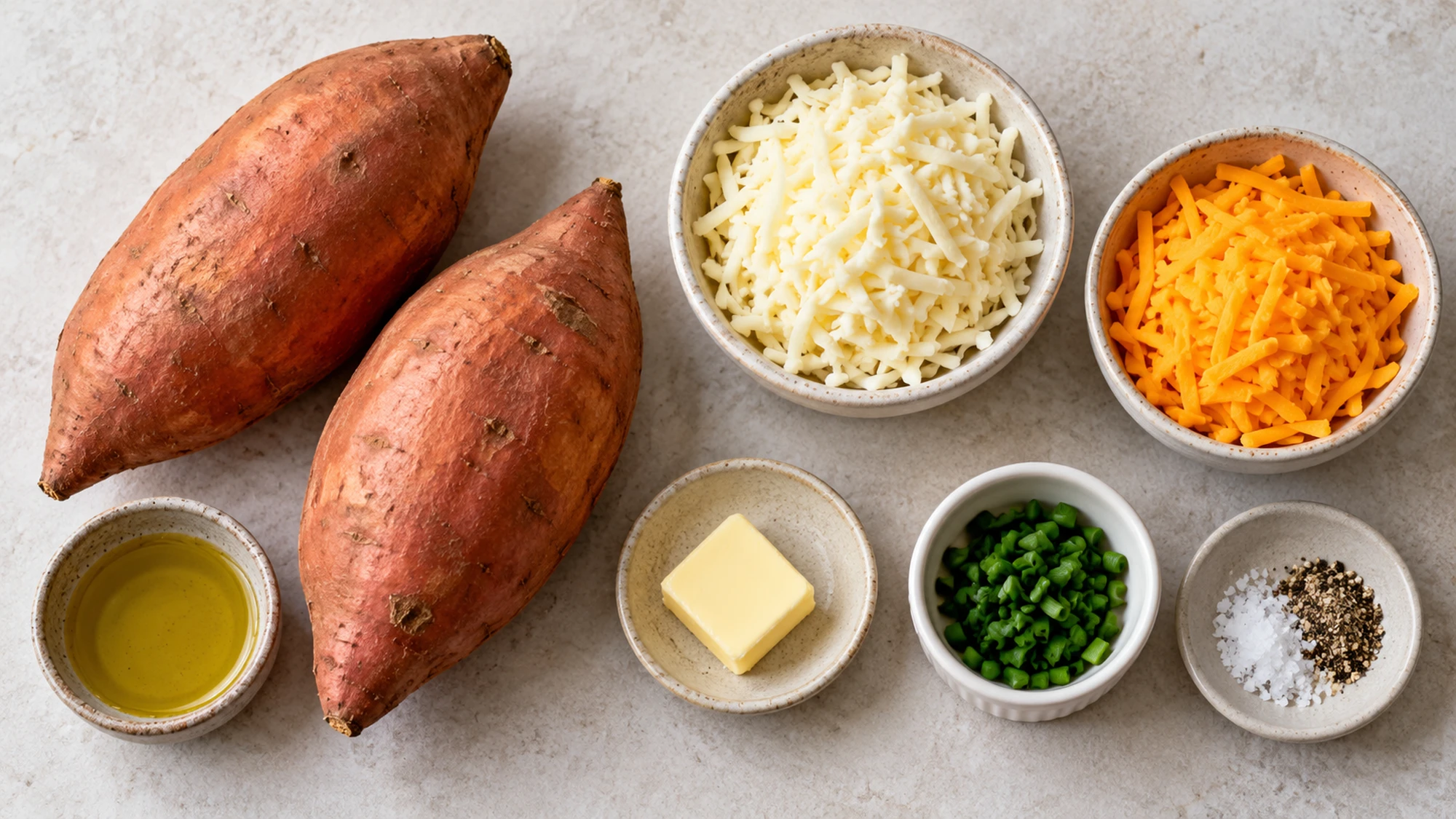
- 2 orange sweet potatoes about 250 g each; 500 g total
- 1 teaspoon olive oil
- 1/8 teaspoon fine salt
- 10 g unsalted butter divided
- 56 g low-moisture mozzarella grated
- 28 g cheddar cheese grated
- 2 teaspoons chopped chives
- 1/8 teaspoon black pepper
Equipment
- Baking sheet
- Parchment paper
- Fork
- Kitchen scale
Instructions
- Heat the oven to 400°F (200°C). Line a baking sheet with parchment. Scrub the potatoes under running water, dry them and prick in several places with a fork. Rub with the oil and sprinkle with the salt.
- Roast whole for 45–60 minutes until a thin knife or fork slides easily through the thickest part. Size and variety affect timing; if there is resistance in the center, continue in 5-minute intervals.
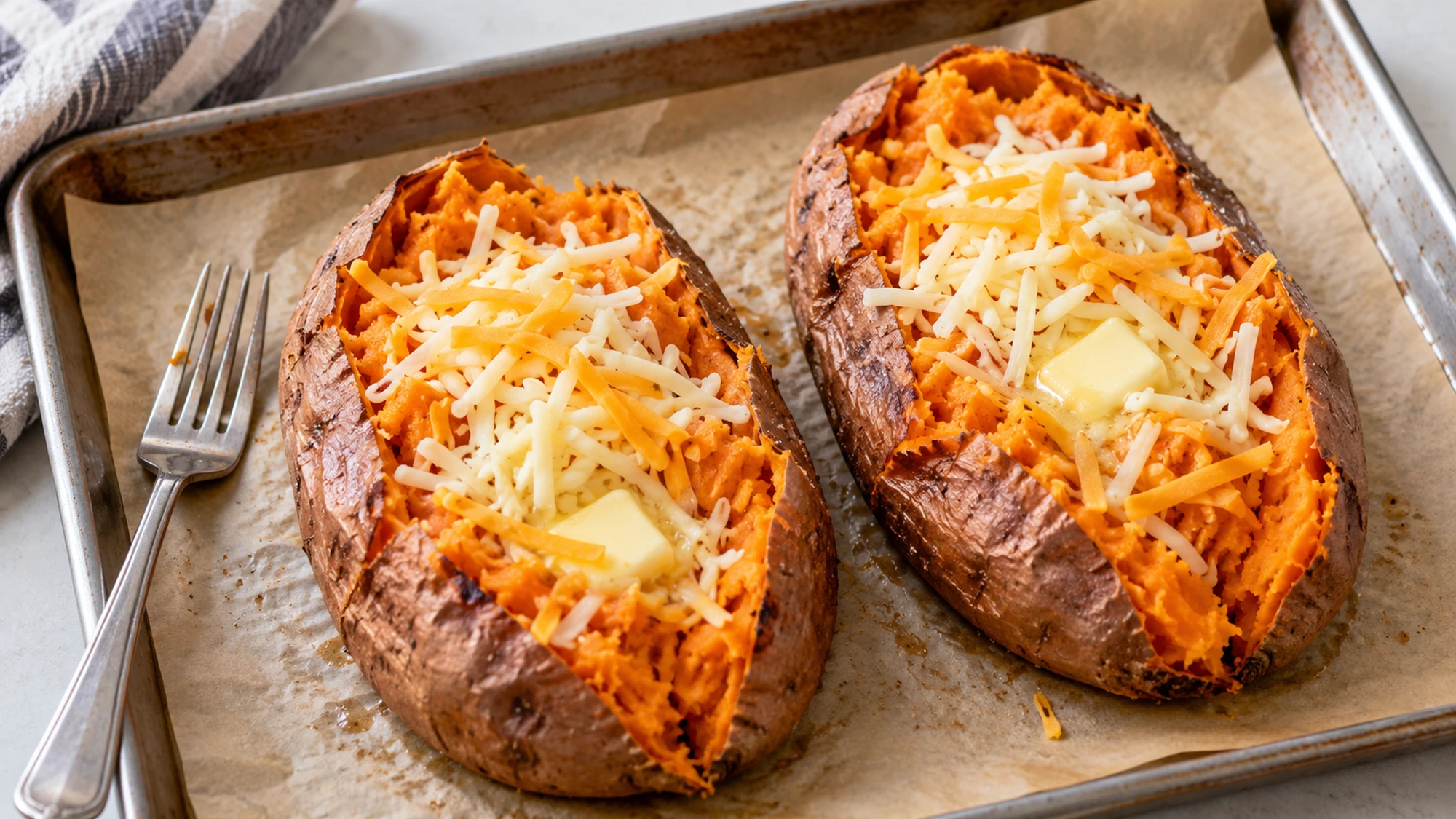
- Let cool only until safe to handle. Split each lengthwise without cutting through the bottom. Loosen the orange flesh with a fork, keeping the skin as a shell, and mix half the butter into each potato.
- Mix the grated cheeses. Tuck half into each potato, distributing some through the loosened flesh and some across the top. Return to the oven for about 5 minutes, until the cheese has melted.
- Finish with chives and pepper and serve while warm. Refrigerate leftovers in shallow containers within 2 hours, or 1 hour above 90°F (32°C). Reheat leftovers to 165°F (74°C).
Nutrition
Video
Notes
Tried this recipe?
Let us know how it turned out!Hi, I’m Emily Pocker! I share recipes and food guides here at Recipes360 to help you find everyday meal inspiration and feel more confident in the kitchen. My goal is to make cooking approachable, enjoyable, and full of flavor.