
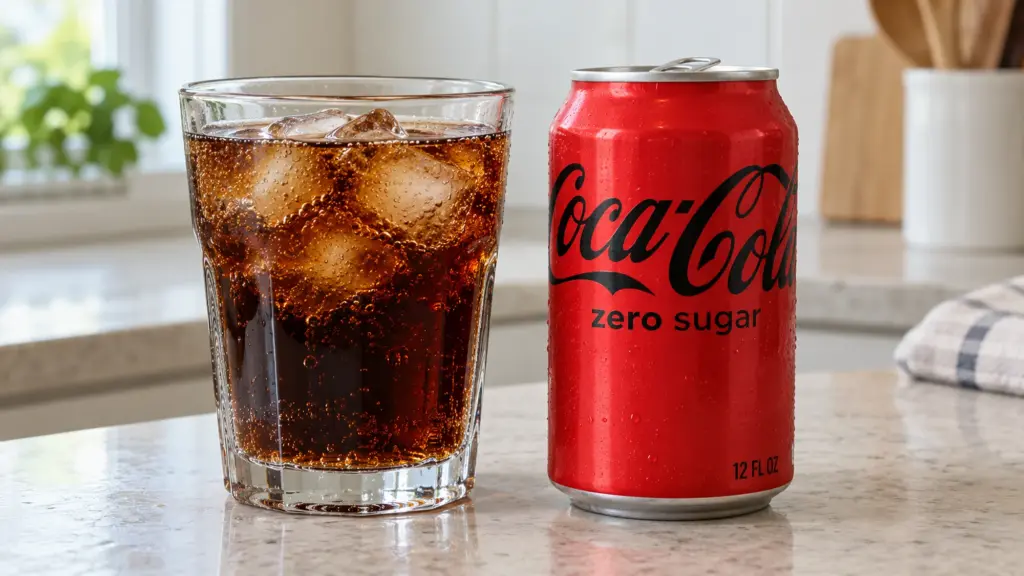
The word “zero” is doing a lot of work on a soda can. If you are choosing a drink for later in the day, the important question is not just whether it has sugar: does Coke Zero have caffeine?
Yes. Regular U.S. Coca-Cola Zero Sugar contains about 34 mg of caffeine per 12 fl oz. The separately labeled caffeine-free version is the choice without caffeine.
I’d check those two words—caffeine free—before relying on the can’s color or the familiar brand name. A similar-looking package can answer a very different question.
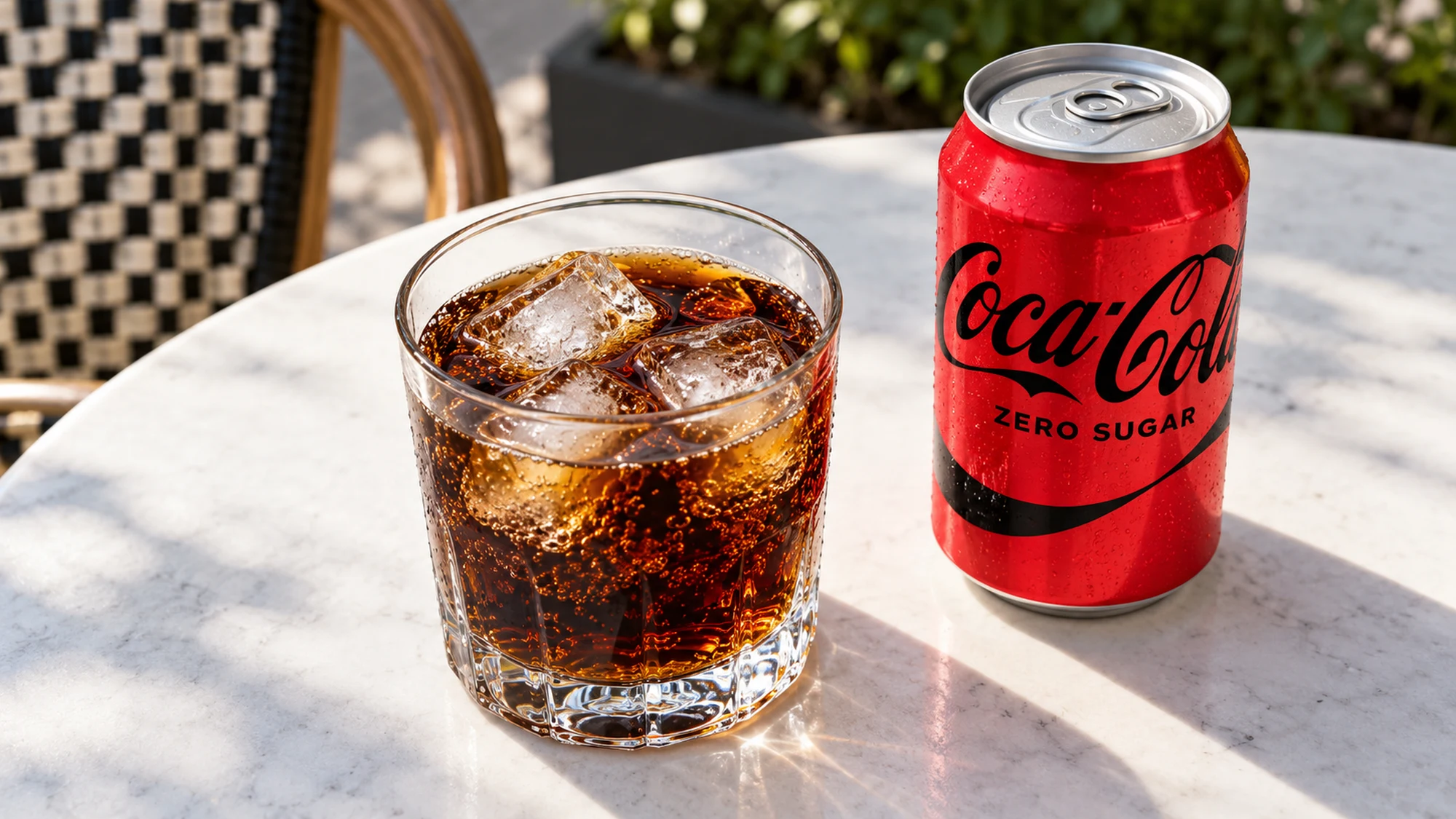
Does Coke Zero have caffeine in every version?
The current U.S. Coca-Cola Zero Sugar page lists caffeine in the regular product and gives approximately 34 mg per 12 fl oz. It also lists a separate Coca-Cola Zero Sugar Caffeine Free product. “Zero Sugar” by itself does not mean zero caffeine.
These are U.S. product details, not a guarantee about every flavor, fountain offering or country. Match the exact name and local label rather than carrying a number from one package to another.
- Regular Zero Sugar: contains caffeine.
- Zero Sugar Caffeine Free: a separate product without caffeine.
- An unfamiliar flavor or imported can: verify its own information.
- A restaurant fountain drink: ask for the specific product if caffeine avoidance matters.
Serving size changes the total
A caffeine amount needs a serving size attached to it. One 12 fl oz can and several refills are not the same amount of drink, even when they share the same name.
The table uses the manufacturer’s approximate 34 mg per 12 fl oz as a calculation basis. Values other than the 12-ounce entry are rounded arithmetic examples for that same formulation—not laboratory measurements or verified labels for different packages.
- Use the amount you actually drink, not the glass’s maximum capacity.
- Keep refills in the count; an empty glass does not reset the total.
- Ice changes the volume of soda poured, so a fountain cup’s size alone is not an exact caffeine measurement.
| Amount of regular U.S. Zero Sugar | Approximate caffeine |
|---|---|
| 6 fl oz (half of 12 fl oz) | 17 mg, calculated |
| 12 fl oz | 34 mg, manufacturer |
| 18 fl oz | 51 mg, calculated |
| 24 fl oz (two 12-ounce cans) | 68 mg, calculated |
Keep the drink amount beside the caffeine number. The pair is more useful than either number alone.
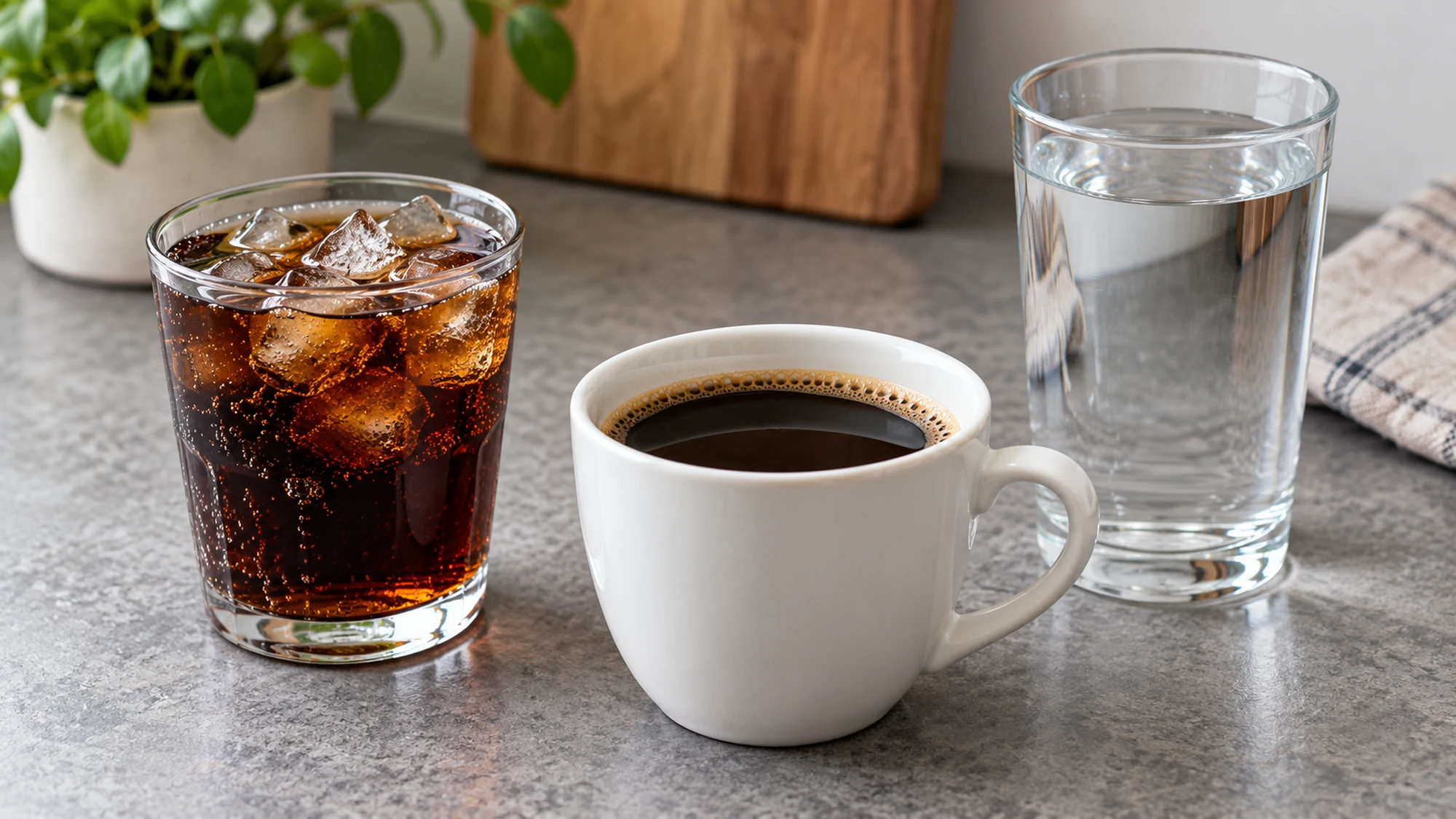
Put the soda beside the rest of your day
Coffee, tea, chocolate and some supplements can also contribute caffeine. The manufacturer’s ingredient FAQ lists 46 mg in 12 fl oz of Diet Coke, showing why that drink should not be treated as interchangeable with Zero Sugar.
For most adults, the FDA cites 400 mg a day as an amount not generally associated with negative effects. This is not a target, a personal allowance or a reason to calculate how many cans to drink. Sensitivity, health conditions and medicines can change what is appropriate.
- Write down the caffeinated drinks you actually have, with their portion sizes.
- Use a product’s own caffeine information when available; coffee strength and serving sizes vary.
- Include any relevant caffeine-containing supplements or medicines in the conversation with your pharmacist.
- If sleep is the concern, pay attention to timing as well as the day’s total.
A practical label check before you open it
The FDA’s caffeine guidance advises asking retailers when caffeine information is unclear. It also notes that too much can cause symptoms such as jitters or sleep problems, and that individual responses vary.
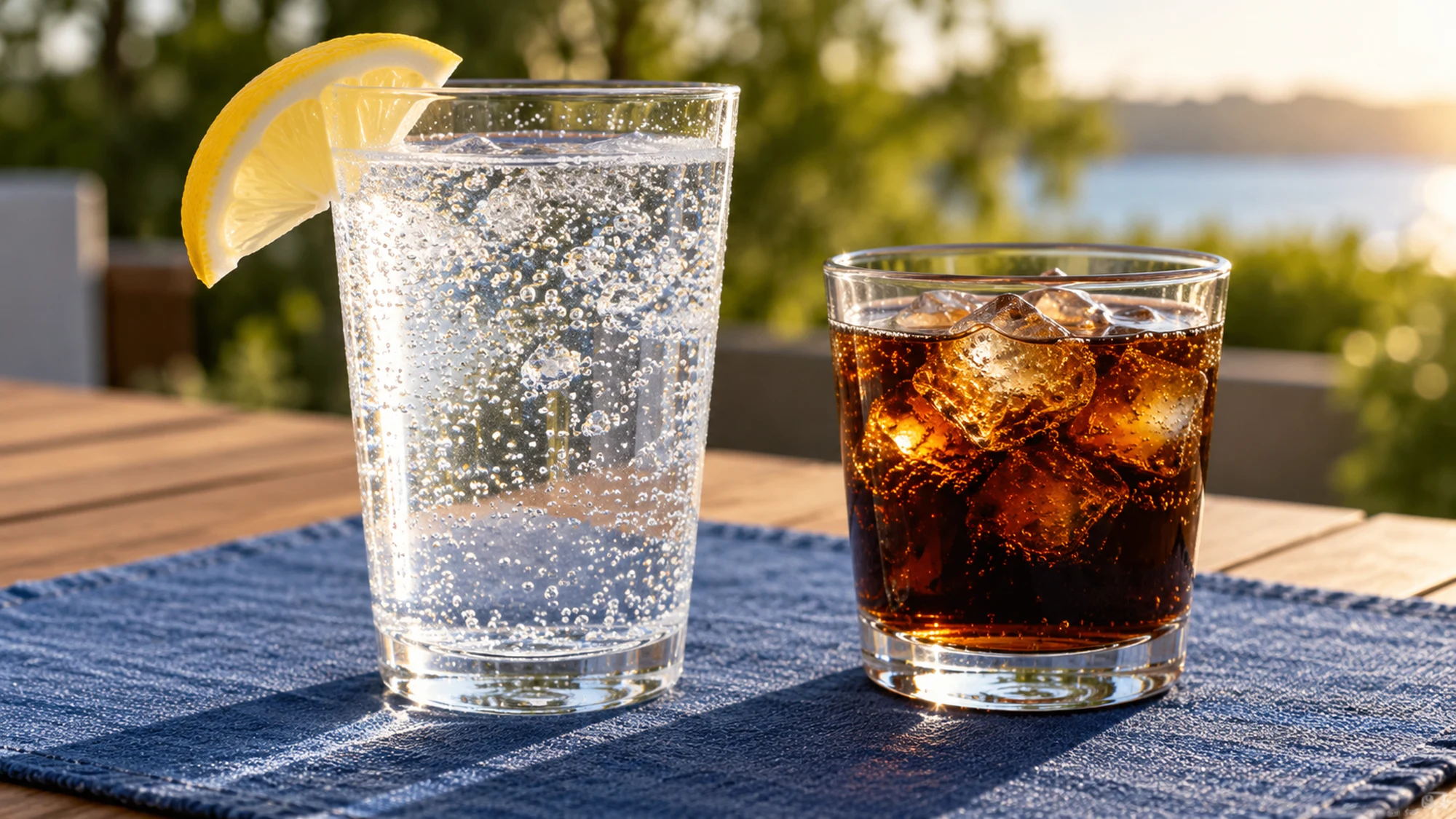
I’d make the decision from the label rather than from whether a drink feels “strong.” Sweetness, fizz and a cold serving temperature are not caffeine measuring tools. For a genuinely caffeine-free change, plain water or plain sparkling water avoids the product-name puzzle altogether.
- Read the full product name for an explicit caffeine-free statement.
- Check the ingredient list and any caffeine amount supplied separately from Nutrition Facts.
- Match the amount to its stated portion; do not assume one bottle equals one reference serving.
- If pregnant, breastfeeding, taking medicines or managing a condition, ask your clinician what limit applies to you.
- Do not use adult caffeine guidance as a recommendation for children.
Bottom Line
Regular Coke Zero contains caffeine; the caffeine-free version is a different choice. Start with the exact product, then check the serving size and your other sources. I’d rather make one clear label check than let the word “zero” make the decision for me.
This Mayo Clinic explanation focuses on children and caffeinated drinks, a useful reminder that adult guidance is not a recommendation for kids.
Sources
- Coca-Cola U.S.: Zero Sugar products and caffeine
- Coca-Cola: ingredient and caffeine FAQ
- FDA: how much caffeine is too much?

Hi, I’m Emily Pocker! I share recipes and food guides here at Recipes360 to help you find everyday meal inspiration and feel more confident in the kitchen. My goal is to make cooking approachable, enjoyable, and full of flavor.