
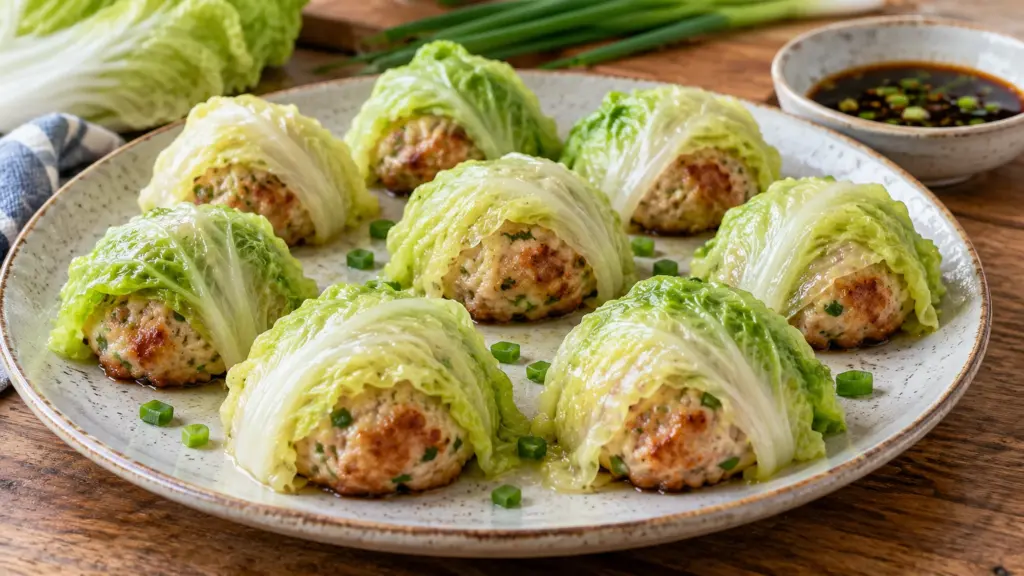
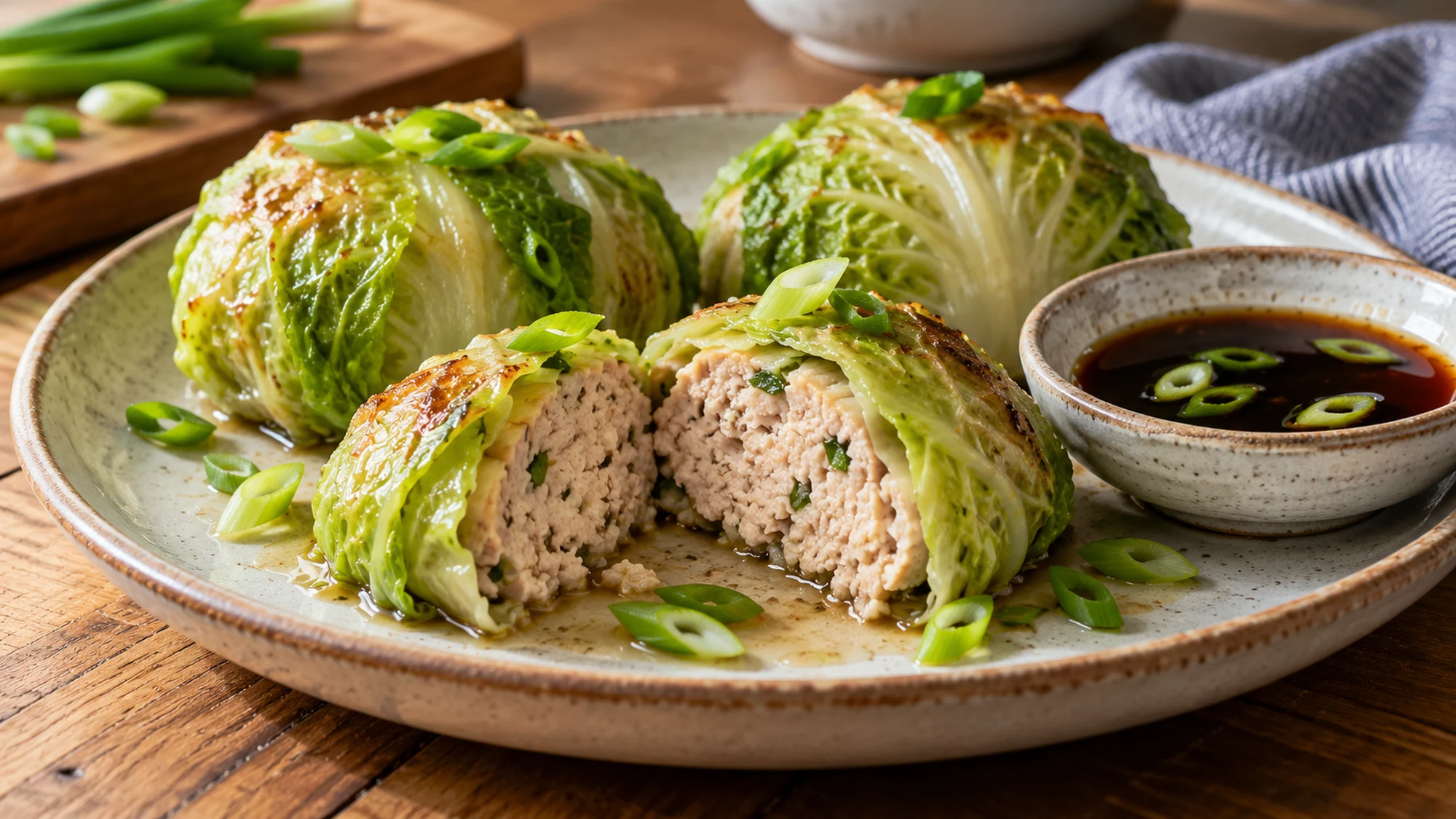
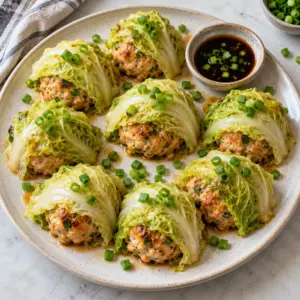
Pleating wrappers is not the only way to put dumplings on the table. These chicken blanket dumplings use softened Napa cabbage leaves draped over small seasoned chicken mounds, with the bases left against the pan. Ginger, scallion, and a little sesame oil give this version its direction; a covered steam finishes the centers.
This is the Napa cabbage version of chicken blanket dumplings. The leaves cover the tops and sides without sealing underneath, so the chicken can brown against the pan.
Serving Suggestions for Chicken Blanket Dumplings
Serve three dumplings per person with rice and a crisp vegetable side, or offer smaller portions as an appetizer. I’d keep an extra dipping sauce light and separate: the filling already contains soy sauce, and there is no need to drown the cabbage before it reaches the plate. A spoon is handy for any flavorful pan juices.
- Choose steamed rice or noodles to make a fuller dinner. These accompaniments are not included in the card’s nutrition estimate.
- Add sliced cucumber or a carrot ribbon salad for a cool, crunchy contrast to the soft leaves.
- Offer chili oil at the table rather than mixing it through the whole batch. That keeps the base recipe mild.
- Lift each dumpling with a broad spatula so the chicken and its cabbage blanket travel together. The leaf is not a handle.
| Serving choice | Texture | Practical detail |
|---|---|---|
| Straight from the pan | Tender leaves, browned base | Lift with a broad spatula |
| Covered on a warm platter | Softens the browned base | Serve promptly |
| Sauce on the side | Keeps flavors adjustable | Taste before adding more soy |
Keep the vegetable blanket supported and the sauce optional. Rice and a fresh side turn the dumplings into a more complete plate.
Variations and Better Cabbage Blankets
Napa cabbage has leafy tips that soften readily, while its thick white ribs need more attention. Use pieces broad enough to cover the filling and save the heavier ribs for another dish. I prefer that approach to forcing a stiff piece around the chicken and hoping the lid will sort it out.
- If a leaf springs away from the mound, soften it a little longer before assembly. Drain it well so it does not carry a puddle into the pan.
- A little finely chopped shiitake can add a different savory note, but too much wet filling can spread. Keep any experiment modest.
- Ground turkey is a possible poultry alternative, but fat content and texture vary. Check the same safe final temperature.
- Use labeled gluten-free soy sauce if needed and check every other packaged ingredient. Cabbage leaves alone do not establish that the whole recipe is gluten-free.
- Add chili crisp or toasted sesame seeds after serving if you like, and count their additional fat, salt, or allergens separately.
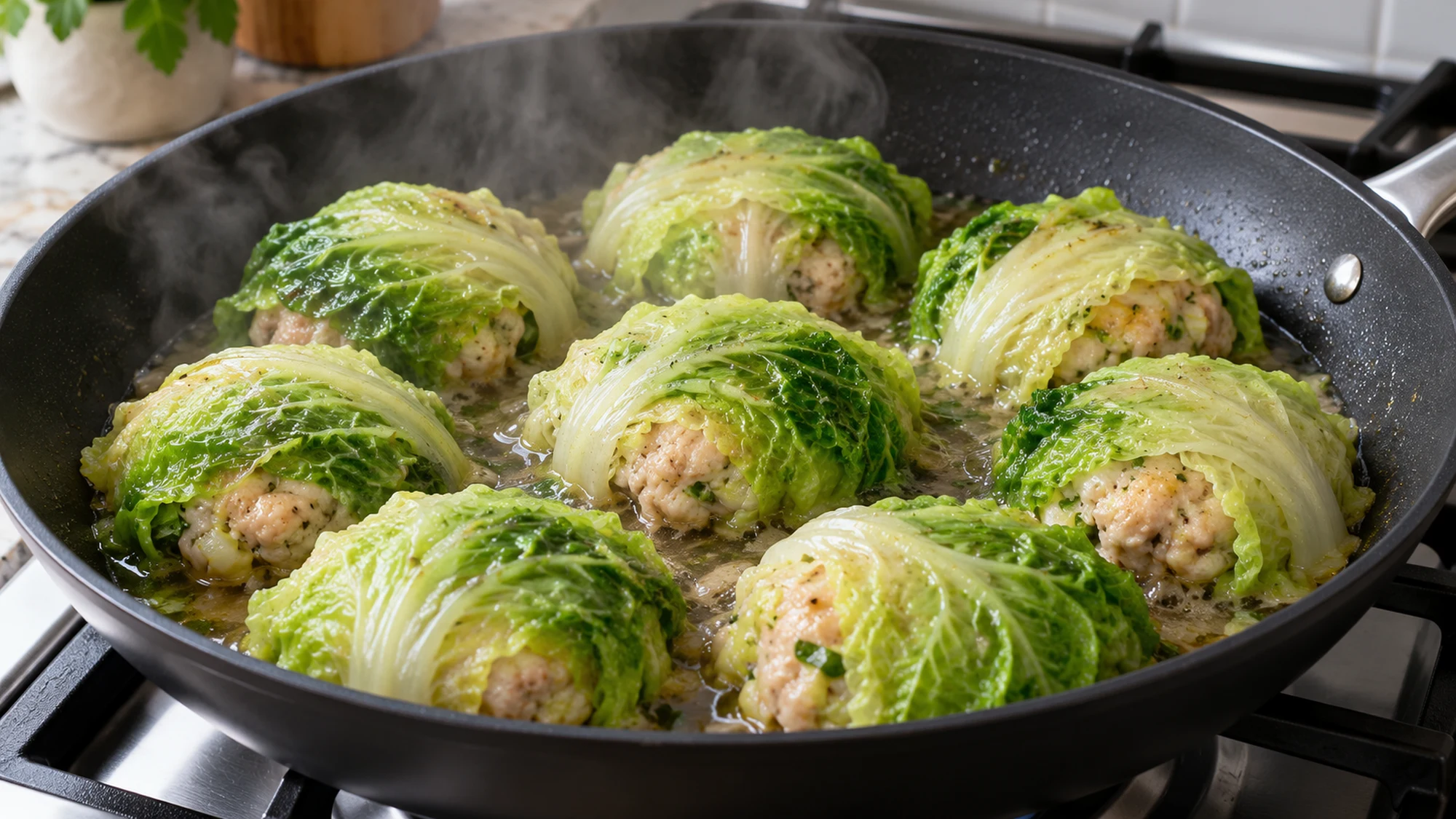
Starting the portions in an unheated skillet gives you time to place the blankets without the first dumpling racing ahead. Leave small spaces between the mounds; crowded portions can merge. Once covered, the steam does the center cooking. A golden base is a texture cue, while the thermometer is the useful safety check.
Choose flexible leaf pieces and keep the filling portions consistent. This version depends on a simple drape, not folding skills or a perfect seal.
Health Benefits and Safe Cooking
Chicken contributes protein, and cabbage adds a vegetable component without a flour wrapper. That does not make this a complete meal by itself or a guarantee of a particular diet outcome. The estimate includes the oils and sauce used in the recipe, because small spoonfuls still contribute to the finished dish.
- Perdue’s ground chicken label provides a representative nutrition basis for the meat; actual products differ in fat content.
- Use a thermometer in the center of the largest mound and reach 165°F (74°C), following FoodSafety.gov’s poultry guidance.
- Handle raw chicken separately from ready-to-eat vegetables, wash hands and utensils, and do not rinse raw poultry.
- Soy and sesame are included. Check soy sauce and any additional condiments for wheat and other allergens.
- Refrigerate leftovers promptly in shallow containers within two hours, or one hour above 90°F (32°C).
Store at 40°F (4°C) or below and use within three days. Reheat to 165°F (74°C), with a small splash of water and a lid to warm the centers without scorching the bases. USDA’s reheating guidance applies even when a dumpling looks hot at the surface. Expect the cabbage to be softer after storage.
The useful benefits are a measured protein portion and some vegetables, with the full meal built around them. Keep the raw-chicken handling and center temperature precise.
Bottom Line
Chicken blanket dumplings can be a straightforward cabbage-and-chicken skillet meal. Make the leaves flexible, portion the filling evenly, and let steam cook the centers before briefly finishing the bases. Serve with rice and a crisp side for contrast.
Chicken Blanket Dumplings Recipe

Ingredients
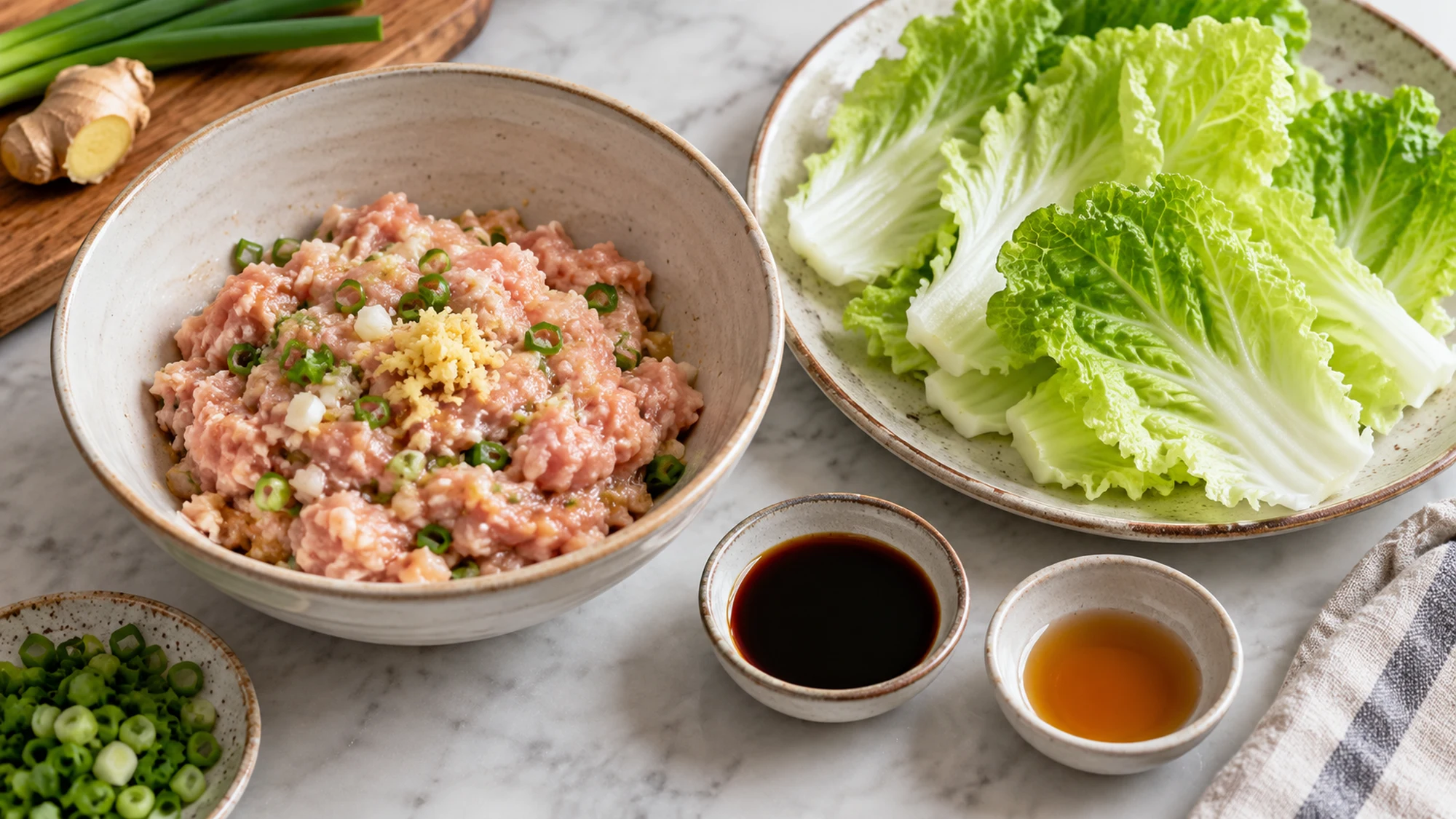
- 450 g ground chicken
- 200 g Napa cabbage leafy portions 9 broad pieces; remove thick rigid ribs
- 40 g scallions finely sliced
- 10 g fresh ginger peeled and finely grated
- 1 tablespoon reduced-sodium soy sauce 15 ml
- 1 tablespoon cornstarch 8 g
- 1 1/2 teaspoons toasted sesame oil 7 g
- 2 teaspoons neutral oil 10 g
- 120 ml water plus small splashes if needed
Equipment
- 12-inch nonstick skillet with lid
- Saucepan
- Mixing bowl
- Broad silicone spatula
- Instant-read thermometer
Instructions
- Bring a saucepan of water to a boil. Blanch the Napa cabbage pieces for 30–60 seconds until flexible, then drain well and cool enough to handle.
- Mix the ground chicken with scallions, ginger, soy sauce, cornstarch and sesame oil until evenly combined. Divide into 9 equal portions.
- Brush the neutral oil over an unheated 12-inch skillet. Place 9 low chicken mounds in the pan, spaced apart. Drape one cabbage piece over each mound, shaping around the top and sides while leaving the bottom uncovered.
- Set over medium heat and cook for about 3 minutes to set the bases. Carefully pour the water around the dumplings, avoiding splashes, cover and gently steam for 8–10 minutes.
- Check the center of the largest mound with a thermometer: it must reach 165°F (74°C). If needed, add a little water, cover and continue, checking again. Once safely cooked, uncover and let excess water evaporate for 1–2 minutes, stopping before the bases scorch.
- Lift with a broad spatula and serve in 3 portions. Rice and extra dipping sauce are optional and excluded from the estimate.
Nutrition
Video
Notes
Tried this recipe?
Let us know how it turned out!Hi, I’m Emily Pocker! I share recipes and food guides here at Recipes360 to help you find everyday meal inspiration and feel more confident in the kitchen. My goal is to make cooking approachable, enjoyable, and full of flavor.