
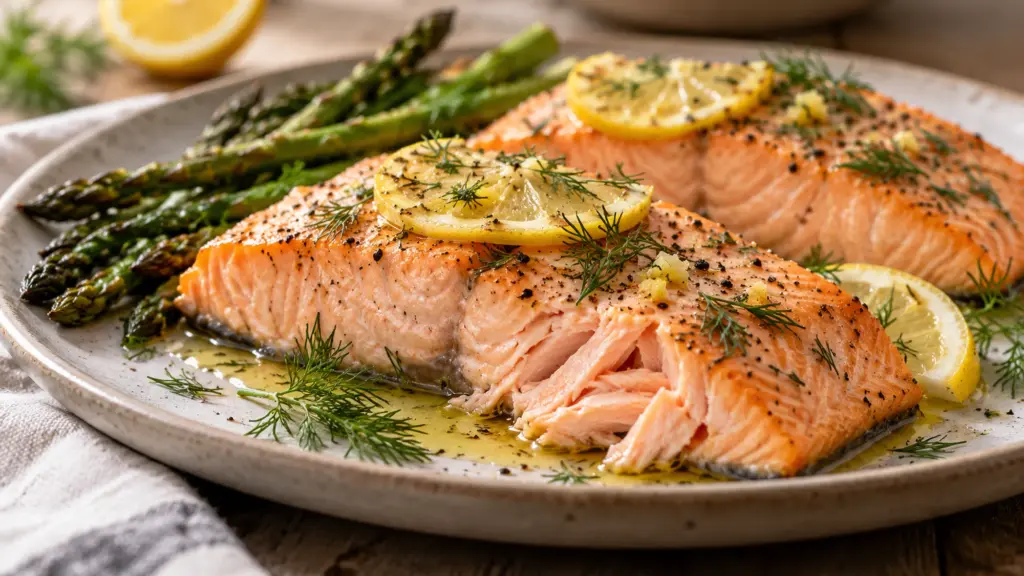
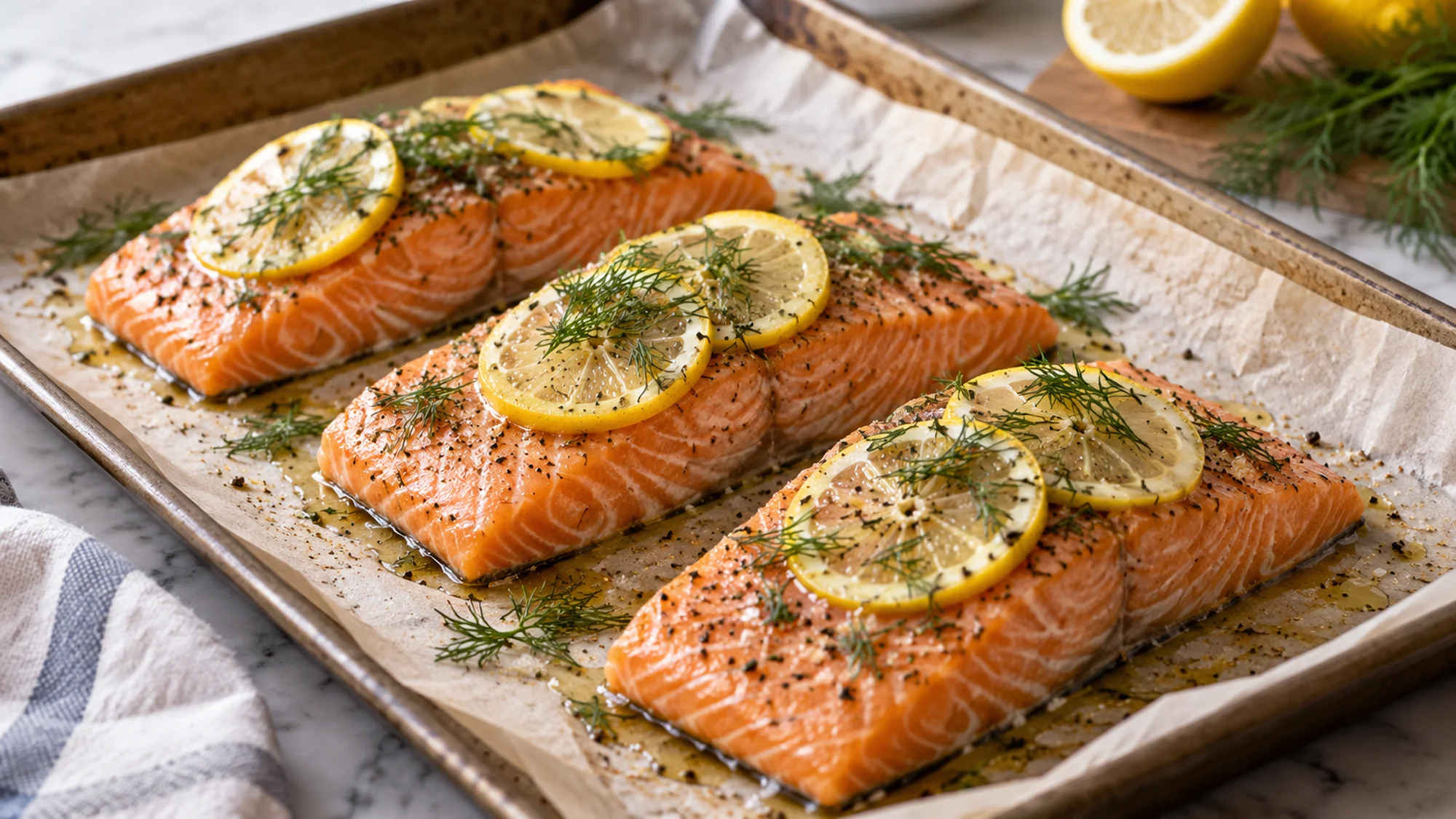
A salmon fillet can go from tender to noticeably dry while the rest of dinner is still finding its way onto plates. For a straightforward home meal, my choice for the best way to cook salmon is a moderate oven, similar-sized fillets and a thermometer. Lemon, dill and a measured amount of olive oil supply flavor without a complicated glaze.
Roast the salmon skin-side down at 375°F (190°C), start checking early and cook the thickest part to 145°F (63°C). Timing depends on thickness, so use the clock as a reminder to look rather than a guarantee. This method favors an evenly cooked interior; it is not designed to create crisp pan-seared skin.
Serving Suggestions for Lemon-Dill Salmon
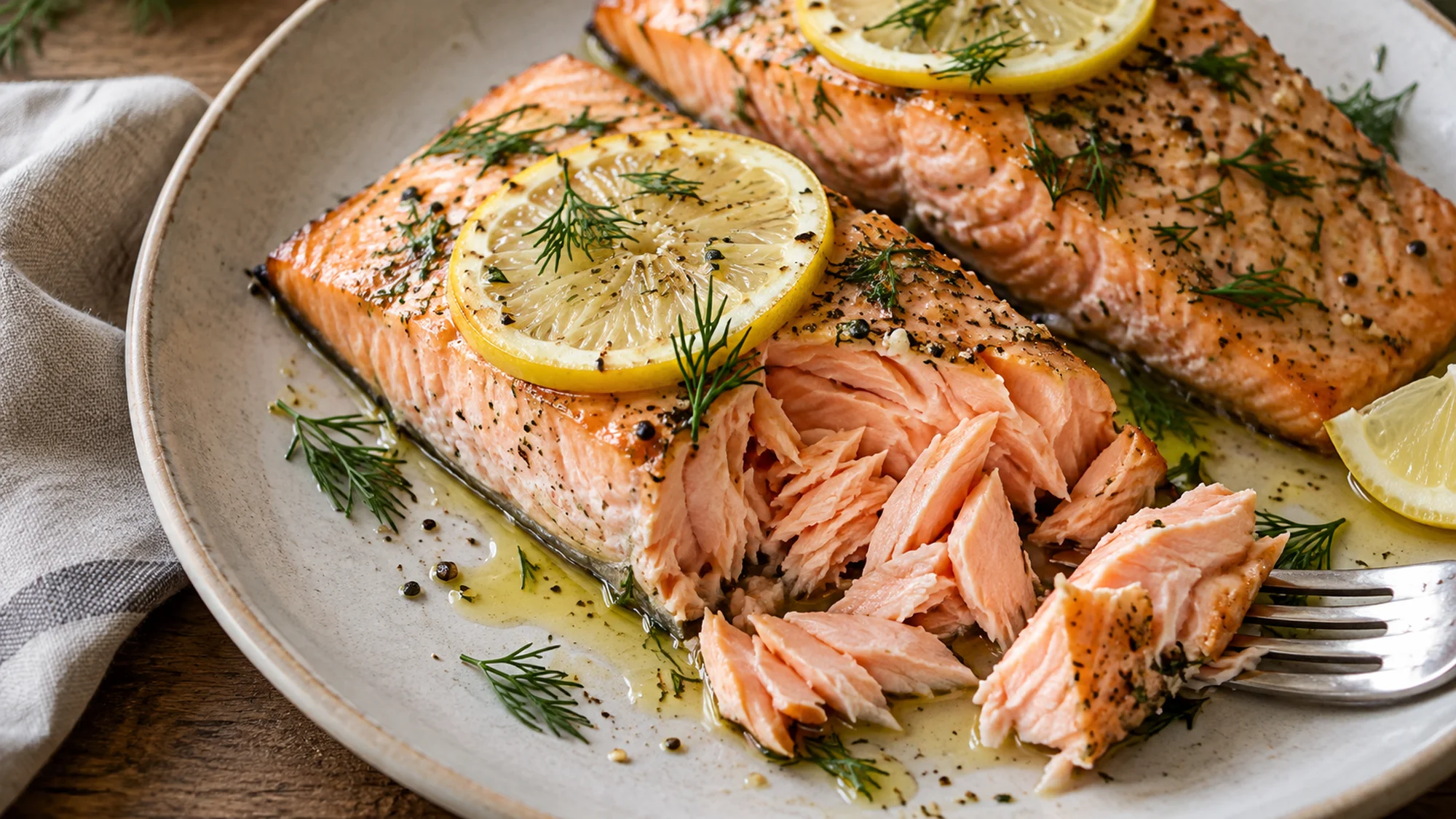
Move the salmon to plates once it reaches the target temperature, rather than leaving it on the hot tray while you finish every side. A wide spatula helps support the fillet. The skin can stay on the plate or be left behind according to preference; roasting it against parchment does not make it especially crisp.
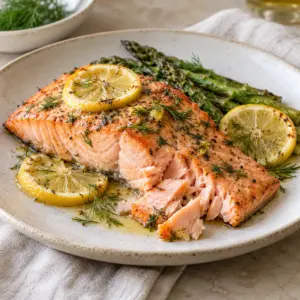
I’d serve lemon-dill salmon with cooked rice and a green vegetable, keeping the side flavors fairly simple. Asparagus appears in two of the serving images as an optional accompaniment; it is not part of the fish-only nutrition estimate. Cook it separately to your liking so its timing does not dictate how long the salmon stays in the oven.
For a different fish dinner, baked cod tacos use a similar thermometer-based doneness check but change the serving style completely. Leftover salmon can be flaked into a meal after safe storage, though repeated reheating tends to dry it out. Chill the fish promptly in a shallow container rather than leaving the tray on the stove.
Variations: Finding the best way to cook salmon
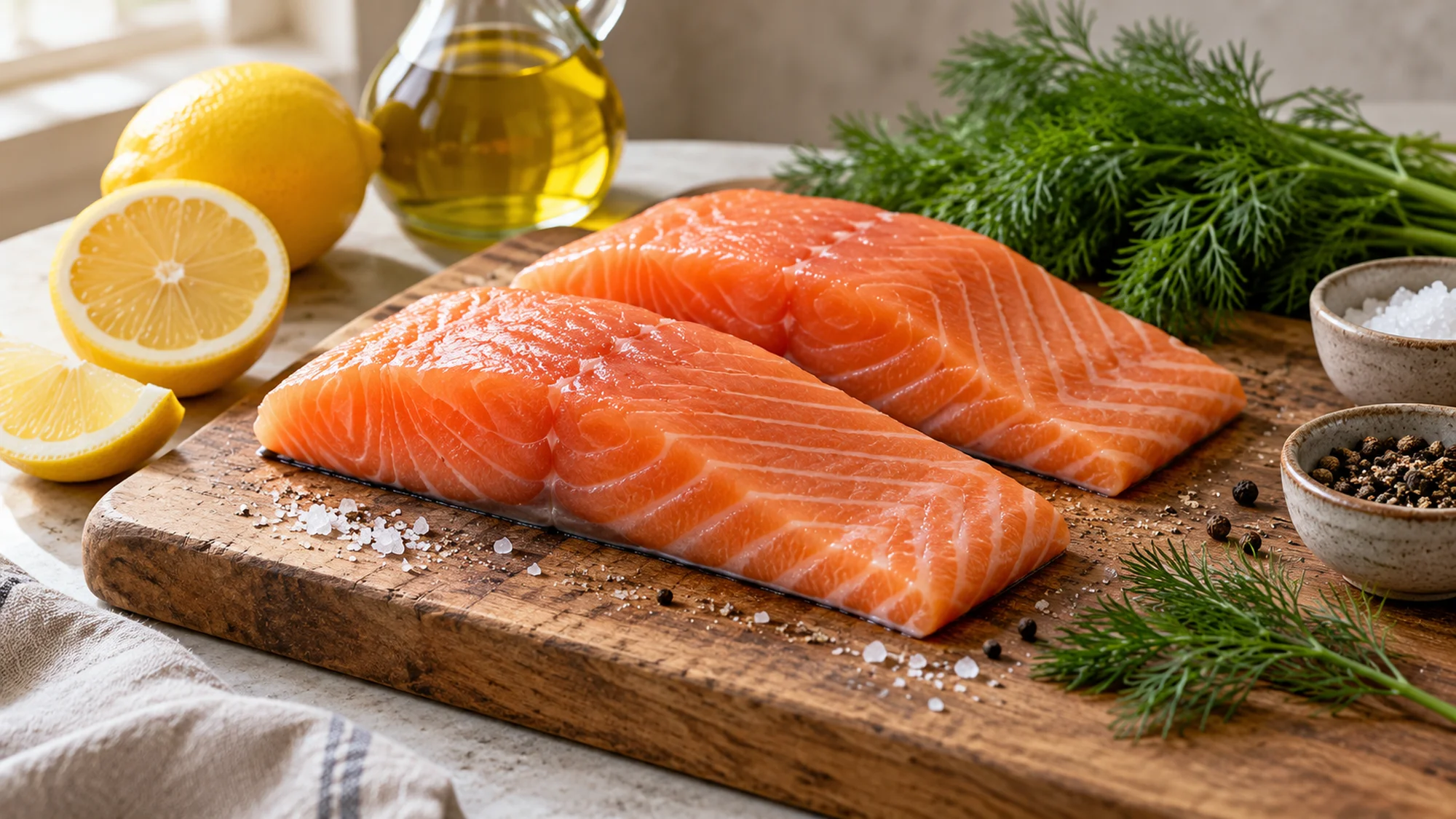
Fillet thickness is the first thing I would compare when buying or portioning salmon. Similar weight does not always mean similar shape: a broad thin tail piece cooks differently from a compact thick center cut. If the pieces differ, check each one and remove the thinner fillet as soon as it is ready.
A little lemon zest gives aroma without covering the tray in acidic liquid. The thin lemon slices add a serving detail, while chopped dill finishes the seasoning. Dried dill can be useful, but it has a different intensity and texture; start with a small amount rather than replacing fresh herb spoon for spoon.
The table compares methods because the word best depends on your priority. Pan-searing suits crisp skin, and a covered preparation gives a different result again. This recipe chooses oven roasting for a simple, largely hands-off process. It does not claim every cook or every salmon portion should use the same method.
| Priority | Method to consider | Trade-off |
|---|---|---|
| Simple oven dinner | Moderate oven roasting | Skin stays relatively soft |
| Crisp skin | Pan-searing | Needs closer stovetop attention |
| Very gentle texture | Lower-temperature roasting | Longer cooking time |
| Mixed fillet sizes | Check pieces individually | Some may finish earlier |
Health Benefits and Portion Balance
Salmon supplies protein and contains omega-3 fats, but species, farming conditions and portion size affect nutrient amounts. The recipe does not need a promise about heart health or another medical outcome to be a useful dinner. Think about the food itself and how it fits with the rest of the meal.
The card estimate uses a representative raw Atlantic salmon value and includes all the measured olive oil. Leaner wild salmon can give different calories and fat, and optional rice or vegetables add their own nutrients. Varied protein and vegetable choices provide a broader framework than treating one fish as a complete eating plan.
Use the safe internal temperature for fish and keep raw-fish utensils away from finished sides. Refrigerate leftovers within two hours, use within three to four days and reheat to 165°F (74°C). Follow package thawing directions and thaw in the refrigerator when planning ahead.
Bottom Line
For an easy oven dinner, the best way to cook salmon starts with matching the fillets and knowing when to stop. A moderate oven, a little lemon and dill, and a thermometer give you a clear plan without a long marinade. I’d spend the final minute checking the fish rather than adding another garnish; doneness makes the larger difference.
Best Way to Cook Salmon Recipe

Ingredients
- 4 salmon fillets 150 g each, skin-on; thawed; similar thickness
- 1 tbsp olive oil
- 1 lemon zest half, then cut into thin slices and serving wedges
- 2 tbsp fresh dill chopped
- 1/2 tsp fine salt
- 1/4 tsp black pepper
Equipment
- Rimmed baking sheet
- Baking parchment
- Food thermometer
- Wide spatula
Instructions
- Heat the oven to 375°F (190°C). Line a rimmed baking sheet with parchment. Check the thawed salmon for pin bones and pat dry.
- Arrange the fillets skin-side down with space between them. Rub with olive oil, then sprinkle with salt, pepper, lemon zest and dill. Place a thin lemon slice on each fillet.
- Roast for about 12–18 minutes, checking from 10 minutes for thinner pieces. Insert a food thermometer sideways into the thickest part. Cook each fillet to 145°F (63°C); remove individual pieces as they finish.
- Lift onto plates with a wide spatula and serve promptly with the remaining lemon wedges. Optional asparagus, rice or other sides are prepared separately and are not included in the fish-only nutrition estimate.
Nutrition
Video
Notes
Tried this recipe?
Let us know how it turned out!Hi, I’m Emily Pocker! I share recipes and food guides here at Recipes360 to help you find everyday meal inspiration and feel more confident in the kitchen. My goal is to make cooking approachable, enjoyable, and full of flavor.