
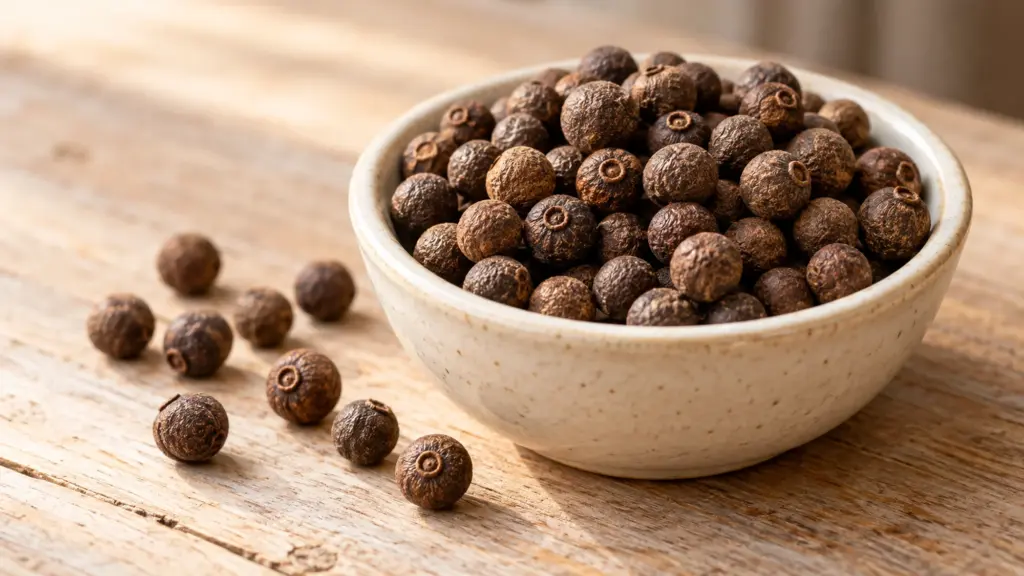
A recipe asks for all spice, and the name sounds like permission to empty the spice rack into a bowl. Resist that very enthusiastic interpretation. Usually written as one word, allspice is a specific ingredient, sold as small brown berries or a fine brown powder.
All spice is a single spice made from the dried fruit of the allspice tree—not a ready-made mixture of cinnamon, cloves and nutmeg. Its warm, complex aroma can suggest those spices, which explains the confusing name.
What All Spice Actually Contains
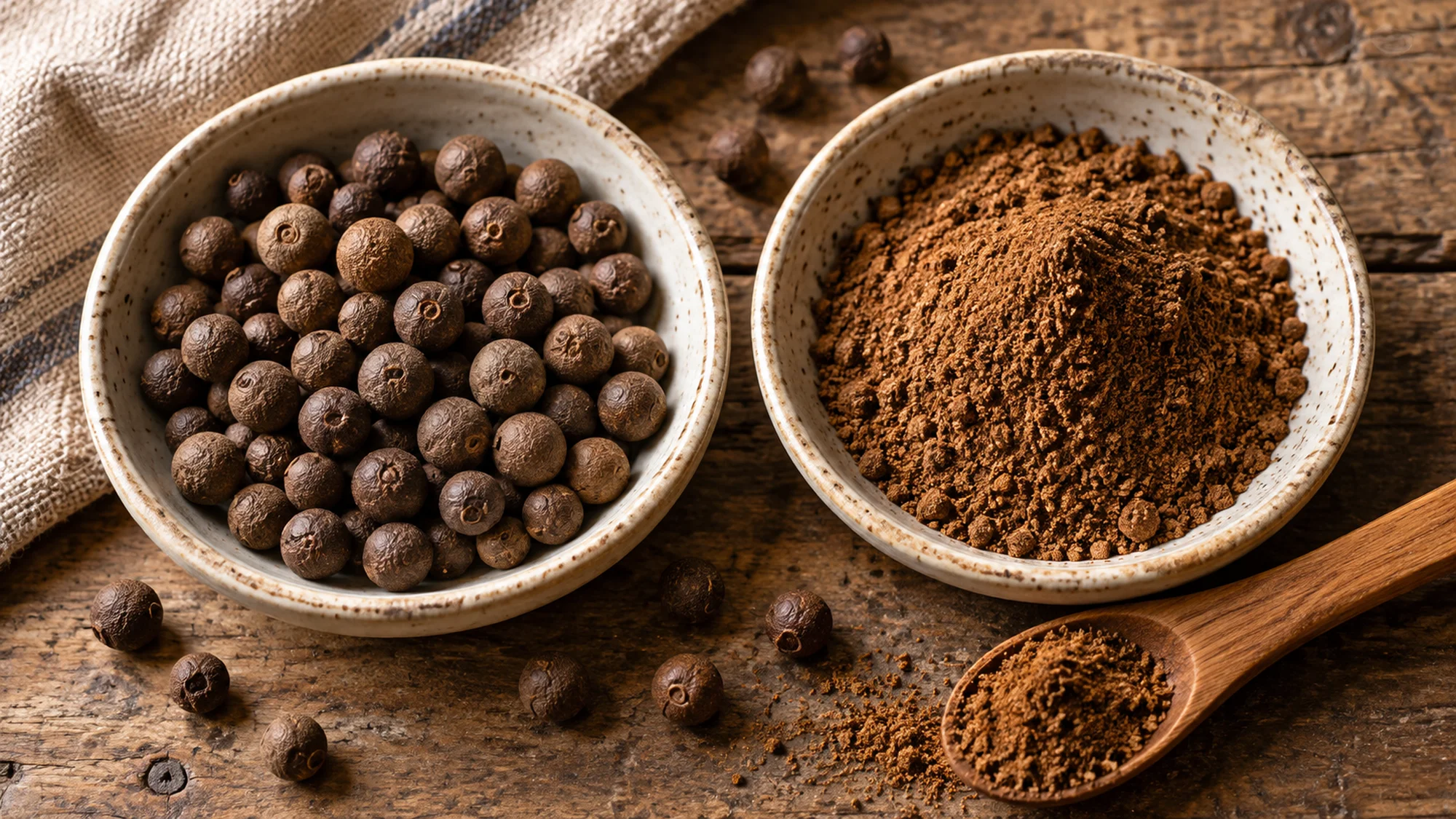
The FDA’s spice definitions describe allspice as a dried fruit with a rounded shape, reddish-brown color and strong aromatic character. The plant is commonly called Pimenta dioica, as identified in McCormick’s culinary overview. You may also encounter the name pimento in a Caribbean spice context; check the product rather than assuming it means a jar of red peppers.
Cinnamon is bark, cloves are flower buds, and nutmeg is a seed. Allspice is none of those things, even when its fragrance brings them to mind. I find that distinction more useful than memorizing a long flavor description: the ingredient list should tell you what you are actually buying.
- Plain allspice: one named spice, whether the berries are intact or ground.
- Mixed spice or pumpkin pie spice: a formulated blend whose ingredients and proportions can vary.
- All-purpose seasoning: a different product altogether; it may contain salt, garlic and other seasonings.
- Peppercorns: superficially similar round dried fruits, but not a substitute for allspice’s flavor.
Whole Berries or Ground Allspice?
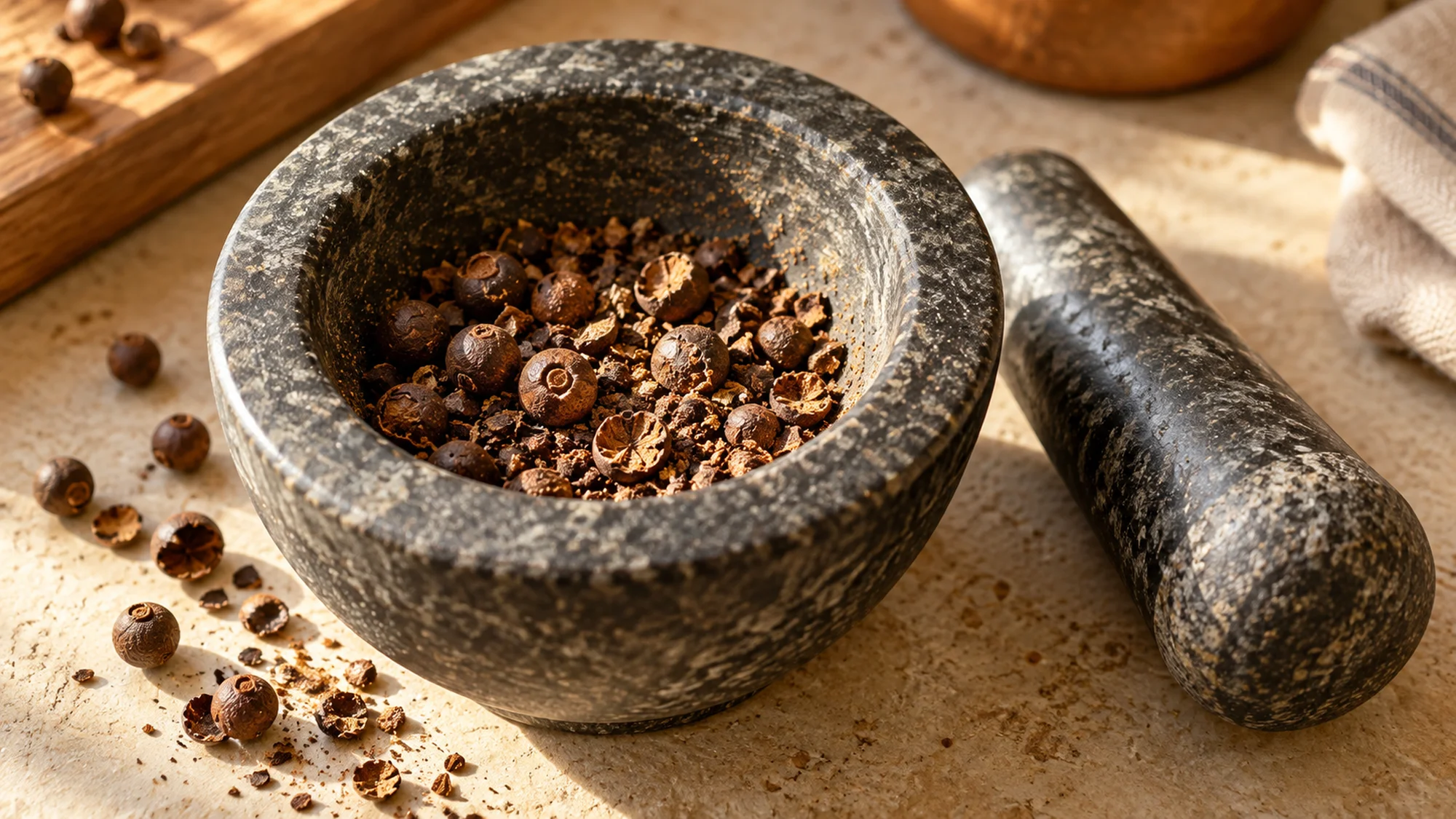
The choice is partly about where you want the spice to end up. McCormick’s whole-allspice guidance describes using berries in brines, slow-cooked dishes and mulled drinks, and grinding them for baking. Whole pieces can flavor a liquid that you later strain; powder becomes part of the food.
I would buy ground allspice for occasional baking and whole berries when a recipe calls for a removable aromatic. Neither form is automatically the better purchase. Buying the form you will actually use matters more than owning an impressive collection.
| Form | Useful role | What to watch |
|---|---|---|
| Whole berries | Infusing broth, brine or a warm drink | Plan to remove or strain the hard berries |
| Freshly ground berries | A measured addition to a rub or batter | Grind finely enough for the intended texture |
| Packaged ground allspice | Convenient, even distribution | Measure as ground spice, not by berry count |
| A spice blend containing allspice | A recipe designed for that blend | Check every ingredient before substituting |
A spoon of whole berries contains spaces that a spoon of powder does not. Follow the form and quantity specified in the recipe rather than treating equal spoonfuls as an exact conversion.
Make Its Warm Flavor Useful
Allspice can belong in dinner as comfortably as dessert. McCormick’s culinary suggestions include meat casseroles and fruit preparations, with a reminder to use it sparingly. The practical goal is a warm supporting note, not a sauce that tastes as though someone tipped in a scented candle.
Start with a recipe written for allspice, especially when you are baking. In an adjustable stew or sauce, add cautiously and taste the cooked mixture before increasing it. I would keep a note of the amount that suits the particular dish instead of assuming one amount works everywhere.
- With stewed fruit: use it to bring a deeper spice note alongside the fruit’s own sweetness.
- In a savory braise: let it complement the other aromatics rather than replace them indiscriminately.
- In a smooth batter: use the requested ground form so hard berries do not surprise anyone.
- If the jar is empty: choose a recipe-supported substitution, knowing that a blend changes the flavor rather than recreating the berry.
For another naming puzzle, our anise-seed guide explains why anise and star anise need their own labels. Similar-smelling spices are not necessarily the same ingredient.
Keep All Spice Away From Heat and Steam
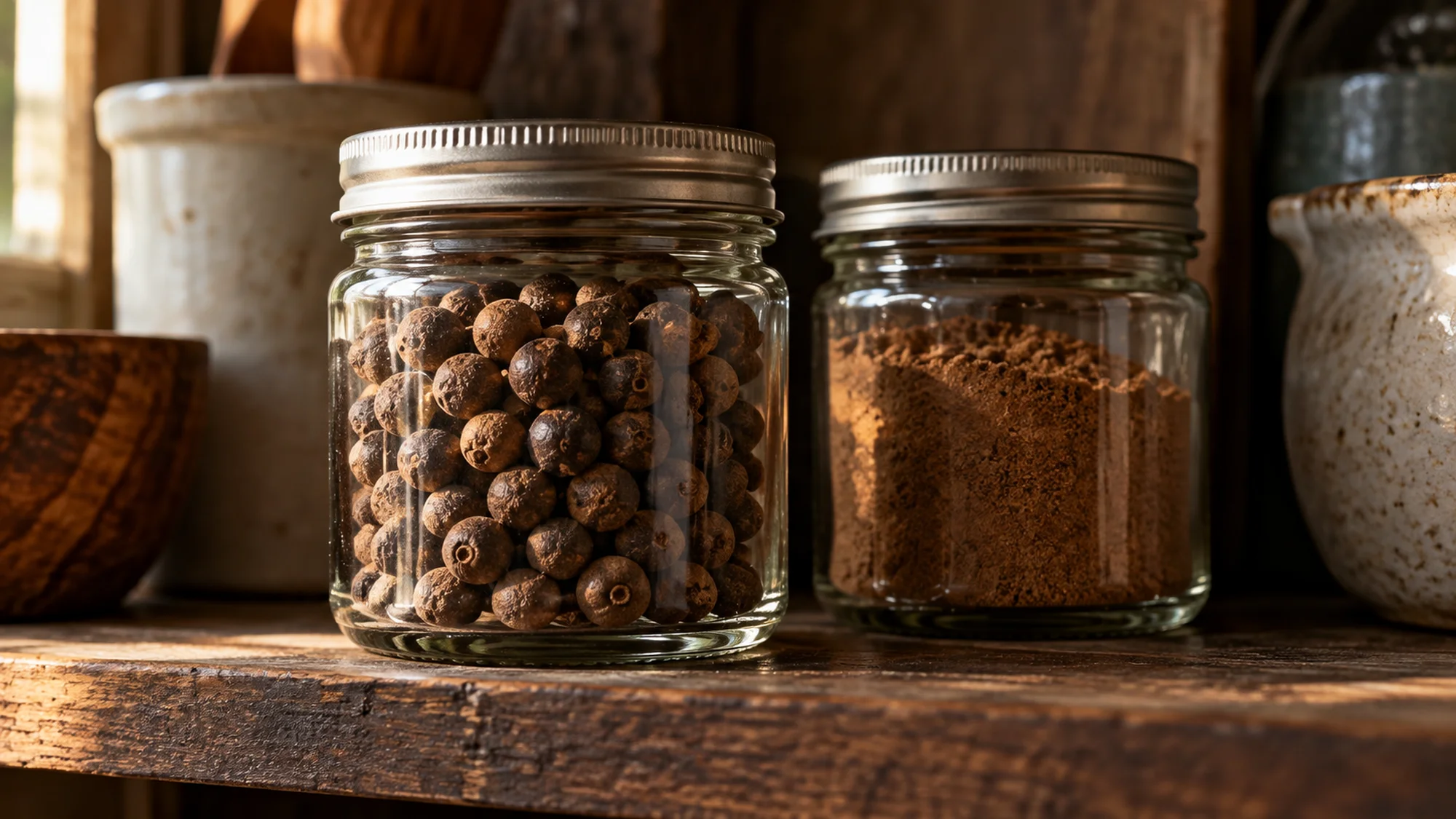
A convenient shelf directly over the stove is not necessarily a good spice shelf. Kansas State Extension’s cupboard-storage guidance recommends airtight containers protected from heat and sunlight, and checking for fading aroma. A dry, shaded cupboard is a more sensible home than a hot, damp cooking zone.
Close the lid promptly, use a dry measuring spoon and keep the original identity with any decanted jar. Buy an amount that matches your cooking habits. A small jar with a clear purpose is often more useful than a large bag bought for a recipe you make once.
- Measure away from a steaming pan rather than shaking moisture into the jar.
- Keep whole and ground containers clearly distinguishable.
- Replace spice that has lost the aroma you need instead of endlessly increasing the amount.
- Treat culinary allspice as a seasoning, not as evidence for medicinal claims.
Bottom Line
All spice earns its confusing name through a layered aroma, not a mixture of ingredients. Choose whole berries for the right infusion and ground spice for even distribution, follow the recipe’s measurement, and protect the jar from heat and moisture. The simplest first step is reading the label.
The American Chemical Society’s Reactions video explains why this single spice can suggest several familiar aromas.
Sources
- FDA: Spice definitions
- McCormick: Whole allspice and culinary uses
- McCormick Foodservice: Allspice
- Kansas State Extension: Cupboard storage
- American Chemical Society: Allspice video

Hi, I’m Emily Pocker! I share recipes and food guides here at Recipes360 to help you find everyday meal inspiration and feel more confident in the kitchen. My goal is to make cooking approachable, enjoyable, and full of flavor.