
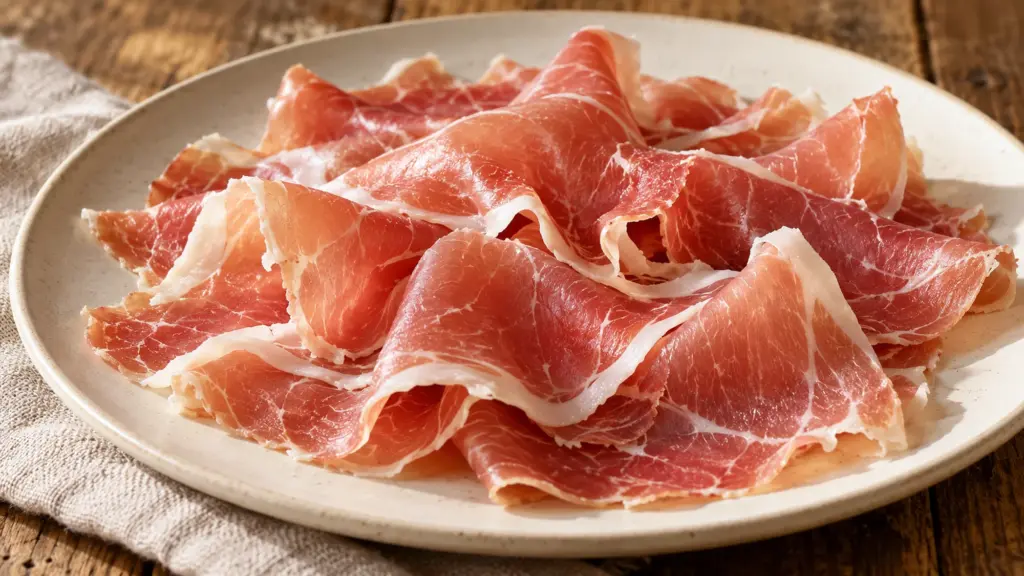
Prosciutto is Italian ham, but the word covers two different styles. Prosciutto crudo is dry-cured and uncooked, with thin, supple slices; prosciutto cotto is cooked ham. In many English-language shops and recipes, prosciutto alone means the cured crudo style.
Check whether you are buying crudo or cotto, and follow the package’s handling instructions. Commercial ready-to-eat prosciutto crudo is commonly served without cooking, but that does not make cold cured meat suitable for everyone: pregnancy and higher-risk food-safety guidance still applies.
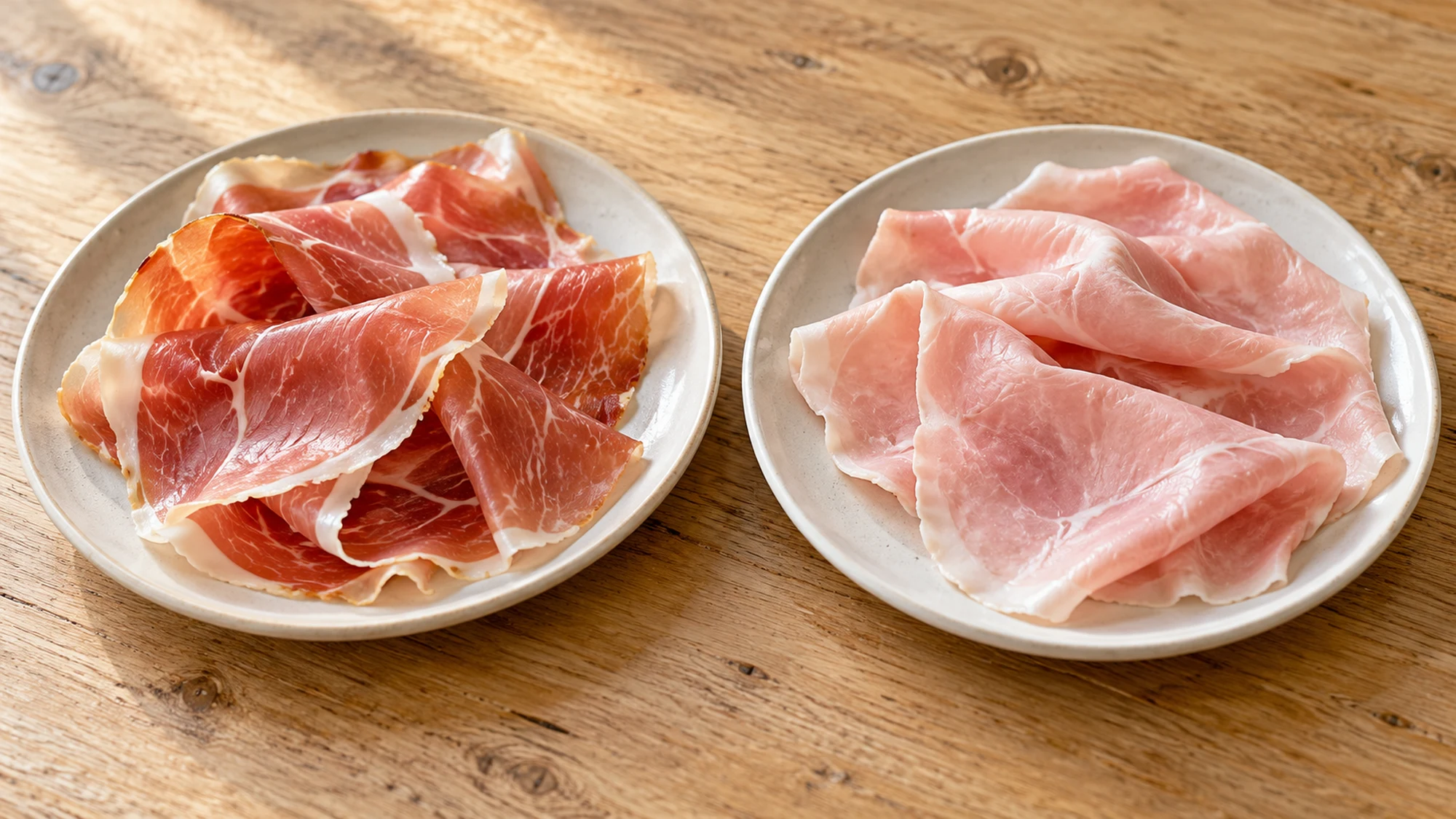
Prosciutto Crudo and Cotto Are Different
Crudo develops its character through salting and curing rather than cooking. The Prosciutto di Parma Consortium describes curing rear pork haunches with sea salt under controlled conditions. The finished slices are rosy, sometimes almost translucent, with distinct white fat and a concentrated savory flavor.
Cotto has a softer, moister, more opaque appearance. For example, Rovagnati describes its traditional prosciutto cotto as gently steam-cooked with herbs and spices. It is closer to the cooked ham used in sandwiches than to a paper-thin slice of dry-cured crudo.
| Name on the label | How it is made | What to expect |
|---|---|---|
| Prosciutto crudo | Salted and dry-cured, not cooked | Thin, supple slices with a concentrated cured flavor. |
| Prosciutto cotto | Cooked ham | Moist, tender slices and a milder cooked-ham character. |
| Prosciutto di Parma PDO | A specifically protected dry-cured ham | Defined origin and production rules, identified by the Parma Crown. |
Prosciutto di Parma is one named type, not a synonym for every prosciutto. The Consortium’s consumer guide explains its protected origin and Crown identification. Another prosciutto may be perfectly useful for dinner without meeting Parma’s specification; read the full name rather than infer origin from the package’s colors.
Choose and Serve the Slices
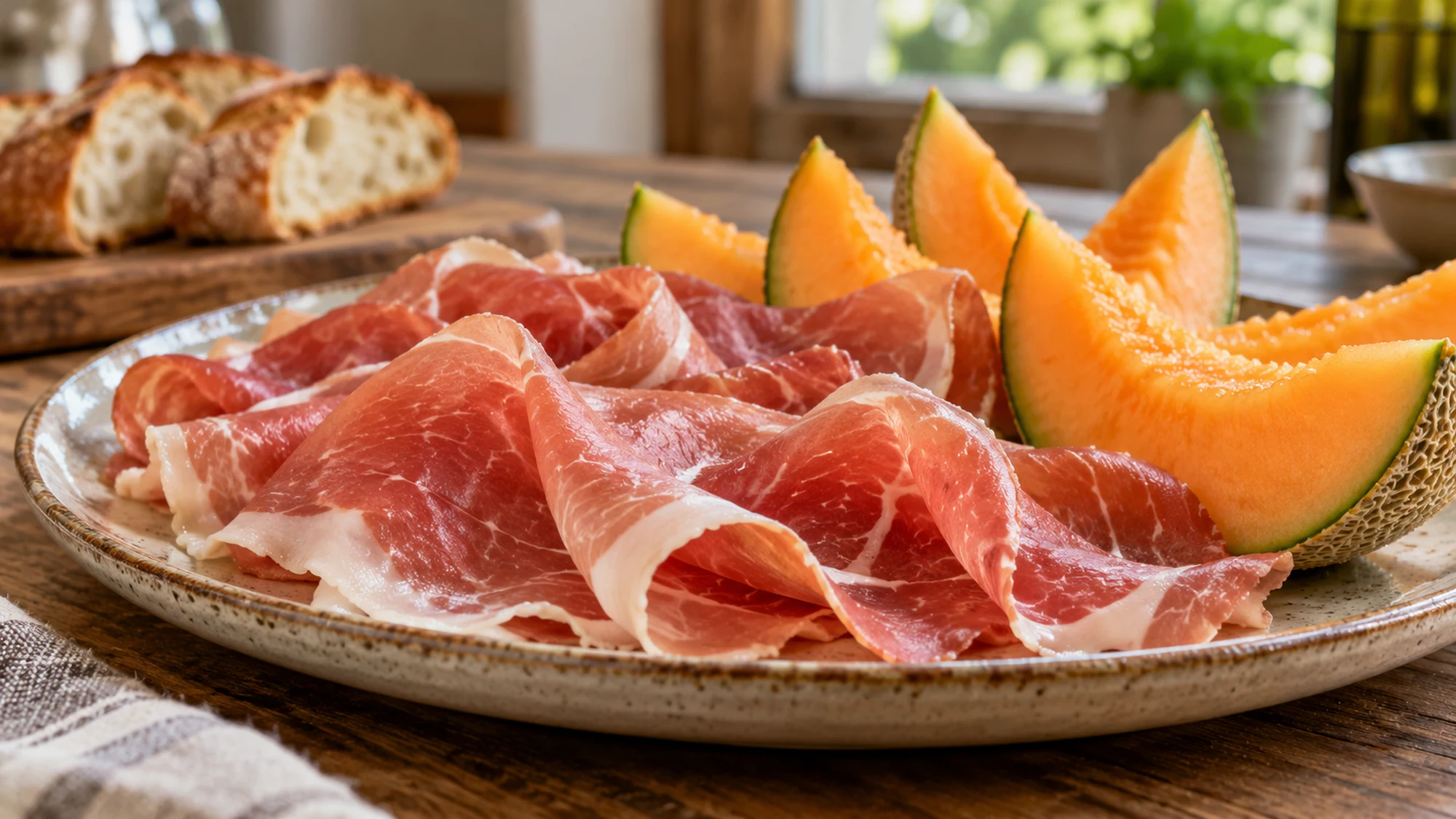
For a platter, look for slices that separate easily and can be draped rather than stacked into a compressed mound. The Parma Consortium recommends paper-thin slicing and paper between layers for its ham. That makes a useful request at a deli counter when you want delicate, manageable pieces.
I would pair crudo with something simple, such as ripe melon, plain bread or a mild cheese, so its saltiness has room to stand out. Leave the slices loose on the plate. For a broader Italian cold-cut comparison, our mortadella guide explains a different style with a very different texture.
- For sandwiches, cotto gives a soft, mild layer; crudo adds a firmer cured flavor in thin folds.
- For pizza or pasta, decide whether you want supple slices added at serving or a deliberately cooked texture.
- For an ingredient substitution, match crudo with a similar dry-cured ham or cotto with cooked ham, then reassess salt and seasoning.
I would buy only what the meal needs when asking for very thin deli slices. Keep the wrapping and label: they identify the product, ingredients, opening instructions and storage advice after the slices are on a plate.
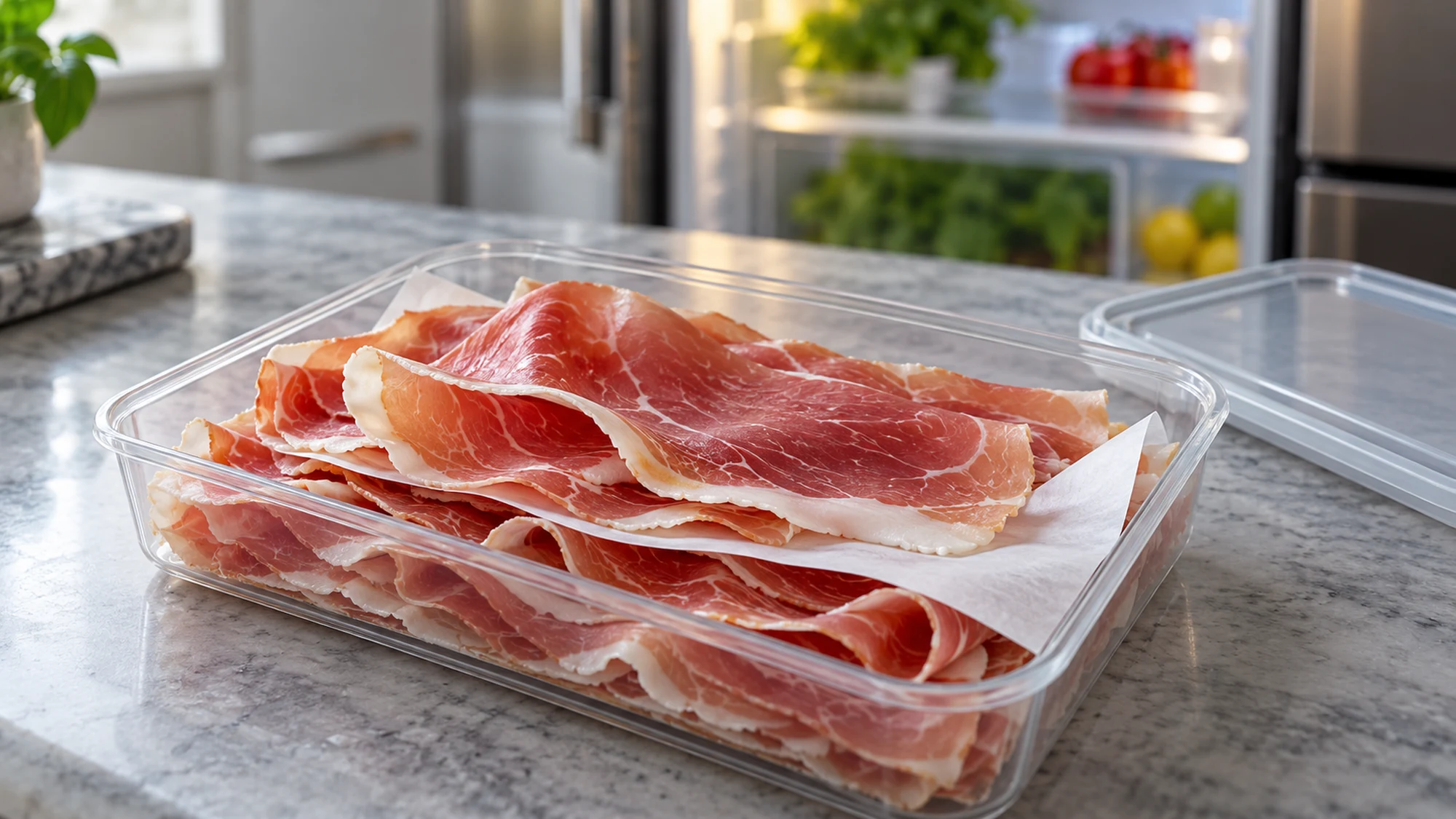
Keep Prosciutto Chilled and Covered
For refrigerated sliced products, keep the meat covered at 40°F (4°C) or below and follow the package’s use-by and after-opening directions. If a deli slices it for you, ask for its storage advice. Instructions for a whole curing ham or a large boneless leg should not be applied automatically to a small opened packet.
For a party, put out a modest platter and replenish it from the refrigerator in a clean dish. FDA’s buffet guidance says to keep cold foods at 40°F or colder and discard perishables left at room temperature beyond two hours, or one hour when temperatures exceed 90°F (32°C). A board containing cheese or cut fruit also needs careful chilling.
Keep clean utensils with the platter and protect ready-to-eat slices from raw meat juices. Do not treat a pleasant smell or attractive color as proof that handling has been safe. Retaining the original label also matters if you need to check ingredients or allergens.
Does Prosciutto Need Cooking?
For ordinary serving, follow the product’s ready-to-eat directions; curing is not a home substitute for making raw pork safe. Pregnancy changes the advice. The NHS specifically lists prosciutto among cold cured meats that should be cooked until steaming hot before eating during pregnancy, citing concerns about toxoplasmosis and listeria.
For people who are pregnant, aged 65 or older, or have a weakened immune system, CDC recommends reheating deli meat and cold cuts to 165°F (74°C) or until steaming hot. This guidance also matters for cooked ham served cold. Brief warming, crisp edges or placing cold slices on a warm dish does not establish that the meat has reached the advised temperature.
Bottom Line
Buy prosciutto by its full name: crudo is dry-cured and uncooked, cotto is cooked, and Parma is a specific protected ham. Serve thin slices simply, follow the actual package’s storage directions, and apply pregnancy or higher-risk heating guidance even when the product is ready to eat.
Sources
- Prosciutto di Parma Consortium: Curing Parma Ham
- Rovagnati: Traditional cooked ham
- Parma Consortium: Common Questions
- Parma Consortium: Slicing and Packaging
- FDA: Serving Up Safe Buffets
- NHS: Foods to Avoid in Pregnancy
- CDC: Preventing Listeria Infection

Hi, I’m Emily Pocker! I share recipes and food guides here at Recipes360 to help you find everyday meal inspiration and feel more confident in the kitchen. My goal is to make cooking approachable, enjoyable, and full of flavor.