
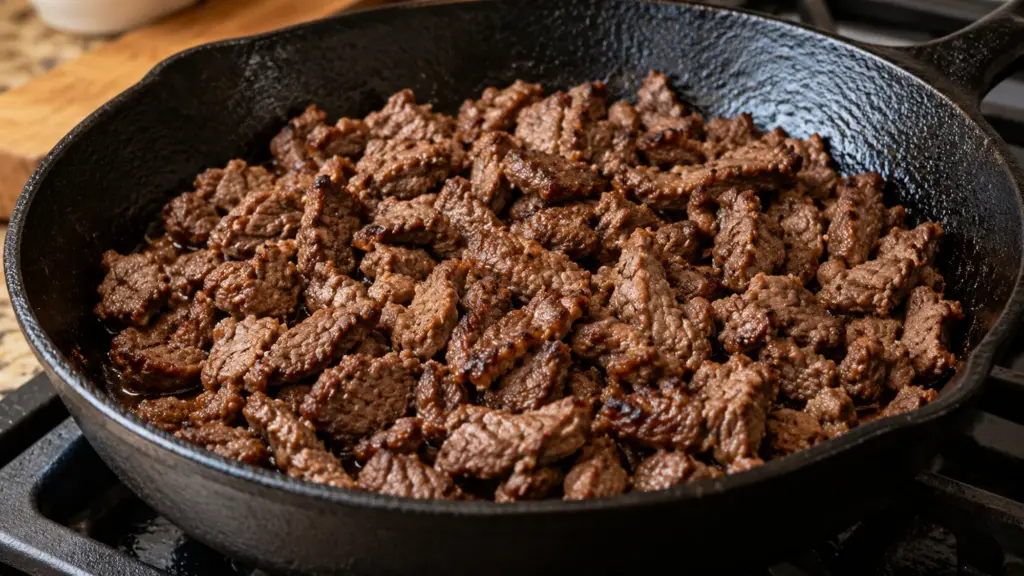
The package says carne picada, but that name does not tell you everything you need for dinner. In U.S. meat cases it can describe beef prepared as small pieces or thin slices. Check the product’s actual form, processing and instructions before deciding it needs a quick sear or a longer cook.
Carne picada is not one guaranteed beef cut or cooking method. Identify what is in your package, including whether it is chopped, ground or mechanically tenderized. Follow its directions and use the appropriate safe temperature; small pieces alone do not tell you how the meat was processed.
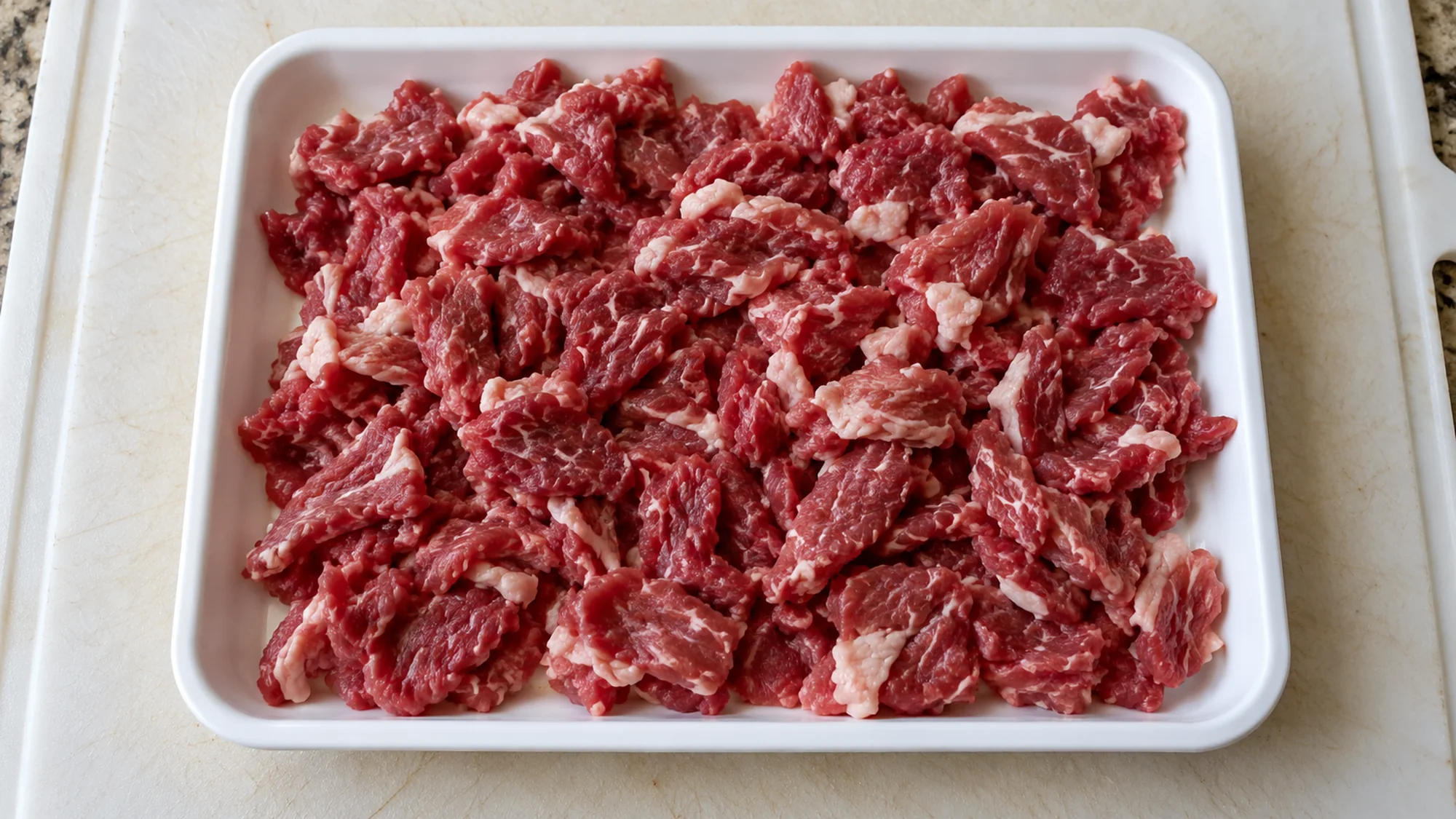
What Are You Buying as Carne Picada?
Kroger describes its Select Beef Carne Picada as chopped beef, ready to season and cook. Meijer’s own-brand product is described as extra-thin sliced, non-enhanced beef. Those real product descriptions show why the same shopping term does not guarantee identical pieces or preparation.
A named dish can vary too. Certified Angus Beef’s carne picada preparation starts with bottom round cut into small cubes, browns them and uses a slow cooker. That is one documented approach, not evidence that every tray bearing the name contains bottom round.
- Ask about the cut: If the package does not name it, the seller may be able to explain what was used.
- Check processing: Look for ground, minced, mechanically tenderized, blade-tenderized or injected wording.
- Check ingredients: Plain beef and a pre-seasoned product need different expectations for salt, sauces and other ingredients.
Use the Right Doneness Rule
USDA’s consumer temperature guidance distinguishes beef steaks and roasts from ground beef. Do not apply the steak minimum to an unidentified carne picada product merely because you can see pieces of meat. Confirm the product category and any package-specific instructions first.
| Confirmed product | Cooking guidance | Important detail |
|---|---|---|
| Intact beef steaks or roasts | 145°F (62.8°C) minimum | At least a 3-minute rest |
| Ground beef | 160°F (71.1°C) minimum | Check with a food thermometer |
| Mechanically tenderized beef | Follow validated label directions | Method, temperature and holding/rest time matter |
| Unclear carne picada package | Ask the seller; follow its instructions | Do not infer processing from appearance |
USDA’s mechanically tenderized beef labeling guidance explains that validated instructions include a cooking method, minimum temperature and applicable time. A short skillet timer or brown exterior does not replace those instructions. Use a suitable thermometer and follow its placement directions, checking more than one piece when appropriate.
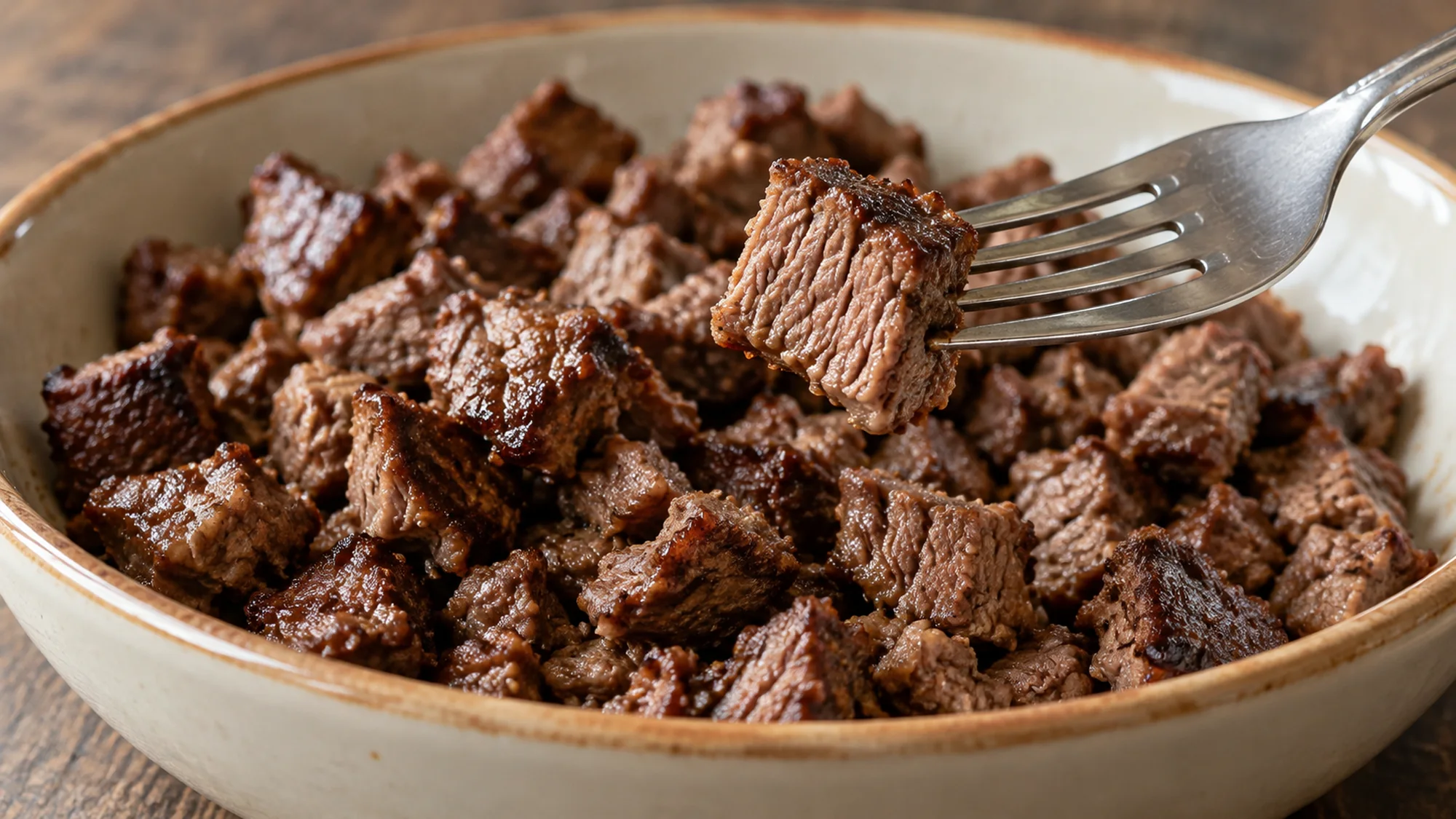
Match the Method to the Cut and Texture
Piece size affects handling, but the original cut still matters. A recipe built around a longer, moist cook is different from one written for thin slices. I’d ask what the seller recommends before assuming all pre-cut beef will behave like a familiar stir-fry cut.
The Certified Angus Beef example shows a useful distinction: browning is one stage, while the later covered cooking develops the intended tenderness. Reaching a safety minimum and reaching a recipe’s desired texture are separate questions.
- For a specific recipe: Match the meat form and cut it calls for rather than borrowing only its cooking time.
- For browning: The producer’s example sears the cubes in batches before adding its other ingredients.
- For serving: Small cooked pieces can fit tortillas or rice bowls, but toppings and sauces bring their own salt and allergens.
- For comparisons: Carne picada is a shopping or preparation term; dishes such as carne en su jugo and caldo de res have their own methods and ingredients.
Keep It Cold and Contain the Juices
FoodSafety.gov’s cold-storage chart lists one to two days for raw ground meat and three to five days for fresh steaks and roasts, in a refrigerator at 40°F (4.4°C) or below. Those categories are not permission to give every finely cut package the longer window.
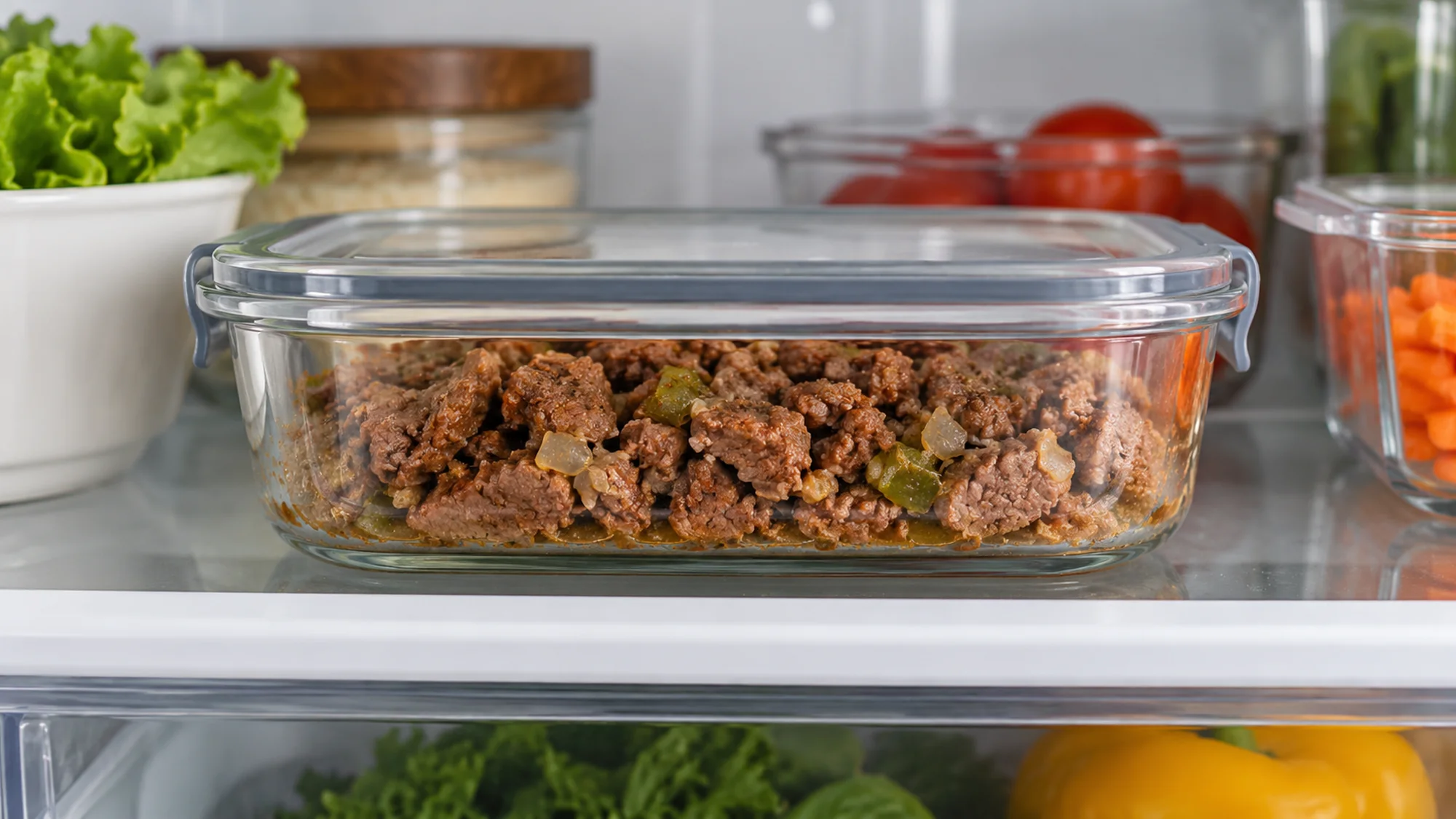
Follow the product’s storage directions. With an unclear, finely cut package, I’d plan to cook or freeze it within one to two days while confirming the details with the seller. Keep it in a leakproof container so raw juices cannot reach ready-to-eat foods.
- The FDA’s refrigeration guidance says to refrigerate perishables within two hours, or one hour when the air is above 90°F (32°C).
- Thaw safely in the refrigerator rather than leaving the meat on the counter.
- Refrigerate cooked beef promptly in shallow containers. FoodSafety.gov lists three to four days for properly refrigerated cooked meat.
- Wash hands and clean utensils after raw-meat contact, and use a clean plate for cooked food.
Bottom Line
Read carne picada as a starting point for questions: which cut, which processing and which instructions? Choose the cooking method from those answers, use the correct doneness guidance and keep the beef cold. I’d make that label check before planning the rest of the meal.
Real Mexican Recipes’ video below shows one cook’s chopped-beef preparation. Use it for culinary context while following the product-specific safety guidance above.
Sources
- Kroger: Select Beef Carne Picada product description
- Meijer: Extra Thin Beef for Carne Picada
- Certified Angus Beef: Bottom-round carne picada preparation
- USDA: Safe meat cooking temperatures
- USDA: Mechanically tenderized beef label instructions
- FoodSafety.gov: Cold food storage
- FDA: Safe refrigeration

Hi, I’m Emily Pocker! I share recipes and food guides here at Recipes360 to help you find everyday meal inspiration and feel more confident in the kitchen. My goal is to make cooking approachable, enjoyable, and full of flavor.