
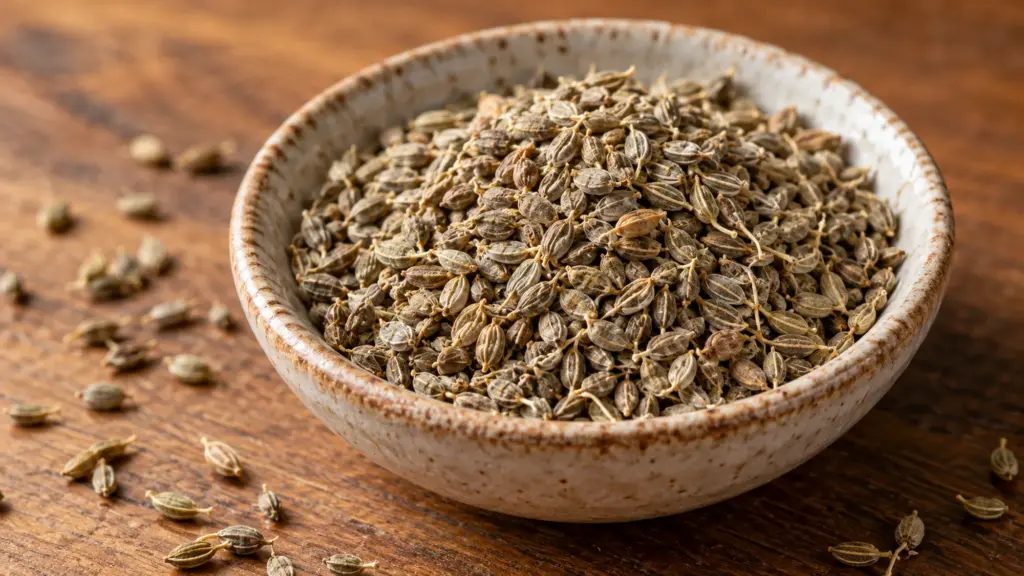
A baking recipe calls for anise seed, but the spice shelf offers little ridged seeds, star-shaped pods and a bottle of extract. They may suggest a similar aroma, yet reaching for whichever looks familiar can change both flavor and texture. Start with the exact ingredient name.
Anise seed is the small dried fruit of Pimpinella anisum, used as a spice for its sweet, licorice-like aroma. It is not the same ingredient as star anise, and whole seeds, ground spice and extract are not automatic equal-volume substitutes.
What Anise Seed Brings to Food
The FDA’s spice definitions identify anise as the dried ripe fruit of Pimpinella anisum. In the kitchen, the familiar name is aniseed or anise seed. The small oval pieces have fine ridges and a grayish-brown appearance.
McCormick Science Institute’s anise overview explains that this plant belongs to the parsley family and that its aromatic oil is dominated by trans-anethole. For a cook, the useful translation is a recognizable sweet-spice fragrance rather than chili heat. The aroma does not mean the seed is a substitute for sugar.
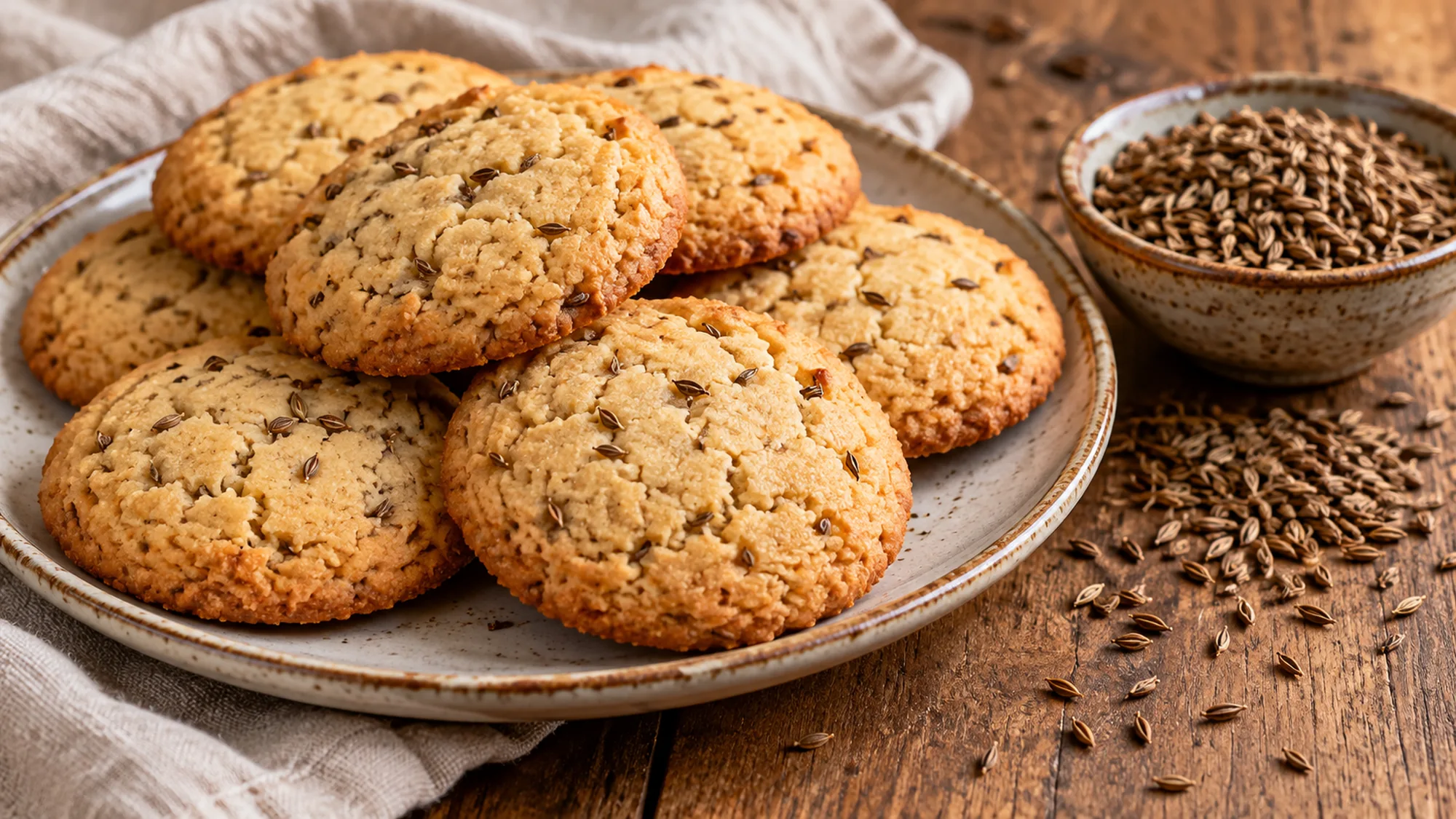
- In a cookie: whole seeds leave small aromatic bites and visible flecks.
- In a fine-textured mixture: ground spice distributes flavor without the same seed texture.
- Beside citrus: a little anise can add a warm contrast rather than another sour note.
- In savory food: use a recipe designed for its strong character instead of treating it like a neutral seasoning.
Anise Seed, Fennel and Star Anise
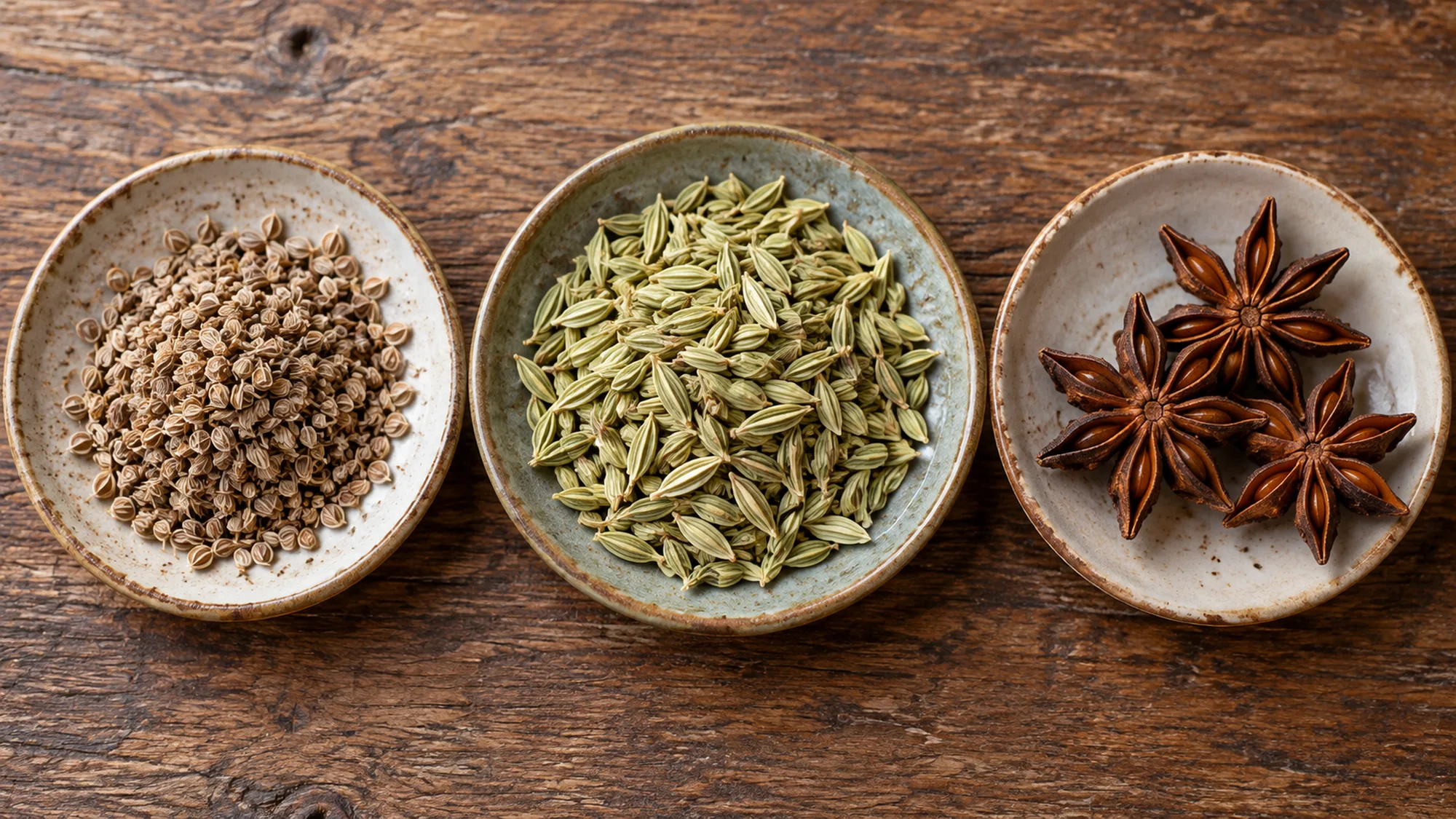
Similar aromas are a useful clue to flavor, not proof that two jars contain the same plant. Anise seed and fennel are separate ingredients; culinary Chinese star anise is the woody, star-shaped fruit of Illicium verum. A shared licorice-like impression does not make their strength or texture identical.
I would not replace a spoonful of tiny seeds with a spoonful of broken star-anise pods in delicate baking. When the original recipe is precise, choose the named spice or a tested alternative rather than improvising a universal conversion.
| Option | What it means | Useful check |
|---|---|---|
| Anise seed | Small, oval, finely ridged dried fruits | Whole or ground in food |
| Fennel seed | Usually longer, often greenish seeds | A distinct spice with a related flavor impression |
| Chinese star anise | Woody star-shaped pods | Used as specified; whole pods are commonly removed |
| Anise extract | A bottled concentrated flavoring | Follow the recipe’s extract measurement |
Choose Whole or Ground for the Job
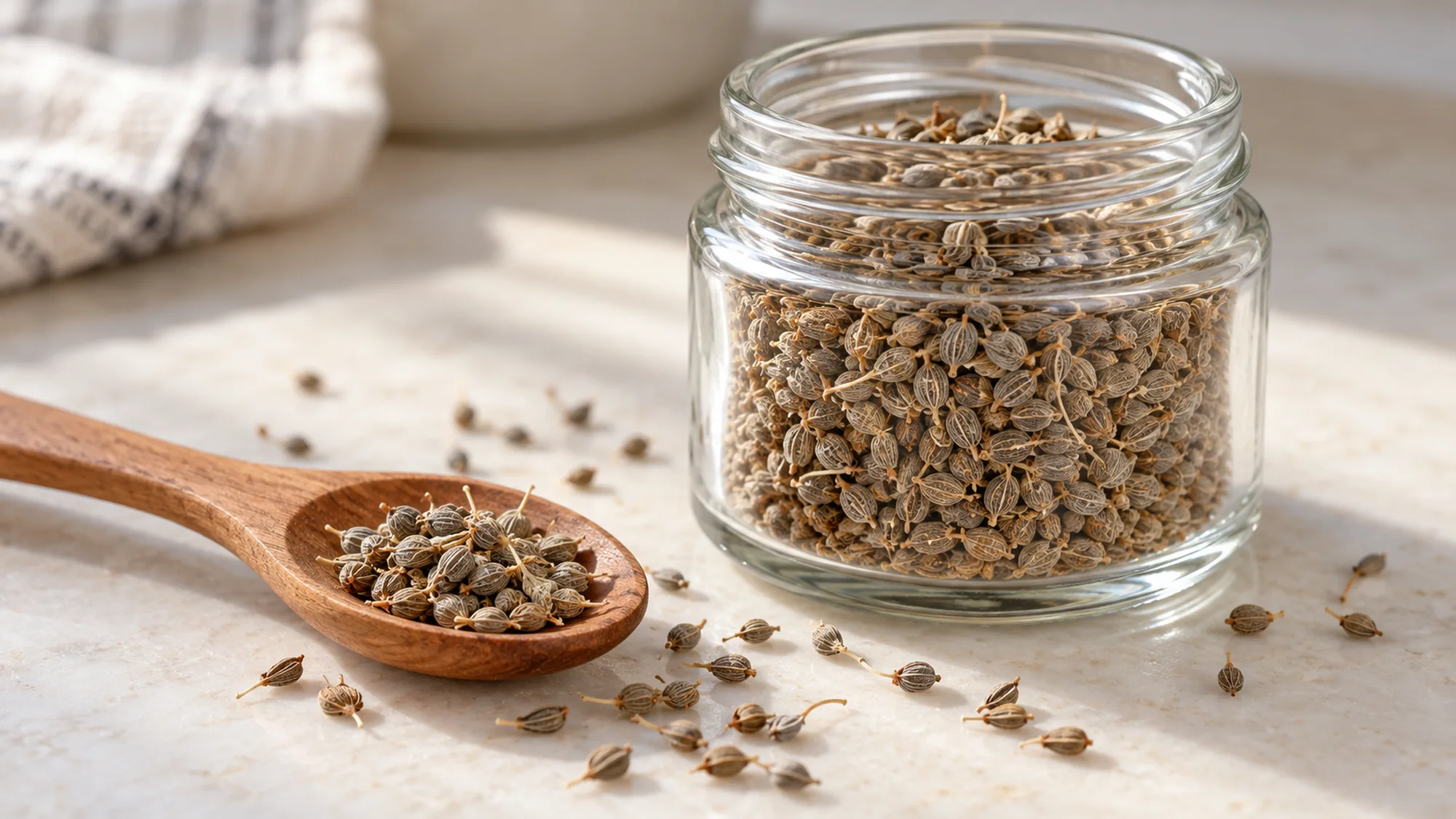
McCormick’s anise-seed guidance suggests uses in breads, confections, fruit dishes and savory seasonings. Those are useful directions to explore, not a reason to add it indiscriminately. I’d begin with a recipe where anise is meant to be noticeable.
If you dislike biting into seeds, look for a method that specifies ground anise. Grinding changes how the spice packs into a spoon and disperses through a mixture, so measure in the form requested. Our ground-coriander guide discusses the same whole-versus-ground distinction for a different spice, not a flavor substitute.
- For bread or cookies: follow the ingredient form in the recipe before choosing the jar.
- For a smooth batter: a specified ground spice is easier to distribute than scattered whole seeds.
- For an extract-based recipe: keep the extract instruction; seeds also add physical texture.
- For a new savory combination: pair a measured amount with familiar ingredients so the anise does not drown out the meal.
Buy Clearly Labeled Spice and Protect Its Aroma
Buy food-grade anise from a reputable supplier, keeping the label with the jar. Do not collect anise-scented ornamental pods for cooking. North Carolina State Extension distinguishes culinary Chinese star anise from other Illicium species with toxic characteristics; fragrance or a photograph is not a reliable safety test.
University of Delaware Extension’s storage advice favors well-closed containers and protection from heat, light and moisture. I prefer a modest jar that has a clear place in the cooking plan to a large bag that loses its aroma while waiting for inspiration.
- Keep it dry: use a clean, dry spoon and avoid holding the open jar over steam.
- Keep the identity: label any decanted container so anise, fennel and other seeds stay distinguishable.
- Check the package: blends, extracts and essential oils are not the same product as culinary seeds.
- Keep the purpose culinary: do not use concentrated oils or homemade herbal preparations as remedies, especially for children. A spice guide does not establish a medicinal dose.
Bottom Line
Anise seed earns its place through a distinctive aroma, not a long list of health promises. Choose the correct plant and ingredient form, measure for the recipe, and store the spice carefully. When a substitute changes the flavor or texture, acknowledge the change rather than expecting an identical result.
Food to Live’s overview below shows the culinary spice. This guide uses it for ingredient context, not as evidence for medicinal claims.
Sources
- FDA: Spice definitions
- McCormick Science Institute: Anise
- McCormick: Anise seed uses
- NC State Extension: Star anise plant distinctions
- University of Delaware Extension: Using herbs and spices

Hi, I’m Emily Pocker! I share recipes and food guides here at Recipes360 to help you find everyday meal inspiration and feel more confident in the kitchen. My goal is to make cooking approachable, enjoyable, and full of flavor.