
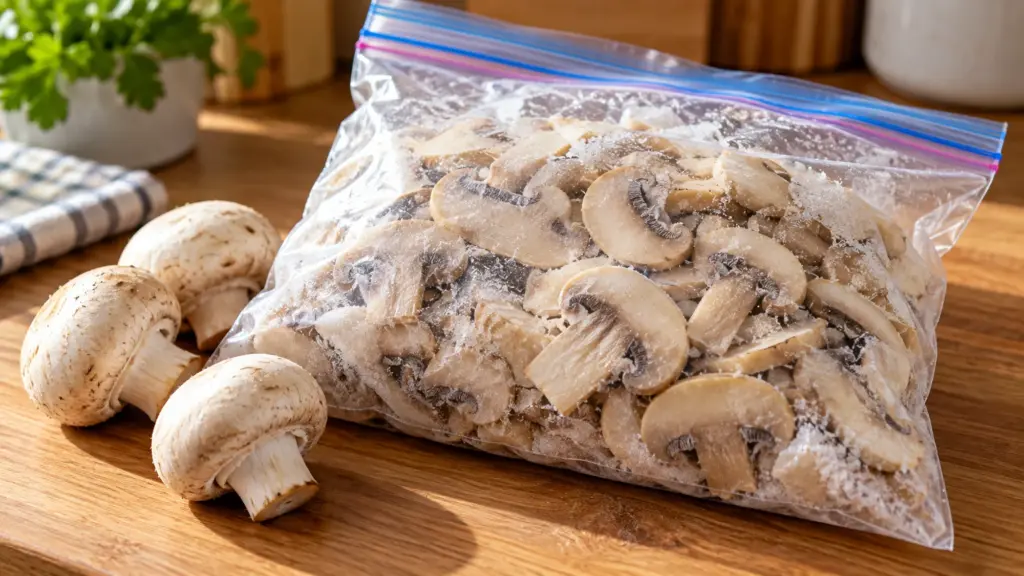
That extra carton of mushrooms does not have to become a race against the refrigerator. Yes, you can freeze mushrooms, and cooking them first is usually the more useful choice. Plan to use the frozen portions in warm dishes rather than expect the firm bite of a fresh mushroom.
For better freezer results, start with sound mushrooms, steam or saute them, cool promptly, then seal in freezer-safe portions. Frozen mushrooms suit soups, sauces and other cooked dishes; freezing will not restore freshness or preserve a crisp raw texture.
Can you freeze mushrooms raw or cooked?
Raw mushrooms can be frozen, but texture is the catch. Mercer Mushrooms’ guidance with New Zealand Food Network warns that uncooked frozen mushrooms can turn very mushy. It suggests raw freezing only where that softness will not matter, such as a blended soup.
I’d choose the method by the next meal. A smooth soup is forgiving; a platter where each mushroom needs a distinct bite is less so. Cooking before freezing gives you a more practical starting point, although it cannot make thawed mushrooms identical to fresh ones.
- For a neutral ingredient: Steam mushrooms before packing them.
- For a savory base: Saute them, then pair the portion with a compatible dish.
- For an already prepared meal: Follow that dish’s storage directions; cream, meat and other ingredients change the handling requirements.
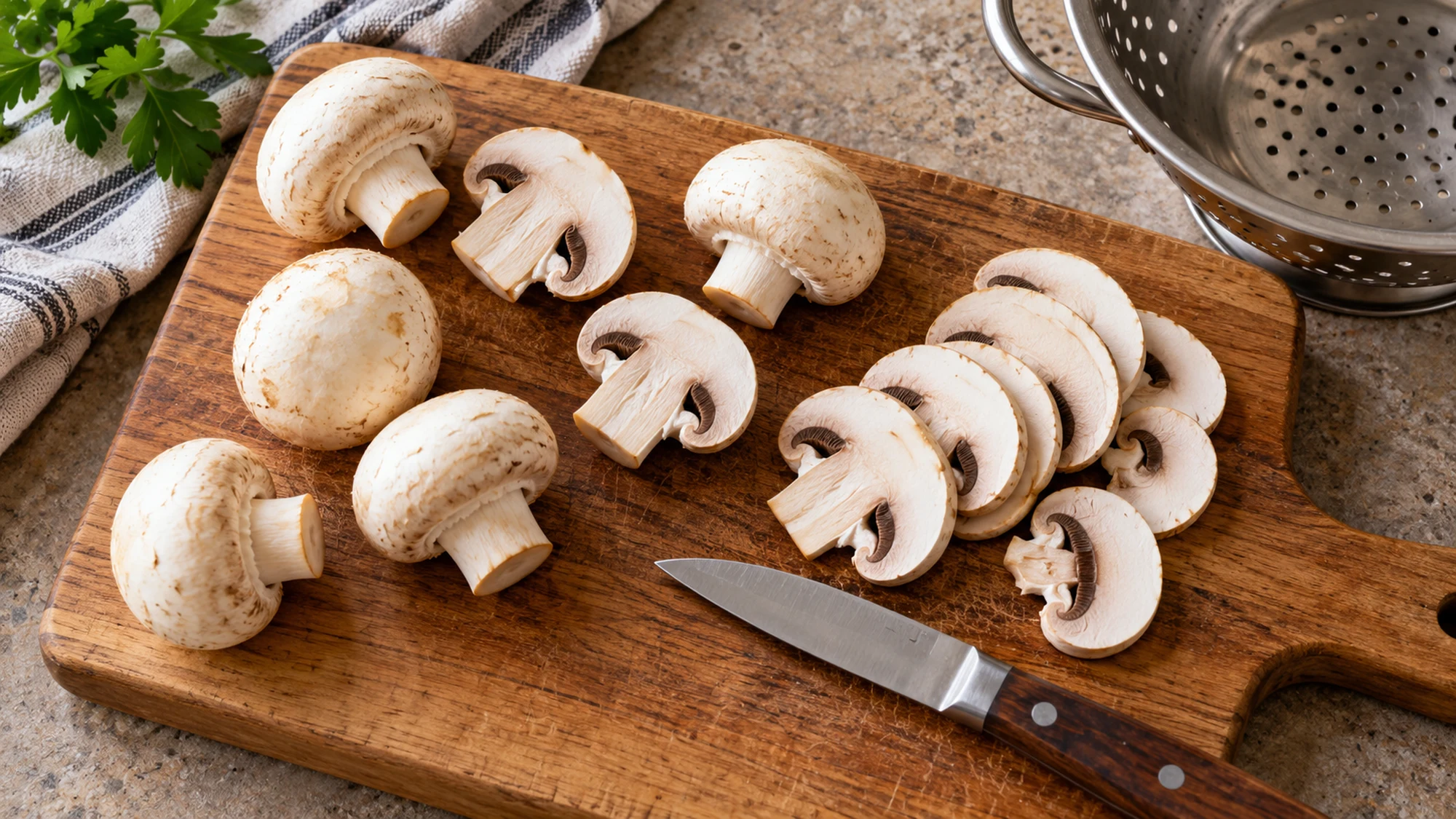
Choose, wash and cut before cooking
Keep fresh mushrooms refrigerated at 40°F (4°C) or below until preparation. FDA produce guidance specifically includes mushrooms among perishable produce. Choose sound mushrooms, discard rotten ones, and keep the work surface separate from raw meat.
Wash under running water before preparation, then dry with a clean towel. Do not use soap or detergent. I’d sort the mushrooms before heating the pan: evenly sized pieces are easier to handle than a jumble of whole caps and paper-thin slices.
- Wash your hands and use a clean knife and cutting board.
- Trim stem ends. Slice or quarter larger mushrooms for manageable portions.
- Keep only the amount you can prepare promptly on the counter; return the rest to the refrigerator.
- Use familiar cultivated grocery mushrooms. This guide does not identify wild mushrooms or establish their safety.
Steam or saute, then cool promptly
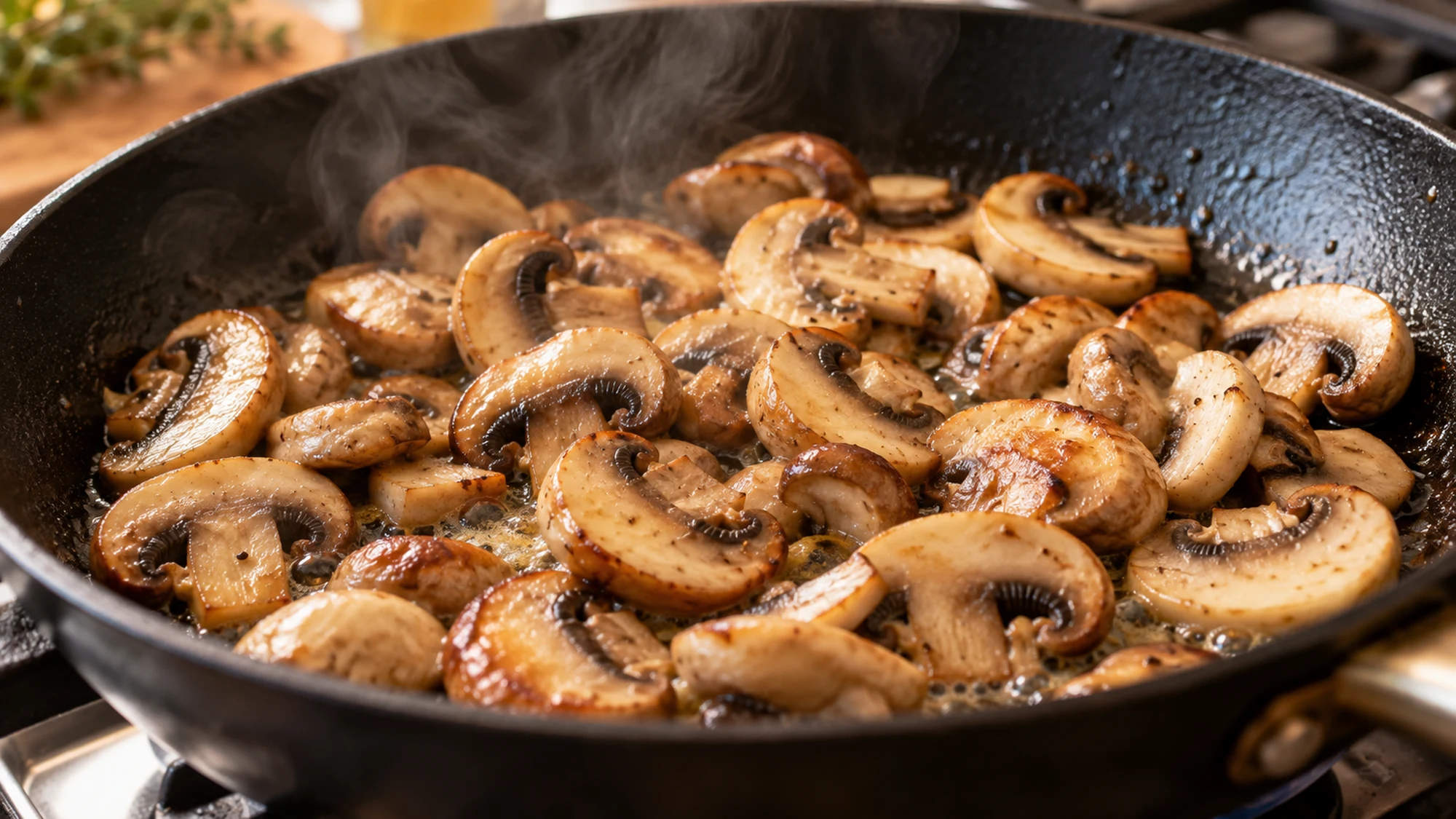
The National Center for Home Food Preservation provides two approaches: steam, or heat small quantities in butter or margarine until almost done. It notes that steamed mushrooms keep longer than those heated in fat. The table gives its steam timings, which should not be substituted for boiling times.
| Mushroom cut | Steam time | After steaming |
|---|---|---|
| Whole | 5 minutes | Cool promptly and drain |
| Buttons or quarters | 3½ minutes | Cool promptly and drain |
| Slices | 3 minutes | Cool promptly and drain |
For better color, NCHFP suggests a five-minute dip in one pint of water mixed with one teaspoon lemon juice before steaming. After either cooking method, cool promptly and pack with ½ inch (1.3 cm) of headspace in containers.
Cooling should not become an afternoon on the counter. USDA allows small amounts of hot food directly into the refrigerator; divide larger quantities into shallow containers. Perishable food should not remain unrefrigerated for more than two hours outside cooking.
Package for the meals you actually make
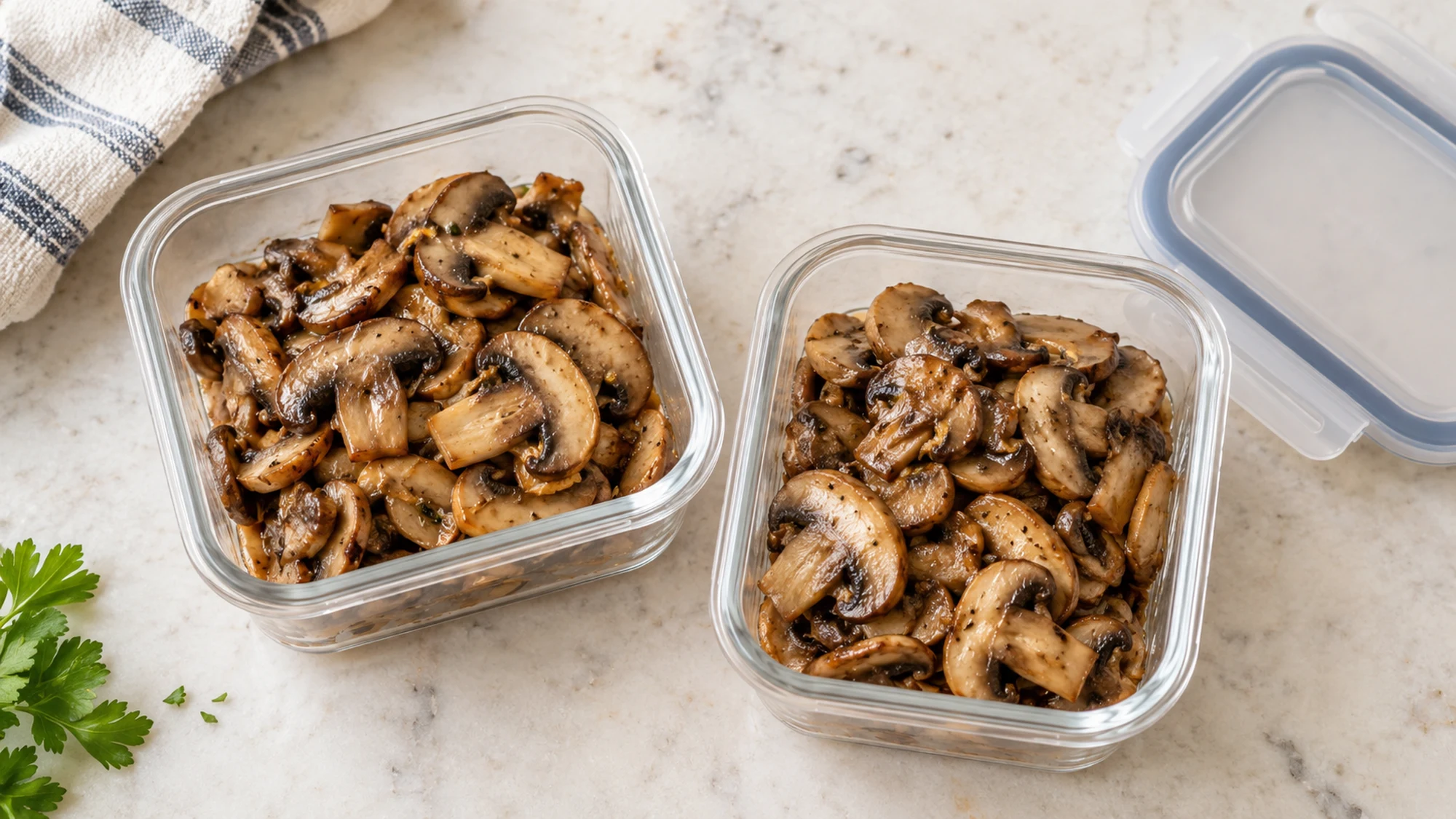
Use bags or containers intended for freezing, close them securely and label the contents, preparation method and date. NCHFP’s storage guidance recommends 0°F (-18°C) or below and gives a general eight-to-twelve-month quality range for properly prepared fruits and vegetables. That is a broad quality guide, not a mushroom-specific safety deadline.
I’d freeze a useful pan-sized portion rather than one enormous block. Leave space around new packages for cold air to circulate, then consolidate them once frozen. A label saying whether butter was added also helps when choosing a dish or checking dairy ingredients.
If a preparation needs thawed mushrooms, use the refrigerator rather than the kitchen counter. Penn State Extension’s freezing guidance identifies refrigerator thawing as the safest method and recommends tightly sealed, dated packages. Keep the portion’s earlier handling in mind: freezing pauses storage; it does not turn poorly handled food into a fresh ingredient.
- Use older packages first: Freezing preserves quality; it cannot improve the starting ingredient.
- Expect some moisture: Choose a cooked dish that can accommodate softer mushrooms.
- Match the seasoning: Keep plain portions versatile and strongly seasoned portions for suitable meals.
- Try a familiar use: Our miso mushroom pasta is one example of a cooked mushroom dish; account for the moisture and preparation of your frozen portion.
Bottom Line
Freeze mushrooms while they are still in good condition, choose steaming or sauteing to suit their next use, and cool and package them promptly. Small labeled portions make the freezer useful; expecting fresh-mushroom texture after thawing is the part to let go.
Sources
- NCHFP: Freezing Mushrooms
- FDA: Selecting and Serving Produce Safely
- NCHFP: Frozen Food Storage
- USDA: Cooling Hot Food
- Mercer Mushrooms and New Zealand Food Network: Mushroom Tips
- Penn State Extension: Freezing and Thawing Foods

Hi, I’m Emily Pocker! I share recipes and food guides here at Recipes360 to help you find everyday meal inspiration and feel more confident in the kitchen. My goal is to make cooking approachable, enjoyable, and full of flavor.