
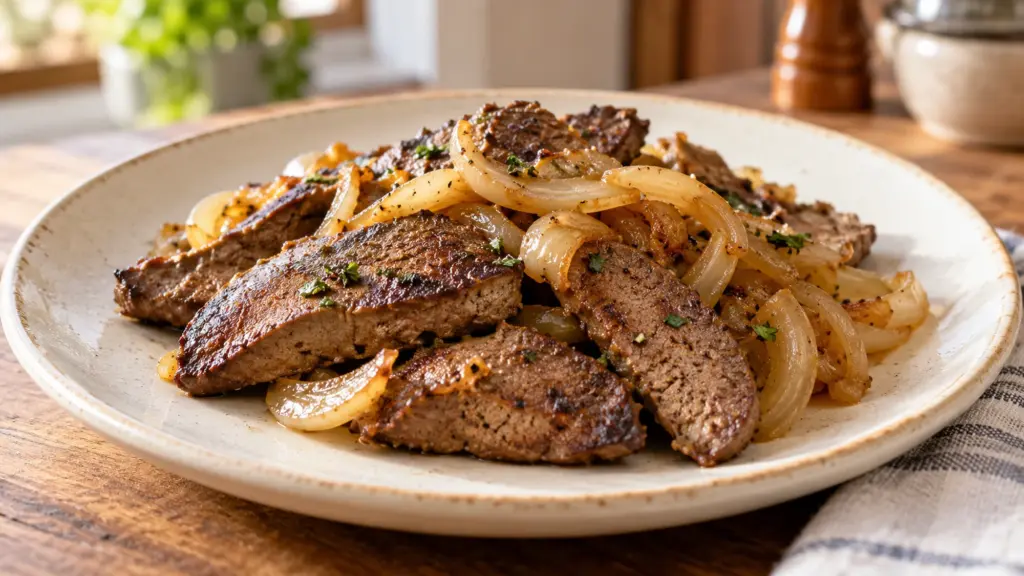
A package of beef liver calls for a different plan from a package of steak. This organ meat has a distinctive, mineral-rich flavor, and its concentrated nutrients deserve as much attention as the frying pan. You can enjoy it as food without treating it as a daily supplement.
Beef liver is a strongly flavored organ meat that needs thorough cooking and careful portion planning. Cook it to 160°F, keep raw liver refrigerated briefly, and avoid it during pregnancy because of its high preformed vitamin A content.
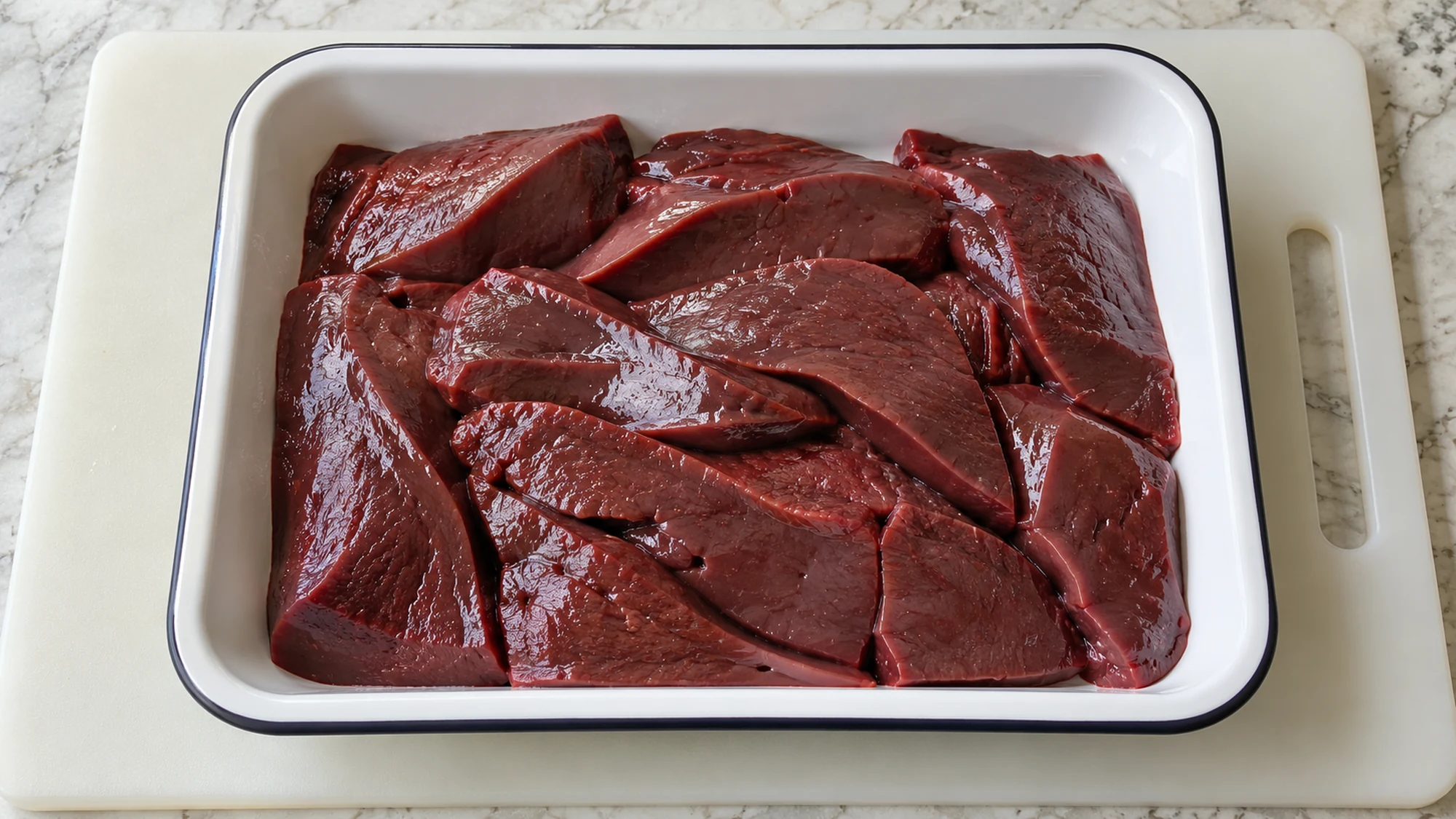
What to Expect From Beef Liver
Liver is organ meat, also called offal, rather than the muscle meat sold as steaks and roasts. Its flavor can seem earthy or metallic, particularly alongside mild sides. I’d choose familiar accompaniments, such as onions, potatoes or rice, rather than expect it to taste like a small steak.
Rumba Meats’ beef liver information identifies skillet cooking and liver with onions as common uses. Its product label also illustrates an important distinction: nutrition information refers to a particular portion and product, not every liver dish.
- For a straightforward introduction: Choose clearly labeled, plain liver rather than a blend with an unknown liver proportion.
- For flavor balance: Consider sweet onions, pepper or a little acidity; these complement the flavor rather than remove the need for safe cooking.
- For allergy awareness: Milk soaks, butter, flour coatings and sauces add ingredients beyond the liver itself. Check them individually.
Vitamin A: Concentrated Does Not Mean Unlimited
The NIH Office of Dietary Supplements lists 6,582 micrograms RAE of vitamin A in a three-ounce serving of pan-fried beef liver. RAE means retinol activity equivalents, a way of expressing vitamin A activity. Animal foods supply mainly preformed vitamin A, which differs from the beta-carotene in vegetables.
NIH lists an adult upper intake level of 3,000 micrograms per day for preformed vitamin A from food and supplements. An upper limit is not an intake target or a diagnosis of poisoning after one meal. These figures do explain why “more nutrients” is an incomplete reason to eat large portions repeatedly.
- During pregnancy: NHS guidance says to avoid liver and liver products because excess vitamin A can harm a baby’s development.
- Outside pregnancy: NHS vitamin A guidance advises against liver or liver products more than once a week.
- With supplements: Consider the total picture, particularly products containing retinol. Ask your clinician or pharmacist about your specific needs rather than combining liver with supplements automatically.
I’d keep liver in the occasional-food category, rather than make an ambitious daily routine around it. There is no need to turn dinner into a nutrient competition.
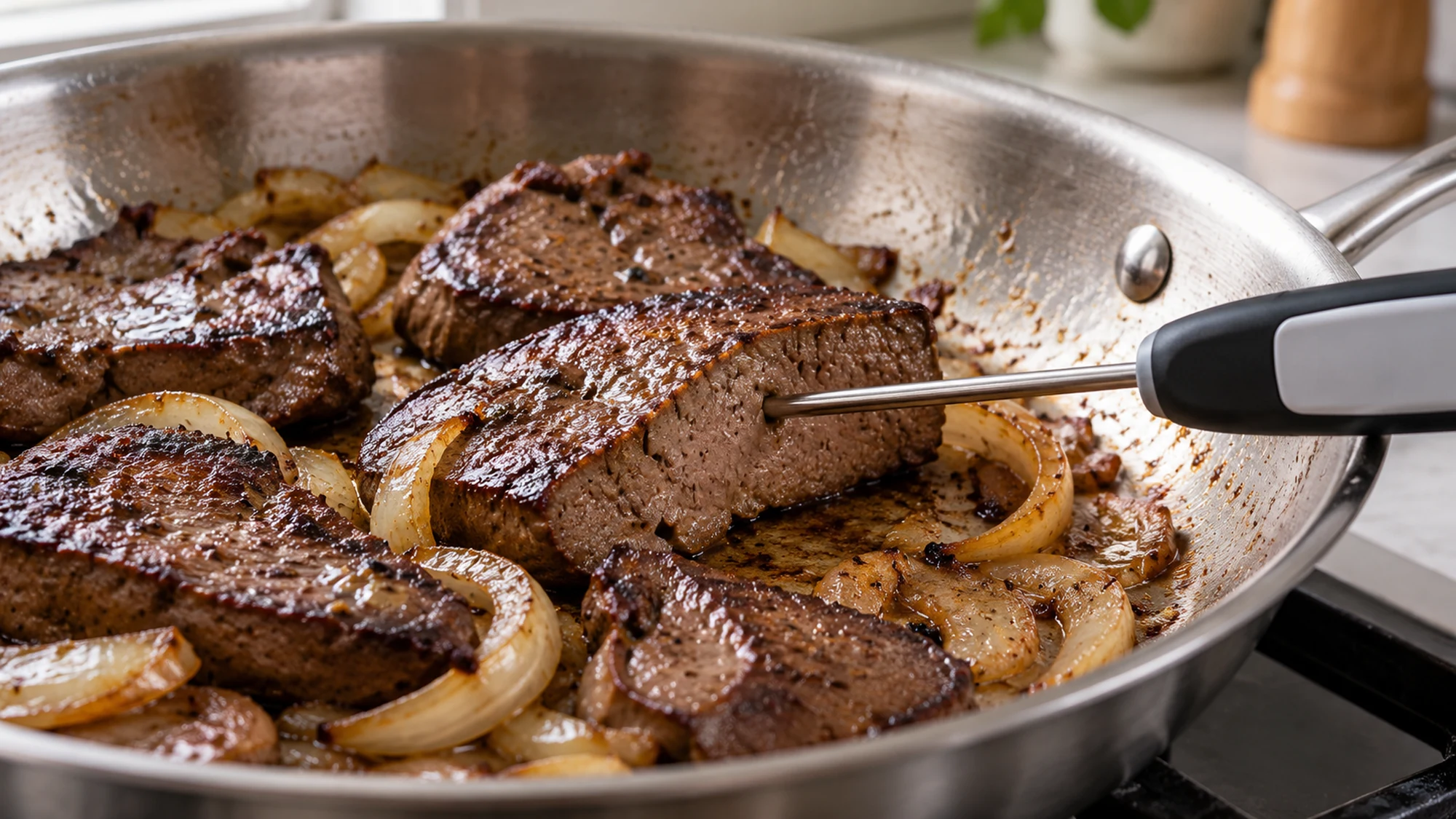
Cook Beef Liver With a Thermometer
The USDA’s beef temperature guidance specifically says to cook organ meats, including liver, to 160°F (71.1°C). The lower temperature and resting guidance for intact beef steaks do not replace that instruction.
A browned surface, a cooking video’s timer or the word “tender” cannot confirm the center temperature. Check the thickest portion with a suitable food thermometer, following its placement instructions.
- Keep raw liver and its juices separate from ready-to-eat foods.
- Wash hands and clean utensils after raw-meat contact.
- Do not return cooked liver to an unwashed plate that held it raw.
- If using a milk soak for culinary reasons, refrigerate it and discard the used liquid. It does not make raw liver safe.
USDA guidance on washing meat discourages rinsing raw beef because splashes can spread contamination. Cooking to the correct temperature does the safety work.
Storage: Use the Shorter Organ-Meat Timeline
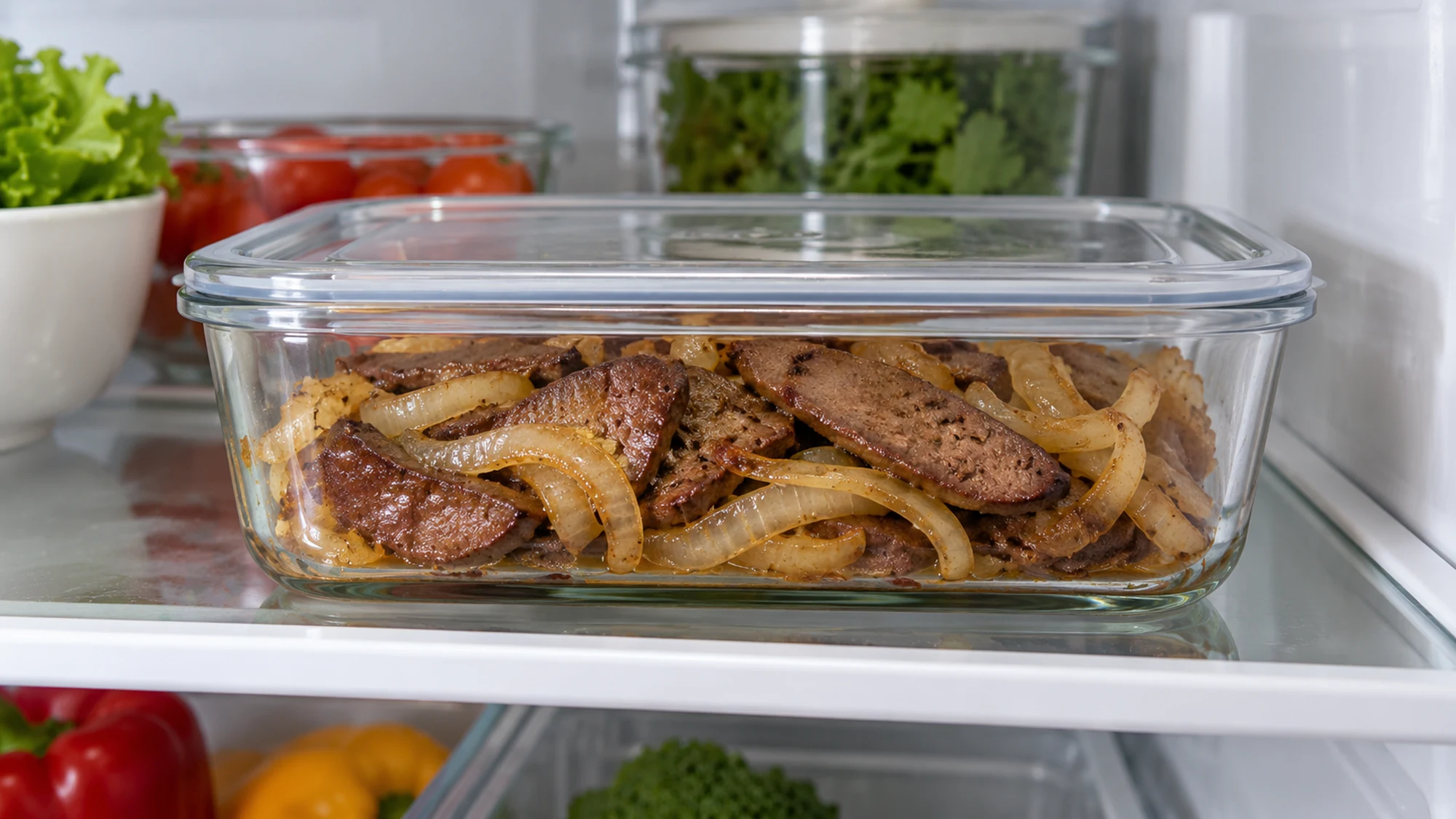
Organ meat has a shorter refrigerator window than whole beef steaks. USDA storage guidance recommends using or freezing raw variety meats within one to two days after purchase.
| Stage | What to do | Key limit |
|---|---|---|
| Raw, refrigerated liver | Cook or freeze promptly | 1–2 days |
| Cooked, refrigerated liver | Keep covered and use promptly | 3–4 days |
| Frozen liver | Thaw safely before cooking | Use the refrigerator; never the counter |
| Cooked food awaiting storage | Refrigerate in shallow containers | Within 2 hours; 1 hour above 90°F |
The FDA’s refrigeration guidance recommends a refrigerator at 40°F (4.4°C) or below and a freezer at 0°F (−17.8°C). Put the raw package in a leakproof container so juices cannot reach other food.
Bottom Line
Choose beef liver for its distinctive flavor, keep portions and frequency thoughtful, and cook it to 160°F. Refrigerate it promptly and follow the short organ-meat storage window. During pregnancy, skip liver; its concentrated vitamin A changes the decision.
The video below shows one creator’s liver-and-onion preparation. Use it for culinary context while following the USDA temperature guidance above rather than a fixed cooking time.
Sources
- NIH: Vitamin A and Carotenoids
- NHS: Vitamins and Supplements in Pregnancy
- NHS: Vitamin A
- USDA: Beef Cooking Temperatures
- USDA: Refrigerated Meat Storage
- USDA: Washing Food and Food Safety
- FDA: Refrigerator Thermometers
- Rumba Meats: Beef Liver

Hi, I’m Emily Pocker! I share recipes and food guides here at Recipes360 to help you find everyday meal inspiration and feel more confident in the kitchen. My goal is to make cooking approachable, enjoyable, and full of flavor.