
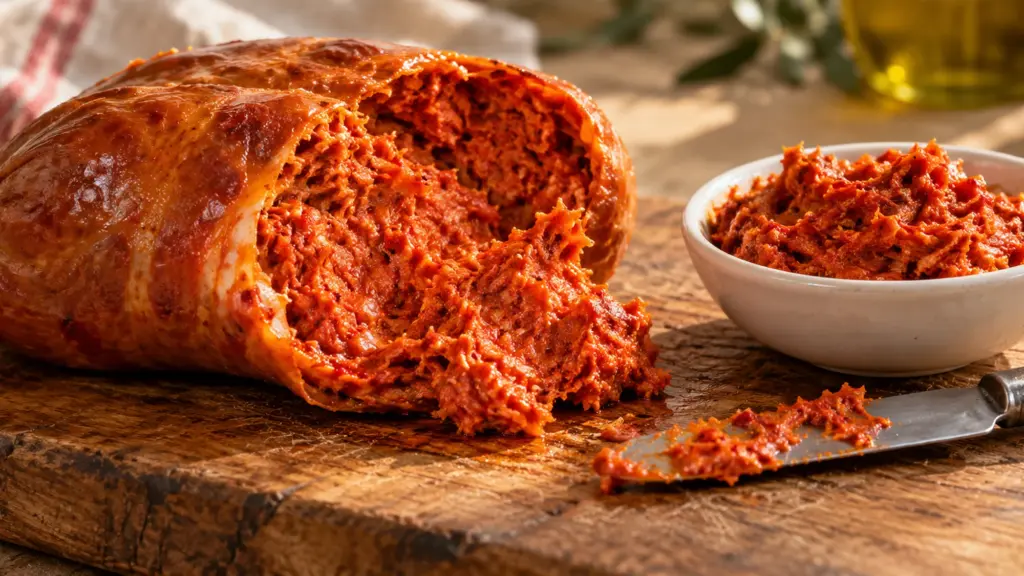
A spoonful of nduja can change the direction of a plain pan of beans or a simple tomato sauce. Nduja, often written ’nduja, is a spicy, spreadable pork salami associated with Calabria. Its soft texture makes it useful as a seasoning ingredient rather than something you have to slice into neat rounds.
Nduja is spicy, spreadable salami made with pork and peppers. Use it to bring savory heat to a meal, start with a little, and follow the specific product’s preparation, allergen and storage directions.
What makes nduja different?
Tempesta Artisan Salumi describes its nduja as a Calabrian-style spreadable salami made with pork, peppers and sea salt. The important kitchen distinction is the texture: you can spread it or work it into another dish rather than expect the firm slices of a dry salami.
I’d approach a new package as a seasoning with a personality, not a blank protein ingredient. Its heat and saltiness can influence the whole meal. Taste a product only as its directions allow, then decide how prominent you want that flavor to be.
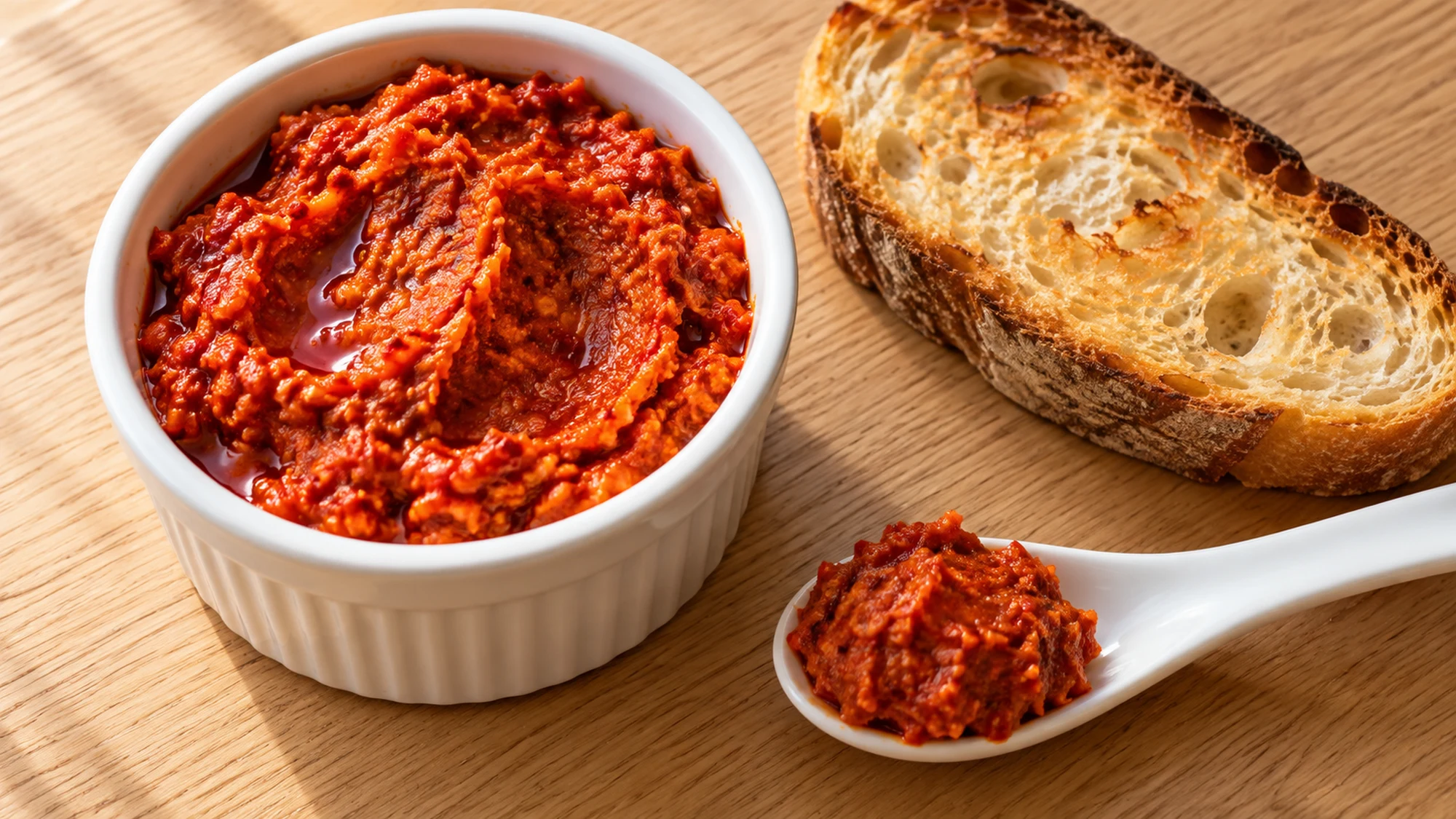
- On bread: Use a product intended for that serving style, and spread it to suit your heat preference.
- In a sauce: Let the nduja contribute flavor before deciding whether more seasoning is needed.
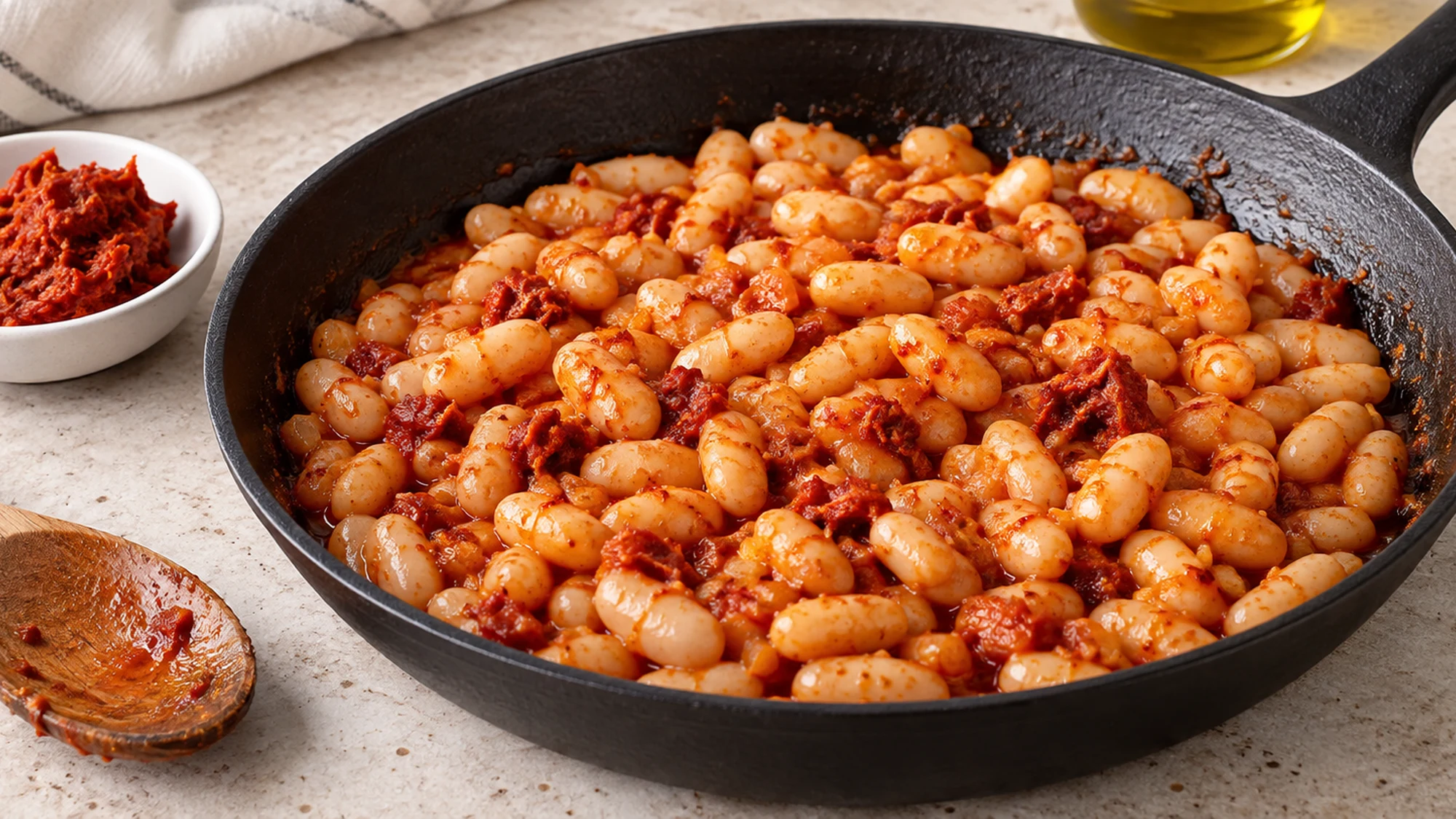
- With a mild base: Beans, pasta or potatoes offer room for its assertive character.
- In a casing or jar: Packaging varies, so read the instructions rather than judging by appearance.
Buying nduja: salami, paste and other products
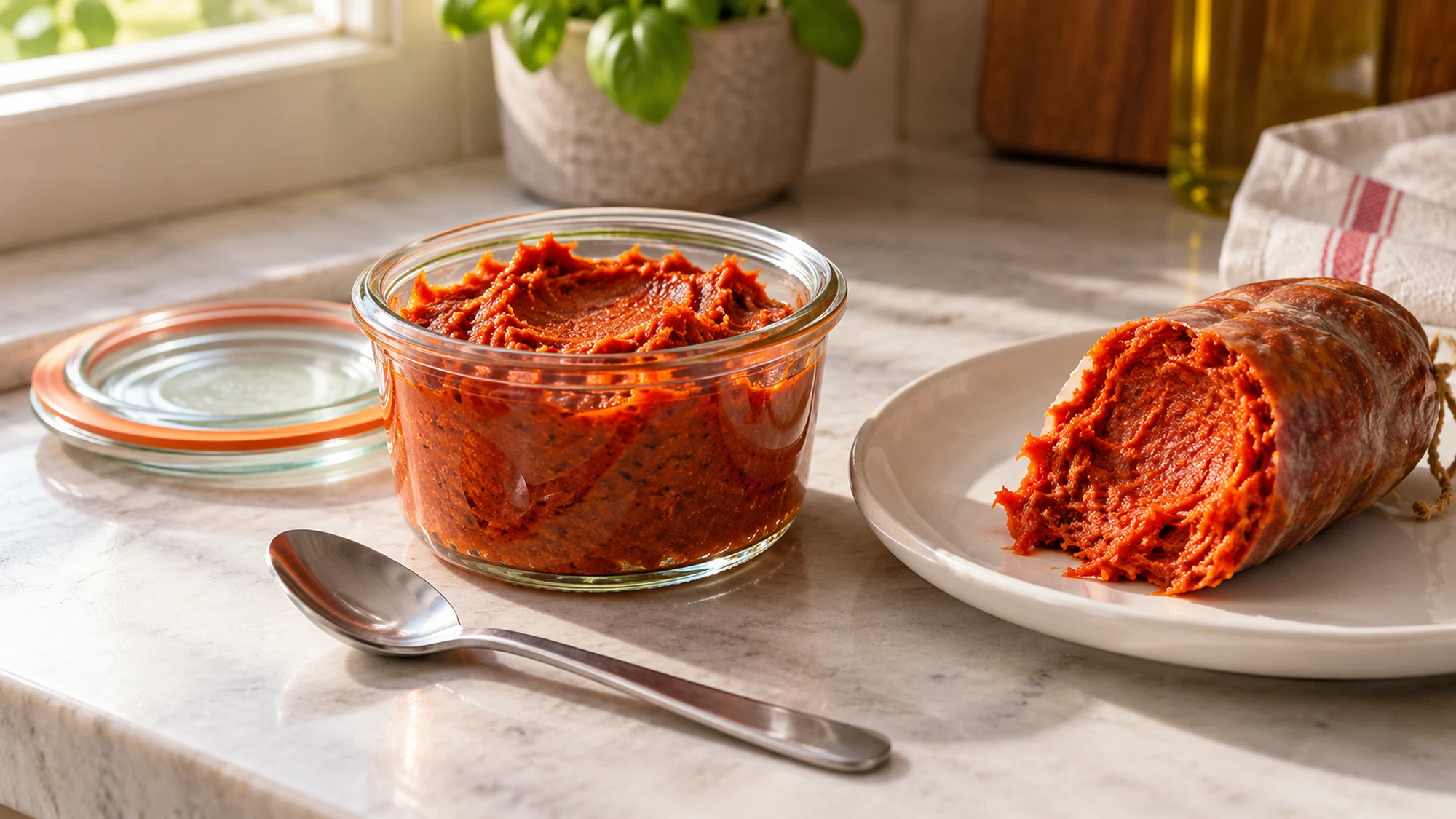
A jar of nduja paste and a piece of spreadable salami need not be the same formulation. The ingredient list tells you whether you are buying the meat itself or a prepared condiment containing it. This distinction matters when comparing flavor, nutrition, allergens and storage.
| Product description | What to inspect | Why it matters |
|---|---|---|
| Spreadable salami | Preparation and casing instructions | Confirms how to serve it |
| Nduja paste | Full ingredients and meat proportion | May contain additional oil or seasonings |
| Sauce containing nduja | Allergens and other ingredients | The complete sauce controls the dish |
| A similarly named alternative | Actual base and intended use | The name alone does not establish equivalence |
For example, the M&S UK Nduja Paste label lists nduja pork sausage plus olive oil, smoked paprika and citric acid. It also says the product is unsuitable for people with nut or peanut allergies. That is a specific label example, not a statement about every nduja sold elsewhere.
Using nduja without overwhelming the meal
Think about the job you want it to do before adding it. If the goal is a little background heat, keep the first addition modest. If nduja is meant to be the main flavor, build the rest of the dish around that decision rather than adding several competing spicy condiments.
- Pasta sauce: Work it into a sauce made for this ingredient, then assess salt before adding cheese or more seasoning.
- Beans: Use it as an accent in a warm bean dish; the beans themselves do not need to disappear behind the heat.
- Toast: A thin spread gives you a clearer starting point than an overfilled slice.
- Eggs or vegetables: Consider the nduja one flavorful component, with the rest of the meal providing balance.
- Substitutions: Chili paste supplies a different combination of flavor, fat and texture; it is not automatically an identical replacement.
I’d make the first meal fairly simple so you can learn what your particular product contributes. You can add another small amount when appropriate; removing the heat after the whole jar has gone in is a less cooperative project. Use a recipe when quantities and cooking steps matter.
Storage and allergens follow the package
Do not apply a generic salami shelf life to every nduja. M&S directs users of its particular paste to keep it cool and dry unopened, then refrigerate and eat within one month after opening. Other products can have different requirements. FDA cold-storage guidance recommends keeping refrigerated perishables at 40°F (4°C) or below.
- Keep the package’s storage and preparation instructions, including any requirement to cook the product.
- Use a clean spoon and close or wrap the remaining product as directed.
- Mark the opening date when the label gives an after-opening limit.
- Do not assume a cured or spicy product is automatically shelf-stable.
- Check accompaniments too: bread, cheese and prepared sauces can add wheat, milk or other allergens.
The FDA recommends reading allergen labels and avoiding foods that contain your allergens. A short traditional ingredient description cannot establish the safety of a particular brand or finished dish. Ask the manufacturer if its instructions are unclear rather than borrowing another product’s answer.
Bottom Line
Choose nduja for its spreadable texture and savory chili heat. Start modestly, let it season a simple dish, and use the actual package to guide preparation, allergens and storage. The product in your kitchen matters more than a universal rule.
Sources
- Tempesta Artisan Salumi: Nduja and serving suggestions
- M&S UK: Nduja Paste ingredients and storage
- FDA: Refrigerator Thermometers
- FDA: Food Allergies

Hi, I’m Emily Pocker! I share recipes and food guides here at Recipes360 to help you find everyday meal inspiration and feel more confident in the kitchen. My goal is to make cooking approachable, enjoyable, and full of flavor.