
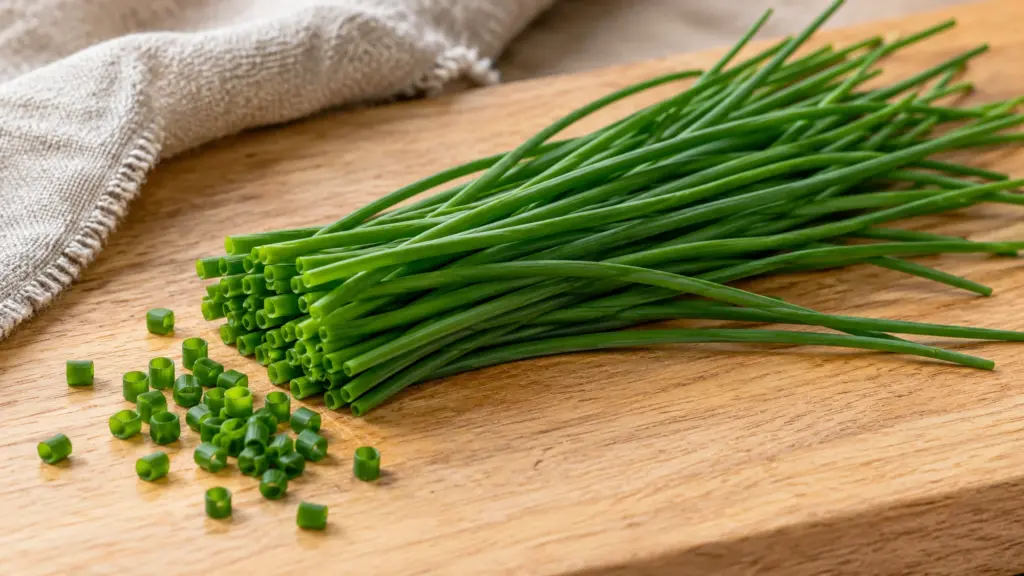
A handful of chives can finish a bowl of potatoes without making it taste like a bowl of raw onion. Common culinary chives are fine, hollow green leaves with a mild onion flavor. Snip them over food near serving time, and use their delicate texture as part of the seasoning rather than expecting them to replace a whole onion.
Use common chives when you want a light onion note and fine green flecks. Garlic chives have flat leaves and a garlic flavor; scallions are larger, with white and green portions. Wash chives before preparation, refrigerate fresh leaves, and freeze extras for cooked dishes rather than a crisp garnish.
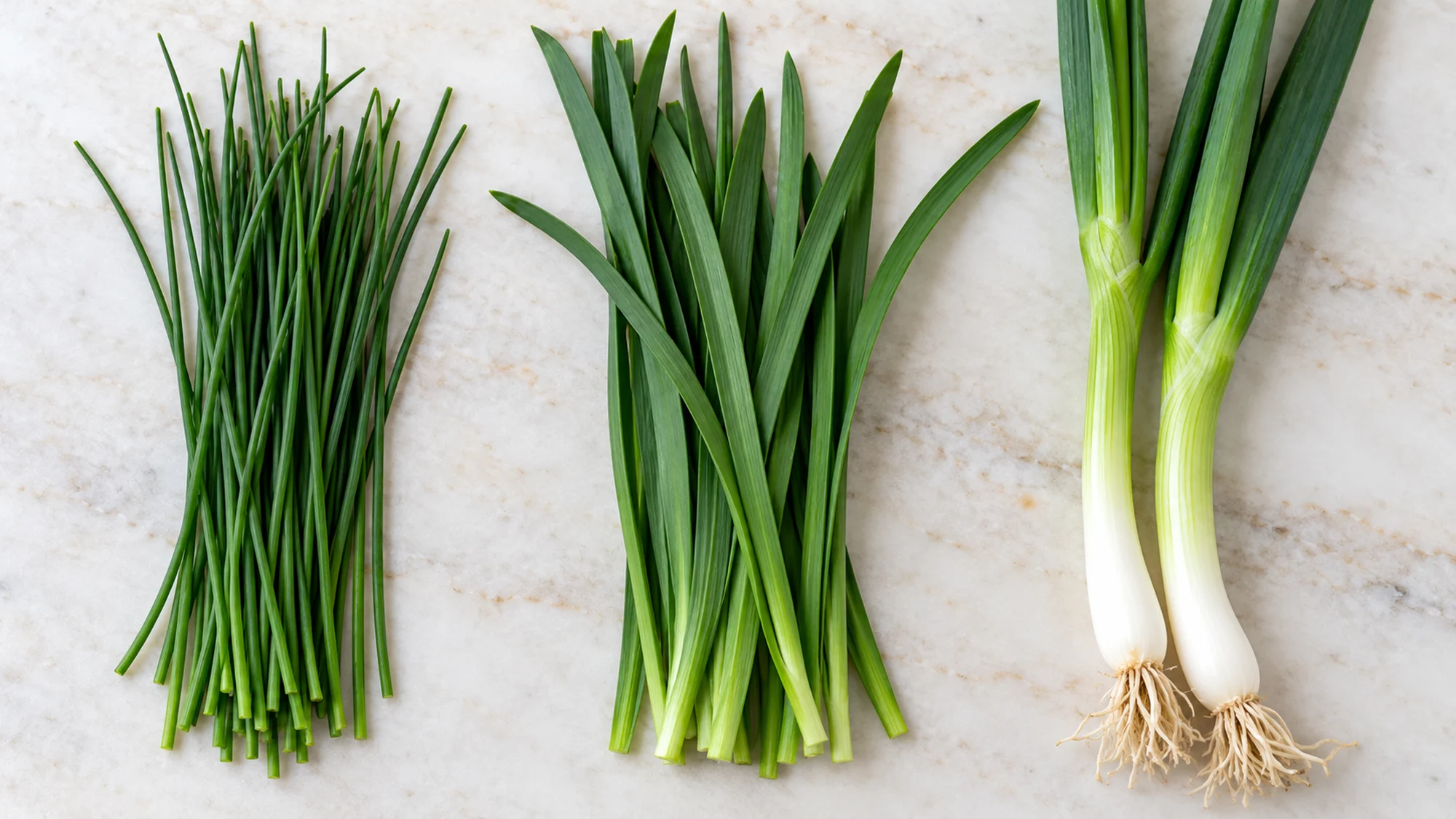
Chives, garlic chives and scallions are different choices
Illinois Extension identifies common chives as Allium schoenoprasum, with round, hollow leaves much finer than onion foliage. The Royal Horticultural Society distinguishes garlic or Chinese chives, Allium tuberosum, by their flat leaves and garlic flavor. Similar names do not make the two herbs interchangeable in every dish.
| Ingredient | Kitchen distinction | Useful starting point |
|---|---|---|
| Common chives | Fine, round, hollow leaves; mild onion note | A delicate finishing sprinkle |
| Garlic chives | Flat leaves; garlic note | A recipe calling for garlic or Chinese chives |
| Scallions | Larger green and white stalks | Sliced white and green portions, as directed |
Illinois Extension’s scallion guide describes scallions, also called green onions, as tender green and white stalks. Both portions are edible, but the white part has more onion flavor. For a fine topping, I’d choose chives first; for a recipe that needs a substantial white onion portion, I would follow that ingredient instruction.
Choose fresh leaves, then wash and cut gently
Look for an evenly colored bunch with intact leaves. Illinois Extension’s buying guidance advises avoiding alliums with soft, slimy or discolored spots. Check the package name as well as the photograph, especially when choosing between common and garlic chives.
- Rinse ordinary fresh chives under running water before preparing or eating them. Do not use soap or household detergent.
- Dry the leaves with a clean towel, and keep them away from surfaces and utensils used for raw meat.
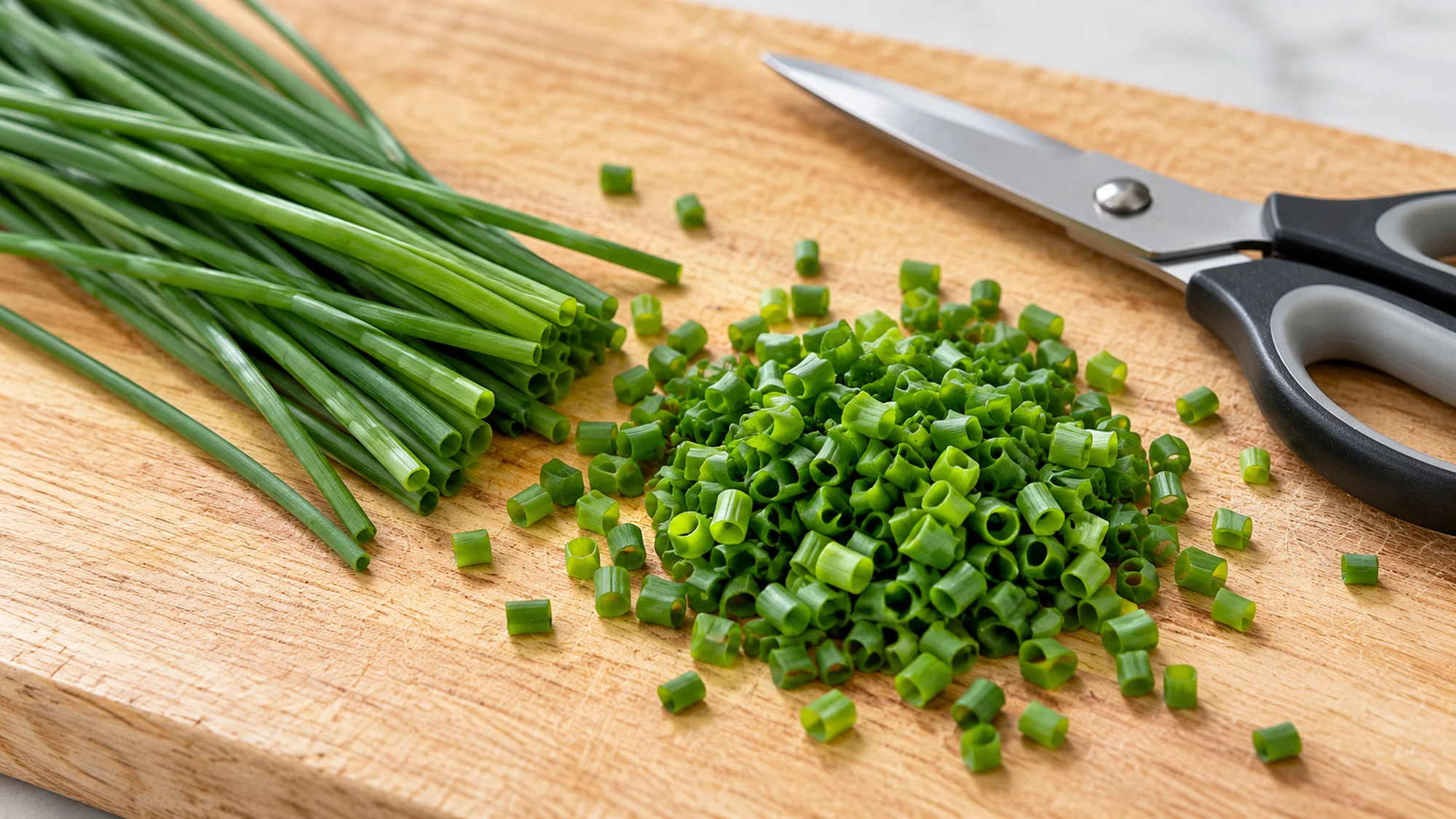
- Gather a manageable amount and snip with clean kitchen scissors, or slice evenly on a stable cutting board.
The washing and separation advice follows the FDA’s produce guidance. For knife work, the Institute of Culinary Education recommends controlled slicing and a protective claw grip for chives. Aim for clean little pieces; speed is not the ingredient that makes dinner better.
Add chives where the mild flavor can stay noticeable
The RHS recommends using chives raw because prolonged cooking diminishes their flavor. Scatter them over a finished hot dish or stir them into a cold preparation, rather than letting a small handful disappear into a long simmer. I’d keep some aside for the final sprinkle when a dish needs both flavor and a visible green finish.
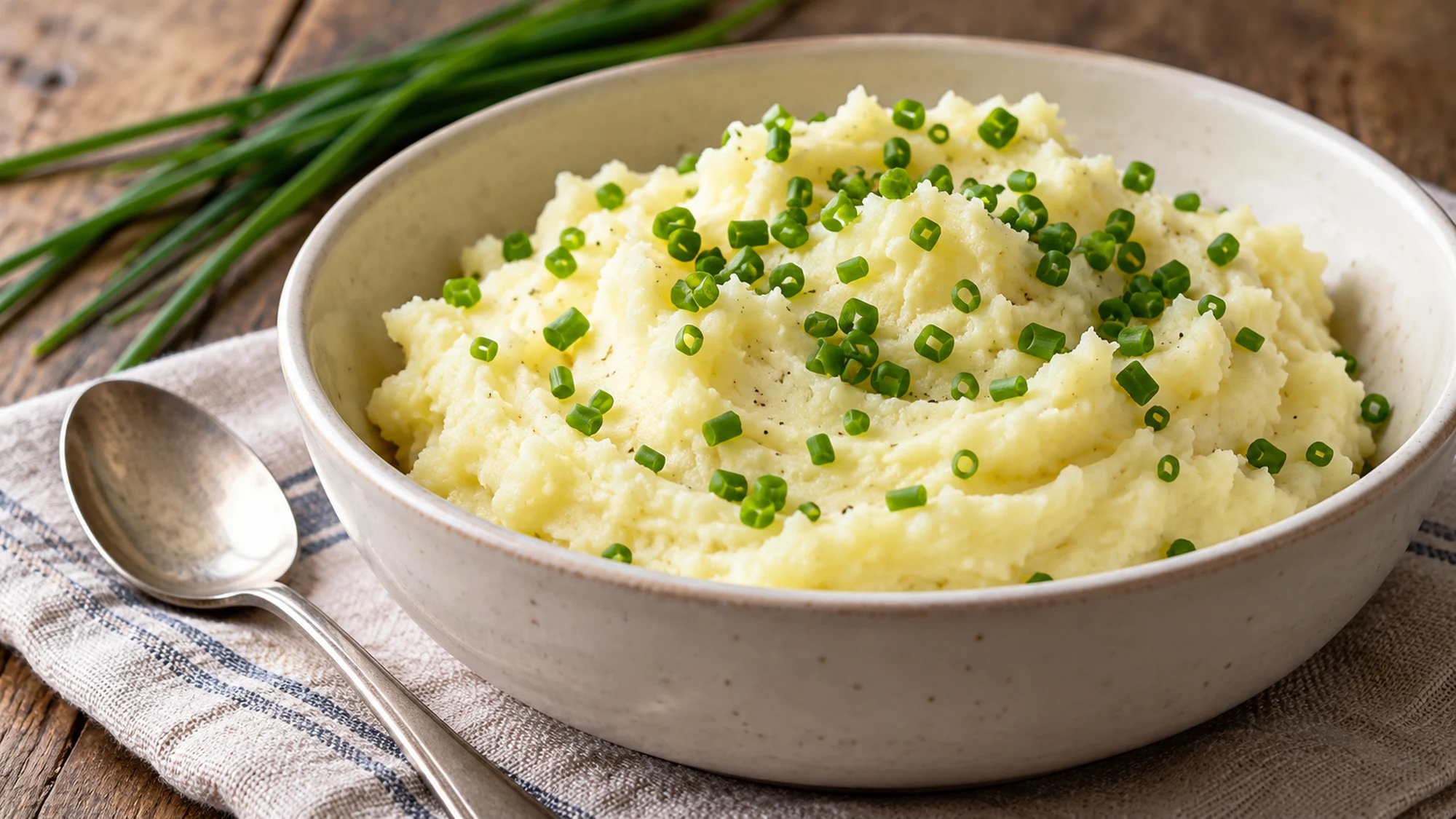
- Potatoes: Add finely snipped leaves over mashed or boiled potatoes just before serving.
- Eggs and soups: Use them as a finishing accent rather than the main cooked aromatic.
- Dips and soft cheese: Stir in small amounts, taste, then adjust to the other ingredients.
- Salads: Scatter evenly so the onion note is distributed rather than concentrated in one bite.
For a simple base, the site’s mashed potato guide gives you a place to use that finishing sprinkle. Chives do not settle the seasoning of the entire dish: consider salt, acidity and the accompaniments separately, and check dairy or other added ingredients if allergies matter.
Refrigerate fresh chives and freeze surplus with a plan
Keep fresh chives refrigerated. The FDA recommends 40°F (4°C) or below for perishable herbs. For a practical storage method, Illinois Extension’s culinary-herb handout suggests wrapping herbs in a damp paper towel inside an open plastic bag in the refrigerator. Follow any package instructions, inspect regularly, and use promptly.
- Before freezing: Wash, drain and pat the herbs dry.
- Package securely: The National Center for Home Food Preservation recommends wrapping a few sprigs or leaves in freezer wrap, placing them in a freezer bag, sealing and freezing.
- Choose the right use: Frozen herbs become limp after thawing, so direct them toward cooked dishes rather than a decorative garnish.
Freezing preserves a useful ingredient, not the exact texture of a fresh bunch. Keep fresh chives for the dish where appearance matters most and freeze surplus before it deteriorates. That is a more useful division than saving every last leaf for a garnish it will no longer make.
Bottom Line
Choose common chives for a gentle onion finish, and keep garlic chives and scallions as distinct ingredients. Wash and cut carefully, add fresh leaves near serving time, and refrigerate the bunch. Freeze extras for cooked food while saving the freshest leaves for the final green sprinkle.
Sources
- Illinois Extension: Chives
- RHS: Chives and related culinary species
- Illinois Extension: Scallions and green onions
- Illinois Extension: Buying and storing alliums
- FDA: Selecting and Serving Produce Safely
- Institute of Culinary Education: Cutting fresh herbs
- Illinois Extension: Culinary herb storage
- NCHFP: Freezing Fresh Herbs

Hi, I’m Emily Pocker! I share recipes and food guides here at Recipes360 to help you find everyday meal inspiration and feel more confident in the kitchen. My goal is to make cooking approachable, enjoyable, and full of flavor.