
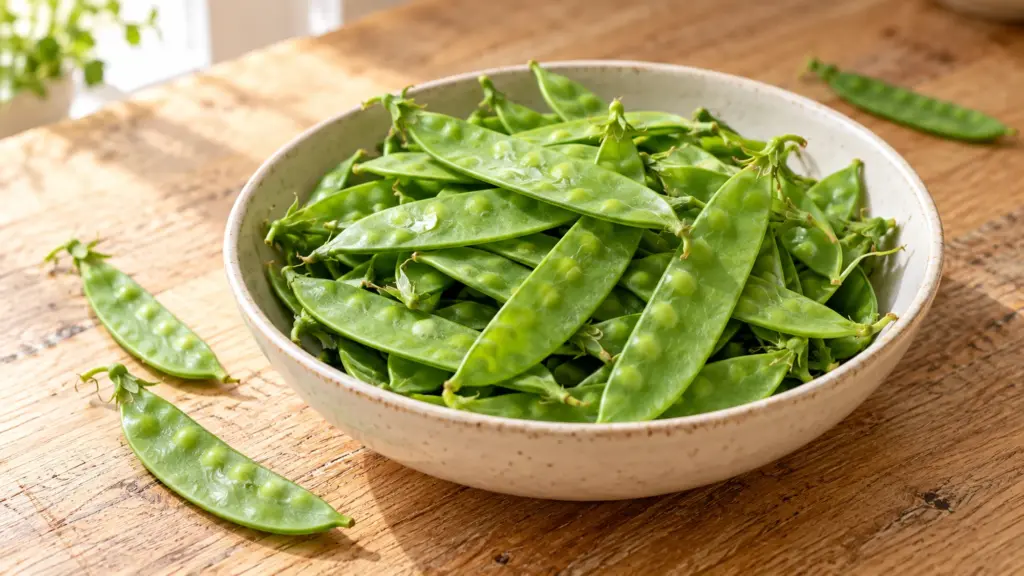
The bag says snow peas, but the pods look almost too flat to contain anything. That is exactly the point: their appeal is the tender, lightly sweet pod, not a handful of round peas waiting to be shelled.
Snow peas are edible-pod peas. Eat the flat pod and tiny peas together, after rinsing and trimming as needed. Enjoy them raw for a crisp bite or cook briefly, stopping before the pods turn limp.
I’d choose them when a bowl needs something green and delicate rather than another soft ingredient. The useful trick is deciding how much crunch you want before they go near the stove; these are not vegetables to leave simmering while everything else catches up.
How snow peas differ from snap peas
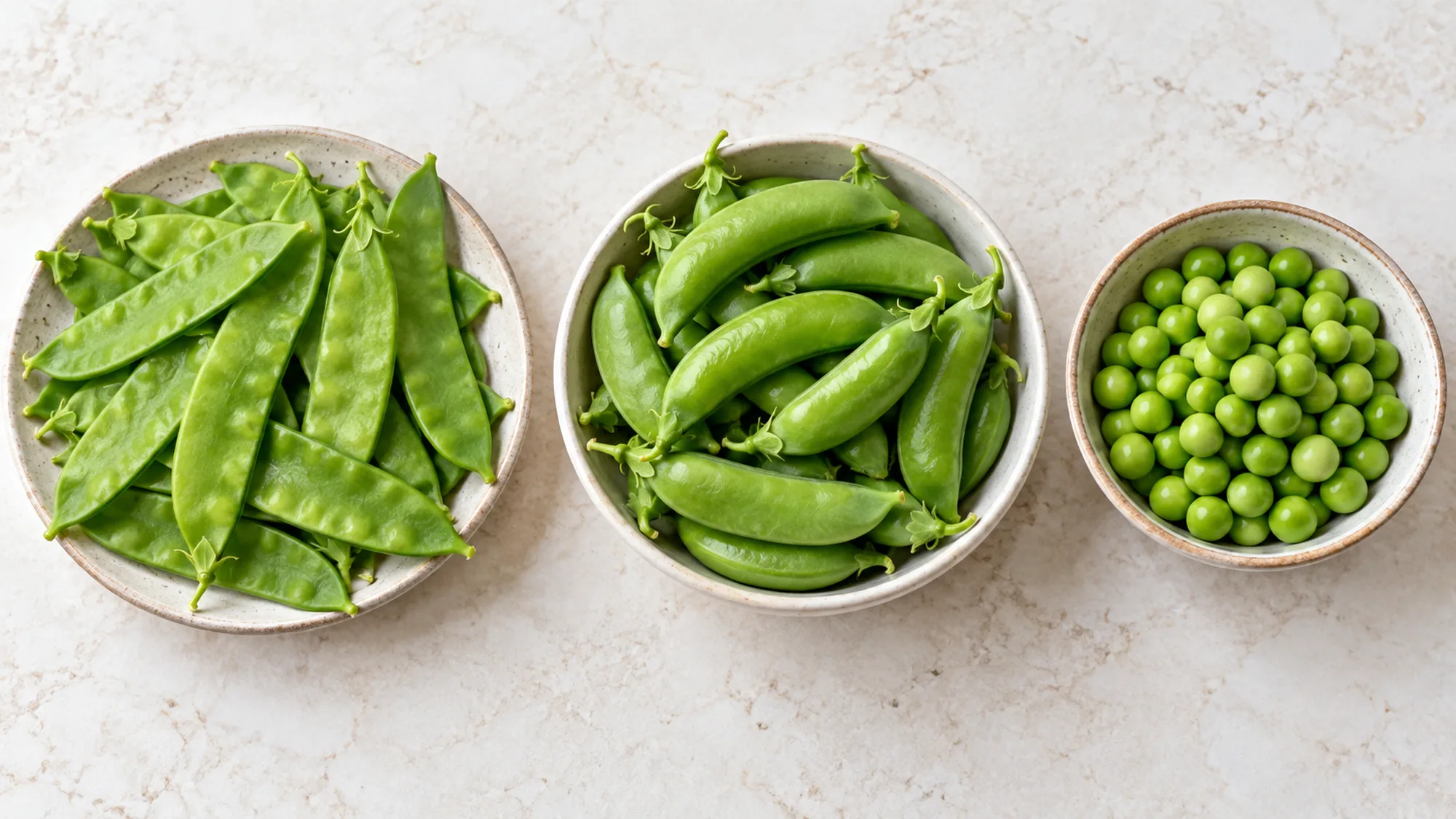
Illinois Extension explains that snow peas are harvested while their pods are flat and tender, before the seeds enlarge. Snap peas have thicker, rounded edible pods, while garden peas are usually shelled. A bag of frozen loose green peas therefore will not give a stir-fry the same broad, crisp pieces.
| Type | What you eat | Texture to expect |
|---|---|---|
| Snow peas | Flat pod and small peas together | Thin, tender-crisp pod |
| Sugar snap peas | Rounded pod and peas together | Thicker, juicy crunch |
| Garden peas | Shelled peas; discard the pod | Round peas with a softer bite |
You can swap snap peas for snow peas when a dish mainly needs an edible green pod, but expect a chunkier bite. Cut larger snap peas across the middle if that suits the dish. For a cold noodle salad, thin diagonal strips of snow pea are easier to distribute than whole rounded pods.
Buying and storing snow peas
Look for flat, bright green pods that feel firm, not tired or leathery. University of Maine Extension recommends shiny, flat snow peas; yellowing, shriveling and obvious decay are reasons to choose another bag. I’d buy a smaller amount for a planned meal rather than a large bag that has to wait.
- Check the bottom of a packaged bag for moisture and damaged pods, not just the attractive ones on top.
- Refrigerate promptly in a breathable or loosely closed produce bag. Keep the pods unwashed until preparation.
- Plan to use them within a few days for their best texture. Discard pods that are slimy, moldy or spoiled rather than trying to revive them in a sauce.
Iowa State’s produce guide gives three to five days in an unsealed bag as a general refrigerator guide for peas. Starting freshness matters, so that window is not a promise that every bag stays good for the same length of time. A date cannot make a deteriorating vegetable fresh again.
Trim them without throwing away the good part
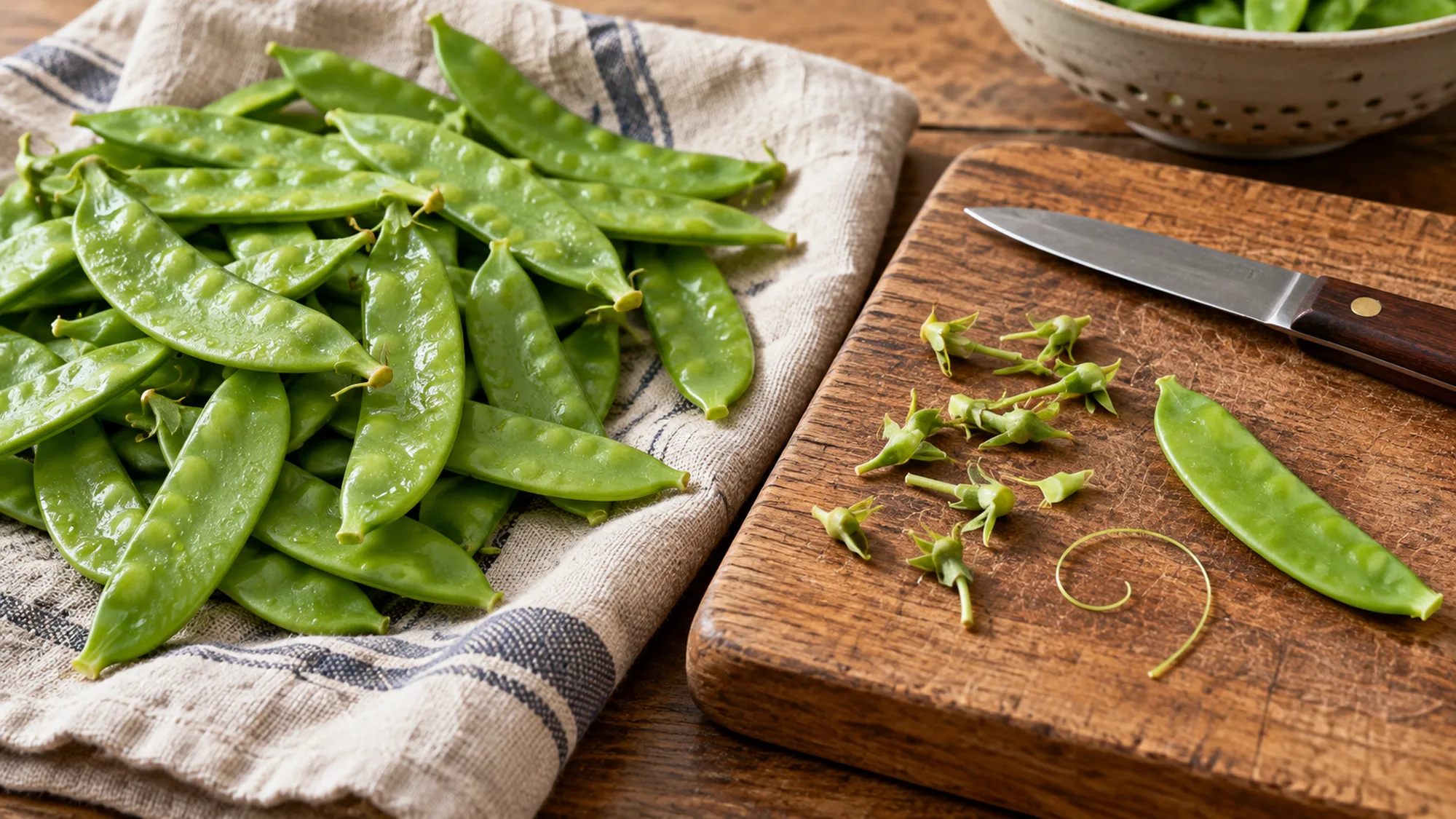
Rinse the pods under cool running water and dry them before a hot-pan preparation. The little stem end is the part to remove, not the whole edge of the pod. Kikkoman’s snow pea preparation guide shows how folding the stem toward the straighter side can help pull away the string.
- Snap or neatly trim off the stem end. If a string follows, pull it down the seam.
- Check the opposite tip and remove a tough end or remaining string if needed.
- Leave small tender pods whole, or cut larger pods diagonally for easier eating. Do not shell them as you would garden peas.
Not every pod has a bothersome string. Try one after rinsing: a fibrous seam needs attention, while a tender pod needs very little fuss. The aim is pleasant eating, not an elaborate trimming project that leaves half the vegetable on the board.
Keep the bite when you cook
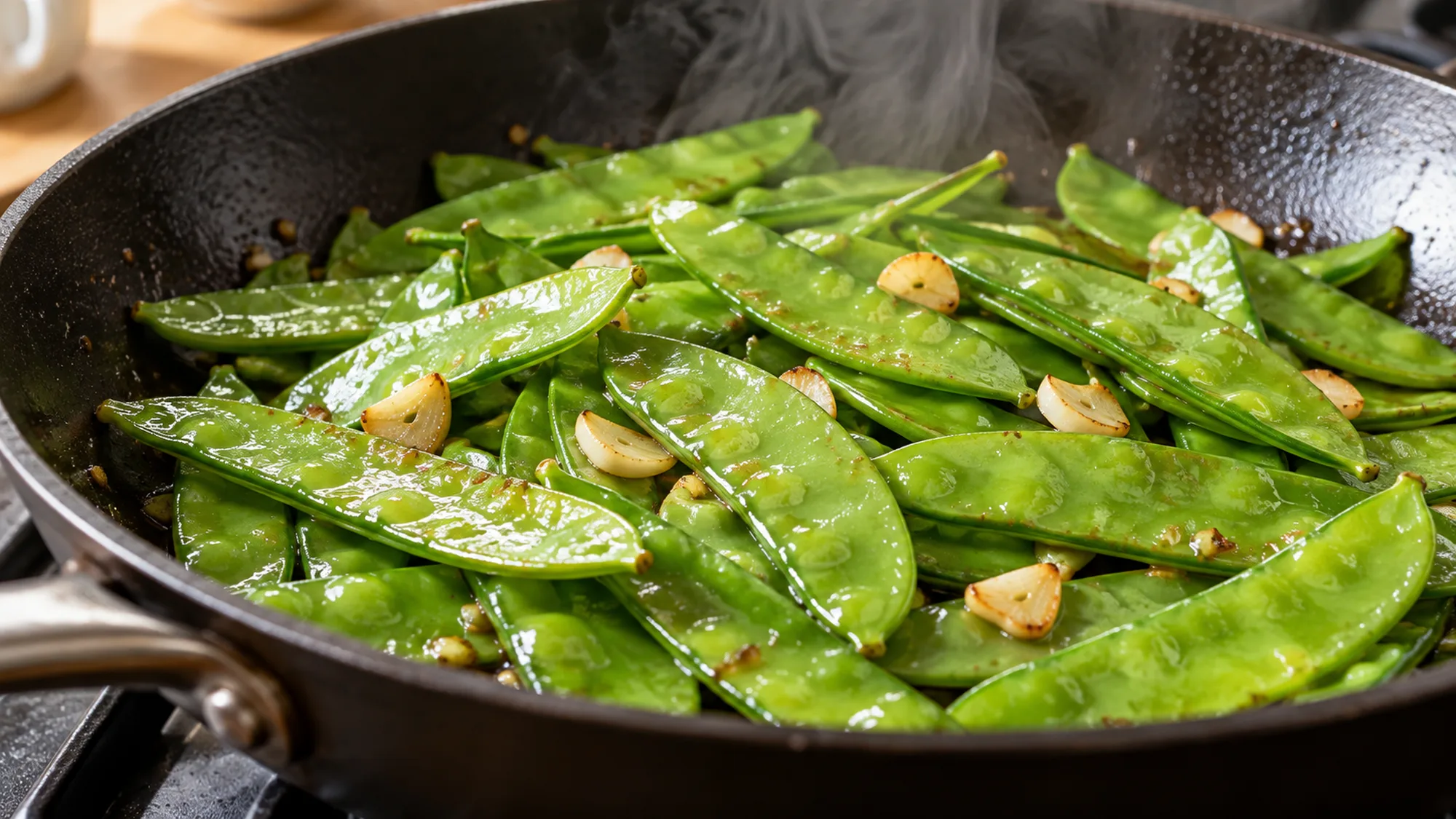
Brief steaming and stir-frying suit these thin pods. Maine Extension suggests roughly two to three minutes for steaming or one to two minutes for a quick stir-fry; treat those as starting points and check your particular pods. Stop when they are bright, hot and tender enough for you, with some resistance left.
- For a mixed stir-fry, cook denser vegetables first and add snow peas near the end.
- For a simple side, try garlic and a modest amount of oil, then finish with lemon off the heat.
- For salads, use rinsed raw pods sliced diagonally, or briefly cooked pods cooled before tossing.
- For a meal bowl, pair them with a protein and a base such as cooked millet; the pod adds contrast rather than replacing the whole meal.
I prefer a light coating of sauce here, because a heavy pool can hide the fresh flavor. If cooking for someone who avoids gluten, check soy sauce and other seasonings rather than assuming that a vegetable dish is automatically suitable.
Bottom Line
Choose flat, fresh snow peas, rinse and trim only what needs removing, and keep the cooking brief. Their thin edible pods are the feature: let their crunch and gentle sweetness remain noticeable.
The Coles video below demonstrates removing the stem and string before cooking.
Sources
- Illinois Extension: pea types and harvesting
- University of Maine Extension: selecting and preparing peas
- Iowa State University: storing and cleaning peas
- Kikkoman: preparing snow peas

Hi, I’m Emily Pocker! I share recipes and food guides here at Recipes360 to help you find everyday meal inspiration and feel more confident in the kitchen. My goal is to make cooking approachable, enjoyable, and full of flavor.