
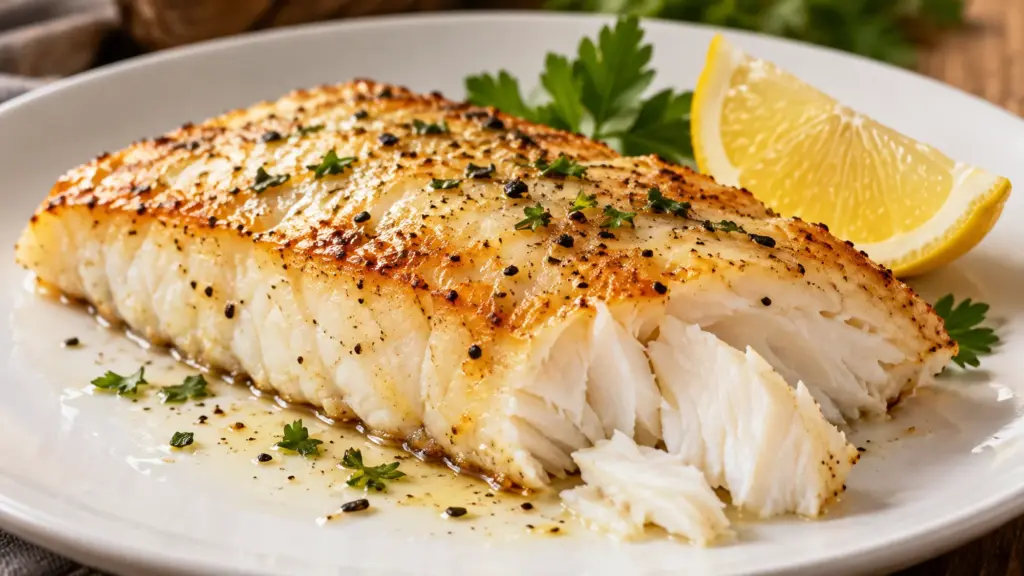
A thick white fillet at the seafood counter can look wonderfully straightforward until you wonder how to keep it from drying out. Halibut fish is mild, firm and pleasantly flaky when cooked, but it benefits from careful timing. Buying the right cut and checking mercury guidance are just as useful as choosing a sauce.
Choose halibut for a mild white fish with substantial flakes. Buy a clearly identified product, keep it cold and cook it carefully; pregnancy fish advice also limits how often halibut belongs on the menu.
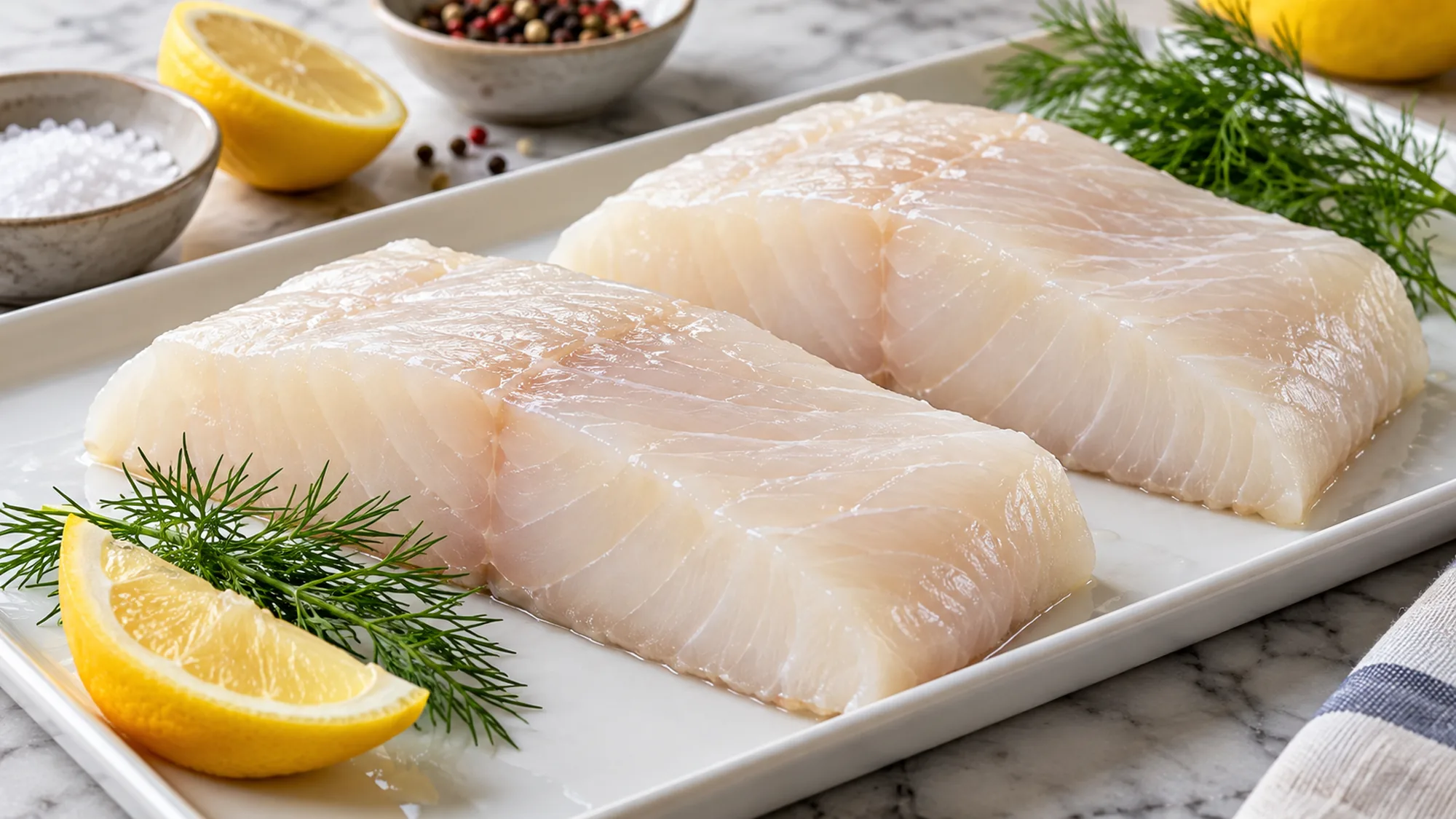
What halibut fish tastes like
NOAA describes Pacific halibut as mild and slightly sweet, with firm, tender flakes after cooking. It is relatively lean, so a small amount of sauce can complement the fish without hiding its character. Lemon, herbs and a little olive oil or butter are simple partners.
I’d choose halibut when I want the fish itself to remain the center of the plate. There is no need for a heavy coating to make it interesting, but it is worth preparing your vegetables and serving plates before the fillet finishes.
- Fillets: convenient portions; similar thickness helps them cook at a similar pace.
- Steaks: cross-cut pieces may include bone and have a different shape from fillets.
- Species and origin: ask what is being sold rather than treating every halibut label as identical.
- Frozen portions: useful when properly handled; frozen does not automatically mean inferior.
Buy for freshness, then keep it cold
The FDA seafood-handling guide recommends a mild, fresh smell and firm flesh, not sour or ammonia-like odors. For frozen fish, choose intact packaging and avoid obvious thawing damage. Appearance alone cannot prove safety.
I’d ask the fishmonger when the fish arrived and how it has been held, rather than choose solely by a bright white color. Once purchased, keep raw fish separate from ready-to-eat food and plan the trip home so the cold items are not sitting in a warm car.
| Situation | Practical choice |
|---|---|
| Cooking within two days | Refrigerate at 40°F (4°C) or below |
| Keeping raw fish longer | Freeze promptly with suitable wrapping |
| Thawing frozen portions | Use the refrigerator and follow package directions |
| Handling raw fish | Keep separate utensils and clean contact surfaces |
Cook halibut fish without relying only on the clock
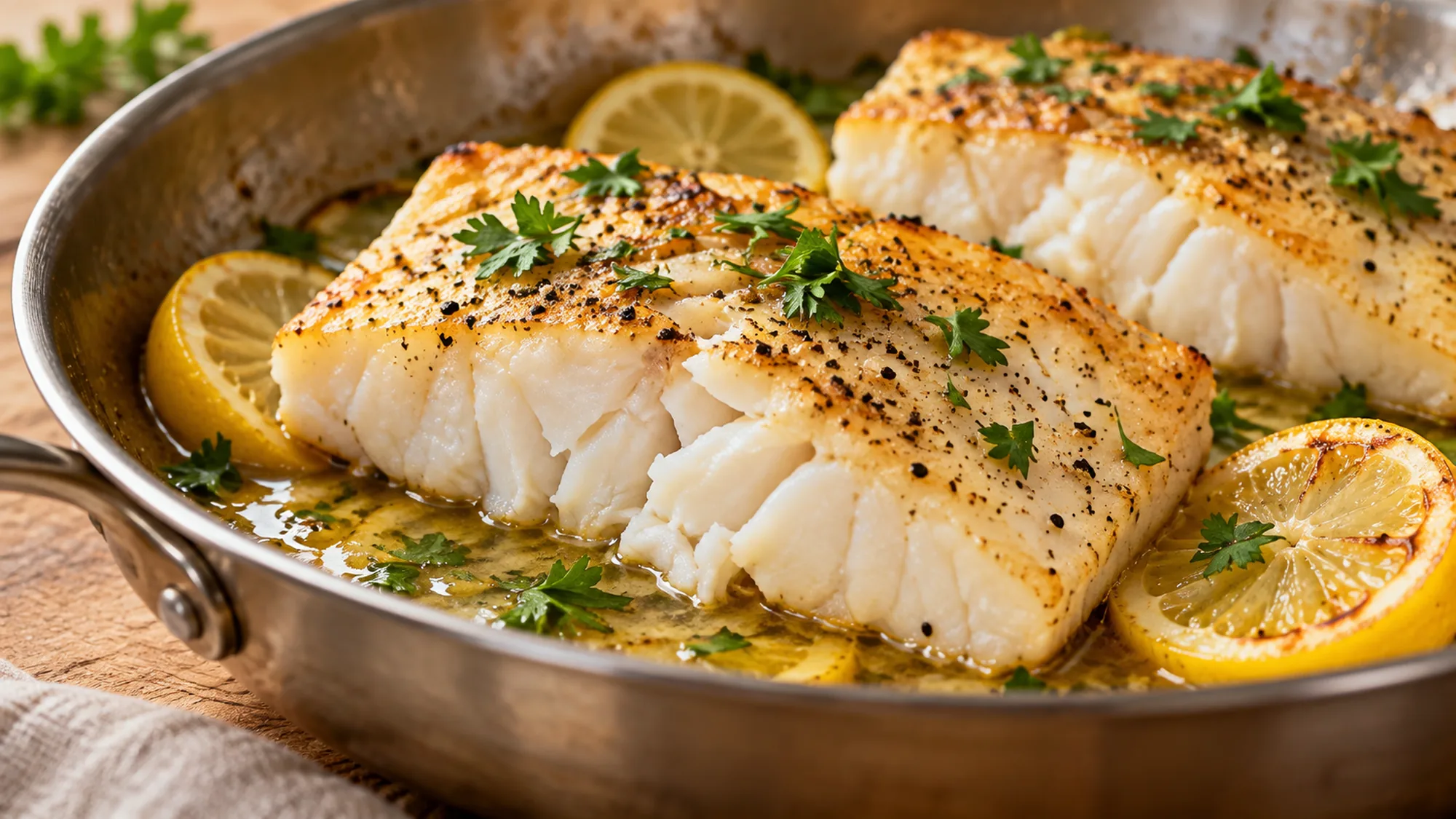
Thickness matters more than a universal minute count. A broad, thin end cooks differently from the center of a thick portion, so check each piece rather than assuming the whole pan is ready together. The FDA recommends cooking seafood to an internal temperature of 145°F (63°C); check the thickest part with a food thermometer.
The flakes should separate readily, but a visual cue is less precise than measuring the temperature. Remove finished portions from the cooking surface instead of leaving them in a hot pan while you finish a side dish. For another mild-fish serving idea, our mahi mahi with lemon-garlic butter shows a complementary sauce; halibut’s cooking time may differ.
- Pan cooking: dry the surface first and give the fillet enough space.
- Baking: use similarly sized portions and begin checking before the recipe’s longest suggested time.
- Saucing: spoon a warm sauce over cooked fish rather than simmering it indefinitely.
- Serving: handle with a broad spatula so the large flakes stay together.
Mercury and pregnancy: halibut is a Good Choice
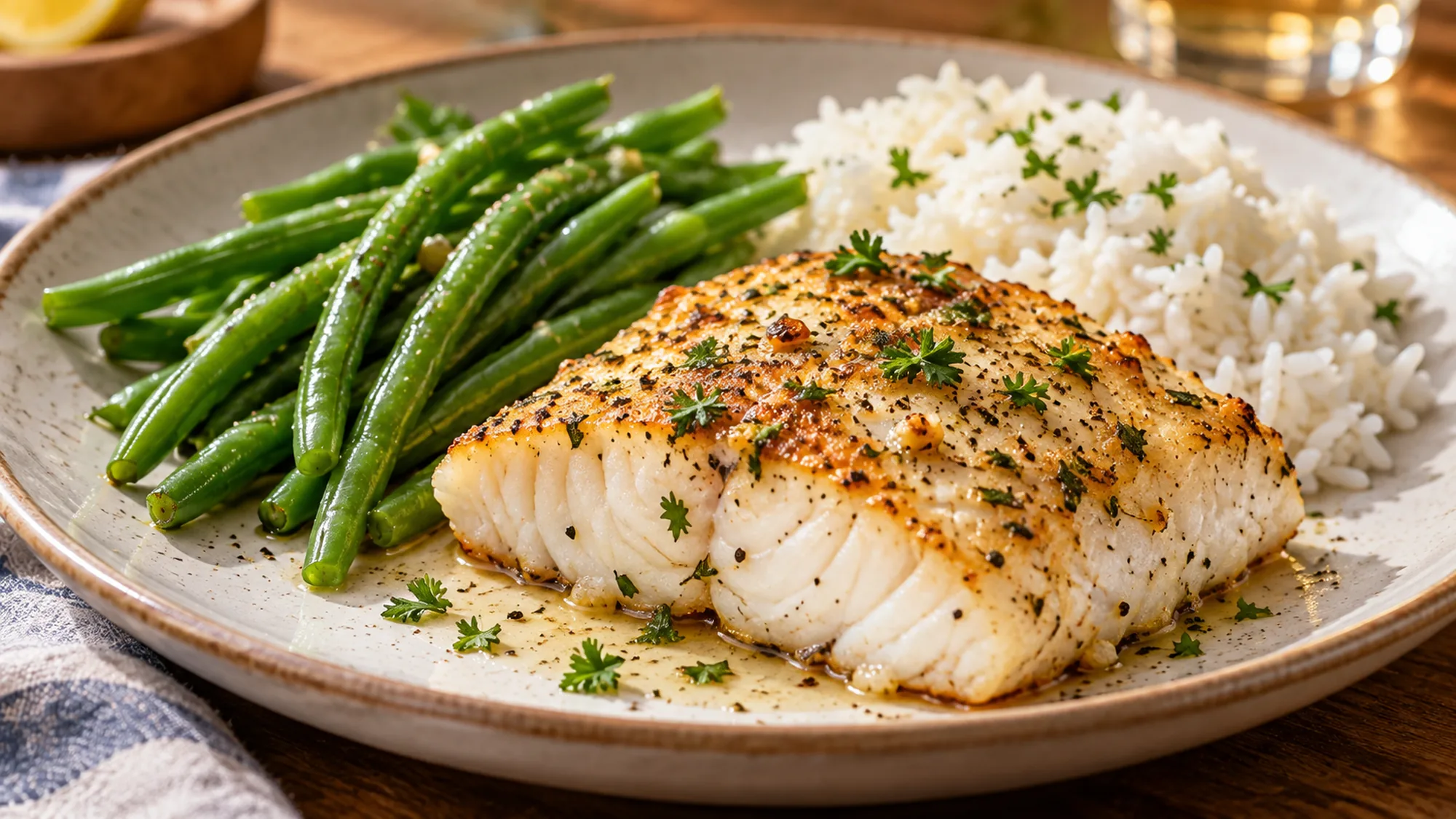
In the FDA/EPA fish advice, halibut is in the Good Choices group, not the lowest-mercury Best Choices group. For people who are or might become pregnant or are breastfeeding, the chart allows one serving per week from Good Choices instead of two to three servings from Best Choices.
An adult serving in this guidance is four ounces before cooking. Do not interpret the halibut serving as an addition to a full week of other fish; use the chart’s either/or pattern. Salmon, cod and pollock are examples from Best Choices when planning lower-mercury variety.
- Pregnant people should avoid raw or undercooked fish; freezing alone does not make every seafood risk disappear.
- Check local advisories for fish caught by family or friends rather than applying the store-bought chart blindly.
- Ask your clinician about individual restrictions and use child-specific serving guidance for children.
- Cooking does not turn a higher-mercury fish into a lower-mercury one.
Bottom Line
Halibut rewards a simple plan: buy well, protect the cold chain and check doneness before the flesh becomes dry. Keep the FDA/EPA mercury category in mind, especially during pregnancy, and let the fish’s mild flavor do the work.
Tim Farmer’s Country Kitchen demonstrates halibut with garlic butter below. Use a thermometer for the FDA doneness check rather than relying only on the demonstration’s cooking times.
Sources
- NOAA Fisheries: Pacific halibut
- FDA: selecting and serving seafood safely
- FDA/EPA: advice about eating fish

Hi, I’m Emily Pocker! I share recipes and food guides here at Recipes360 to help you find everyday meal inspiration and feel more confident in the kitchen. My goal is to make cooking approachable, enjoyable, and full of flavor.