
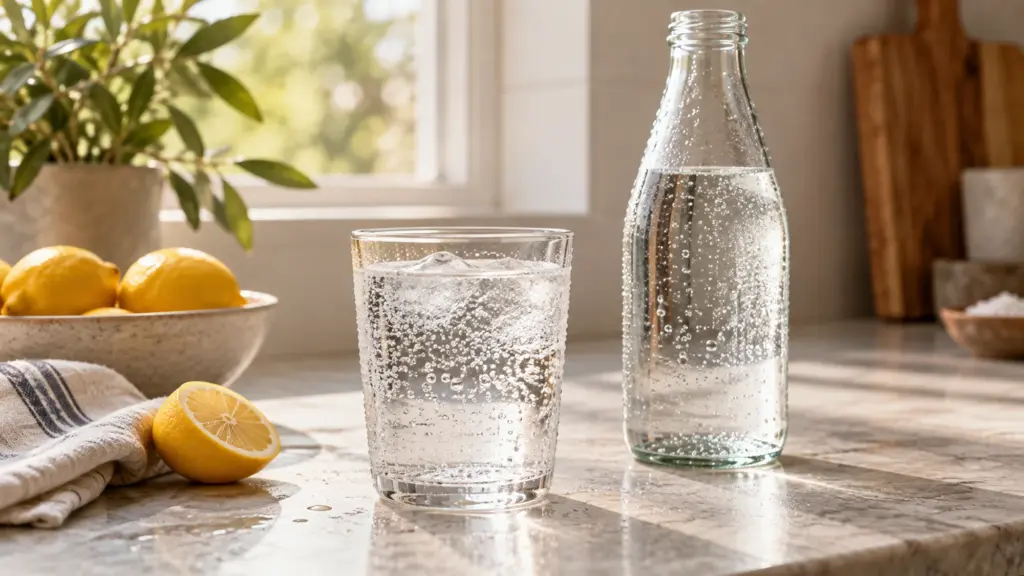
The bottles beside the tonic all look reassuringly clear, but choosing soda water is not quite a color test. A quick look at the ingredients tells you whether you are buying plain bubbles, a mineral-tasting mixer or a sweetened drink.
Soda water usually means carbonated water, often sold as club soda with added mineral salts. It is not automatically tonic water, and its sodium content depends on the exact product. Check the ingredients and serving size rather than judging by the name alone.
I would choose a plain version first, then add flavor only if the glass needs it. That keeps the fizzy, clean-tasting base useful for drinking on its own or mixing without an unexpected sweet finish.
What is in soda water?
Carbon dioxide supplies the bubbles. Added mineral salts can change the taste, but brands do not use one universal formula. Schweppes U.S. Club Soda lists carbonated water, sodium bicarbonate, salt and potassium sulfate; its current page identifies the drink as caffeine-free and lists zero sugar.
For contrast, Canada Dry’s Canadian Club Soda lists potassium bicarbonate and potassium citrate with carbonated water. These are country-specific products, not interchangeable nutrition labels. Even a familiar brand can have a different formulation elsewhere.
- Read the full product name, including flavor and any zero-sugar wording.
- Check the ingredient list for sugar, sweeteners, flavorings and added acids.
- Use the sodium line on Nutrition Facts; an ingredient name does not tell you the amount in your glass.
Soda water, seltzer and tonic: the useful distinction
For most kitchen decisions, sweetness matters more than terminology. Plain seltzer and club soda can both supply fizz, while tonic brings a distinctly bitter-sweet profile. Sparkling mineral water may contribute its own mineral character, so taste is worth considering before using it in a delicate drink.
| Bottle type | What to expect | Best label check |
|---|---|---|
| Plain club soda | Carbonation with mineral salts | Sodium and serving size |
| Plain seltzer | Carbonated water without the club-soda salt blend | Any added flavors or sweeteners |
| Sparkling mineral water | Water with a source-specific mineral composition | Mineral information and carbonation |
| Tonic water | Quinine bitterness, usually balanced with sweetness | Sugar or sweeteners; not a plain-water substitute |
The distinction is visible on Schweppes’ product information: its regular tonic lists high fructose corn syrup and quinine, while its club soda does not. Replacing one with the other can change a drink considerably, even though both arrive clear and bubbly.
For a neutral mixer, choose a plain, unsweetened product. A clear bottle is not a shortcut around reading its label.
Read soda water nutrition without overthinking it
On the verified labels, U.S. Schweppes Club Soda lists 95 mg sodium per 12 fl oz, while Canadian Canada Dry lists 45 mg per 355 mL. Those are approximately comparable serving volumes, but different products and markets. Neither number should be applied to every soda water.
If you are limiting sodium, compare the same volume and account for refills. Plain soda water is not a nutritional upgrade simply because the label mentions minerals. For another example of why front-label words need context, our Coke Zero caffeine guide separates zero sugar from caffeine-free.
- Check the bottle in your hand when a dietary restriction matters; online formulas can change.
- Do not assume flavored means sweetened, or unsweetened means free of added acids.
- Choose the drink for its taste and ingredients rather than promises of cleansing or special health benefits.
Keep the bubbles enjoyable
Plain sparkling water can fit alongside still water. The American Dental Association’s sparkling-water guidance considers plain sparkling water generally fine for teeth, while highlighting added sugar and more acidic citrus-flavored versions as important distinctions. It also recommends regular fluoridated water.
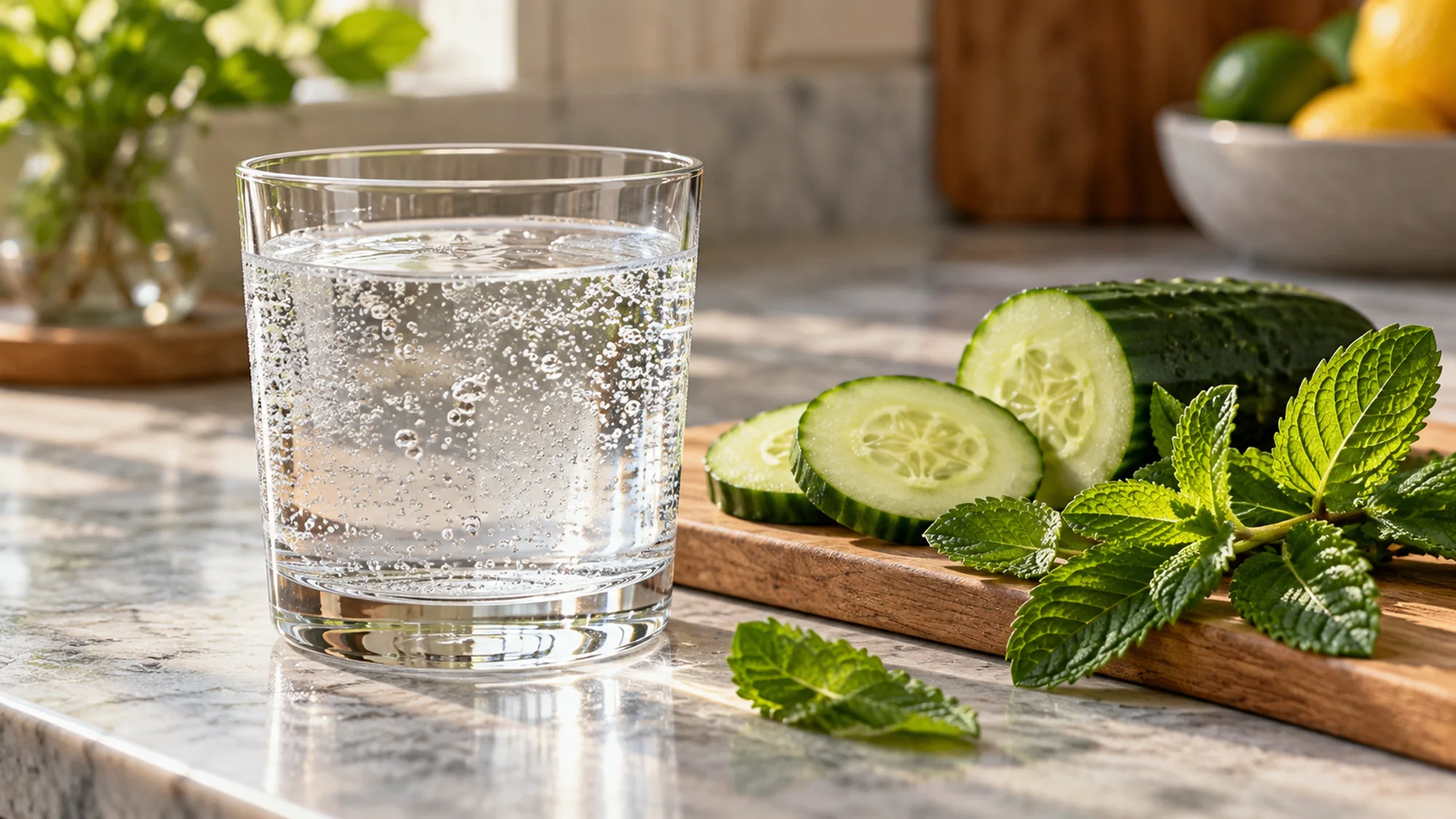
For serving, I prefer a modest amount of garnish rather than enough juice to turn the drink into something else. Cucumber or mint offers a different direction from lemon, though any addition changes what is in the glass. A bottle that suits your taste without syrup is often the simplest choice.
- Chill before serving, open carefully and pour without vigorous stirring.
- Recap a partly used bottle promptly and follow its storage instructions.
- Choose smaller bottles if a large one regularly loses its fizz before you finish it.
- If acidic flavorings are part of the drink, enjoy it with a meal rather than sipping continuously all day.
Bottom Line
Soda water is a flexible fizzy drink, not a single fixed formula. Choose plain and unsweetened when that is your goal, compare sodium on matching serving sizes, and keep tonic in its own category. The label does more useful work than the bubbles.
The video below from Big Questions explains the basic differences among club soda, seltzer and sparkling water. Use your current package label for product-specific ingredients and nutrition.
Sources
- Schweppes U.S.: Club Soda and tonic ingredients and nutrition
- Canada Dry Canada: Club Soda ingredients and serving sizes
- American Dental Association: sparkling water and teeth

Hi, I’m Emily Pocker! I share recipes and food guides here at Recipes360 to help you find everyday meal inspiration and feel more confident in the kitchen. My goal is to make cooking approachable, enjoyable, and full of flavor.