
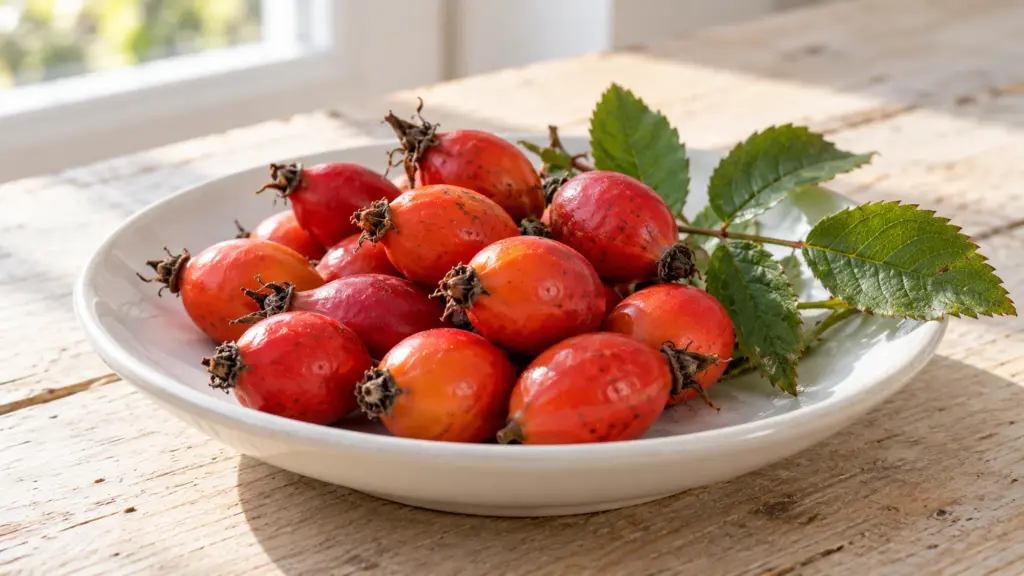
A bag of dried rose hips looks very different from a bunch of roses, and it belongs in a different part of the kitchen. Rose hips are the fruits that develop after rose flowers fade. Properly sourced and prepared, they can be used in herbal infusions, jellies and other fruit preparations.
Rose hips are rose fruits, rather than petals. Choose a food-grade product or a positively identified, uncontaminated source, and remove or thoroughly strain out the seeds and fine hairs before eating or drinking a preparation.
What are rose hips, and what do they taste like?
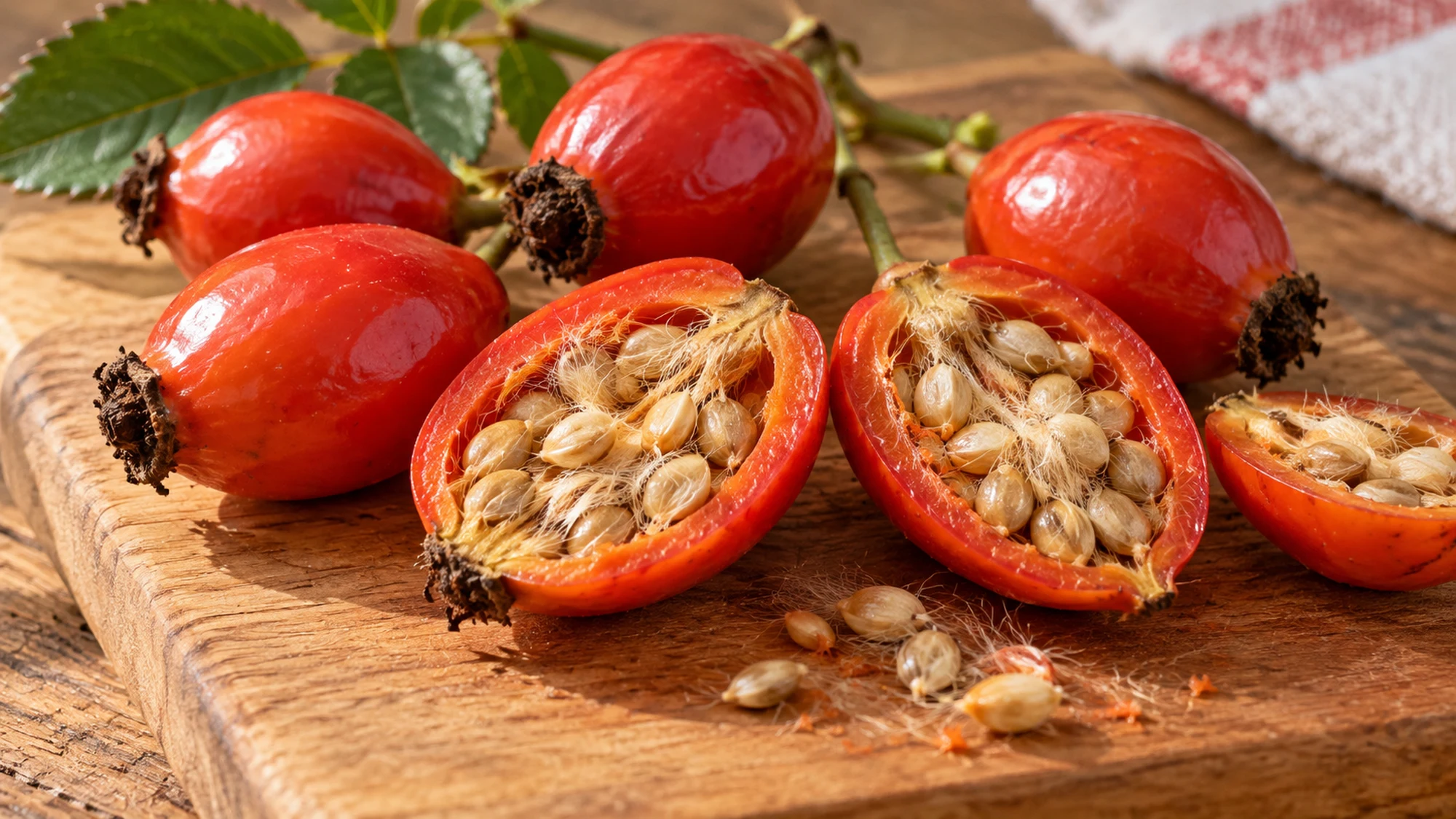
The Smithsonian’s rose garden guide explains that hips develop when spent rose flowers remain on the plant. Their size and flavor vary, and preparation needs to remove the seeds and fine hairs. A rose hip’s appealing red color does not make it ready to eat straight from any ornamental bush.
For the kitchen, think fruit rather than perfume. Hips can give a tart, fruity character, while petals bring a different floral quality. I’d choose a small, clearly labeled bag of dried hips for a first introduction instead of starting with an unidentified garden harvest.
- Fresh hips: Useful when you want to prepare the fruit itself and are ready for the cleaning work.
- Dried pieces: Convenient for an infusion when sold specifically for food or tea.
- Rose petals: A different part of the plant, with different preparation requirements.
- Blended tea: Read every ingredient; the front label does not describe the whole blend.
Choose the form for your plans
A product name alone leaves several useful questions unanswered. Are the hips whole, cut, cleaned or blended with other ingredients? Is the package intended for brewing, cooking or an entirely different use? Choose the form that matches your next step.
| Form | Useful for | Check first |
|---|---|---|
| Fresh hips | Prepared fruit or puree | Identity, source and cleaning |
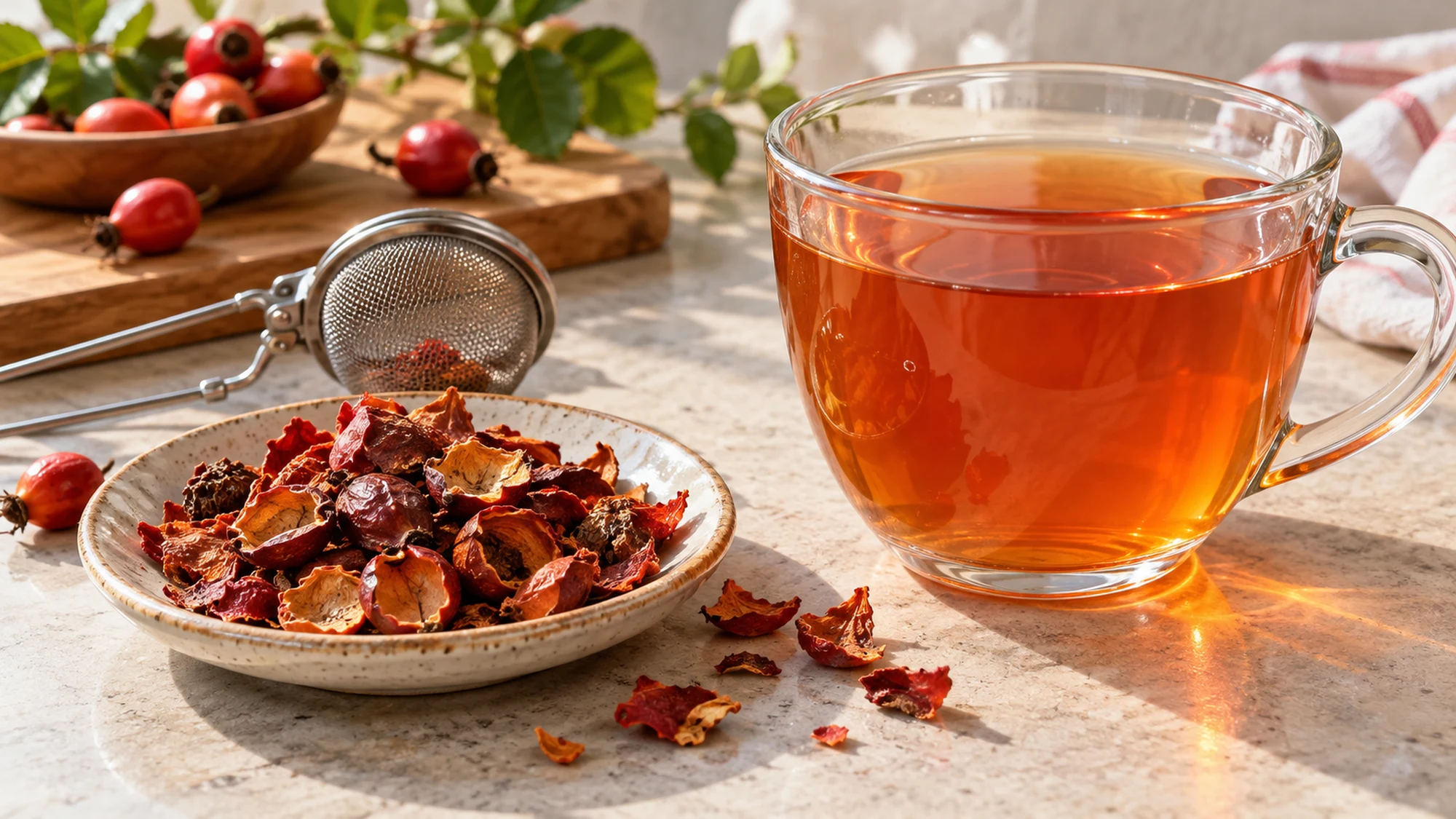
| Dried food-grade pieces | Herbal infusions | Seed removal and straining directions |
| Packaged tea blend | A convenient cup | Other ingredients and brewing instructions |
| Prepared jelly or spread | Ready-to-use fruit flavor | Ingredients and after-opening storage |
I’d favor clear preparation instructions over a long list of promises on the packet. If you want plain rose hips, a blend containing hibiscus, flavorings or other botanicals will give a different cup. That may be enjoyable, but it is worth knowing what you are buying.
Preparation matters more than the pretty color
The University of Alaska Fairbanks Cooperative Extension advises choosing hips away from pesticides, herbicides, vehicle exhaust and other contamination. It recommends removing the stem, blossom end and seeds, or carefully straining the preparation. Do not use a photograph in a food article as a wild-plant identification guide.
- Wash fresh hips and use clean equipment before preparing them.
- Remove the unwanted seeds and hairs rather than treating a quick rinse as complete preparation.
- Follow a reliable, specific method for the form you are using; packaged tea should carry brewing directions.
- Strain an infusion carefully. A cup should not contain loose seeds or hairy debris.
- Use a tested preservation recipe for shelf-stable products instead of improvising a canning process.
A useful first serving can be as simple as a plain infusion prepared according to its package. Taste it before adding sweetener, and consider whether you enjoy the fruit character on its own. Buying a bag does not oblige you to turn the entire cupboard into a rose-themed project.
Storage and sensible expectations
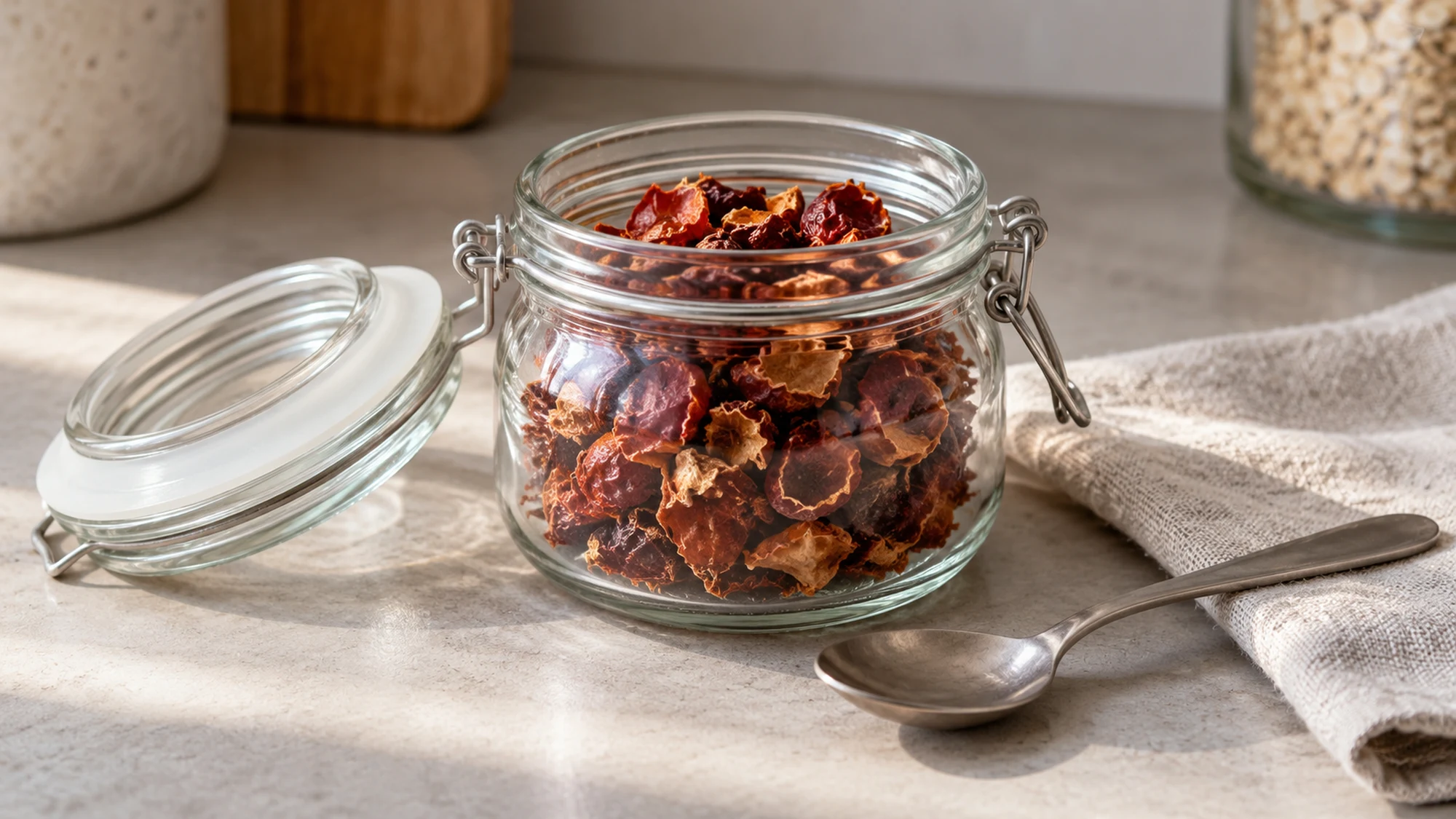
UAF advises refrigerating cleaned fresh hips, covered, for up to one week; its dried-hip guidance calls for a clean, dry, sealed container. Keep the package’s own instructions where you can find them. The FDA’s produce guidance recommends running-water washing without soap and keeping perishable produce refrigerated at 40°F (4°C) or below.
- Label containers so dried hips cannot be confused with decorative plant material.
- Use a clean, dry scoop and close the storage container after use.
- Follow the label on purchased spreads or blends, including any after-opening refrigeration instruction.
- Discard spoiled material rather than trying to rescue it by brewing.
Choose rose hips because you want their culinary character. A statement about a fruit’s nutrient content does not tell you the amount in a particular strained drink. This guide does not establish a therapeutic dose or a treatment benefit, and an herbal product should not replace prescribed care.
Bottom Line
Rose hips can bring a tart fruit note to the kitchen, provided the source and preparation are right. Choose a food-grade form, pay attention to seeds and hairs, and follow storage directions. Flavor is a good enough reason to enjoy them.
Sources
- Smithsonian Gardens: An Apple Is a Rose?
- UAF Cooperative Extension: Wild Roses
- FDA: Selecting and Serving Produce Safely

Hi, I’m Emily Pocker! I share recipes and food guides here at Recipes360 to help you find everyday meal inspiration and feel more confident in the kitchen. My goal is to make cooking approachable, enjoyable, and full of flavor.