
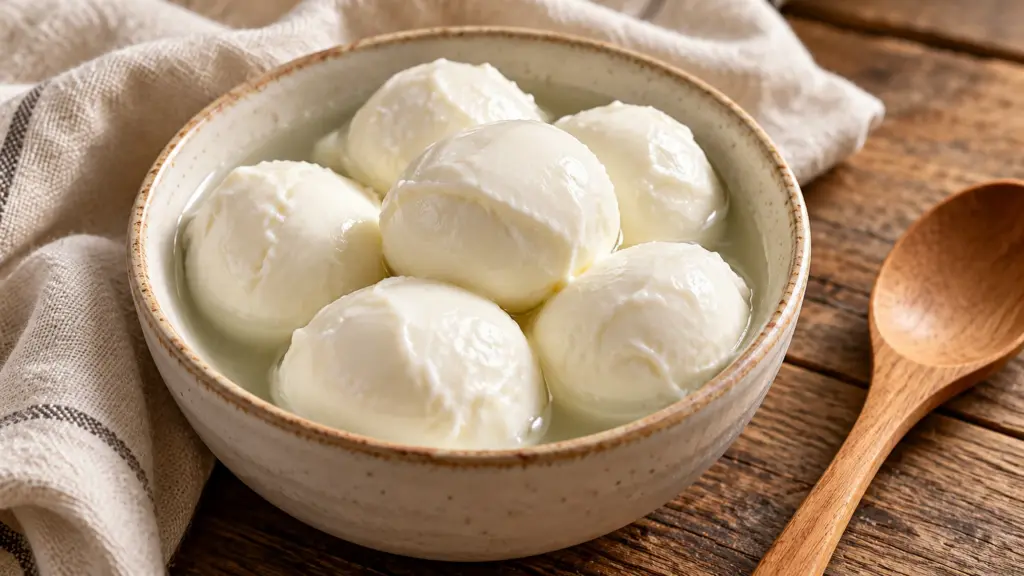
A tub of little white cheese balls can make a tomato salad almost effortless. Bocconcini are small fresh mozzarella balls, with a moist, mild, milky character. They can be eaten without cooking or added to warm dishes; the useful decisions are which size to buy, how much liquid to drain and how to keep the remainder cold.
Bocconcini are fresh mozzarella in small balls. Use them whole, halved or sliced according to the dish, and follow the exact package’s storage directions. Choose pasteurized milk, check the milk-allergen label and buy an amount you can use promptly after opening.
What bocconcini are
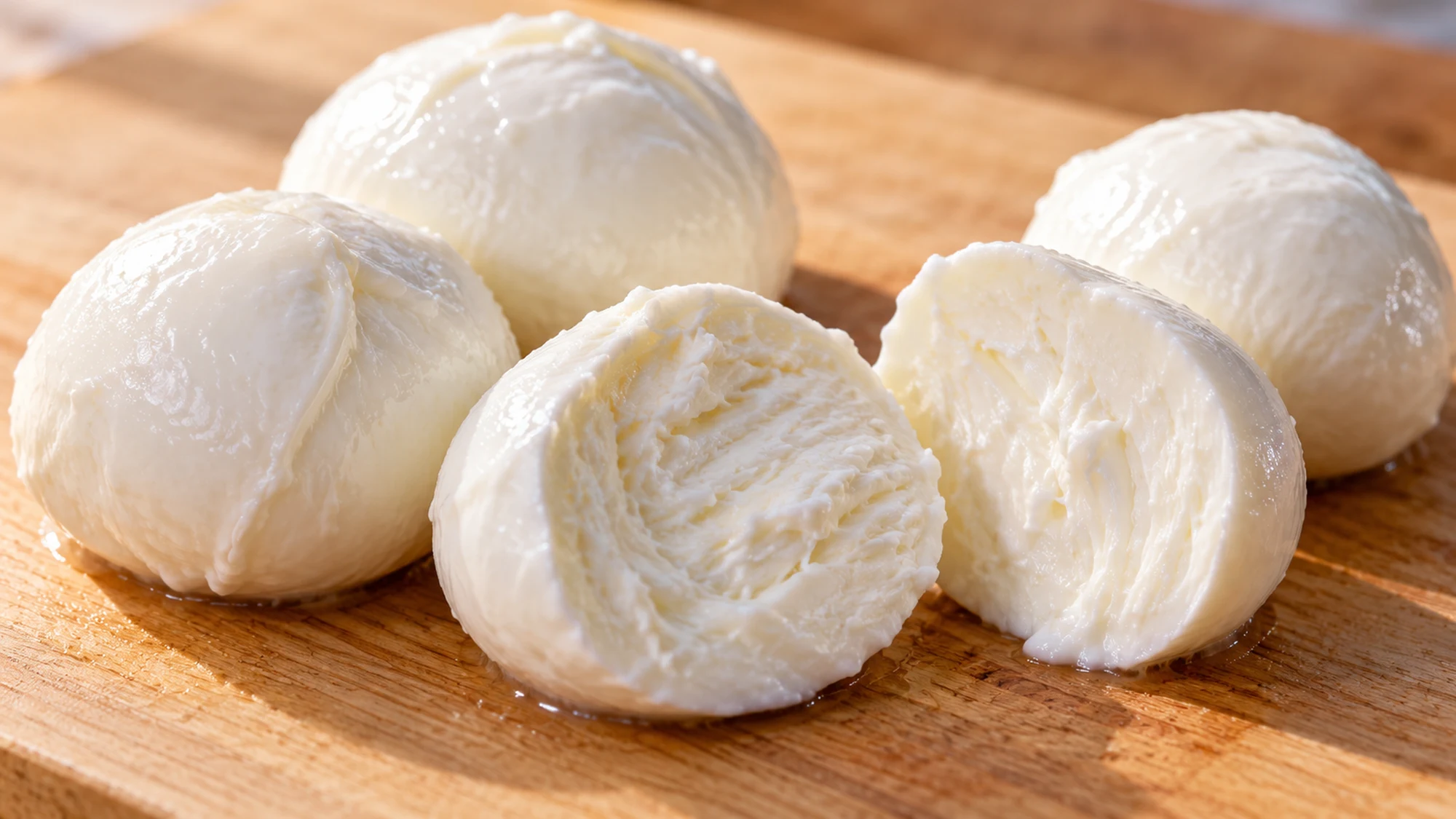
Saputo’s bocconcini description identifies soft, mild balls with a creamy texture, and its ingredient list starts with pasteurized milk. Bocconcini belong to the fresh mozzarella family. Their pale color and delicate flavor make them useful beside ripe tomatoes and herbs without the sharpness you would expect from an aged cheese.
- Fresh means a cheese style: It does not cancel the need for refrigeration or after-opening instructions.
- Small balls are convenient: They save slicing when their size already suits the plate, but halving is often useful.
- Milk type still matters: Read the actual product label rather than assuming every mozzarella is made from the same milk.
- Flavor is gentle: A mild cheese will not season a whole bowl the way a salty, tangy cheese might.
I’d let that gentle character guide the meal. A few good accompaniments can provide contrast, while a heavy dressing can make the cheese feel like an afterthought. If you want a different salad-cheese profile, this site’s feta cheese guide explains its salty, tangy role.
Choose bocconcini size for the way you will serve it
Look through the tub before buying. Saputo, for example, offers bocconcini, mini, cocktail and pearl formats in its range. Those names help you narrow the choice, but check the size and drained quantity on your own package rather than treating a name as a precise kitchen measurement.
| Format | Useful for | Before using |
|---|---|---|
| Bocconcini balls | Halves or slices in a salad | Cut to suit the other ingredients |
| Mini or cocktail balls | Small servings and appetizer skewers | Check the actual size in the tub |
| Pearls | Scattering through pasta or salad | Drain only the portion needed |
| Marinated cheese | An already-seasoned accent | Read added ingredients and salt |
I’d buy smaller balls for an appetizer that should be easy to pick up, and a larger format when slices would sit neatly in a sandwich. Match the cheese to the other ingredients: a whole ball that dwarfs a tiny tomato can become an unexpectedly awkward mouthful.
Simple ways to serve bocconcini
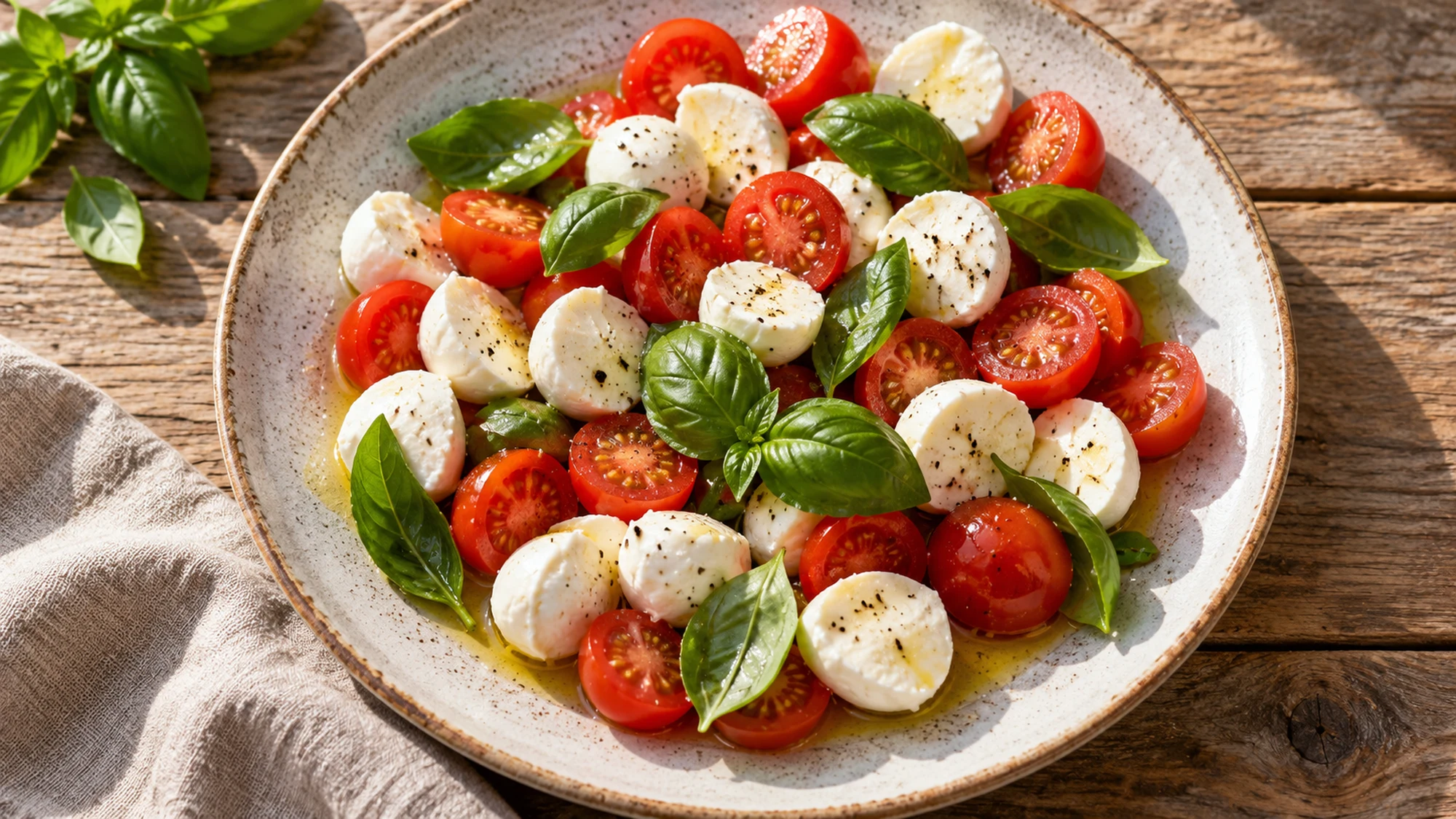
BelGioioso suggests fresh mozzarella for salads, sandwiches, pizza, pasta and antipasto, with pairings such as tomatoes, basil and roasted peppers. Begin with a simple combination so you can judge the cheese’s flavor and moisture before adding more dressing or seasoning.
- Tomato salad: Halve the cheese if needed, then combine with tomatoes, basil and a modest amount of dressing.
- Sandwiches: Slice to distribute the cheese across the bread rather than leave a thick lump in the center.
- Pasta salad: Choose a size that mixes easily with the pasta and vegetables.
- Warm dishes: Use a recipe written for fresh mozzarella, and account for its packing liquid when portioning the cheese.
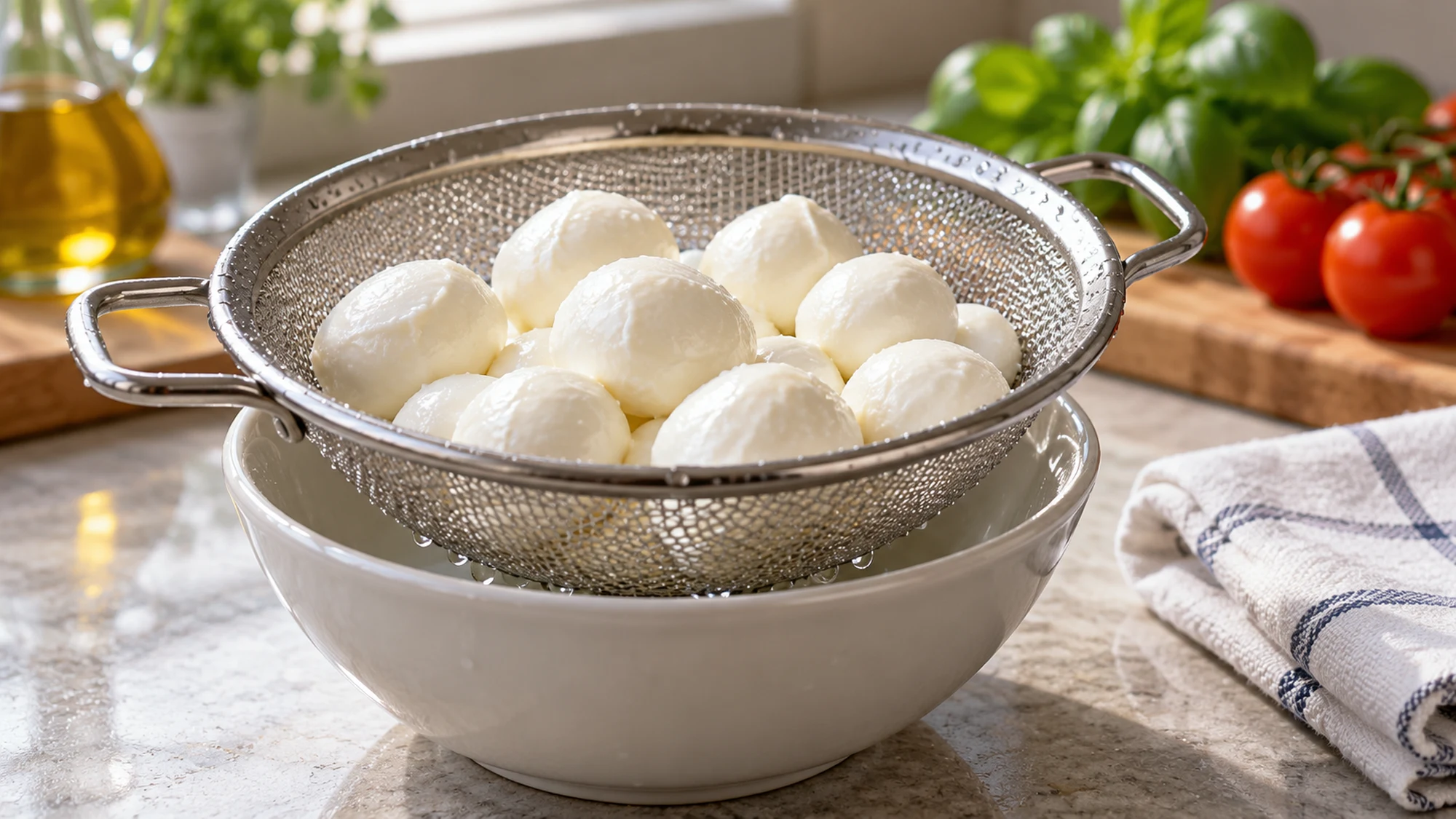
Drain the serving portion in a clean strainer before assembling a dish that should not become watery. Keep the unused cheese separate from the dressed salad, and use clean utensils. Adding oil, herbs or garlic is a seasoning choice, not a way to preserve fresh cheese at room temperature.
Keep bocconcini cold and follow its own label
Storage advice can differ by product. Saputo recommends keeping soft cheeses such as bocconcini in their original container, with brine when included, in a refrigerator at 34–39°F (1–4°C). BelGioioso’s water-cup instructions instead say to drain the liquid on opening, replace the lid and refrigerate immediately, with best enjoyment within one to two days. Follow the instructions that match your tub.
That difference is a good reason to retain the label rather than improvise a fresh-water or salt-water routine. Check any after-opening limit as well as the printed date. Both makers advise against freezing their fresh mozzarella products for quality reasons; buying a smaller tub is usually a better starting point when plans are uncertain.
- CDC lists mozzarella made with pasteurized milk as a safer choice for people at increased risk of Listeria illness, including during pregnancy. Check that wording on the label.
- Pasteurization does not replace correct storage, clean handling or attention to recalls.
- Milk is a major allergen. FDA guidance explains where to find allergen information; read marinated products and accompaniments separately.
- Discard moldy soft cheese rather than trim and serve the remaining balls; Saputo’s guidance specifically includes bocconcini.
Bottom Line
Choose bocconcini for its soft texture and mild milk flavor, then choose the size that fits the bite. Drain the serving portion, keep the remaining cheese cold and follow that exact package’s instructions. A simple pairing and a practical tub size are often all you need.
Sources
- Saputo: Bocconcini and available sizes
- BelGioioso: Fresh mozzarella
- Saputo: Cheese storage questions
- BelGioioso: Handling and storage recommendations
- CDC: Preventing Listeria infection
- FDA: Food allergies

Hi, I’m Emily Pocker! I share recipes and food guides here at Recipes360 to help you find everyday meal inspiration and feel more confident in the kitchen. My goal is to make cooking approachable, enjoyable, and full of flavor.