
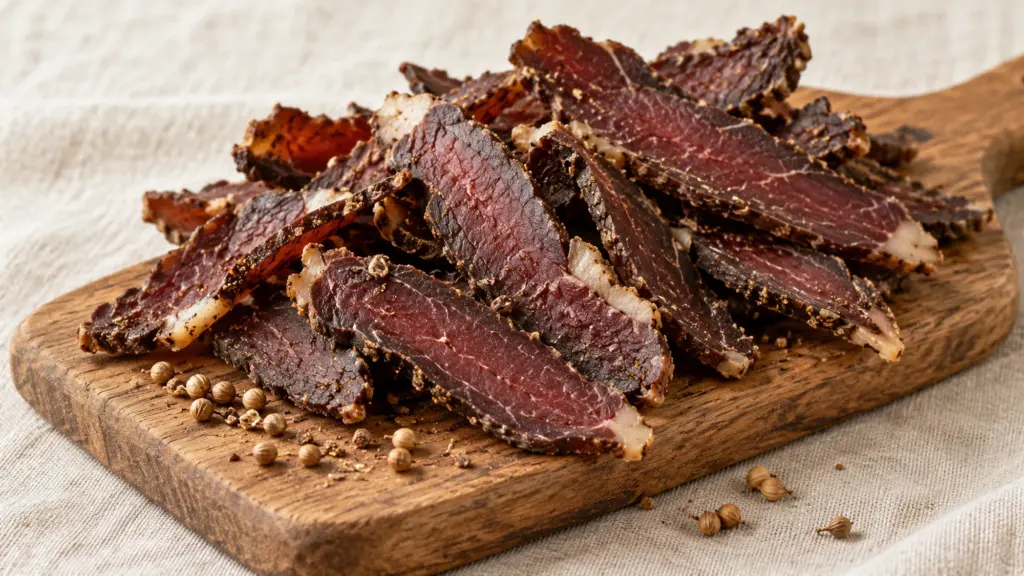
A bag of biltong can look familiar until you open it: thin, irregular meat slices rather than the long strips you expected from jerky. Biltong is a Southern African style of dried, seasoned meat, commonly beef. Its preparation, texture and ingredients make it worth considering on its own terms.
Biltong is dried meat, typically seasoned with salt, vinegar and spices and sliced from larger pieces. Check the actual package for ingredients, allergens and storage instructions; the name alone cannot answer those questions.
What Is Biltong?
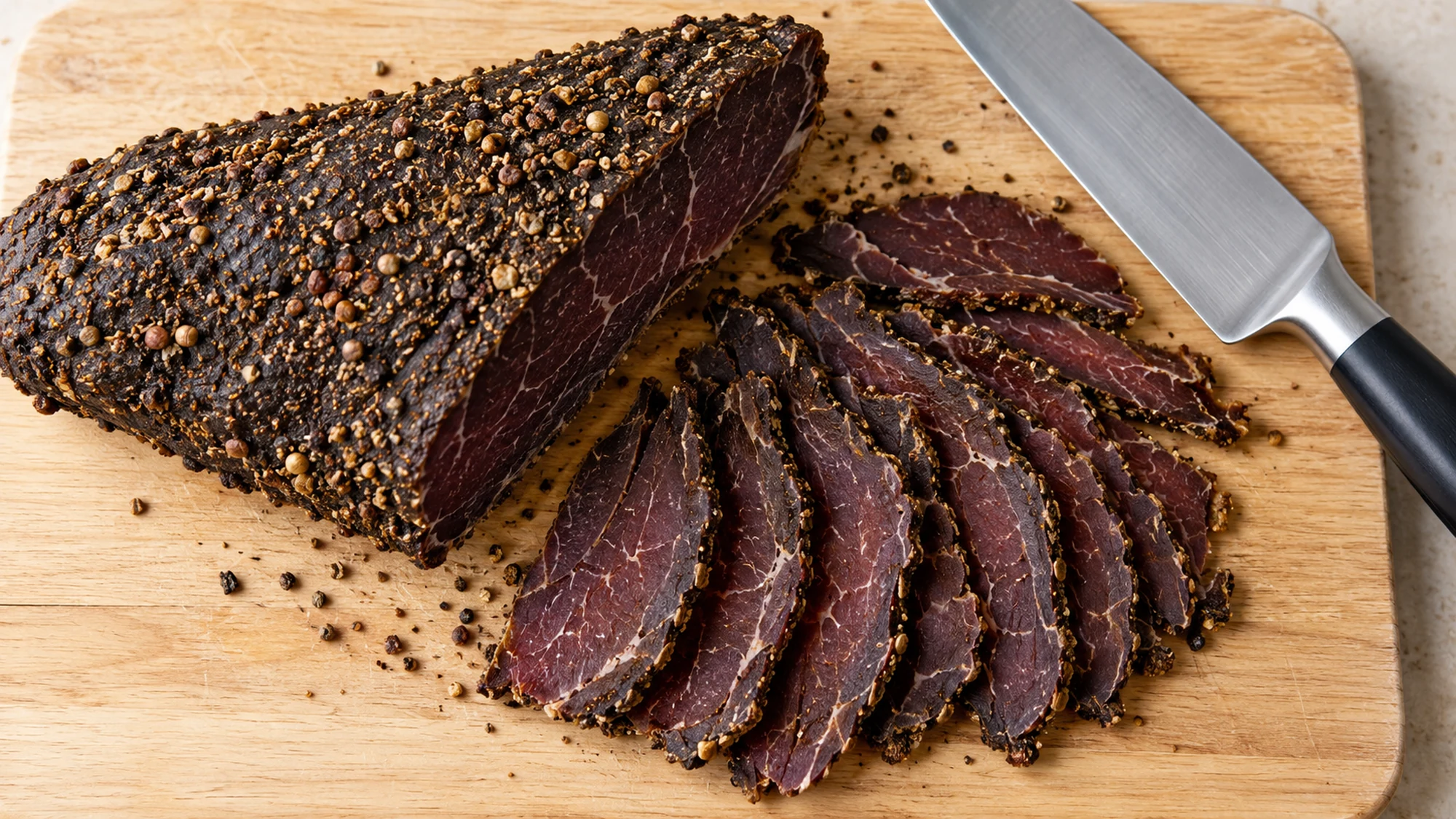
Biltong Depot describes thick meat strips seasoned with salt, vinegar, pepper and coriander, then air-dried. The word does not mean the product contains tongue. Beef is common, but other meats can be used, so check the species when shopping.
Expect a concentrated savory flavor, often with vinegar tang and fragrant coriander. Thickness, fat and dryness affect the eating experience. I’d choose a small package first: a preference for soft slices or a firmer chew is more useful than someone else’s claim that one texture is best.
- Presliced: Convenient for a snack plate or scattering over a salad.
- Whole pieces: Let you choose slice thickness, using a clean board and a suitable knife.
- Seasoned varieties: Check the ingredient list again when changing flavors, even within one brand.
How Biltong and Jerky Compare
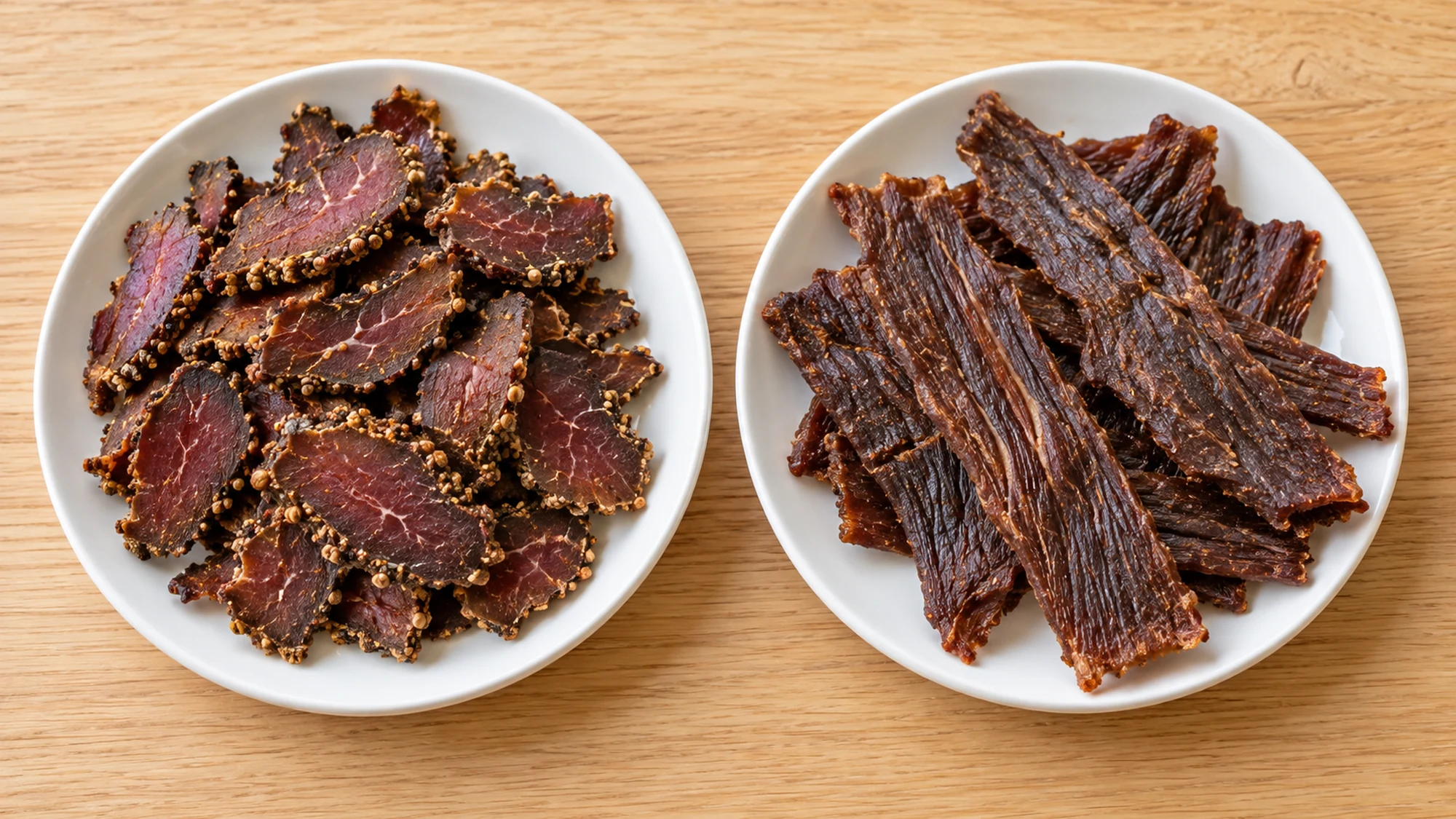
Both are dried meat products, but the usual processes differ. The 2025 Guidelines for the Safe Manufacture of Smallgoods describes biltong curing with salt and vinegar before air-drying, while jerky commonly uses heated drying. Commercial methods vary; a neat slogan cannot describe every bag.
| Check | Biltong | Jerky |
|---|---|---|
| Typical preparation | Salt, vinegar and air-drying | Seasoning and commonly heated drying |
| Common format | Larger pieces sliced for eating | Strips or formed pieces |
| Sugar | May be added; read the label | May be added; read the label |
| Allergens | Depend on seasoning and handling | Depend on seasoning and handling |
| Storage | Follow the specific package | Follow the specific package |
Neither name guarantees a softer texture, less sodium or a sugar-free snack. I’d compare equal amounts on the nutrition panels before choosing between them. A larger stated serving can make an otherwise similar product look very different.
Read the Nutrition and Allergen Details
A real label is more informative than a general claim about tradition. NATIV’s Original Biltong lists brown sugar and gluten-free tamari soy sauce, declares soy, and warns that it may contain sesame. That is one specific product, not the ingredient list for every biltong.
Another manufacturer’s FAQ states that its biltong formula uses soy sauce containing wheat flour. Its discussion of gluten test results does not establish suitability for someone with a wheat allergy. For an allergy, read the current package and ask the manufacturer about anything unclear; recipes and facilities can change.
- Start with serving size: Compare the same weight and consider how much of the bag you will eat.
- Read protein and sodium together: A protein claim does not tell you whether the sodium amount fits your needs.
- Check each flavor: Sauces and seasoning blends can introduce soy, wheat or other allergens.
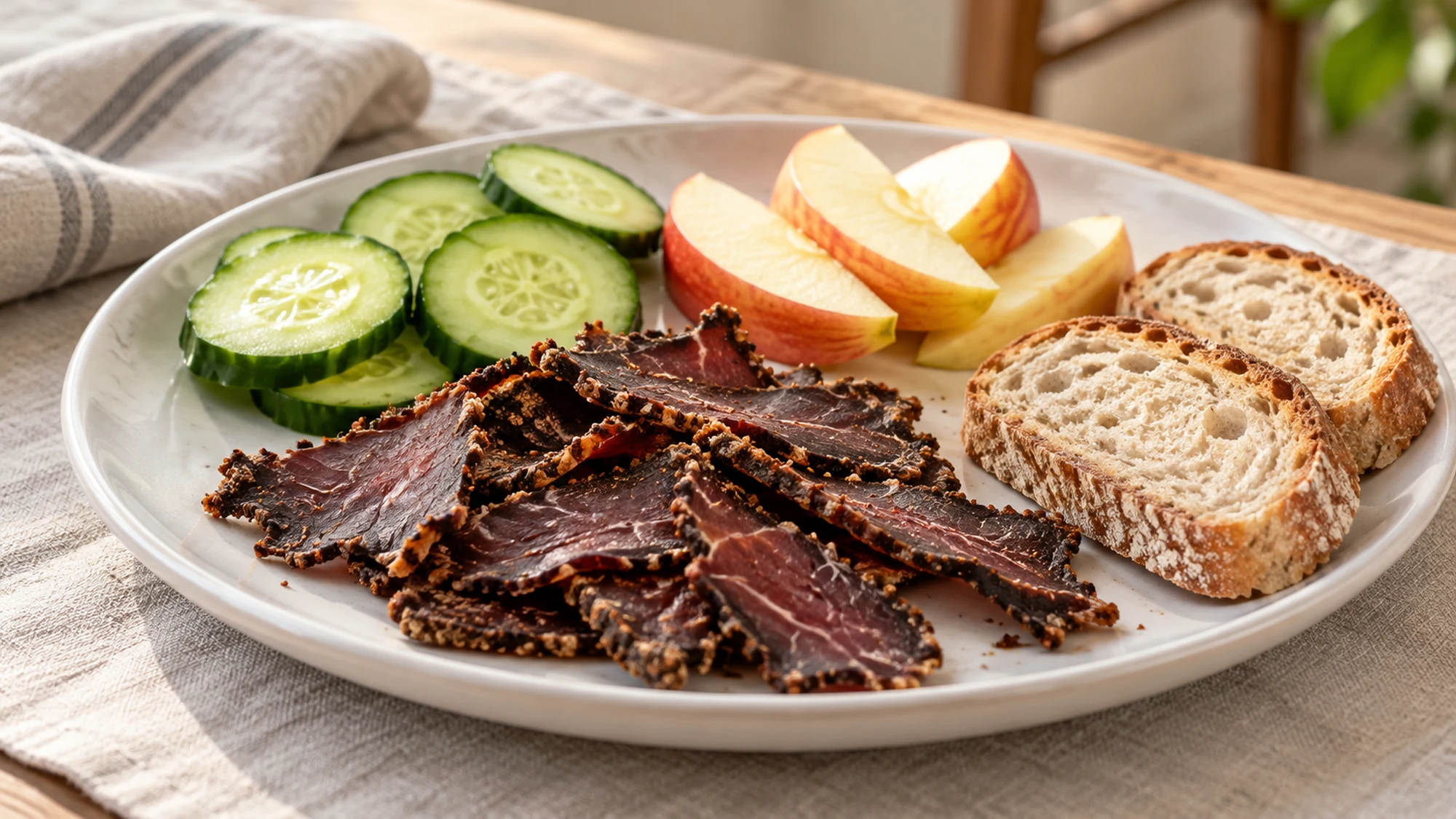
- Build a snack you enjoy: Add cucumber, apple or bread for contrast rather than treating the meat as a complete meal.
For a shared spread, the portioning idea in Recipes360’s charcuterie cups can be useful. Keep the biltong package available so guests can check its ingredients, and use separate utensils when allergy cross-contact is a concern.
Storage and Safety Depend on the Product
Unopened shelf stability and storage after opening are separate questions. Biltong.com’s FAQ recommends refrigerating opened biltong in an airtight container. NATIV specifies up to three to four refrigerated days after opening for its Original product; apply that instruction to that product rather than borrowing it for every brand.
Buy a package size you can use within its instructions. Keep the storage directions when transferring slices to a container, and mark the opening date. If directions are missing, ask the producer before assuming a moist, recently opened product belongs in the pantry.
- Follow any refrigeration requirement and the package’s after-opening limit.
- Keep utensils and containers clean, and close the package promptly.
- Do not use smell, appearance or a dry surface as proof that homemade dried meat is safe.
The smallgoods guidance emphasizes that a biltong process needs careful validation because safety depends on several controls working together. A video can explain the food, but it does not validate a home setup or replace tested preservation guidance.
Bottom Line
Choose biltong for the flavor and texture you enjoy, then let its actual label guide the rest. Compare portions, check seasonings and allergens, and follow the producer’s storage instructions after opening.
Sources
- Biltong Depot: Product FAQs
- AMIC: Guidelines for the Safe Manufacture of Smallgoods, 2025
- NATIV Foods: Original Biltong ingredients and storage
- Biltong.com.au: Ingredients and gluten FAQ
- Biltong.com: Storage FAQ

Hi, I’m Emily Pocker! I share recipes and food guides here at Recipes360 to help you find everyday meal inspiration and feel more confident in the kitchen. My goal is to make cooking approachable, enjoyable, and full of flavor.