
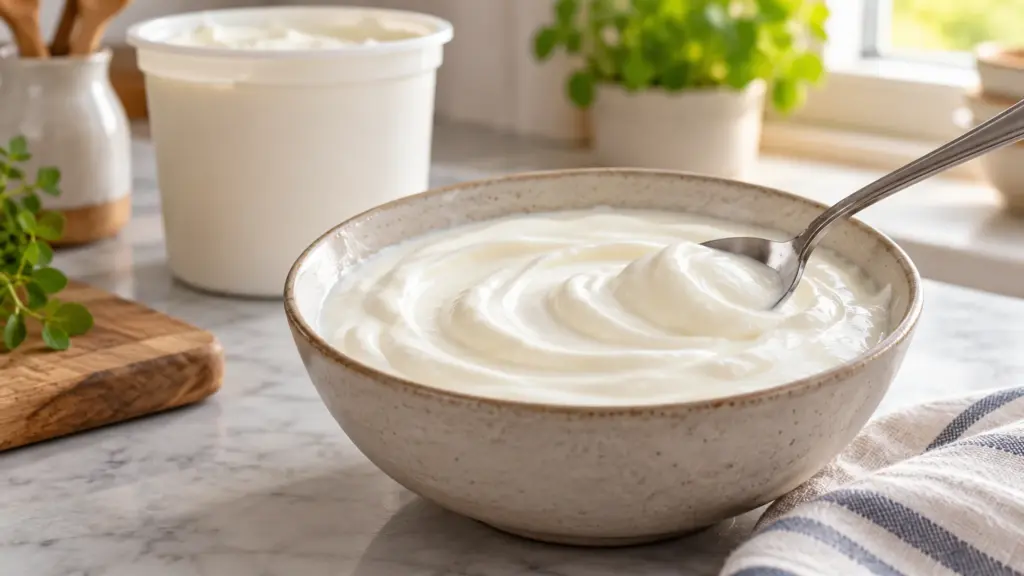
A tub of plain yogurt can go from breakfast to a savory sauce without a fruit flavor following it around. Its useful feature is flexibility: the tang and creamy texture can suit sweet or savory food. Choose the thickness and fat level for the job, rather than treating every plain tub as interchangeable.
Plain yogurt is unflavored yogurt, available in different fat levels and textures. It can contain naturally occurring milk sugar even with no added sugar. Match the label and consistency to how you will use it, and keep dairy yogurt refrigerated.
What plain yogurt tells you—and what it does not
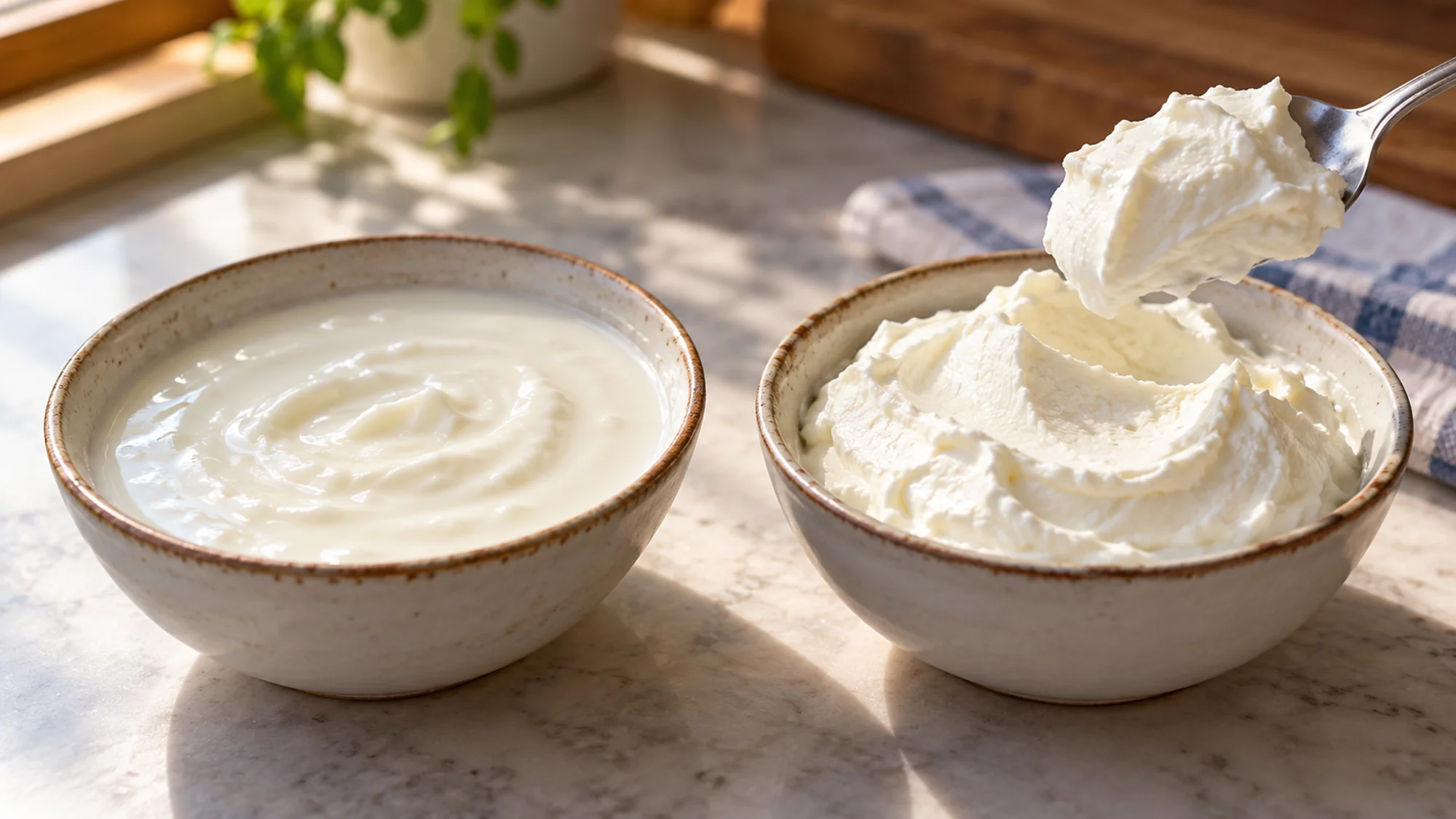
Plain describes the flavor, not a promise about fat, protein, lactose or ingredients. Conventional and strained yogurts may both be plain. A dairy-free yogurt alternative is a different product again; check its ingredients and nutrition rather than assuming it works exactly like a dairy yogurt.
For a concrete example, FAGE Total 5% lists 160 calories, 15 grams of protein, 5 grams of total sugar and zero added sugar per ¾ cup (170 grams). Those numbers describe that product and serving. They illustrate why no added sugar does not mean no sugar, and why a larger bowl needs a different calculation.
- Read the ingredient list if avoiding sweeteners or added flavorings.
- Check the stated serving before comparing protein or calories.
- Choose the fat level deliberately; plain does not automatically mean low fat.
- For a specific lactose concern, see our separate guide to lactose-free yogurt labels.
Match the texture to the job
I would choose a thicker strained yogurt for a spoonable topping or a dip that needs to hold its shape. A looser plain yogurt can be easier to stir into a dressing or spoon over a grain bowl. Neither texture is automatically better; the useful choice depends on what you want it to do.
Do not judge consistency by the word “plain” alone. Look for the product’s description, and consider any thickeners or other ingredients listed. If replacing yogurt in a recipe, match the named style where possible; changing water, fat and protein can change the result even when the swap looks similar in the bowl.
| Use | A helpful texture | What to watch |
|---|---|---|
| Spoonable topping | Thicker, strained yogurt | Tang and how firmly it sits |
| Pourable dressing | Looser yogurt or a suitably thinned mixture | Final consistency and seasoning |
| Breakfast bowl | Whichever texture you enjoy | What toppings add to the meal |
| Baking or a cooked recipe | The style specified by the recipe | A swap may change moisture and structure |
Choose texture for the task. A thick dip, a pourable dressing and a baked batter do not ask the same thing of a tub of yogurt.
Keep one tub useful across different meals
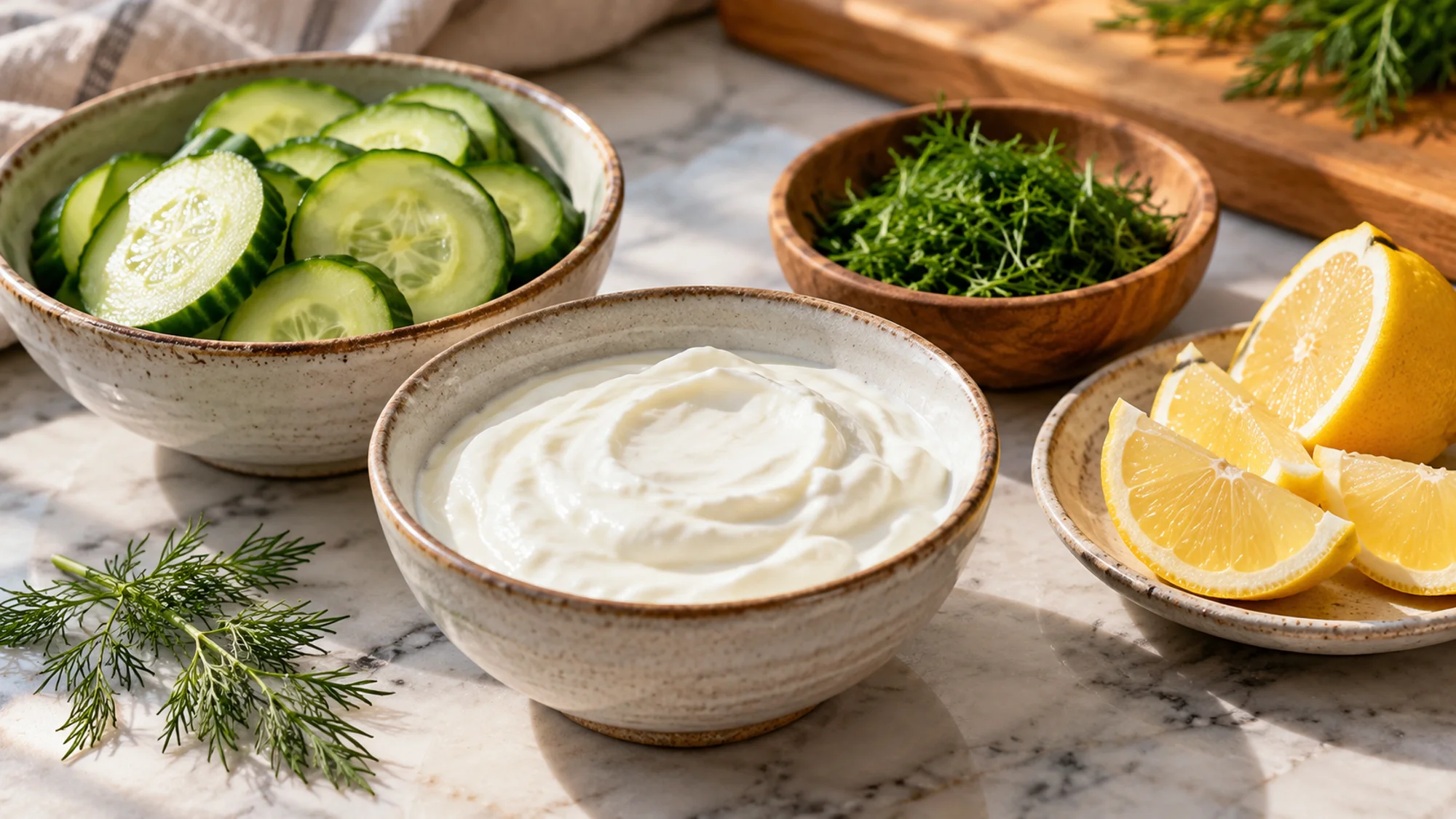
Start with the plain base and flavor the portion you are serving. Fruit and nuts can take breakfast in one direction; cucumber, herbs or lemon can take a savory accompaniment in another. I prefer adding those ingredients to a separate bowl so the rest of the tub remains available for a different meal.
The FDA’s label guidance is useful when comparing a plain base with a finished sweetened product: look at serving size, total sugar and added sugar rather than treating one front-label word as the whole decision. Honey, syrup and sugar added at home still contribute to the finished serving.
- Spoon out the amount needed with a clean utensil before adding flavorings.
- Taste before adding more acid or sweetness; the yogurt already has a tang.
- Use a recipe written for yogurt when baking or cooking rather than assuming a universal substitution ratio.
- Account for allergies in toppings, seasonings and the yogurt itself.
Keep it cold and read culture claims carefully

Plain dairy yogurt is perishable. FoodSafety.gov’s general guidance calls for refrigeration at 40°F or below and limits perishable food left out to two hours, or one hour above 90°F. Return the tub promptly and follow its manufacturer’s instructions for storage after opening, rather than applying one brand’s window to every product.
Stonyfield explains that some liquid whey separating on top can be normal. That is different from mold or other spoilage; do not taste an abnormal yogurt to investigate. Also, NIH notes that not all fermented foods with live cultures contain proven probiotic microorganisms. A culture claim alone does not establish a treatment benefit for a particular condition.
Bottom Line
Plain yogurt earns its place through versatility. Pick a texture and fat level that fit the food, compare nutrition using the stated serving, flavor portions separately and keep the tub cold. Enjoy it as an ingredient without expecting every culture claim to promise a health outcome.
America’s Test Kitchen compares regional styles of plain whole-milk yogurt in the video below. Its tasting discussion adds context about texture; the preferences are the presenters’ and do not replace your product label.
Sources
- FAGE: Total 5% ingredients and serving information
- FDA: Understanding Nutrition Facts
- Stonyfield: Storage and whey separation FAQ
- FoodSafety.gov: Keeping perishable foods cold
- NIH Office of Dietary Supplements: Probiotics

Hi, I’m Emily Pocker! I share recipes and food guides here at Recipes360 to help you find everyday meal inspiration and feel more confident in the kitchen. My goal is to make cooking approachable, enjoyable, and full of flavor.