
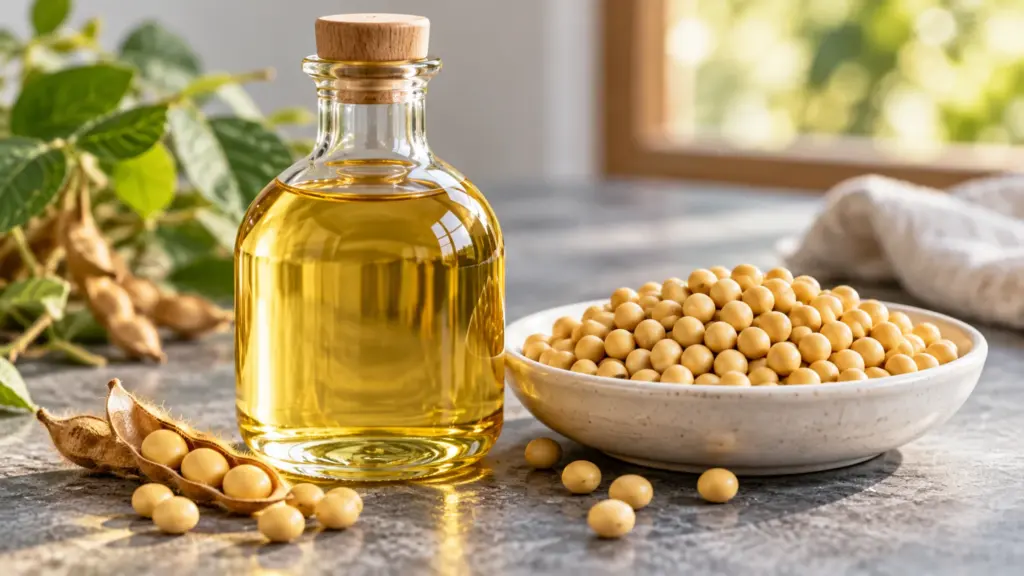
Turn a bottle of vegetable oil around and you may find soybean oil listed as its only ingredient. The familiar front label can make the specific oil easy to miss. What matters in the kitchen is the product’s flavor, processing and intended use—not whether the name sounds more complicated on the back.
Soybean oil is oil extracted from soybeans. Refined versions usually have a mild flavor that works in dressings, baking and everyday cooking. It is not nutritionally interchangeable with whole soybeans, and refined and unrefined oils need different consideration for soy allergy.
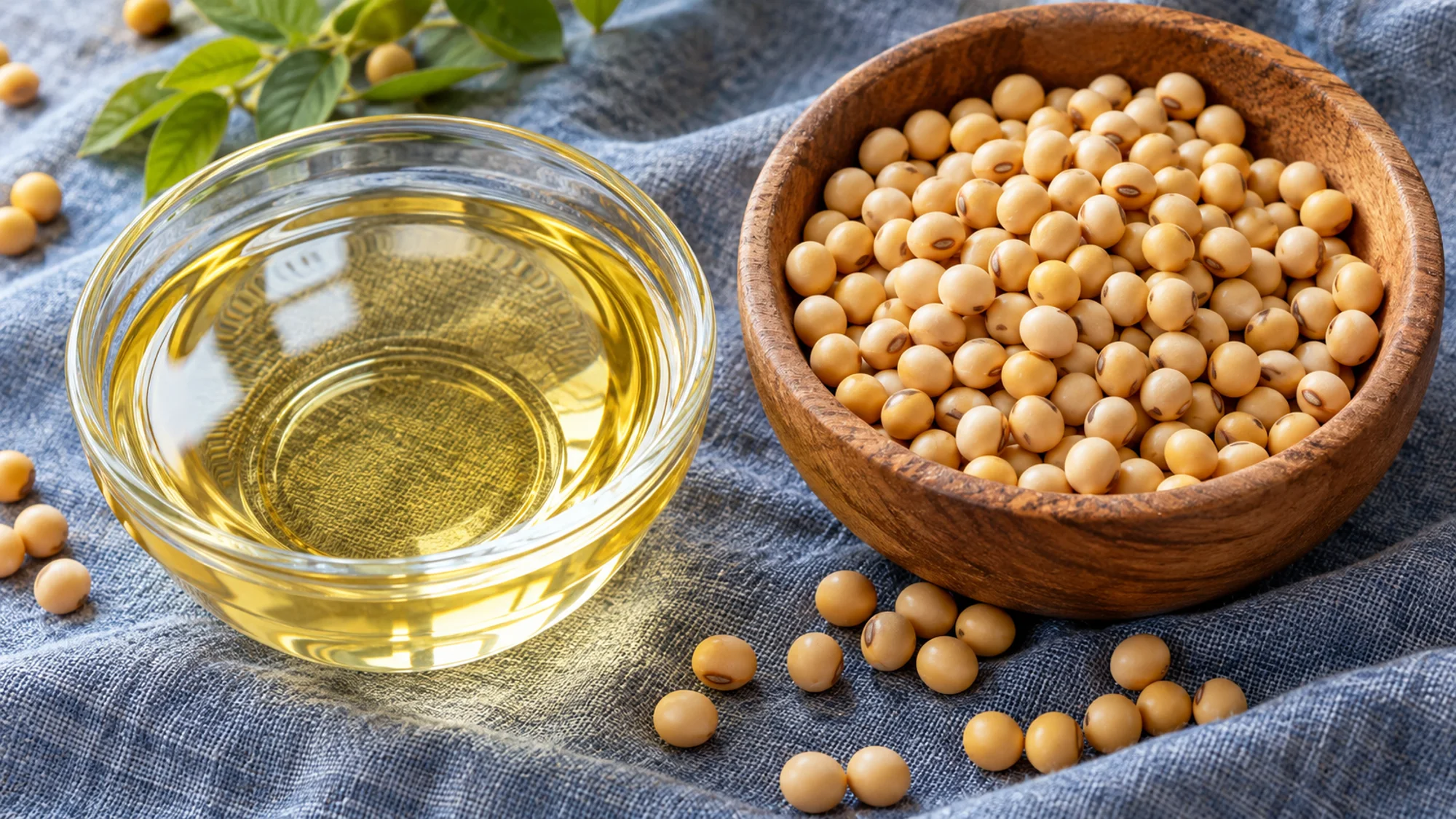
What Soybean Oil Is—and Is Not
Soybeans are seeds of a legume plant. Separating their oil produces a fat ingredient, not a substitute for the whole bean’s protein and fiber. A drizzle belongs in the cooking-fat part of a meal, even when its starting ingredient is also used to make tofu or edamame.
The industry organization U.S. Soy describes cleaning, dehulling and extracting oil, followed by refining for many commercial products. Mechanical pressing and solvent extraction are different routes. Processing language is useful, but it does not tell you everything about taste, cooking performance or the finished meal.
- Soybean oil: check whether the ingredient list names it alone or as part of a blend.
- Vegetable oil: a broad product name; read the ingredients rather than assuming every bottle is identical.
- High-oleic soybean oil: a distinct fatty-acid profile, not simply another name for conventional soybean oil.
- Whole soy foods: beans, tofu and related foods have a different nutritional role from extracted oil.
Choose Soybean Oil for the Job
I would choose a mild refined oil when I want the food—not the oil—to supply most of the flavor. Think lemon and herbs in a dressing, or the spices in an oil-based muffin batter. When an oil’s own peppery or nutty character is the point, a neutral product will not deliver that same effect.
| Kitchen task | Useful decision | Important limit |
|---|---|---|
| Salad dressing | Use a mild oil when other ingredients should stand out | Taste the finished dressing before adding more oil |
| Oil-based baking | Follow a recipe already designed for liquid fat | Butter-based creaming methods may not translate |
| Sautéing or roasting | Choose a cooking product and follow its label | Do not leave the pan heating unattended |
| Buying a blend | Compare the full ingredient list | Vegetable oil does not identify one fixed formula |
The word “refined” and the word “high-oleic” answer separate questions. For another example of why source and processing should not be mixed up, see our explanation of olive oil and seed-oil labels. I find that distinction more useful than trying to crown one bottle the winner of every kitchen task.

What the Nutrition Evidence Actually Says
The FDA’s soybean-oil review supports a qualified heart-health claim, with evidence described as supportive rather than conclusive. Its possible benefit concerns replacing a similar amount of saturated fat without increasing total calories. It is not a promise that adding oil prevents heart disease.
The American Heart Association includes soybean oil among liquid cooking-oil choices that offer more unsaturated and less saturated fat than many solid fats. The useful comparison is what replaces what across your meals, not whether an isolated ingredient has acquired a frightening nickname online.
- Consider the amount as well as the type: a free-handed pour and a measured quantity are different kitchen decisions.
- Do not transfer findings about whole soy foods directly to their extracted oil. They are different foods.
- A claim about one laboratory experiment, processing step or fatty acid does not by itself establish the health effect of your overall diet.
Ask what the oil replaces, how much you use and what else is on the plate. A single ingredient name cannot answer all three.
Allergy and Storage: Two Checks Worth Making
Soy allergy deserves product-specific advice. Health Canada distinguishes highly refined soybean oil from less-refined oils because refining greatly reduces residual protein. That distinction is not permission to assume every soy-derived oil is suitable for you; ask your allergy clinician which products fit your plan.
- Check the exact product: cold-pressed or unrefined soybean oil should not be treated as equivalent to highly refined oil for allergy decisions. Contact the manufacturer when processing details are unclear.
- Protect freshness: keep the cap closed and store the bottle away from light and heat; follow its storage instructions.
- Watch the pan: if oil starts smoking, stop heating it rather than treating smoke as an instruction to add food.
- Buy realistically: a smaller bottle can be the practical choice when you rarely use oil. Discard oil with an unpleasant, rancid smell.

Bottom Line
Soybean oil can be a useful, mild cooking fat. Read the ingredients, choose the right product for the task and use it thoughtfully. Keep allergy questions separate from general nutrition claims, and judge a meal by more than the name on its oil bottle.
Chef Ashok Nageshwaran discusses soybean oil’s mild flavor in this short, landscape-format U.S. Soy video. It is industry-produced culinary commentary, not independent medical advice.
Sources
- U.S. Soy: oil extraction and culinary uses
- FDA: soybean-oil qualified health-claim review
- American Heart Association: cooking-oil guidance
- Health Canada: refined oils and food allergens

Hi, I’m Emily Pocker! I share recipes and food guides here at Recipes360 to help you find everyday meal inspiration and feel more confident in the kitchen. My goal is to make cooking approachable, enjoyable, and full of flavor.