
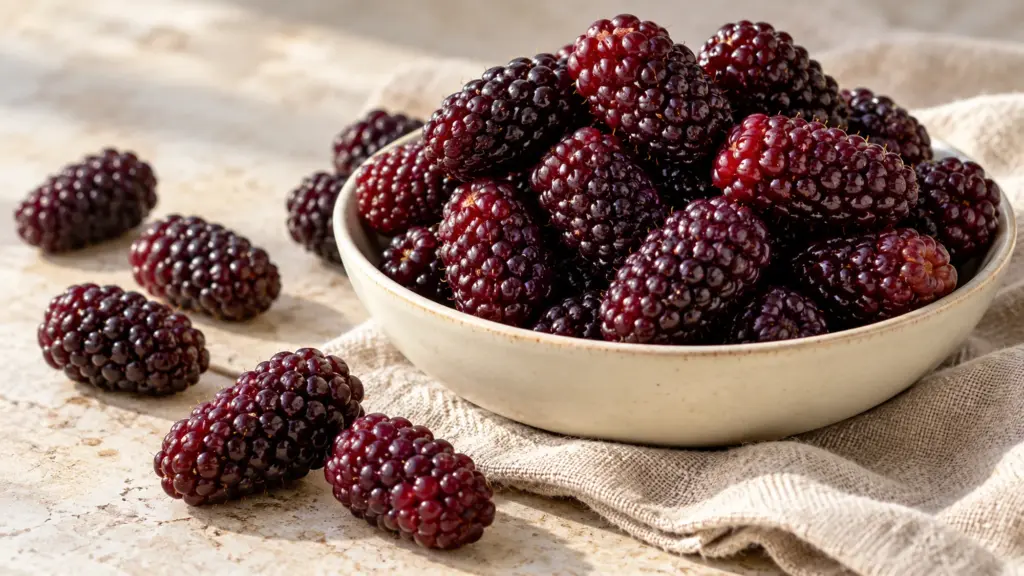
A boysenberry can look like an oversized blackberry, but its soft skin and deep maroon color give it a character of its own. This juicy hybrid caneberry can be eaten fresh or used in pies, sauces and preserves. The immediate task is simpler than its family history: handle it gently and use it while it is in good condition.
Boysenberry is a soft, juicy berry related to blackberries and raspberries. Refrigerate fresh fruit, wash it just before use, and freeze sound berries promptly if you cannot use them soon. Fresh fruit, frozen fruit and boysenberry jam serve different purposes.
What Is Boysenberry?
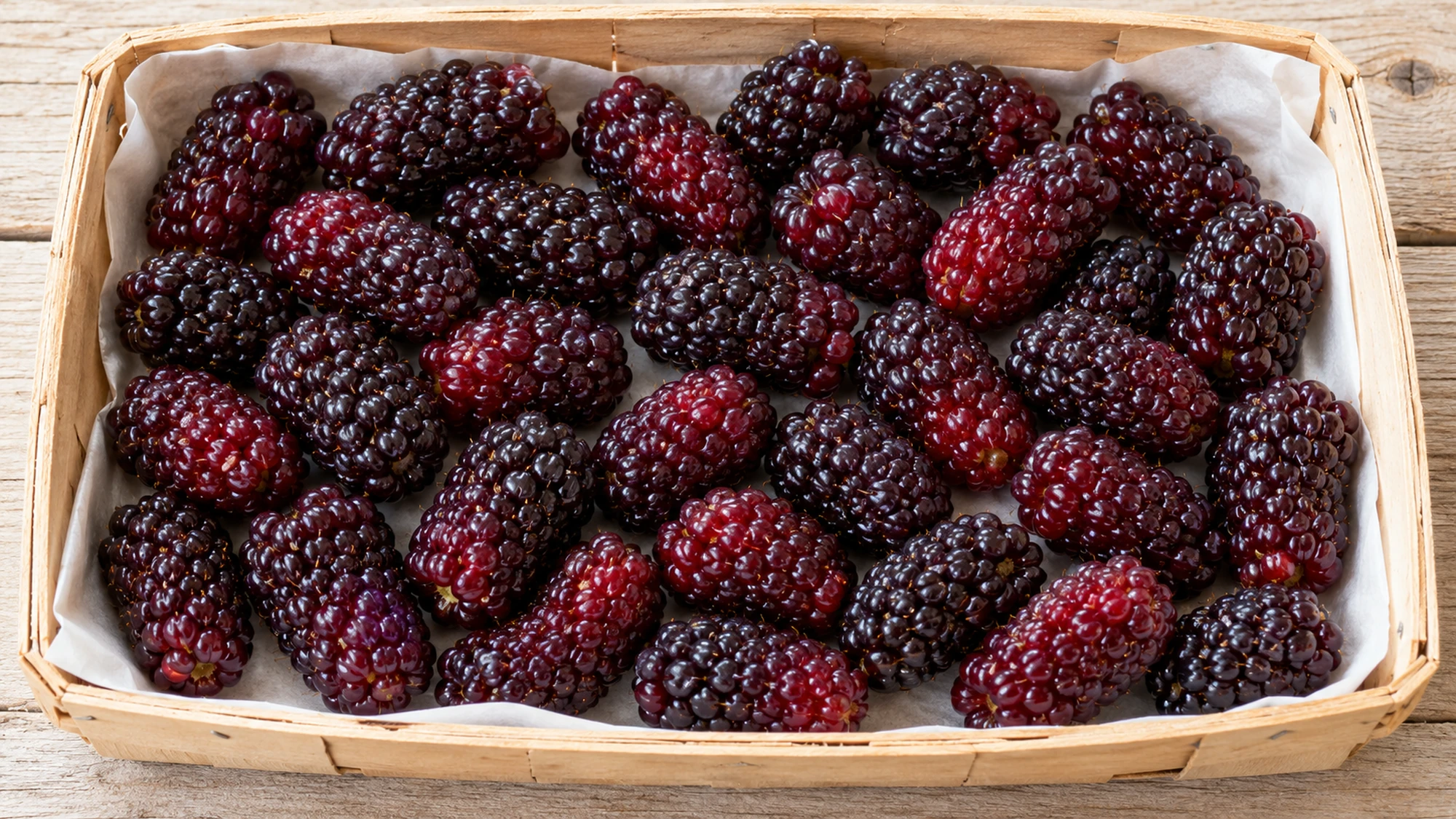
Oregon State University groups ‘Boysen’ with trailing blackberry hybrids. The Oregon Raspberry and Blackberry Commission describes boysenberries as large, deep maroon fruit with soft, thin skin. They have seeds; a seedless spread has been processed differently from a bowl of whole berries.
You will often see a tidy list of berries in its family tree, but the Commission notes that its exact parentage is unknown. Calling it a hybrid is more dependable than treating one detailed ancestry story as settled. The Royal Horticultural Society describes a wild-blackberry-like flavor in the juicy dark fruit.
- Expect juiciness: Soft fruit can release color onto a plate or into yogurt.
- Expect variation: Ripeness and condition affect sweetness and sharpness.
- Read product names: Boysenberry-flavored food and whole boysenberries are different purchases.
Choosing and Washing Fresh Boysenberries
Look for sound fruit that is not leaking, crushed or moldy. Check the bottom of a container when possible, since pressure can damage the berries underneath. Buy an amount you can use promptly rather than assuming the deepest container is the better value.
The FDA’s produce guidance recommends choosing undamaged produce and washing it under running water. Use clean hands and utensils, keep the berries away from raw meat and its juices, and skip soap or commercial produce wash. Gently drain the fruit without scrubbing the tender skin.
- Keep the berries cool on the trip home and refrigerate promptly.
- Wait to wash until you are ready to eat or prepare them.
- Remove spoiled fruit and inspect the remaining berries carefully.
- Use a shallow container and avoid piling heavy food on top.
My preference would be to reserve the best-looking berries for a simple bowl or topping. Sound fruit that has lost a little shape can suit a cooked dish, but cooking is not a way to make moldy or rotten fruit acceptable.
Match the Form to Your Boysenberry Dish
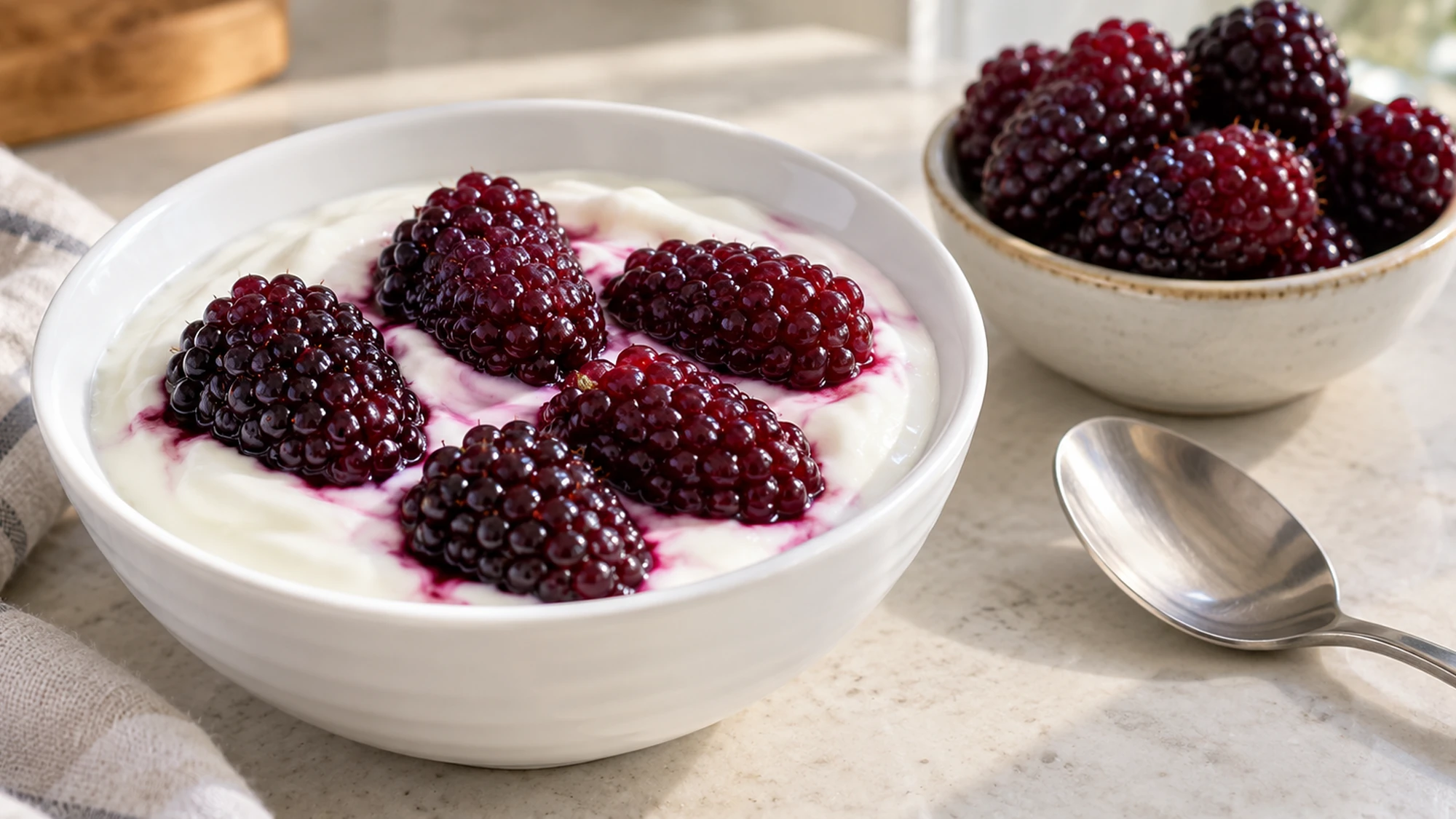
Fresh berries make sense when their shape matters. Frozen berries are useful when you want the flavor in a cooked filling or sauce and can accommodate their juice. Jam supplies a prepared spread, often with added sugar, so it cannot simply replace whole fruit in every recipe.
| Form | Useful starting point | Watch for |
|---|---|---|
| Fresh whole berries | Yogurt, fruit plate or dessert topping | Fragile shape and released juice |
| Frozen whole berries | Cooked filling, sauce or smoothie | Thawing and cooking directions |
| Purée | Fruit sauce or a recipe calling for purée | Seeds, added sugar and thickness |
| Jam or preserves | Toast or a specified filling | Sugar, set and opening instructions |
For a first taste, I’d keep the accompaniment mild: plain yogurt, oatmeal or a small piece of simple cake. Add sweetener only after tasting the fruit. If you are baking, follow a recipe’s fruit and thickener directions instead of guessing how much juice it will release.
Refrigerating and Freezing Boysenberries
OSU’s berry-preservation guidance says picked berries lose freshness quickly in heat and advises refrigeration, with washing delayed until use. Keep the refrigerator at 40°F/4°C or below. Check the fruit daily rather than treating a storage estimate as a guarantee of condition.
For longer storage, OSU recommends freezing washed, well-drained berries separately before packing them. Its broader freezing guidance notes that freezing does not kill most microorganisms, so safe handling still matters. Use freezer packaging that protects against air and moisture.
- Sort sound berries, rinse gently and drain well.
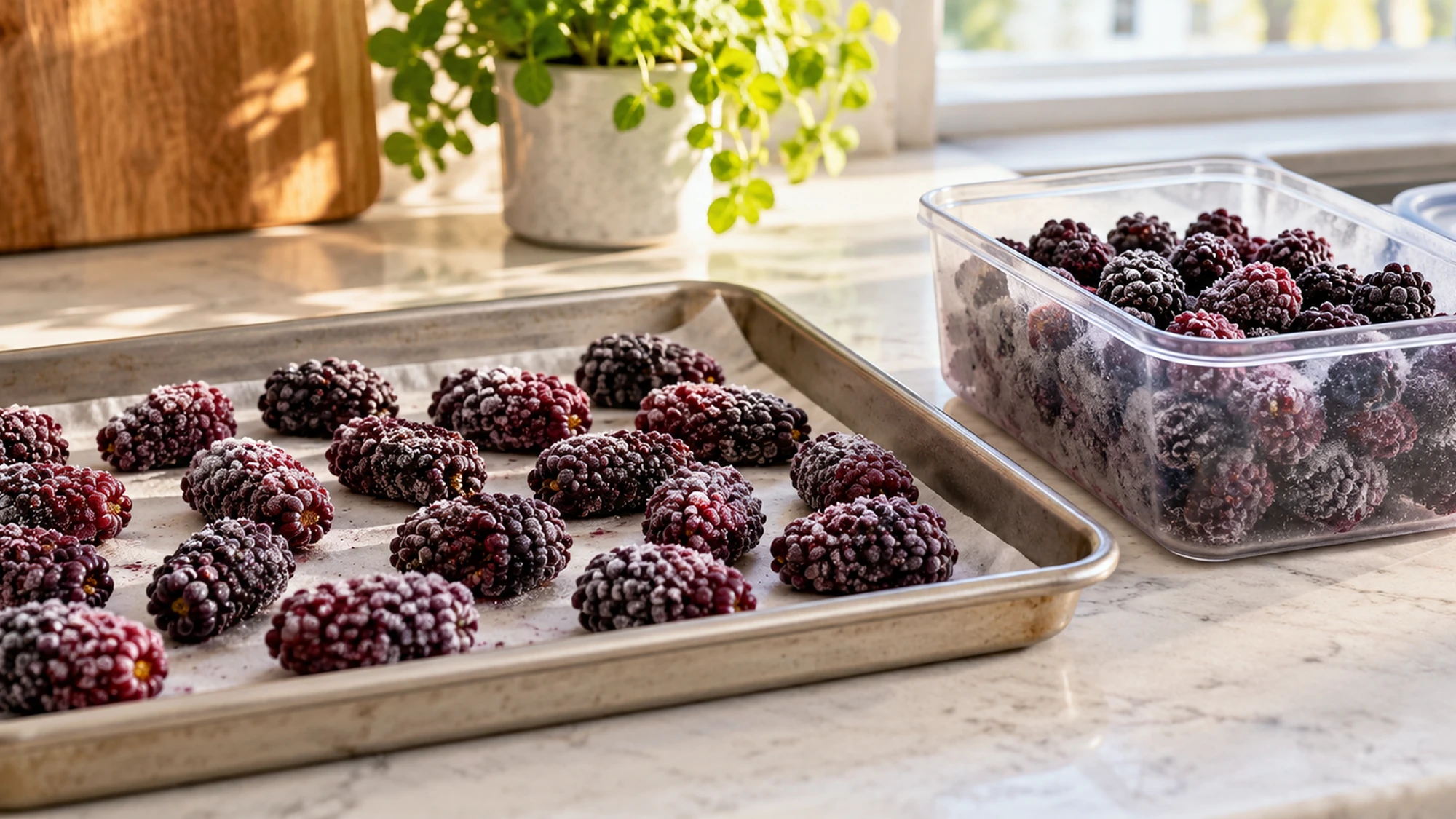
- Spread them in one layer on a tray and freeze until firm.
- Transfer to freezer bags or suitable containers; label with the fruit name and date.
- Store at 0°F/−18°C or below. Thaw in the refrigerator when needed.
Frozen fruit may be softer after thawing, so plan for a topping, filling or sauce when a pristine whole berry is less important. Follow package cooking directions for purchased frozen fruit. For shelf-stable jam or canned fruit, use a tested preservation recipe rather than improvising the process.
Bottom Line
Enjoy boysenberry for its juicy flavor and tender texture. Choose sound fruit, keep it refrigerated, wash gently before use, and freeze extra berries while they are still in good condition.
Sources
- Oregon Raspberry and Blackberry Commission: Boysenberry
- Oregon State University: Raspberries and blackberries
- RHS: Blackberries and hybrid berries
- FDA: Selecting and serving produce safely
- OSU: Preserving berries
- OSU: Freezing fruits and vegetables

Hi, I’m Emily Pocker! I share recipes and food guides here at Recipes360 to help you find everyday meal inspiration and feel more confident in the kitchen. My goal is to make cooking approachable, enjoyable, and full of flavor.