
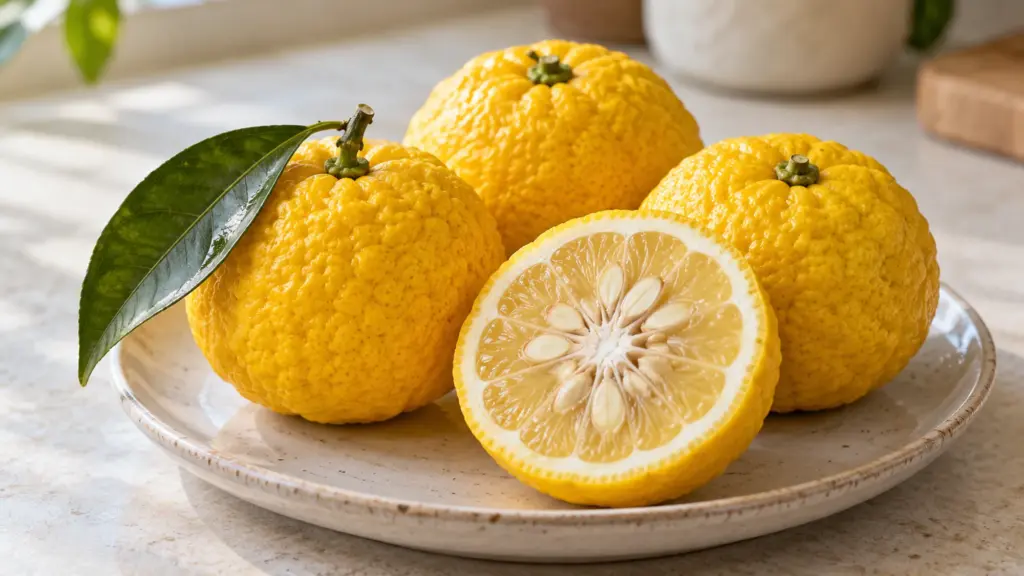
A bumpy yellow citrus fruit can look as though it belongs in the orange bowl, but yuzu fruit has a different job. Its appeal is the fragrant peel and sharp juice rather than a handful of sweet segments. If you have bought one without a plan, think of it as a finishing ingredient: a little can change a familiar bowl of rice, a dressing, or a simple dessert.
Yuzu is an aromatic, tart citrus used mainly for its zest and juice. Zest it before squeezing, strain out the seeds, and add a little at a time so its fragrance complements the food.
What makes yuzu fruit different?
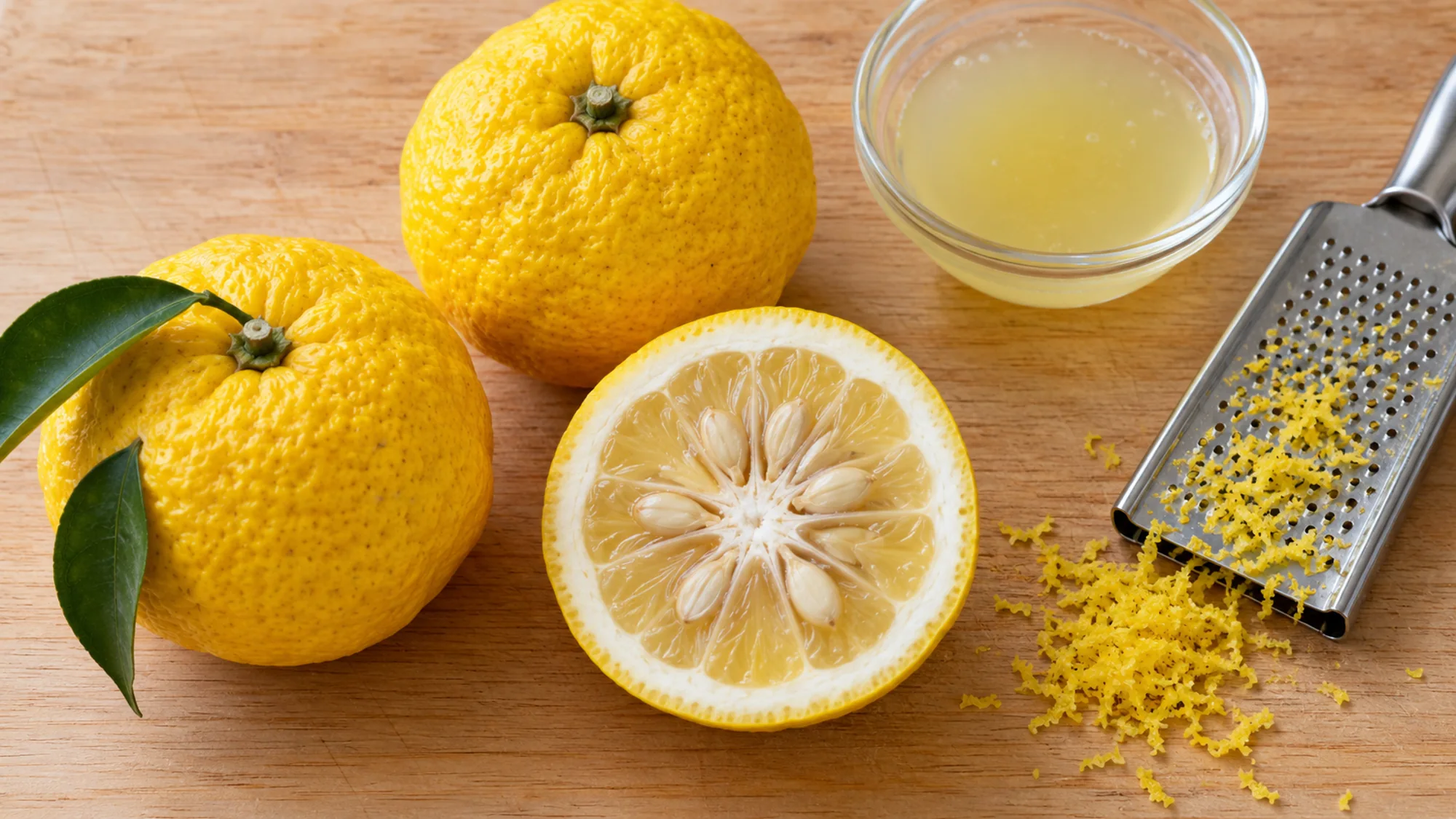
The University of California, Riverside Citrus Variety Collection describes yuzu as a papeda–mandarin hybrid with a rough rind, very acidic flesh, and numerous seeds. That explains the practical surprise when you cut one open: quite a lot of fruit is devoted to rind and seeds, not a generous pool of juice. Do not judge it by how well it squeezes compared with a lemon.
Green and ripe yellow yuzu both have culinary uses. The Japan External Trade Organization emphasizes the aroma of the peel and the fruit’s role as a seasoning in Japanese cooking. I would treat the zest as the main attraction when a dish needs fragrance without much extra liquid.
Lemon or lime can supply tartness when yuzu is unavailable, but neither reproduces its aroma exactly. For an everyday dressing, that substitution may be perfectly useful. For a dessert built around yuzu, changing the citrus changes the dessert; describe the result honestly rather than promising an identical flavor.
Choose the right form for your dish
Fresh fruit gives you both peel and juice. A bottle is convenient when you need juice alone, but read the ingredient list before buying: pure juice, sweetened drinks, and seasoned sauces do different jobs. The word yuzu on the front is not enough to tell you which one you have.
| Form | Useful for | Check before using |
|---|---|---|
| Fresh yuzu | Zest, finishing juice, fragrant garnish | Sound rind and no mold or soft, leaking areas |
| Unsweetened yuzu juice | Dressings and recipes calling for juice | Whether it is pure juice or a blend |
| Yuzu ponzu | A savory dipping or finishing sauce | Soy sauce, salt, and possible wheat or fish ingredients |
| Yuzu kosho | A small amount of spicy citrus seasoning | Chili and salt; it is not plain zest |
| Sweetened yuzu products | Drinks and desserts | Added sugar and the intended dilution |
My preference is the simplest product that matches the job, not necessarily the most expensive bottle. If you need to avoid wheat, our guide to soy sauce and gluten-free choices explains why the exact label matters. A citrus name does not make a mixed sauce allergen-free.
Use the peel first, then the juice
Wash the whole fruit under running water and dry it before zesting. The FDA’s produce-cleaning guidance recommends washing before cutting, even when the peel will not be eaten; do not use soap. A fine grater makes it easier to take the colored outer layer without digging deeply into the white pith.
Zest before cutting because a whole fruit is easier to hold. Then halve it and squeeze through a small strainer to catch the seeds. Kikkoman’s culinary glossary describes using thinly grated peel in soups and savory custards, and the juice in dressings and ponzu.
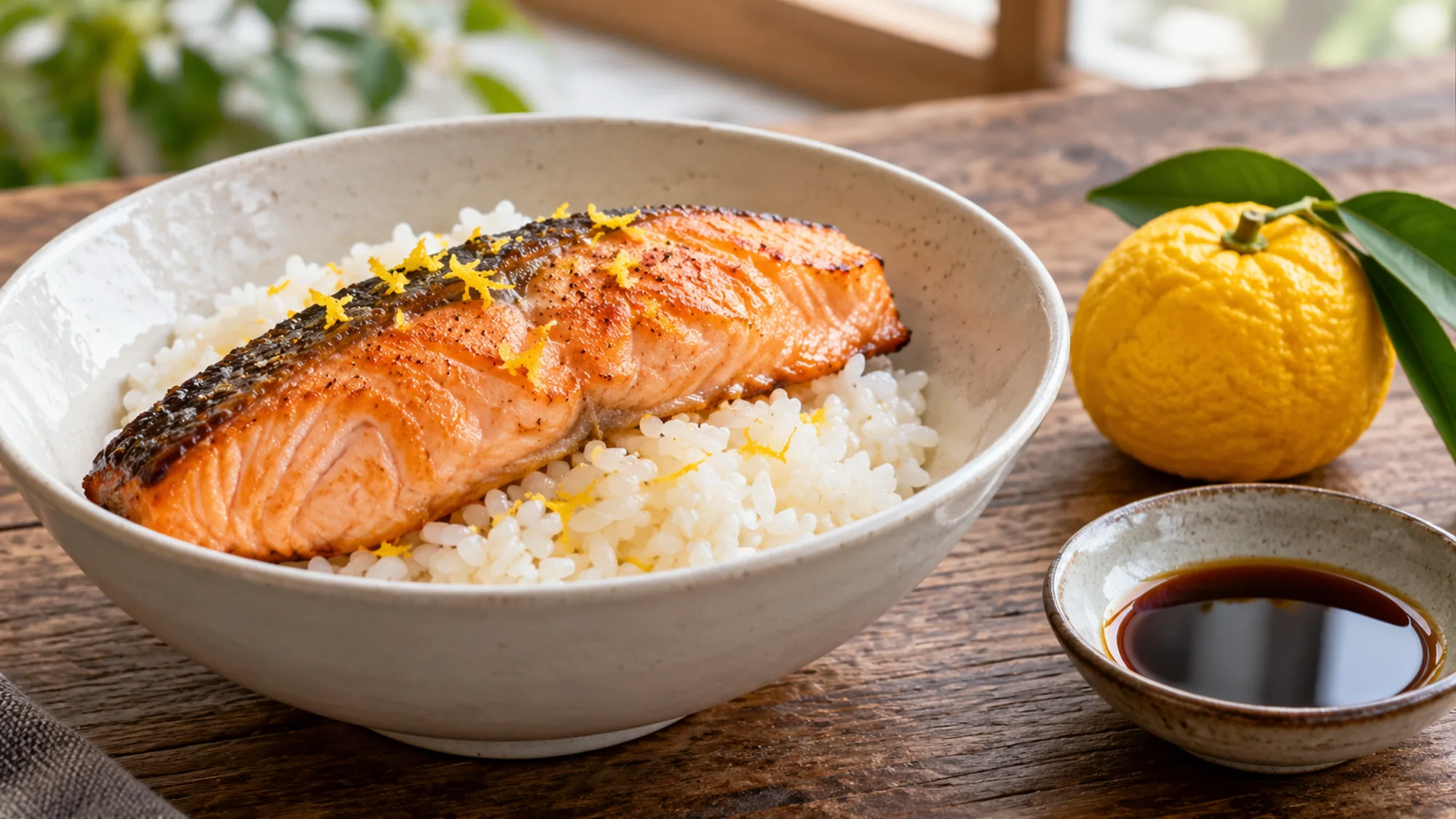
For a first try, I would finish cooked fish, rice, or vegetables with a light scattering of zest, then taste before adding juice. Stir a little juice into an already balanced dressing rather than pouring it over everything. In sweet dishes, start with a recipe designed for citrus: extra liquid and acid can change how a filling sets. Yuzu should bring a clear note, not make the rest of dinner disappear.
Keep the fragrance from going to waste
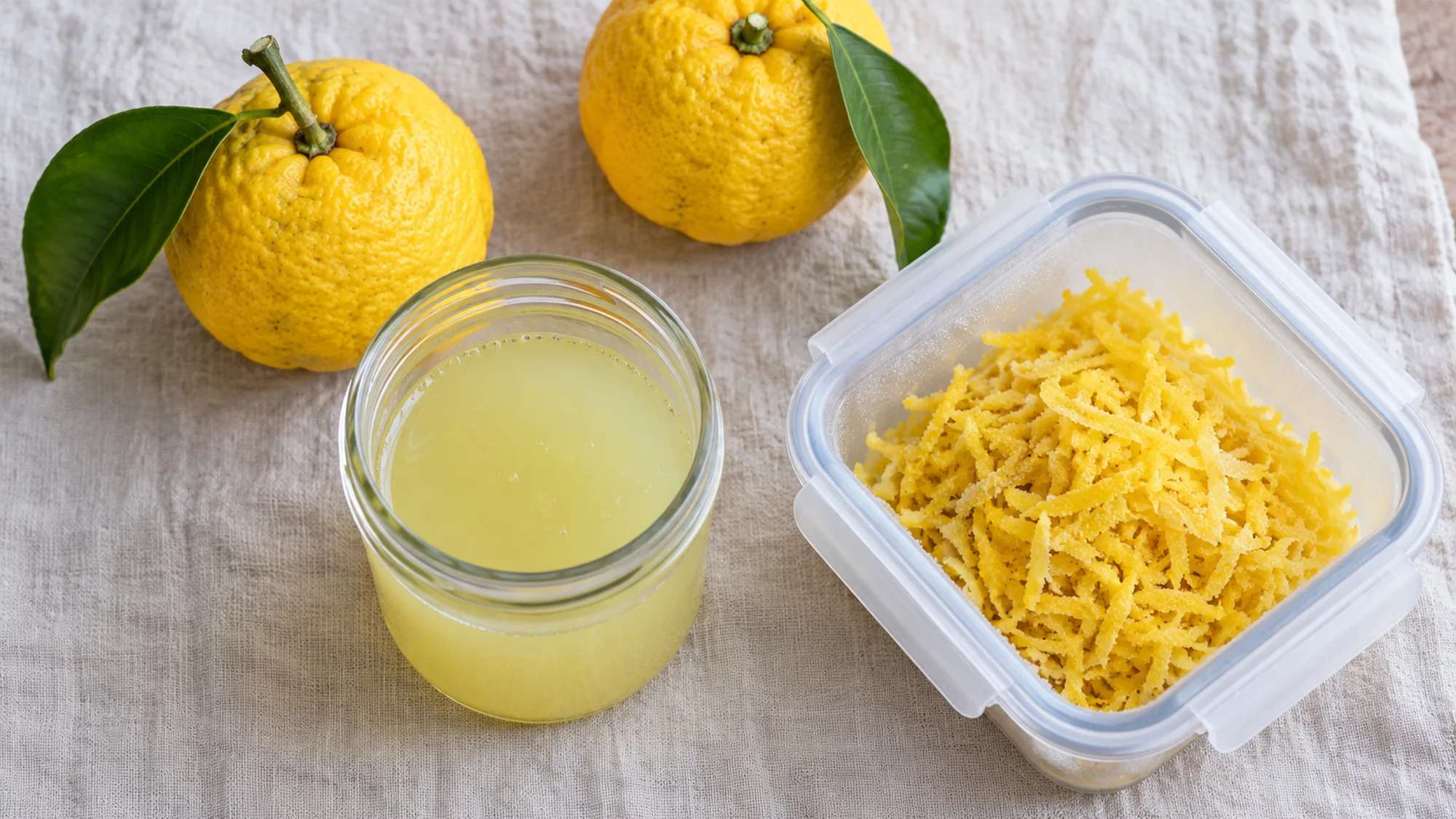
Buy only what you expect to use soon. Kikkoman suggests refrigerating whole yuzu wrapped in kitchen paper inside a plastic bag, with up to ten days as a storage guide. That is not a guarantee for bruised or deteriorating fruit. Check it before use and discard fruit with mold or obvious spoilage.
Keep bottled products according to their own labels, especially after opening. For leftover fresh zest or juice, small covered freezer portions are more convenient than one large block; label them so you know what you saved. Freezing is a way to preserve an ingredient for later cooking, not a way to rescue spoiled fruit.
Bottom Line
Use yuzu for the job it does best: adding aromatic citrus character in small amounts. Choose fresh fruit when you want the peel, unsweetened juice when you need acidity, and a seasoned product only when its other ingredients belong in the dish. Zest first, taste as you go, and keep the leftovers covered and cold.
For a look at the fruit before it reaches the kitchen, this Eater film visits Bhumi Growers and shows its yuzu-growing operation.
Sources
UC Riverside: Yuzu ichandrin
JETRO: Yuzu culinary uses
Kikkoman: Yuzu preparation and storage
FDA: Cleaning fruits and vegetables

Hi, I’m Emily Pocker! I share recipes and food guides here at Recipes360 to help you find everyday meal inspiration and feel more confident in the kitchen. My goal is to make cooking approachable, enjoyable, and full of flavor.