
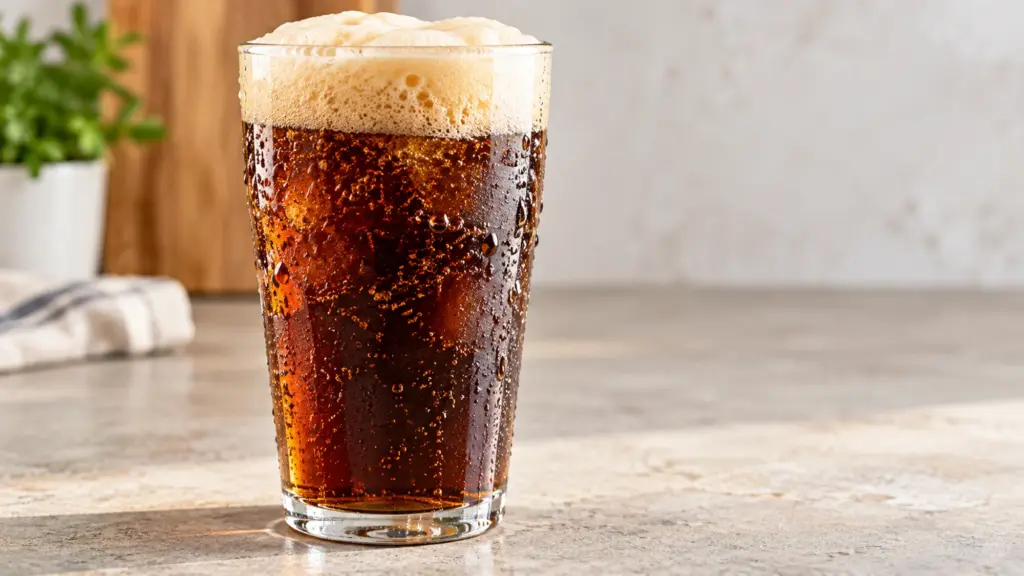
A frosty root beer looks like a caffeine-free choice, right up until you turn the can around. Does root beer have caffeine? Sometimes—and the answer can change between two versions carrying the very same brand name.
Some root beers are caffeine-free, but regular U.S. Barq’s contains 22 milligrams per 12 fluid ounces. Check the exact product, not just the words “root beer.”
I’d rather spend ten seconds checking a label than guess from the color of a drink. Here’s how to compare familiar options, work out your portion, and order a float without overlooking what went into the glass.
Does Root Beer Have Caffeine? Compare the Exact Version
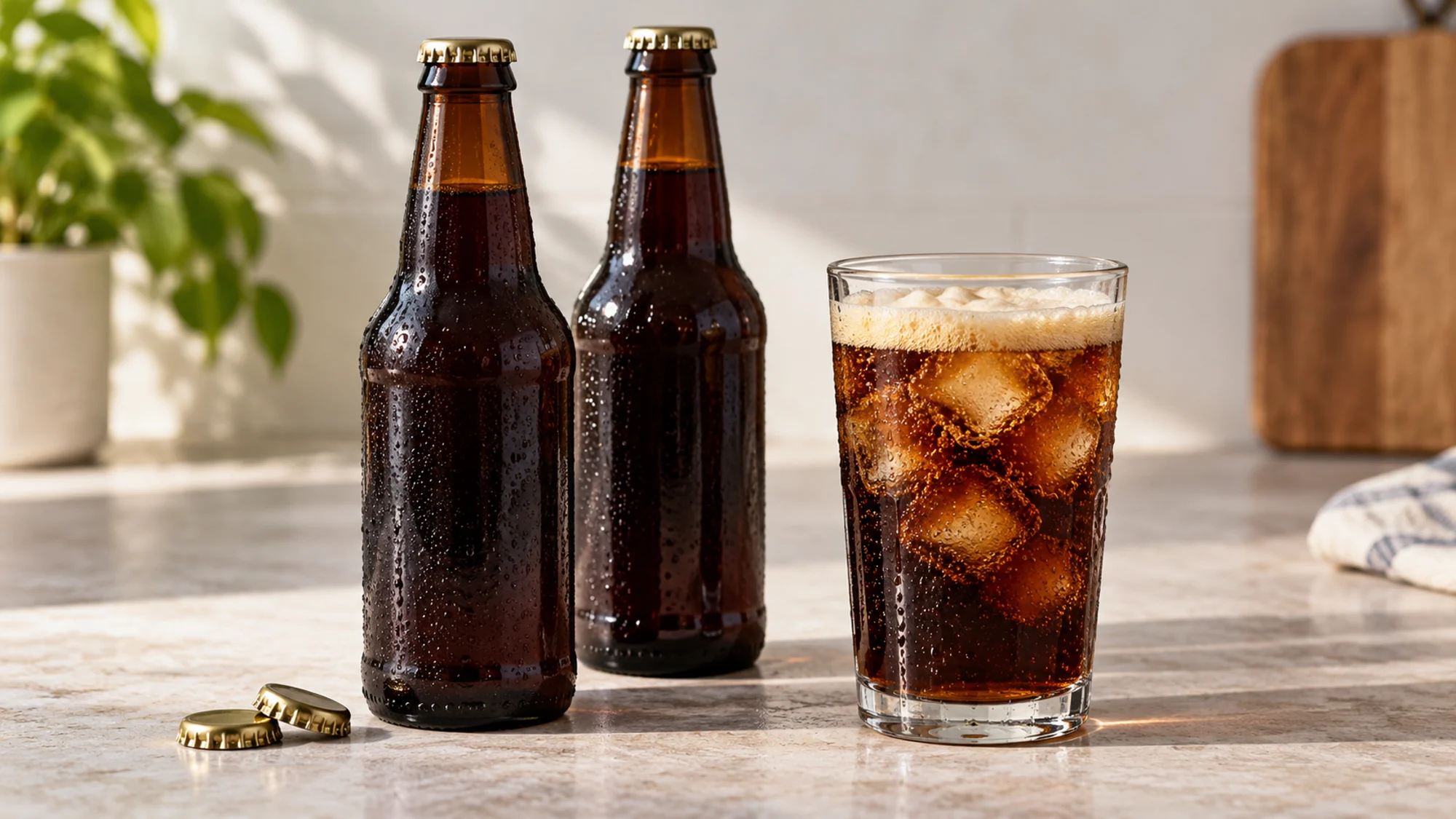
Coca-Cola’s U.S. Barq’s product information lists caffeine in regular root beer and gives 22 mg per 12 fl oz. The same official page describes Barq’s Zero Sugar Root Beer as caffeine-free. Sugar content and caffeine content are separate details; one does not reliably predict the other.
PepsiCo’s Mug FAQ says Mug root beer products are caffeine-free. These are product-specific answers, not a promise about every regional brand, restaurant pour, or root-beer-flavored energy drink.
| Product checked | Caffeine information | What to verify |
|---|---|---|
| Regular U.S. Barq’s root beer | 22 mg per 12 fl oz | Exact package and portion |
| Barq’s Zero Sugar Root Beer | Caffeine-free | The Zero Sugar version |
| Mug root beer | Manufacturer says caffeine-free | Product name on the label |
| Unfamiliar craft or fountain drink | Do not assume | Ask for the actual product information |
The table covers the named U.S. products, not every market or future formulation. A similar-looking label is not enough when avoiding caffeine matters to you. For an unfamiliar bottle, use the manufacturer’s current information rather than carrying over a number from another brand.
Read Beyond the Front of the Can
Start with any caffeine-free statement, then read the ingredients and serving size. The FDA’s caffeine guidance explains that added stand-alone caffeine must appear in the ingredient list, while the amount is often disclosed voluntarily. A caffeine-containing ingredient can also bring caffeine without a separate “caffeine” entry.
Look for a milligram amount per serving or container, and check whether the package holds more than the serving described. If the label leaves your question unanswered, contact the manufacturer with the full product name and package size. That is more useful than a broad question about all root beer.
Read the version, ingredients, and serving size together. “Zero sugar,” “diet,” and “craft” are not substitutes for a caffeine-free statement.
Your Pour Changes the Caffeine Total
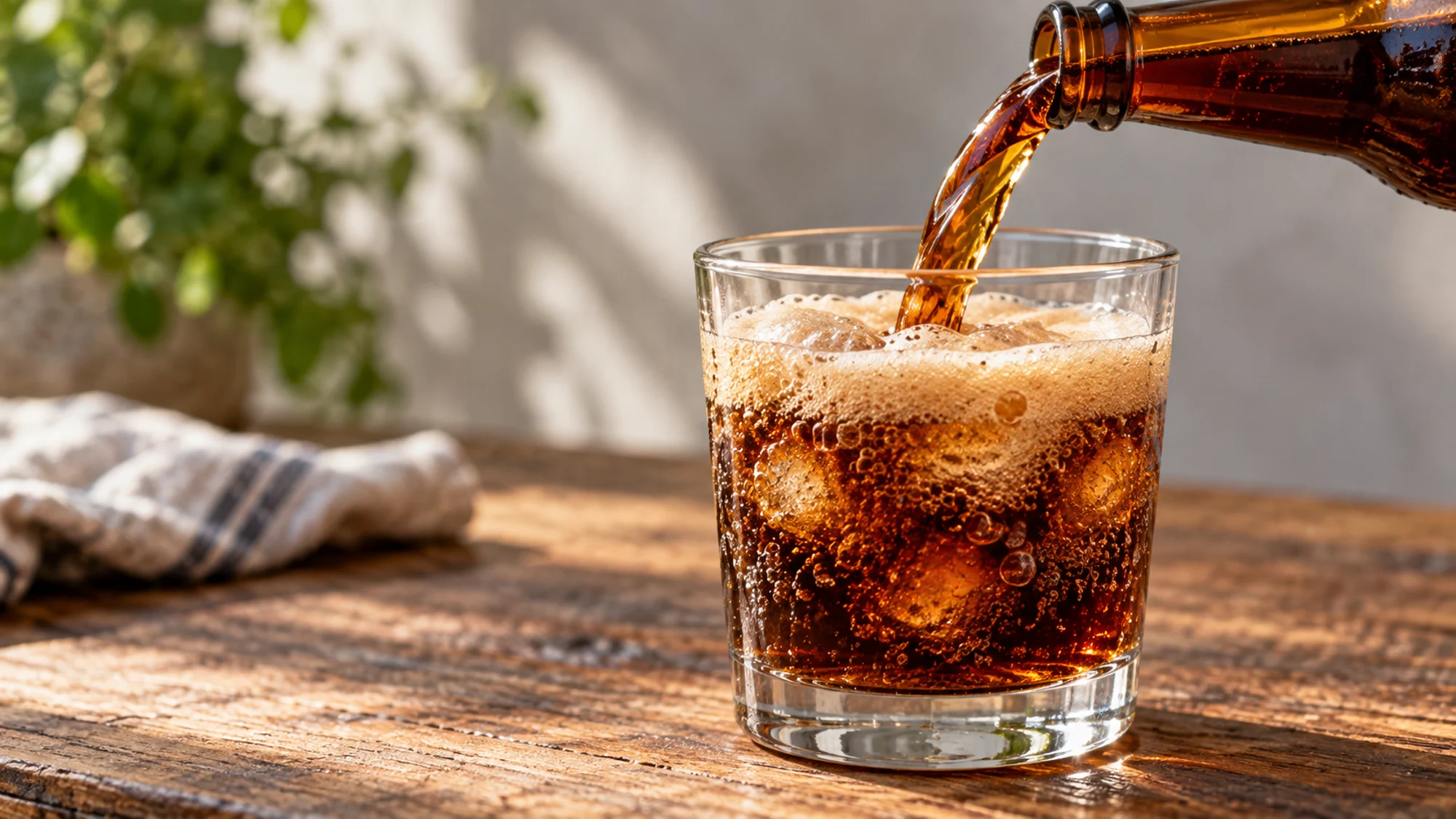
For the regular Barq’s formula listed above, a 6-fl-oz portion contains about 11 mg; two 12-fl-oz cans contain 44 mg. Those are simple calculations from the manufacturer’s figure, not separate laboratory measurements. They do not establish the content of a differently formulated drink.
Ice makes a cup look full without telling you the amount of soda inside. I prefer measuring the soda before adding it to a float when a specific portion matters. A large restaurant cup, repeated refills, and a small glass at home can represent very different amounts.
At a fountain, ask which syrup or product is being served and whether caffeine information is available. If staff cannot confirm it and you need to avoid caffeine, choose a clearly identified alternative rather than treating an uncertain answer as zero.
Floats, Evening Drinks, and Other Sources
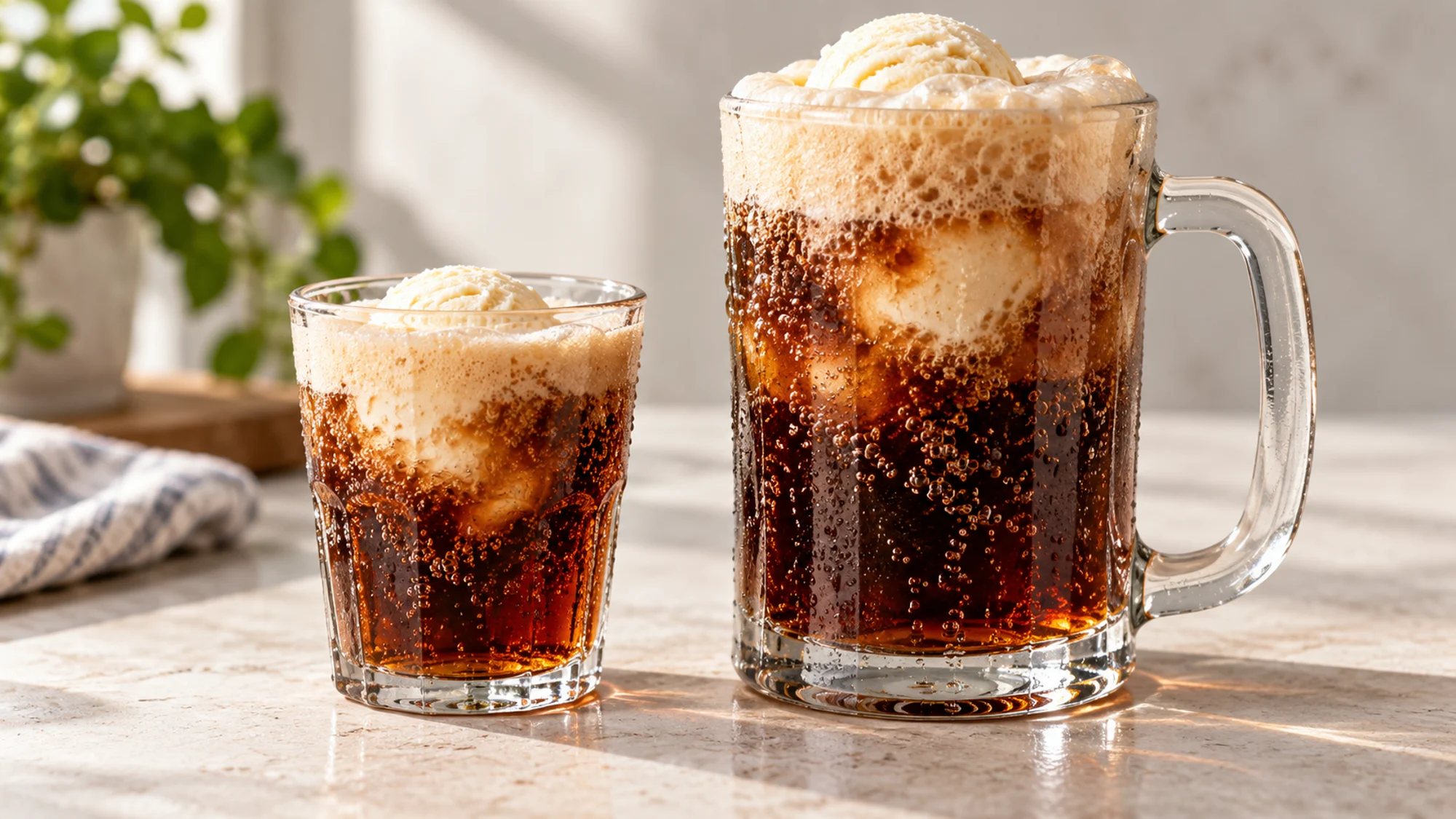
Adding vanilla ice cream does not remove caffeine already in the soda. Coffee or chocolate ice cream can introduce another source, so a caffeine-free base alone does not settle the question for every float. Check the ice cream and toppings separately, especially when serving someone with a specific restriction.
Caffeine sensitivity differs, and a number that seems modest to one person may not suit another. Consider coffee, tea, supplements, and other drinks across the day rather than judging the root beer in isolation. Ask a health professional for individualized advice if pregnancy, medication, or a medical condition affects your choices.
My practical choice for a caffeine-free dessert would be a clearly labeled caffeine-free soda with toppings checked individually. It keeps the decision simple without turning a treat into a guessing game. And caffeine-free does not mean sugar-free: those are two different label checks. Our Coke Zero caffeine guide explains the same distinction for another familiar soda.
Bottom Line
Choose by the exact label. Regular U.S. Barq’s has caffeine; the listed Zero Sugar version and Mug root beer are caffeine-free. When the product or portion is uncertain, verify before pouring.
Sources
Coca-Cola: Barq’s U.S. products; PepsiCo: Mug caffeine FAQ; FDA: caffeine and product labels.

Hi, I’m Emily Pocker! I share recipes and food guides here at Recipes360 to help you find everyday meal inspiration and feel more confident in the kitchen. My goal is to make cooking approachable, enjoyable, and full of flavor.