
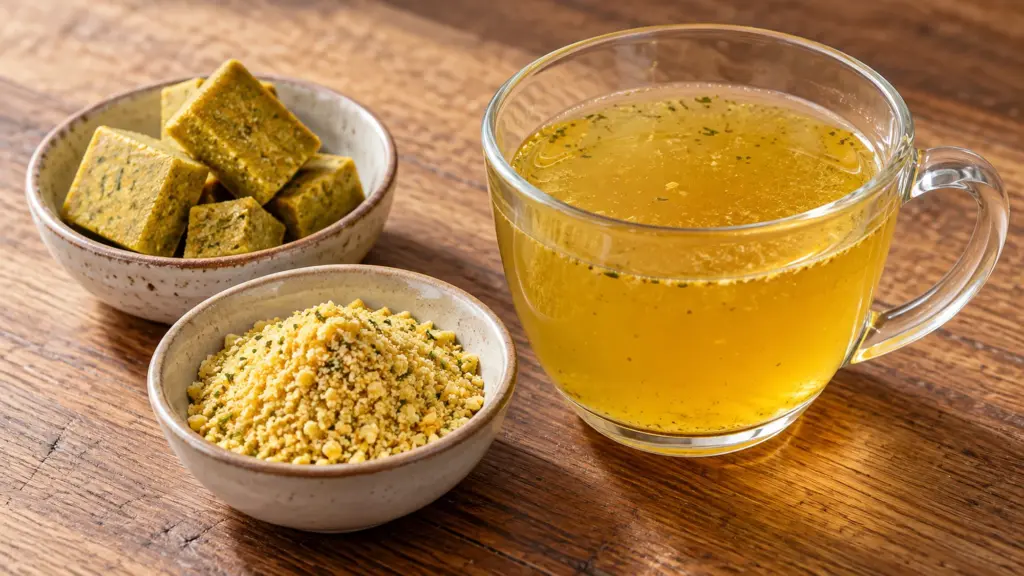
Dinner is halfway underway, and the recipe calls for broth you do not have. Chicken bouillon can fill that gap, but tipping it straight into the pot without checking the label is an easy way to make every other flavor disappear behind salt.
Chicken bouillon is concentrated seasoning used to make broth or add savory flavor. Match the water to your product’s directions, account for its sodium, and taste before adding any extra salt.
I like bouillon as a practical pantry helper, not a replacement for every other ingredient in the pot. The useful trick is knowing what your particular cube, powder, or paste contributes—and when a lighter hand makes dinner better.
What chicken bouillon adds to a dish
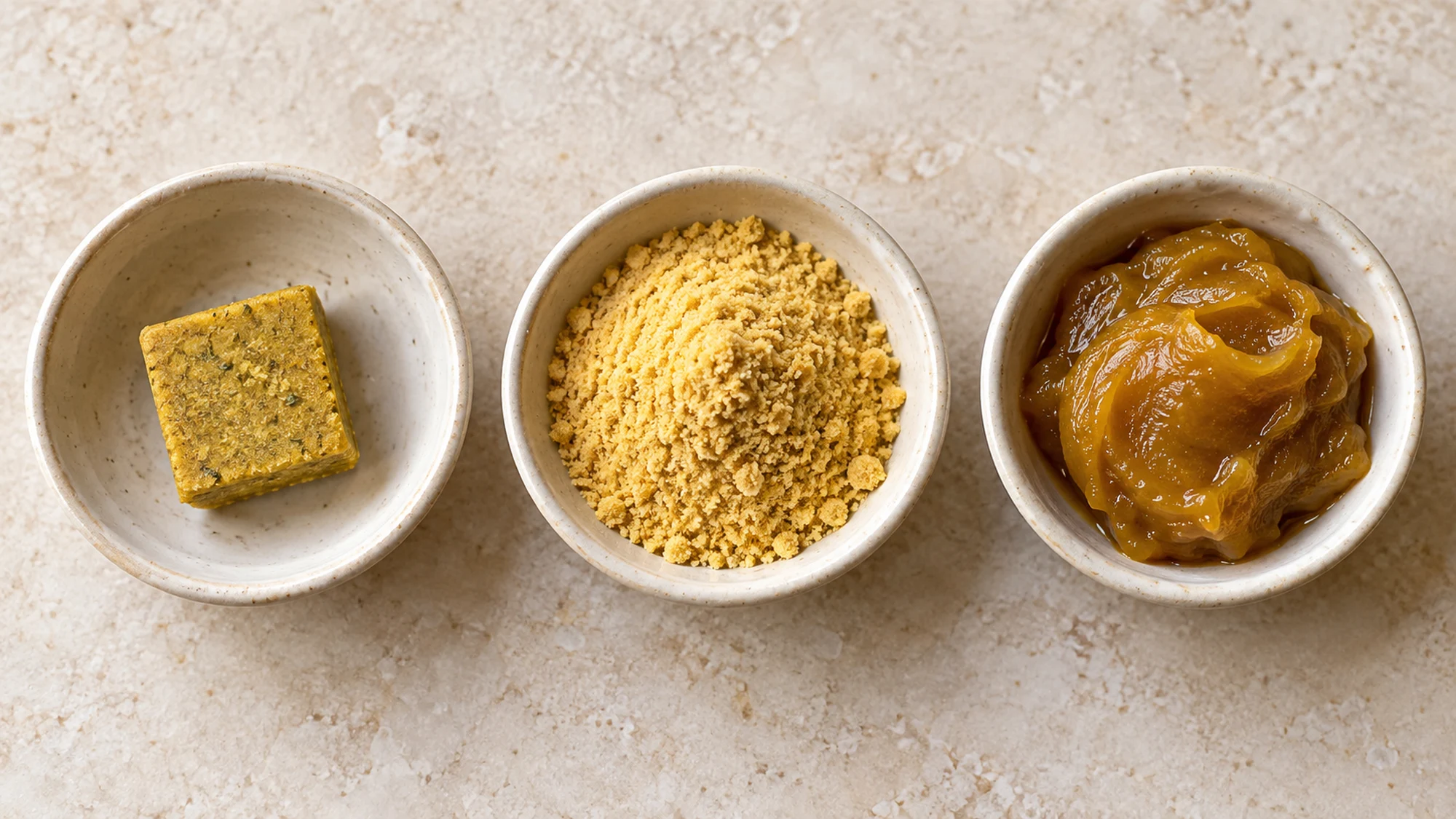
Bouillon products supply concentrated flavor in a small package. Better Than Bouillon describes its bases as concentrates made with cooked meat or vegetables. Other products combine seasonings differently, so the name alone does not tell you their ingredients or strength.
Think of it as one part of the seasoning plan. It can give rice, soup, or a pan sauce a savory starting point; it does not create the texture of sautéed vegetables or replace the substance of chicken, beans, or grains.
For perspective, the Roasted Chicken Base label lists only 1 gram of protein per teaspoon. A flavorful cup is not automatically a protein-rich meal. Build the rest of dinner around the ingredients you actually want to eat.
Use bouillon for flavor, then let the other ingredients provide the meal’s substance.
Choose the right form and dilution

Do not memorize one universal cube-to-cup ratio. Knorr’s U.S. chicken cube instructions call for one cube in two cups of boiling water. Better Than Bouillon’s guidance uses one teaspoon in eight ounces of hot or boiling water. Those are product examples, not interchangeable rules.
| Form | Practical advantage | Check before using |
|---|---|---|
| Cube | Convenient pre-portioned amount | How much water that particular cube requires |
| Granules or powder | Easy to measure smaller amounts | Serving size and level-measure directions |
| Paste or base | Easy to mix into cooking liquid | Dilution and refrigeration instructions |
| Prepared broth | Already diluted and ready to measure | Sodium level and recipe’s required volume |
If substituting for broth, make the required volume using your label first. Stir until the concentrate is dispersed before adding it to the dish. I prefer measuring over guessing: a heaped spoon can turn a sensible shortcut into a surprisingly salty one.
The package ratio is your starting point; the finished dish decides whether more seasoning is needed.
Read the sodium and ingredient labels
The FDA’s sodium label guide treats 5% Daily Value or less per serving as low and 20% or more as high. Compare the serving sizes too. A small amount of concentrate and a full cup of prepared broth are not the same measuring unit.
For example, the Roasted Chicken Base nutrition panel lists 680 milligrams of sodium per teaspoon, or 30% Daily Value. Its ingredient list includes soy protein and whey. That is a reminder to check each product for allergens, not evidence that every chicken bouillon has the same formula.
Count other salty ingredients already in the recipe: cheese, cured meat, soy sauce, and canned ingredients can change the balance. Adding more water makes a broth less concentrated, but it does not remove sodium from the whole pot.
My first adjustment would be to hold back discretionary salt, not to cover an oversalted broth with extra herbs. Fresh herbs or a little acidity can change the flavor balance, but they do not cancel its sodium.
Read the label in the amount you will actually use, then consider the rest of the dish.
Use and store it thoughtfully

For rice, replace part or all of the cooking water with correctly diluted broth while keeping the recipe’s liquid quantity unchanged. For sauces that reduce, start cautiously: evaporation leaves the seasoning in a smaller volume. Taste near the end before making the final adjustment.
In a vegetable-forward soup, bouillon can support the aromatics rather than overpower them. Our mushroom barley soup offers a useful reminder that browned vegetables and grains bring their own depth, too.
Storage is product-specific. Better Than Bouillon instructs refrigeration after opening and says its bases should be heated rather than eaten as-is. Follow your own container’s storage, preparation, and date guidance; a jar of paste need not follow the same rules as a dry cube.
Bottom Line
Chicken bouillon works best as measured seasoning. Follow the dilution directions, check sodium and allergens, and hold off on extra salt until the dish is nearly finished.
America’s Test Kitchen discusses Better Than Bouillon in the video below. It is a product-focused cooking discussion, not a rule that one brand belongs in every kitchen.
Sources
- Better Than Bouillon: Preparation and storage FAQ
- Better Than Bouillon: Roasted Chicken Base label
- Knorr: Chicken Bouillon Cubes directions
- FDA: Sodium in Your Diet

Hi, I’m Emily Pocker! I share recipes and food guides here at Recipes360 to help you find everyday meal inspiration and feel more confident in the kitchen. My goal is to make cooking approachable, enjoyable, and full of flavor.