
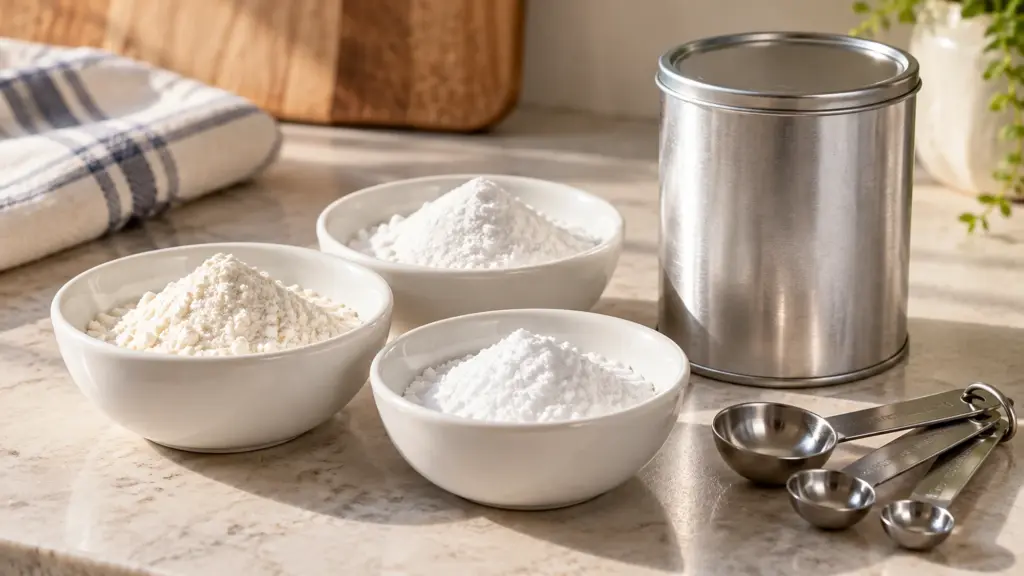
An empty baking powder tin can stop muffin batter halfway through breakfast. A baking powder substitute can help, but the useful swap is a measured combination—not a spoonful of baking soda tipped straight into the bowl.
Quick answer: For each 1 teaspoon of baking powder, combine ¼ teaspoon baking soda, ½ teaspoon cream of tartar, and ¼ teaspoon cornstarch. This is a practical emergency substitute, not a promise of an identical rise.
Check what your recipe actually requests before measuring anything. Baking soda and baking powder may sit beside each other in the cupboard, yet they do different jobs. Choose one substitution method and keep the rest of the recipe steady.
The simplest baking powder substitute
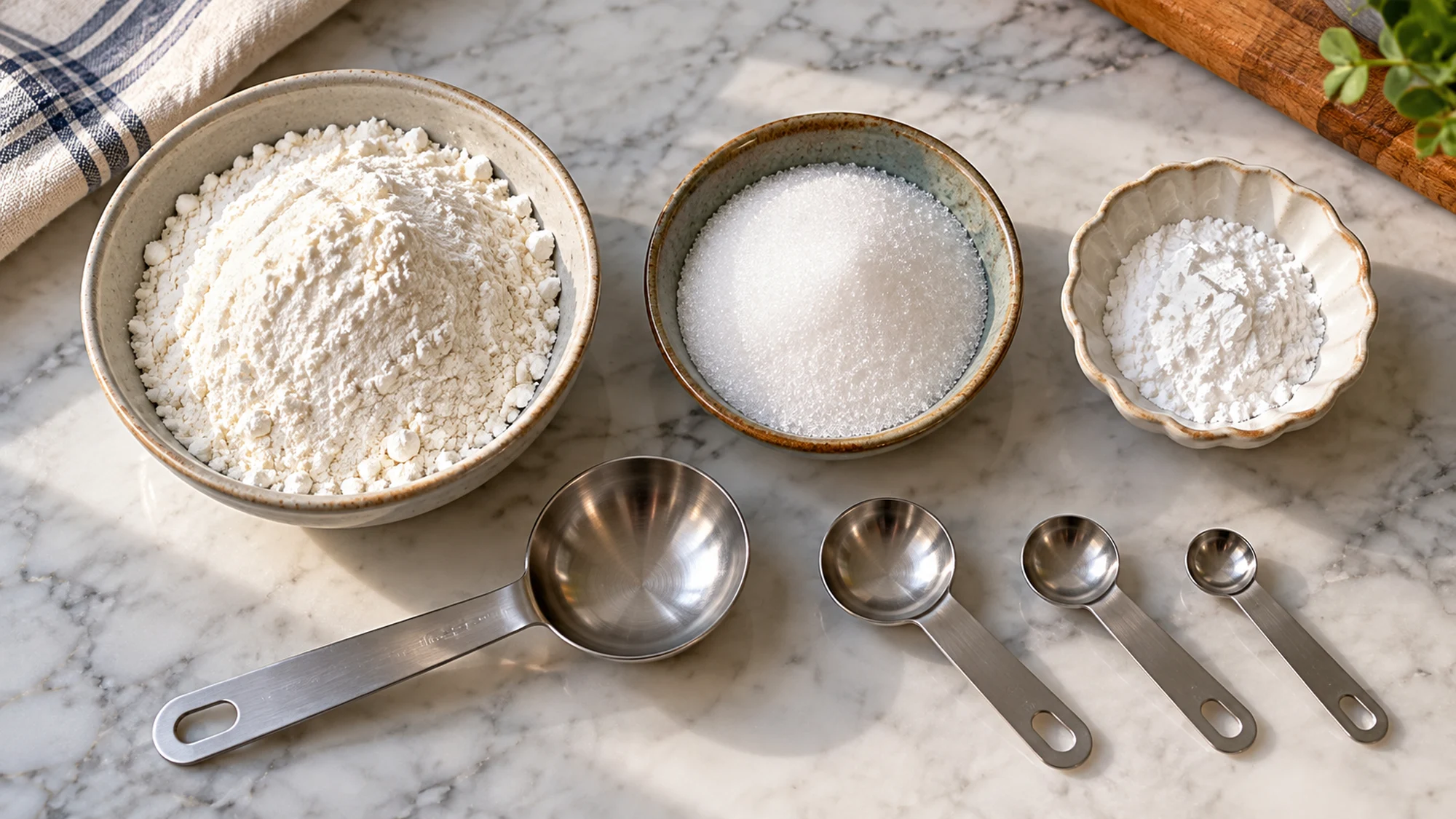
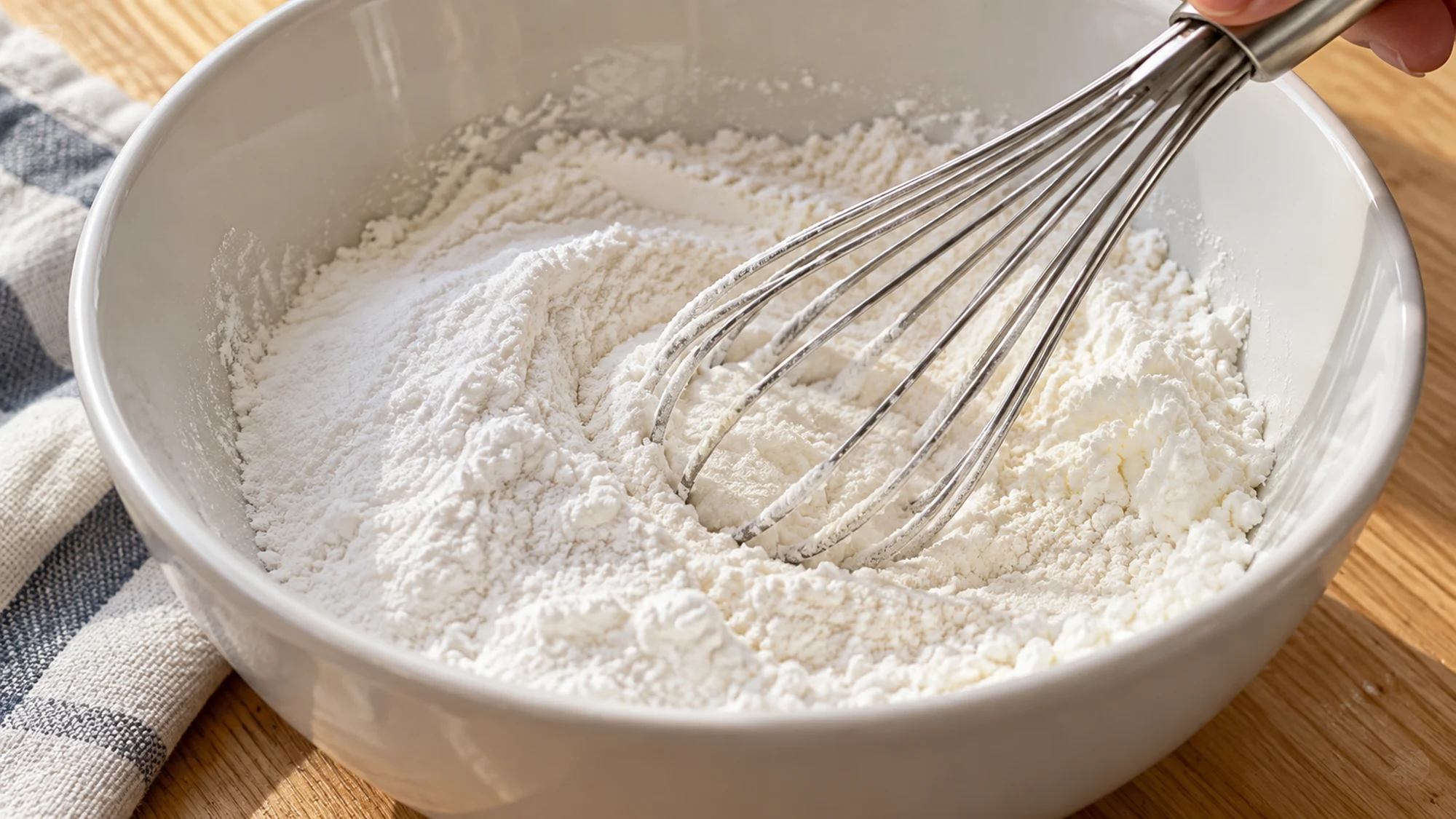
King Arthur Baking’s substitution guide recommends the dry mixture above. Cream of tartar supplies acid, baking soda supplies the base, and starch completes the blend. Whisk the three thoroughly in a small, dry bowl before distributing them through the recipe’s dry ingredients.
| Baking powder requested | Baking soda | Cream of tartar | Cornstarch |
|---|---|---|---|
| 1 teaspoon | ¼ teaspoon | ½ teaspoon | ¼ teaspoon |
| 2 teaspoons | ½ teaspoon | 1 teaspoon | ½ teaspoon |
| 1 tablespoon (3 teaspoons) | ¾ teaspoon | 1½ teaspoons | ¾ teaspoon |
These are level measuring-spoon quantities, not heaped spoonfuls. Make the amount you need rather than guessing from the appearance of three similar white powders. If your recipe already includes baking soda as a separate ingredient, leave that original amount unchanged; the table replaces only its baking powder.
Keep the ingredient containers in front of you until the small mixture is finished. That simple habit makes it easier to catch a doubled spoonful or an accidental swap before it disappears into a larger bowl of flour.
Why baking soda alone is not enough
Baking soda requires a suitable acid to produce the gas that helps lift a batter. Baking powder already includes an acid component. Replacing a teaspoon of powder with a teaspoon of soda changes both the amount of base and the recipe’s balance, and can leave an unpleasant flavor.
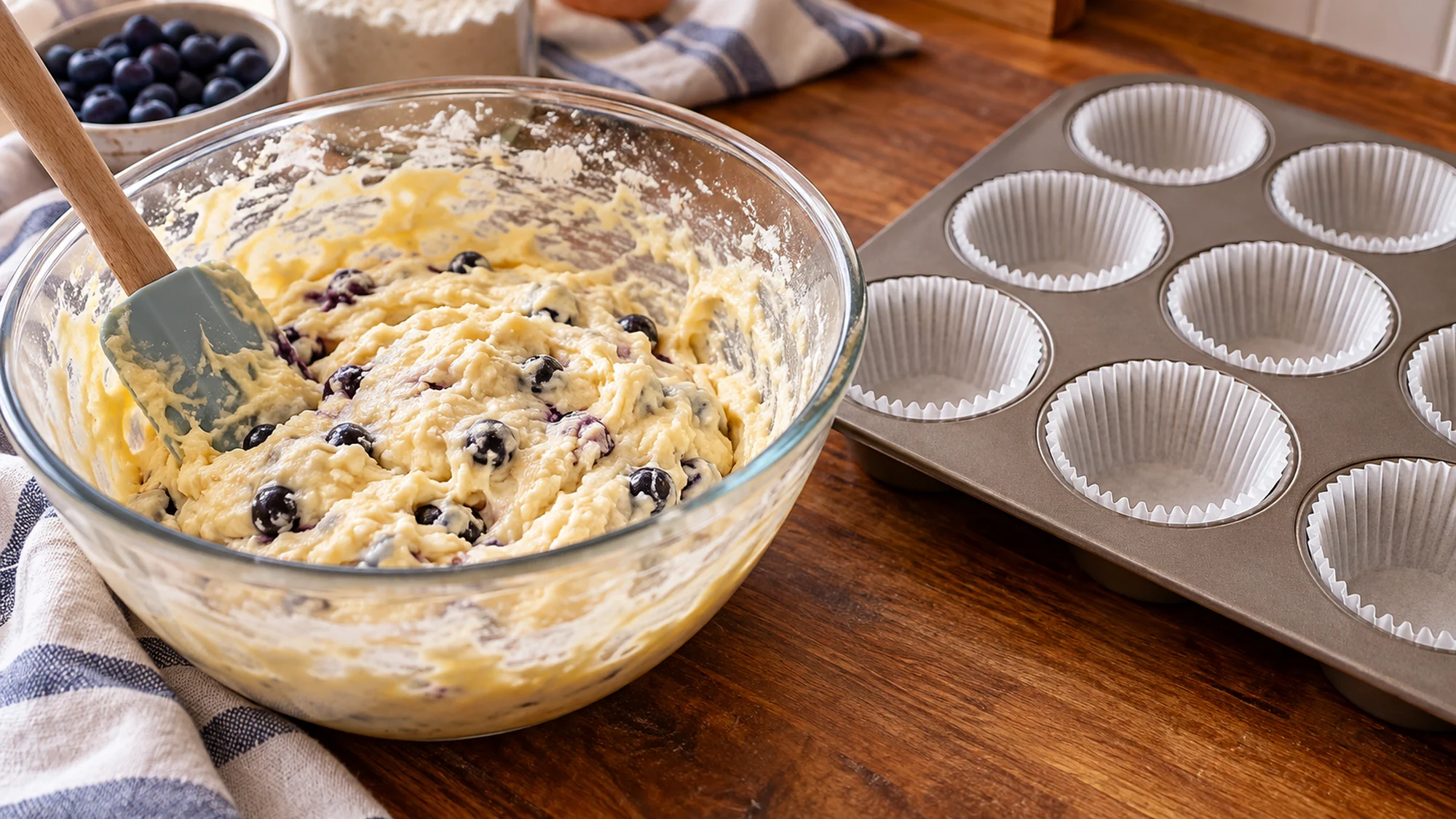
Kansas State University Extension’s leavening guide explains the different roles of these ingredients. A homemade cream-of-tartar blend begins reacting when moistened, so have the oven heated and the pan ready before you combine wet and dry ingredients. Do not make the batter and leave it waiting while you finish another kitchen job.
This does not mean mixing frantically. Work normally and stop when the batter reaches the consistency your recipe describes. Adding more leavener to compensate for a long delay is not a reliable repair.
When buttermilk is a useful alternative
Colorado State University Extension also lists ¼ teaspoon baking soda plus ½ cup buttermilk as a replacement for 1 teaspoon baking powder. Reduce the recipe’s other liquid by ½ cup. This option needs a recipe with enough liquid to exchange; it is not an extra half cup poured on top.
For example, a batter containing a cup of milk gives you room to replace half of that milk with buttermilk. A stiff cookie dough with only a splash of liquid usually does not. The tang and thickness may change the finished result, so the dry mixture is easier to manage when preserving the original flavor matters.
Avoid stacking substitutions. Changing the milk, flour, eggs, and leavener together makes it difficult to tell why the batter behaves differently. For a celebration cake or a recipe you have never made, waiting for the specified ingredient may be the less frustrating choice.
Choose the swap before you mix
Start by reading the complete recipe and checking the amounts. Decide whether the dry blend or a compatible liquid exchange makes sense, then measure the substitute separately. Label any temporary bowl if you are preparing several components at once.
Self-rising flour is not a direct spoon-for-spoon replacement: it brings flour and other ingredients along with its leavening. Yeast follows a different process and timing, so it is not an emergency equivalent for this blend either. Whipped egg whites require a recipe designed to use their structure rather than an improvised addition.
Keep the remaining baking soda, cream of tartar, and starch dry and tightly closed. Use a dry spoon. If an ingredient looks damp or contaminated, replacing it is better than building a substitution around it. A cupboard check before your next baking day avoids repeating the same interruption.
Bottom Line
The most straightforward baking powder substitute is the measured baking soda, cream of tartar, and starch blend. Use the table for the amount requested, prepare the pan first, and expect some variation from the original recipe. A careful small adjustment beats an unmeasured rescue.
Sources
King Arthur Baking: Baking Soda vs. Baking Powder · Colorado State University Extension: Ingredient Substitutions · Kansas State University Extension: Chemical Leavening Agents

Hi, I’m Emily Pocker! I share recipes and food guides here at Recipes360 to help you find everyday meal inspiration and feel more confident in the kitchen. My goal is to make cooking approachable, enjoyable, and full of flavor.