
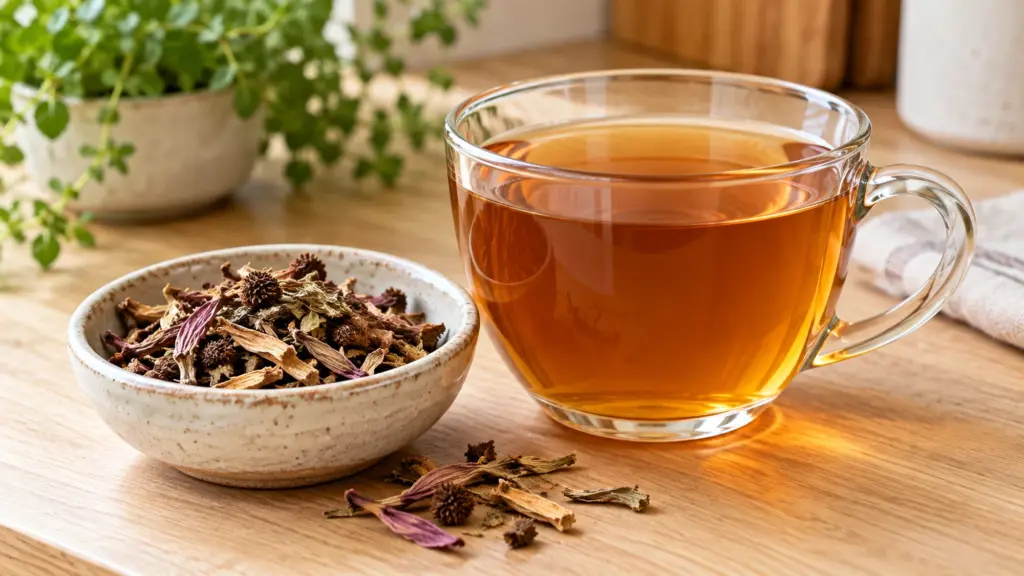
A box of echinacea tea can make the cold-season shelf look reassuring. But choosing a pleasant herbal drink and choosing a supplement for a health outcome are two different decisions. Before adding either to your routine, it helps to separate what researchers have studied from what a package promises.
Echinacea benefits may include a small reduction in the chance of catching a cold, but evidence is mixed. It is not a proven cure, and a cup of tea cannot be assumed to work like a studied extract.
I prefer a modest, useful answer to an impressive-sounding immunity claim. Here is how to read the evidence, compare forms, and decide which questions belong with a pharmacist rather than on the tea aisle.
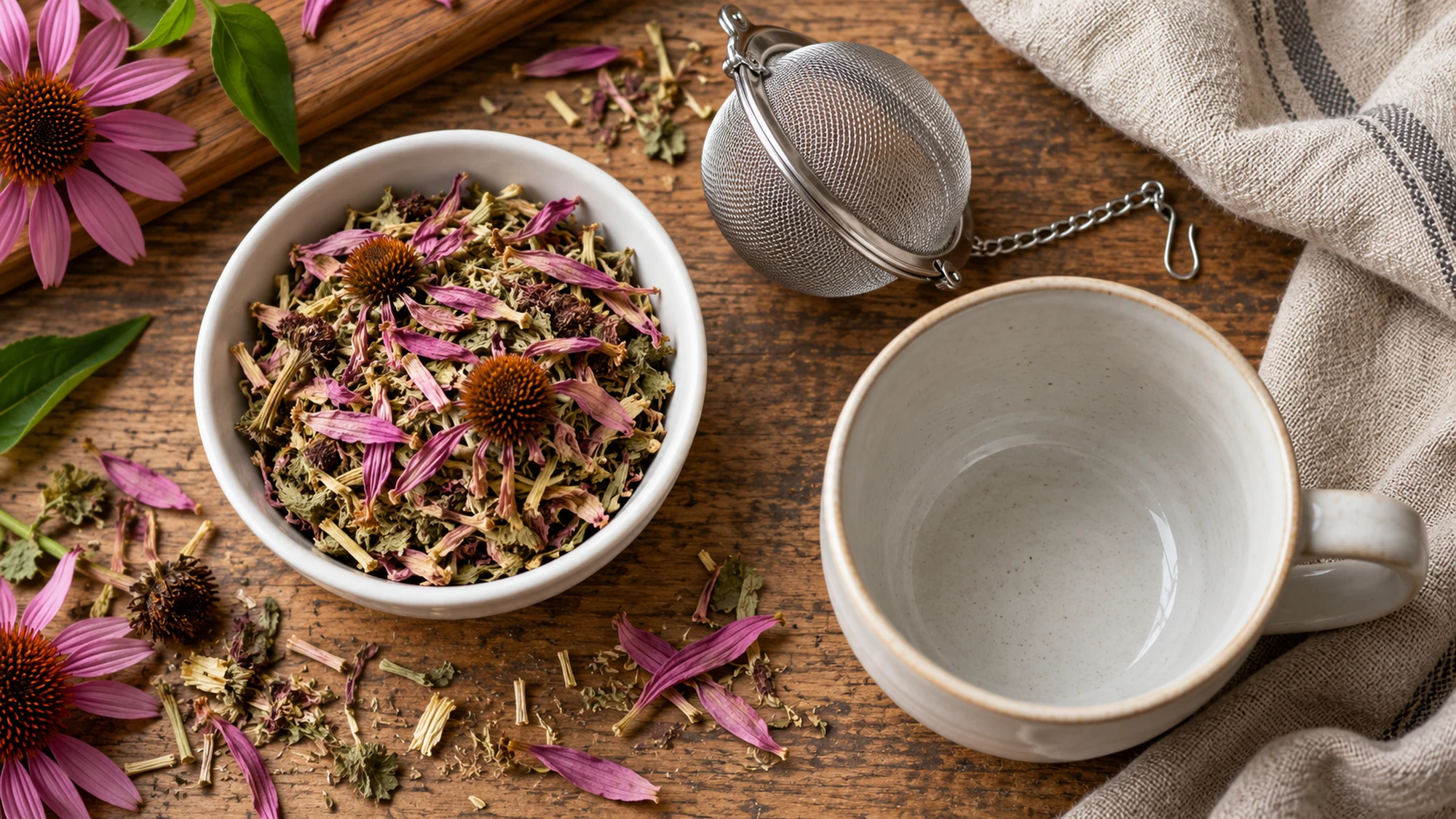
What echinacea benefits does the evidence support?
The National Center for Complementary and Integrative Health says echinacea may slightly reduce cold risk, while its effect on cold duration remains unclear. That is a limited possibility, not a guarantee that taking it will keep you well or make tomorrow’s symptoms disappear.
A Cochrane review of 24 trials involving 4,631 participants found weak overall evidence for clinically meaningful treatment effects. Its evidence search ended in July 2013, so it should not be mistaken for a newly completed trial. Different preparations also made firm conclusions difficult.
Preventing an illness and shortening one already underway are separate outcomes. When a headline slides from one to the other, pause. Ask what was measured, in whom, and with which product before treating the headline as advice for your own cupboard.
A possible small preventive effect does not establish that echinacea treats an existing cold.
Why tea and extracts are not interchangeable
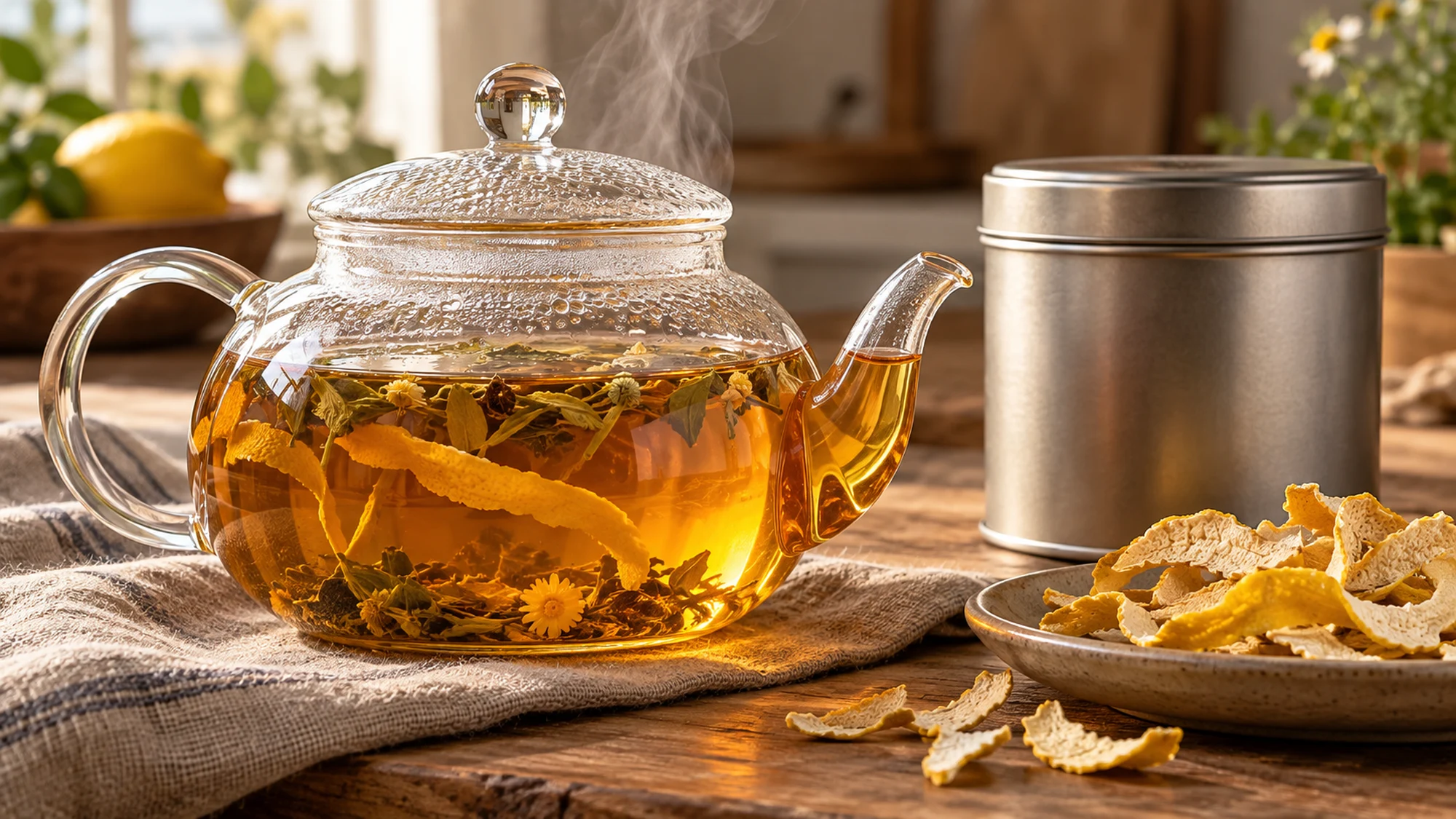
The same Cochrane review describes substantial differences in species, plant parts, manufacturing methods, and added herbs. A dried tea bag, a liquid extract, and a capsule therefore should not be treated as equivalent just because each says echinacea.
For shopping, this means keeping the product’s identity attached to any evidence claim. There is no sensible kitchen conversion from a study’s extract amount to a stronger homemade brew. More concentrated is not automatically more appropriate.
| Form | What to check | What not to assume |
|---|---|---|
| Herbal tea | Full ingredient list and brewing directions | That a cup reproduces a clinical extract |
| Liquid extract | Species, plant part, serving instructions, and other ingredients | That all droppers deliver equivalent amounts |
| Capsule or tablet | Supplement Facts and the actual preparation | That the biggest number means the best outcome |
| Mixed herbal blend | Every herb, not only the front-label name | That echinacea research covers the whole mixture |
Choose a clearly labeled product, not an imagined equivalence between tea, drops, and capsules.
Check safety before making it a habit
According to NCCIH’s safety summary, digestive discomfort and allergic reactions can occur, occasionally severely. Medication interactions are another reason to ask a clinician first; concerns include immunosuppressants. Ask a child’s clinician before offering echinacea, and seek individualized advice during pregnancy or breastfeeding.
The NIH Office of Dietary Supplements review also discusses mixed efficacy findings and interaction concerns. “Natural” does not tell you whether a product fits your medicines, allergies, or medical history. Bring the actual container or a clear label photograph to that conversation.
I would put that label check ahead of experimenting with several products at once. Keeping the ingredient list understandable is more useful than building a complicated routine around a benefit that remains uncertain.
Treat an herbal product as something to review, not something automatically harmless.
A practical label-reading checklist
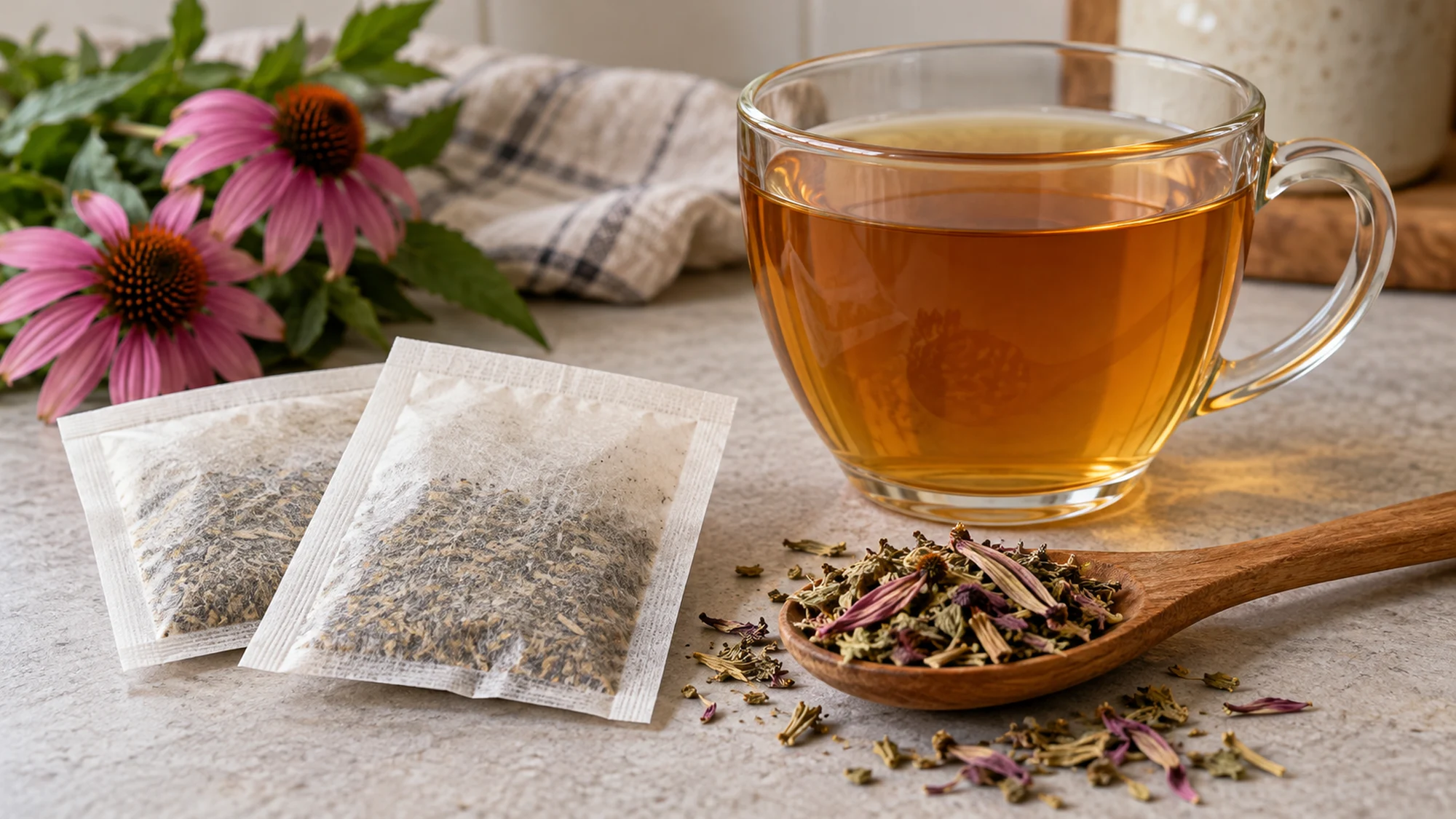
The FDA explains that dietary supplements are not approved for safety and effectiveness before sale. A professional-looking package is not proof of a demonstrated medical benefit. Supplements should not replace prescribed medicine or a varied diet.
- Read the complete ingredient list, including herbs added for flavor.
- Match any evidence claim to the product form rather than the word echinacea alone.
- Follow the package directions instead of inventing a stronger preparation.
- Ask a pharmacist about your medicines and keep the label available for reference.
If your goal is simply choosing an evening drink, begin with flavor and suitability, not a disease claim. Our guide to chamomile tea benefits uses the same distinction between enjoying a beverage and expecting a clinical result.
Bottom Line
Keep expectations for echinacea benefits modest. Check the exact product and your personal safety considerations before use, and do not let a comforting tea ritual stand in for needed medical care.
The FDA’s overview below explains the broader supplement-safety questions behind this choice; it is not an echinacea treatment demonstration.
Sources
- NCCIH: Echinacea usefulness and safety
- Cochrane: Echinacea and the common cold
- NIH ODS: Dietary supplements for immune function
- FDA: Dietary Supplements

Hi, I’m Emily Pocker! I share recipes and food guides here at Recipes360 to help you find everyday meal inspiration and feel more confident in the kitchen. My goal is to make cooking approachable, enjoyable, and full of flavor.