
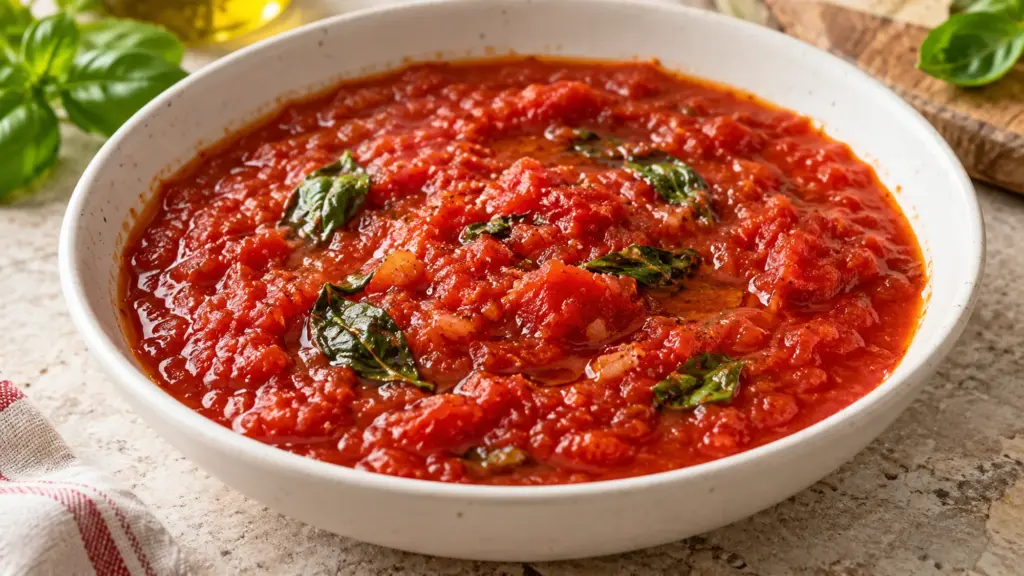
An open can of tomatoes and a bunch of basil can take dinner surprisingly far. This pomodoro sauce keeps the focus on those two ingredients, with olive oil for a soft finish and gently warmed garlic for depth. There is no cream, no long shopping list, and no reason to spend the afternoon stirring.
For a bright, spoon-coating pomodoro sauce, soften the garlic without browning it, simmer the tomatoes gently, and add fresh basil at the end. The sauce takes about 35 minutes from start to finish and makes four generous sauce portions.
I prefer a sauce with a little texture rather than a completely smooth puree. Crushed tomatoes make that easy; their small pieces soften while the liquid reduces. Choose a can you enjoy the taste of, because there is nowhere for an unpleasantly metallic or heavily seasoned tomato to hide.
Serving Suggestions for Pomodoro Sauce
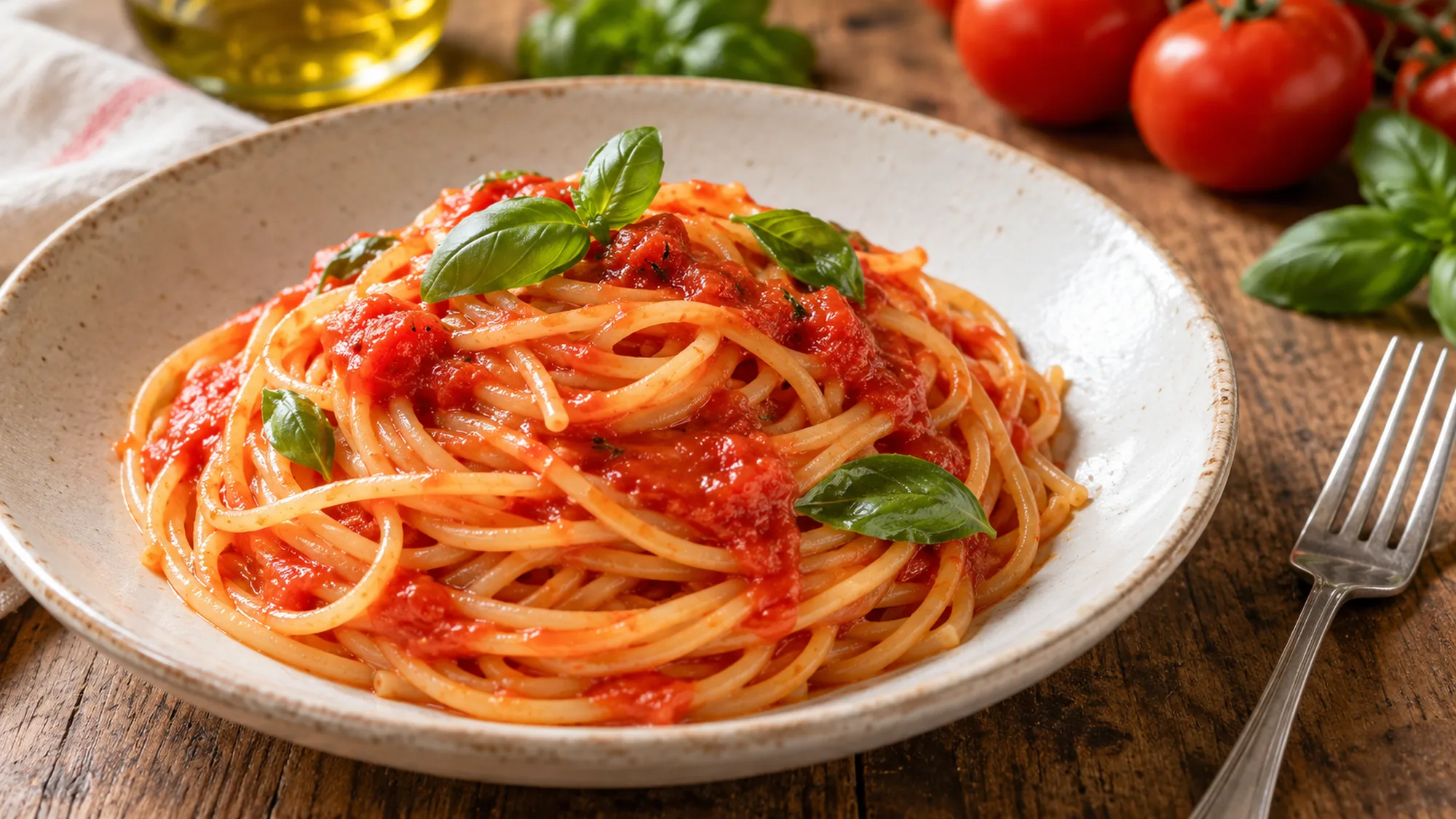
Pasta is the obvious partner, but the sauce is useful beyond a bowl of spaghetti. Spoon it over tender white beans, tuck it into a baked eggplant dish, or serve a small warm bowl beside bread. For pasta, loosen the sauce with a little reserved cooking water so it coats the noodles instead of sitting on top.
A crisp vegetable side brings welcome contrast to the soft tomatoes. These garlicky green beans with lemon fit especially well. Keep any cheese at the table rather than stirring it into the whole saucepan if some diners want a dairy-free meal.
I would keep the first serving simple: pasta, sauce, torn basil, and perhaps a little Parmesan. That lets the tomatoes do the talking. If you are using the sauce in a layered bake, reduce it slightly more so the finished dish does not become watery.
Leftover sauce is handy, but cool it promptly rather than leaving the pan on the stove overnight. Divide it into shallow containers and refrigerate within two hours. Use refrigerated leftovers within three to four days, following USDA leftover guidance.
Match the thickness to the meal: a looser sauce clings to pasta, while a thicker spoonful works better for topping toast or filling a baked dish.
Pomodoro Sauce Variations
Start with the plain version before adding extras. A pinch of crushed red pepper gives warmth; a small amount of finely chopped onion adds sweetness but needs its own gentle cooking time before the tomatoes go in. Neither addition is necessary for a rounded sauce.
| Change | What to expect | Useful adjustment |
|---|---|---|
| Whole canned tomatoes | A chunkier sauce unless broken down | Crush by hand in a bowl before adding |
| Passata | A smoother, more uniform finish | Watch thickness; loosen with water if needed |
| Fresh basil unavailable | Less fresh herbal aroma | Use a small pinch of dried oregano, not a handful |
| A spicy finish | Gentle heat behind the tomatoes | Add a pinch of chili flakes with the garlic |
Avoid piling several dried herbs into the pan at once. The result can become dusty rather than fragrant. If the sauce tastes sharp, first check the salt and give it a little more gentle simmering; an optional tiny pinch of sugar can balance the flavor, but it does not remove the tomatoes’ acidity.
Tomato brands differ in both thickness and salt. Taste near the end, after some water has evaporated, before adding more seasoning. A sauce that seemed mild at the start can become noticeably saltier as it reduces.
Make one small adjustment at a time. Keeping the tomatoes recognizable is more useful than turning a simple sauce into a crowded pantry experiment.
Health Benefits and Nutrition
Tomatoes contribute fiber and potassium, while olive oil supplies most of the fat in this recipe. The manufacturer’s chopped-tomato nutrition label illustrates why the brand matters: salt and carbohydrate amounts vary, even among plain canned products.
The recipe-card estimate covers sauce only, not pasta, bread, beans, or cheese. Those additions change the meal’s energy and protein considerably. For a more substantial plate, pair the sauce with a protein source and vegetables rather than expecting a tomato sauce to provide everything.
This version contains no dairy ingredients, but check packaged ingredients and toppings if you are avoiding an allergen. There is also no added sugar in the base recipe; that describes the ingredients, not a promise that every variation has the same nutrition.
Think of this sauce as a flavorful tomato component of a meal. Portions, accompaniments, and the amount of added salt matter more than a healthy-sounding label.
Bottom Line
Pomodoro sauce rewards a light touch: gentle garlic, a steady simmer, and basil added while it still smells fresh. Keep a portion simple, adjust the thickness for dinner, and let a modest can of tomatoes earn its place in the pantry.
Pomodoro Sauce Recipe

Ingredients
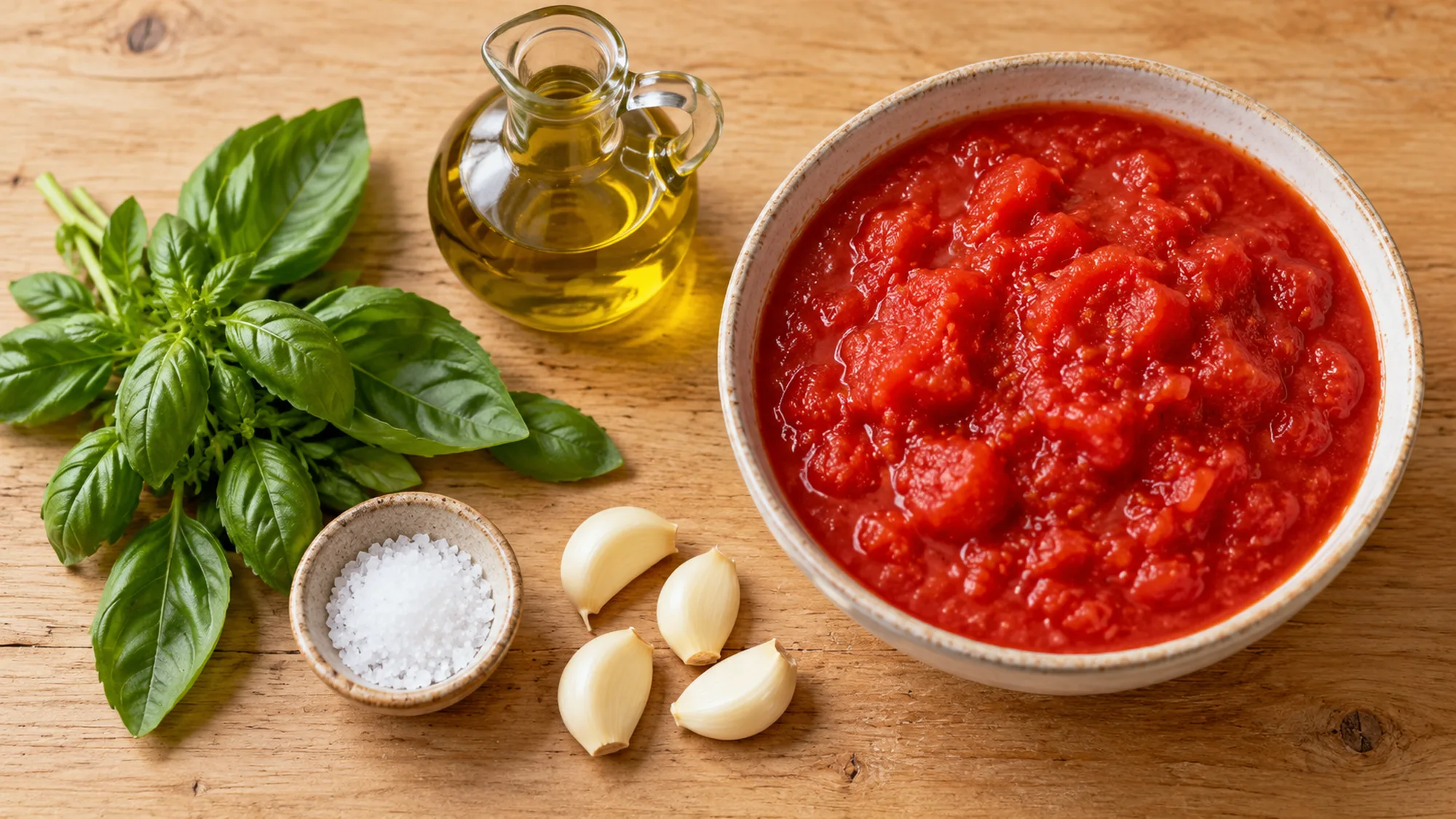
- 28 ounces crushed tomatoes one can, about 800 g; plain, not pre-seasoned sauce
- 2 tablespoons olive oil 27 g
- 4 garlic cloves about 12 g, finely sliced
- 1/2 cup loosely packed fresh basil leaves about 10 g; torn just before adding
- 1/2 teaspoon fine salt start with less if the tomatoes are salty
- 1/4 teaspoon black pepper
Equipment
- Medium heavy-bottomed saucepan
- Wooden spoon
- Knife and cutting board
Instructions
- Slice the garlic and open the tomatoes. Keep the basil aside until the sauce is nearly finished.
- Add the olive oil and garlic to a saucepan over medium-low heat. Cook gently for about 2 minutes, stirring, until fragrant but not browned. Lower the heat immediately if the edges start to color.
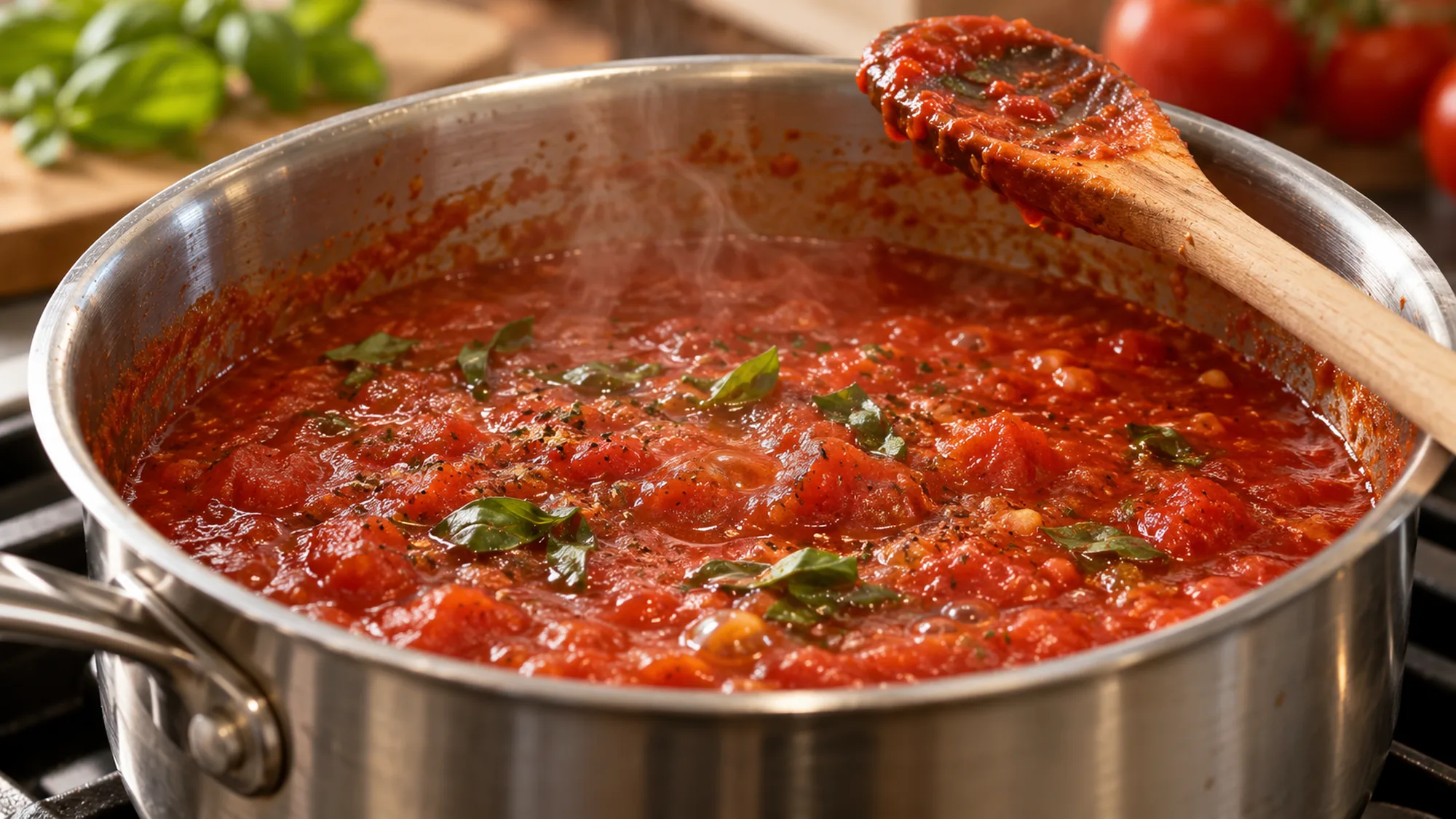
- Carefully add the crushed tomatoes, salt, and pepper. Bring to a gentle simmer, then cook uncovered over low to medium-low heat for about 20 minutes, stirring regularly. Keep the bubbles small; a hard boil splatters and can scorch the bottom.
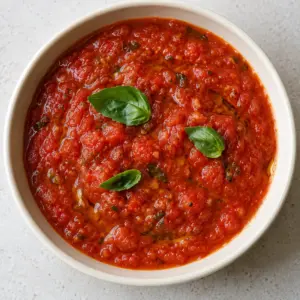
- Tear the basil and stir it in for the final 2–3 minutes. The sauce should coat a spoon while still flowing. If too thick, add water a tablespoon at a time; if thin, simmer briefly longer. Taste and adjust seasoning. Divide into four sauce portions.
- Refrigerate in shallow covered containers within 2 hours, or 1 hour above 90°F/32°C. Keep at 40°F/4°C or below and use within 3–4 days. Reheat leftovers to 165°F/74°C, stirring thoroughly.
Nutrition
Video
Notes
Tried this recipe?
Let us know how it turned out!Hi, I’m Emily Pocker! I share recipes and food guides here at Recipes360 to help you find everyday meal inspiration and feel more confident in the kitchen. My goal is to make cooking approachable, enjoyable, and full of flavor.